To save content items to your account,
please confirm that you agree to abide by our usage policies.
If this is the first time you use this feature, you will be asked to authorise Cambridge Core to connect with your account.
Find out more about saving content to .
To save content items to your Kindle, first ensure no-reply@cambridge.org
is added to your Approved Personal Document E-mail List under your Personal Document Settings
on the Manage Your Content and Devices page of your Amazon account. Then enter the ‘name’ part
of your Kindle email address below.
Find out more about saving to your Kindle.
Note you can select to save to either the @free.kindle.com or @kindle.com variations.
‘@free.kindle.com’ emails are free but can only be saved to your device when it is connected to wi-fi.
‘@kindle.com’ emails can be delivered even when you are not connected to wi-fi, but note that service fees apply.
As modern constitutions bind democratic legislation to entrenched norms, they are in tension with the democratic idea that laws should be open to revision by new majorities. Against a widespread view, constitutional norms cannot be considered to be “more democratic” than ordinary laws due to specific qualities of the constitution-making process. Rather, the higher-level law of constitutions can fulfil a specific function as it may provide standards that ensure that laws made by the majority can be justified to everyone. On that basis, I evaluate for different types of constitutional norms whether there are good reasons for constraining legislation. In particular, entrenching cultural traditions and economic policy is more problematic than guarantees of the democratic process and rights ensuring respect for individuals. In sum, a two-tiered law-making system has important values, but people engaging in constitution-making and constitutional interpretation should be wary that the constitutional form is not abused.
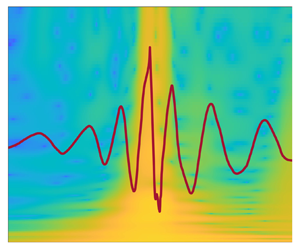
Steep wave breaking on a vertical cylinder (a typical foundation supporting offshore wind turbines) will induce slam loads. Many questions on the important violent wave loading and the associated secondary load cycle remain unanswered. We use laboratory experiments with unidirectional waves to investigate the fluid loading on vertical cylinders. We use a novel three-phase decomposition approach that allows us to separate different types of nonlinearity. Our findings reveal the existence of an additional quasi-impulsive loading component that is associated with the secondary load cycle and occurs in the backwards direction against that of the incoming waves. This quasi-impulsive force occurs at the end of the secondary load cycle and close to the passage of the downward zero-crossing point of the undisturbed wave. Wavelet analysis showed that the impulsive force exhibits superficially similar behaviour to a typical wave-slamming event but in the reverse direction. To monitor the scattered wave field and extract run-up on the cylinder, we installed a four-camera synchronised video system and found a strong temporal correlation between the arrival time of the Type-II scattered wave onto the cylinder and the occurrence of this quasi-impulsive force. The temporal characteristics of this quasi-impulsive force can be approximated by the Goda wave impact model, taking the collision of the Type-II scattered waves at the rear stagnation point as the impact source.
During the Second World War, a number of manuscript fragments in Iranian languages from the Berlin Turfan collections were lost. Photographs of these fragments preserved in the Nachlass of Walter B. Henning bring to light their contents and fill gaps in the record of Turfan texts. These photographs are published here for the first time, together with a description of the fragments and their contents.
Next Generation EU, specifically its Recovery and Resilience Facility (RRF), has been a groundbreaking new experiment for the EU. From the speed of the reaction at the EU level with an agreement between leaders a few weeks after the COVID-19 crisis erupted, the size of the instrument (being the largest EU fund ever created), to the RRF's design features (including the performance nature of the instrument, its leverage on reforms, and its method of financing), it is a fundamentally novel EU instrument. Aimed at both recovery and resilience, it first led to a firm common response to a simultaneous economic downturn across the EU, ensuring rapid macroeconomic stabilization and preservation of public investment levels, in contrast with previous crises. It has also planted the seeds of a significant increase in the resilience of the EU economy by fostering the implementation of major structural reforms in line with the common priorities of the EU. Lessons about absorption capacity, incentives, flexibility, and governance will all advance future program design in the EU and beyond.
The last three decades have seen significant development in understanding and describing the effects of task complexity on learner internal processes. However, researchers have primarily employed behavioral methods to investigate task-generated cognitive load. Being the first to adopt neuroimaging to study second language (L2) task effects, we aimed to provide novel insights into the neural correlates of task-related variation in L2 oral production. To advance research methodology, we also tested the utility of a neuroimaging technique, functional magnetic resonance imaging (fMRI), in examining the impact of task-related variables on L2 speech production when combined with cognitive–behavioral tools (speech analysis, expert and learner judgments). Our research focus was the effects of task complexity on silent pausing. Twenty-four Japanese learners of English completed eight simple and complex versions of decision-making tasks, half in their first language and half in their L2. The dataset for the present study included the L2 speech and fMRI data, expert judgments, and participants’ difficulty ratings of the L1 and L2 tasks they completed. Based on our findings, we concluded that brain imaging and L1 task difficulty ratings were more sensitive to detecting task complexity effects than L2 self-ratings and pausing measures. These results point to the benefits of triangulating cognitive and neural data to study task-based neurocognitive processes.
Since 2009, the European Union has undergone a succession of crises. It is even said to be in a sort of permacrisis: the financial crisis; the debt and euro crisis; the migration crisis; the rule of law crisis afflicting some of its member states; the process of withdrawal of the UK from the Union; the pandemic crisis; and the war in Ukraine.
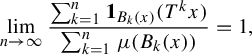
Let $(X,\mu ,T,d)$ be a metric measure-preserving dynamical system such that three-fold correlations decay exponentially for Lipschitz continuous observables. Given a sequence $(M_k)$ that converges to $0$ slowly enough, we obtain a strong dynamical Borel–Cantelli result for recurrence, that is, for $\mu $-almost every $x\in X$,
where $\mu (B_k(x)) = M_k$. In particular, we show that this result holds for Axiom A diffeomorphisms and equilibrium states under certain assumptions.

This contribution will analyze the significance and legacy of Next Generation EU (NGEU). It will start by providing a snapshot of the state of the EU's Economic and Monetary Union (EMU) before the pandemic struck in 2020. It will then map out NGEU's likely legacy, arguing that NGEU may change the way the EU raises and spends revenues in the future. The essay will finish by reflecting on how NGEU may change our interpretation of important elements of EMU and affect the ongoing debate about the future of fiscal integration within the EU.
Toxic substances and endocrine disruptors are present in consumer goods on the European Union (EU) market, such as in food contact materials like cookware. This article investigates whether a legal recall obligation of such products exists in EU law, and in the absence of such an obligation, how the EU legislature has ensured that such products are disposed of in a manner that does not compromise human health and the environment when they become waste. For this purpose, this Article analyses recall obligations for food contact materials containing persistent organic pollutants, as well as their waste regulations. It focuses on a class of substances with non-stick properties, some of them formerly used in cookware, such as pentadecafluorooctanoic acid (PFOA) and perfluorooctane sulfonic acid (PFOS). We show that there is no single legal recall obligation; rather, many legal obligations are scattered among different provisions of EU law. When read together, they form a complex web of obligations, which may lead to recall measures for most of these products. However, doubts over the feasibility and effectiveness of such recalls remain.
Coffee is one of the most popular beverages worldwide, and there is an increasing concern of the health risk of coffee consumption in pregnancy. Preeclampsia (PE) is a serious pregnancy disease that causes elevated blood pressure and proteinuria in pregnant women and growth restriction of fetuses due to poorly developed placental vasculature. The aim of our study is to investigate the possible effect of coffee intake during pregnancy in rats with potential underlying vasculature conditions. The endothelial nitric oxide synthase inhibitor N(gamma)-nitro-L-arginine methyl ester (L-NAME) at a high dose (125 mg/kg/d) was used to induce PE in pregnant rats, which were used as the positive control group. In addition, low-dose L-NAME (10 mg/kg/d) was used to simulate the compromised placental vasculature function in pregnant rats. Coffee was given together with low-dose L-NAME to the pregnant rats from gestational day 10.5–18.5. Our results show that the pregnant rats treated with low-dose L-NAME + coffee, but not low-dose L-NAME alone, developed PE symptoms such as prominent fetal growth restriction, hypertension, and proteinuria. Therefore, our findings suggest that coffee intake during pregnancy may cause an increased risk of PE in susceptible women.
In various industrial robotic applications, the effective traversal of a manipulator amidst obstacles and its ability to reach specific task-points are imperative for the execution of predefined tasks. In certain scenarios, the sequence in which the manipulator reaches these task-points significantly impacts the overall cycle time required for task completion. Moreover, some tasks necessitate significant force exertion at the end-effector. Therefore, establishing an optimal sequence for the task-points reached by the end-effector’s tip is crucial for enhancing robot performance, ensuring collision-free motion and maintaining high-force application at the end-effector’s tip.
To maximize the manipulator’s manipulability, which serves as a performance index for assessing its force capability, we aim to establish an optimal collision-free task sequence considering higher mechanical advantage. Three optimization criteria are considered: the cycle time, collision avoidance and the manipulability index. Optimization is accomplished using a genetic algorithm coupled with the Bump-Surface concept for collision avoidance. The effectiveness of this approach is confirmed through simulation experiments conducted in 2D and 3D environments with obstacles employing both redundant and non-redundant robots.
This research employs a vector autoregression (VAR) analysis to explore the volatility and dynamic interactions between stock, commodity, and cryptocurrency markets. It focuses on the returns of the S&P 500, gold, crude oil, and Bitcoin to analyse their interconnections. Our results indicate that Bitcoin returns positively affect S&P 500 and crude oil, but negatively impact gold. Conversely, crude oil returns have a positive influence on gold but lead to decreased returns for Bitcoin and the S&P 500. Similarly, higher gold returns correspond to increased returns in crude oil and S&P 500 but decreased returns in Bitcoin. The rise of the S&P 500 negatively influences Bitcoin and crude oil returns, while gold returns remain unaffected. However, these relationships exhibit weak and limited strength. Including these assets in a portfolio can help risk mitigation, as Bitcoin diversifies crude oil, gold, and S&P 500, and crude oil diversifies S&P 500. These findings contribute to our understanding of global financial dynamics and inform decision-making in risk assessment, portfolio management, risk mitigation, and diversification strategies.
Growth in the complexity of advanced systems is mirrored by a growth in the number of engineering requirements and related upstream and downstream tasks. These requirements are typically expressed in natural language and require human expertise to manage. Natural language processing (NLP) technology has long been seen as promising to increase requirements engineering (RE) productivity but has yet to demonstrate substantive benefits. The recent addition of large language models (LLMs) to the NLP toolbox is now generating renewed enthusiasm in the hope that it will overcome past shortcomings. This article scrutinizes this claim by reviewing the application of LLMs for engineering requirements tasks. We survey the success of applying LLMs and the scale to which they have been used. We also identify groups of challenges shared across different engineering requirement tasks. These challenges show how this technology has been applied to RE tasks that need reassessment. We finalize by drawing a parallel to other engineering fields with similar challenges and how they have been overcome in the past – and suggest these as future directions to be investigated.
Collision with powerlines is a major cause of mortality for many bird species, including bustards and sandgrouse. In this work, we used GPS tracking data to identify the hour of collision of three threatened steppe birds, i.e. Little Bustard Tetrax tetrax, Black-bellied Sandgrouse Pterocles orientalis, and Pin-tailed Sandgrouse Pterocles alchata. Out of a data set of 160 GPS-tracked individuals collected over a 13-year period, we detected eight collision events with powerlines or fences. Of these, we were able to determine the timing of 87.5% of the collision events with a resolution accurate to within two hours. Our results reveal that collisions occurred throughout the year and at different hours of the day, presenting a challenge for implementing effective mitigation strategies. The use of dynamic and reflective or luminescent devices may therefore be appropriate to prevent collision of steppe birds with powerlines during the day and night. Overall, this study adds evidence to the utility of using tracking data to better understand anthropogenic mortality in birds.
Trials involving police as defendants are rare but are significant events that give insight into police violence and its adjudication. This article explores the reasoning practices through which court actors navigate the disjunctive accounts created by competing claims of “what happened” in a police shooting. The data is drawn from trial testimony of officers and “use of force experts” in police deadly force cases in the United States. We focus on use of force experts who use a veneer of science and police logic to assert particular visions of officer “reasonableness.” We suggest that the systems of reasoning that lawyers and witnesses use in these cases create accounts of police violence that conflict with mundane reasoning and challenge credibility. We show that the proliferation of different reasoning practices and the elaboration of a “police logic” serve to insulate officers from criticism and accountability—albeit, not always successfully.
The global increase in observed forest dieback, characterized by the death of tree foliage, heralds widespread decline in forest ecosystems. This degradation causes significant changes to ecosystem services and functions, including habitat provision and carbon sequestration, which can be difficult to detect using traditional monitoring techniques, highlighting the need for large-scale and high-frequency monitoring. Contemporary developments in the instruments and methods to gather and process data at large scales mean this monitoring is now possible. In particular, the advancement of low-cost drone technology and deep learning on consumer-level hardware provide new opportunities. Here, we use an approach based on deep learning and vegetation indices to assess crown dieback from RGB aerial data without the need for expensive instrumentation such as LiDAR. We use an iterative approach to match crown footprints predicted by deep learning with field-based inventory data from a Mediterranean ecosystem exhibiting drought-induced dieback, and compare expert field-based crown dieback estimation with vegetation index-based estimates. We obtain high overall segmentation accuracy (mAP: 0.519) without the need for additional technical development of the underlying Mask R-CNN model, underscoring the potential of these approaches for non-expert use and proving their applicability to real-world conservation. We also find that color-coordinate based estimates of dieback correlate well with expert field-based estimation. Substituting ground truth for Mask R-CNN model predictions showed negligible impact on dieback estimates, indicating robustness. Our findings demonstrate the potential of automated data collection and processing, including the application of deep learning, to improve the coverage, speed, and cost of forest dieback monitoring.
Stars with about 45 to 80% the mass of the Sun, so-called K dwarf stars, have previously been proposed as optimal host stars in the search for habitable extrasolar worlds. These stars are abundant, have stable luminosities over billions of years longer than Sun-like stars, and offer favourable space environmental conditions. So far, the theoretical and experimental focus on exoplanet habitability has been on even less massive, though potentially less hospitable red dwarf stars. Here we present the first experimental data on the responses of photosynthetic organisms to a simulated K dwarf spectrum. We find that garden cress Lepidium sativum under K-dwarf radiation exhibits comparable growth and photosynthetic efficiency as under Solar illumination on Earth. The cyanobacterium Chroococcidiopsis sp. CCMEE 029 exhibits significantly higher photosynthetic efficiency and culture growth under K dwarf radiation compared to Solar conditions. Our findings of the affirmative responses of these two photosynthetic organisms to K dwarf radiation suggest that exoplanets in the habitable zones around such stars deserve high priority in the search for extrasolar life.
The dietary habits of Neanderthals are considered an issue of great interest in the literature and have opened an important number of fruitful debates. Indeed, understanding diets can provide important information regarding issues of palaeoenvironmental reconstructions and subsistence strategies. In this respect, dental remains can play a vital role in the conducted efforts to reconstruct the palaeoecological niches securely and accurately since dental microwear analyses have precisely detected dietary patterns of the populations in the past. In this context, the Iberian Peninsula forms an interesting model for examining Neanderthal populations, their subsistence strategies, and adaptive skills. This study aims the examination of already published data in order to provide a holistic approach regarding the dietary habits of H. neanderthalensis populations in the Iberian Peninsula, along with the importance of the utilization of dental microwear analysis in the archaeological record.
The European Union’s Digital Services Act (DSA) introduces a new regulatory approach to address the societal harms of online platforms: Systemic risk assessments. While a core component of the DSA, the regulation only outlines the standards and processes governing systemic risk assessments in broad strokes. It remains unclear what these systemic risk assesments will entail in practice. This Article develops a proposal of how systemic risk assessments should be implemented. It situates systemic risk assessments as a critical step toward platform accountability as they address societal harms, while existing approaches, such as remedy mechanisms, only protect user rights. Engaging with intangible harms and regulating speech and public discourse, risk assessments also entail significant challenges. Conventional reference points for content moderation regulation, such as terms and conditions, contractual freedom, fundamental rights and expertise, do not provide practical and legitimate bases to concretize risk assessment obligations. Public actors, such as the European Commission, should refrain from defining substantive standards, too, as they are directly bound by freedom of expression guarantees. Instead, the Article argues, the Commission should foster a procedural framework, a “virtuous loop,” which empowers civil society and allows it to specify and refine the standards governing systemic risks over time. Developing this framework, the Article explains how systemic risk assessment can fix “multistakeholderism,” and “multistakeholderism,” in turn, can help make systemic risk assessments work.