To save content items to your account,
please confirm that you agree to abide by our usage policies.
If this is the first time you use this feature, you will be asked to authorise Cambridge Core to connect with your account.
Find out more about saving content to .
To save content items to your Kindle, first ensure no-reply@cambridge.org
is added to your Approved Personal Document E-mail List under your Personal Document Settings
on the Manage Your Content and Devices page of your Amazon account. Then enter the ‘name’ part
of your Kindle email address below.
Find out more about saving to your Kindle.
Note you can select to save to either the @free.kindle.com or @kindle.com variations.
‘@free.kindle.com’ emails are free but can only be saved to your device when it is connected to wi-fi.
‘@kindle.com’ emails can be delivered even when you are not connected to wi-fi, but note that service fees apply.
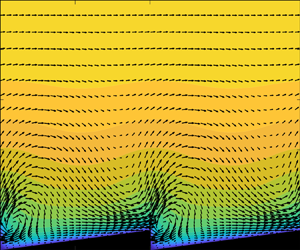
The influence of symmetry-breaking effects of ridge-type roughness on secondary currents in turbulent channel flow is investigated using direct numerical simulations. The ridges have triangular cross-section, which is systematically varied from isosceles to right-angled triangle, introducing an imbalance to the slopes of the ridges’ lateral surfaces while the streamwise homogeneity of the surfaces is maintained. In all cases, secondary current vortices are produced, but asymmetric ridge cross-sections break the symmetry of these vortices. As a result of the asymmetry-induced misalignment and imbalance in the secondary current vortices, net spanwise flow emerges. The magnitude of the spanwise flow increases with the slope ratio of the ridge lateral surfaces and significantly modifies the mean flow topology, leading to the merging of critical points in the case of the right-angled triangular ridge shape. Within the cavities, the net spanwise flow is accompanied by a non-zero mean spanwise pressure gradient, while from the perspective of the outer flow, the scalene ridge surfaces have a similar effect as a wall that is slowly moving in the spanwise direction. Overall, the present results suggest the existence of a special type of Prandtl's secondary currents of the second kind, namely those that result in net spanwise flow.
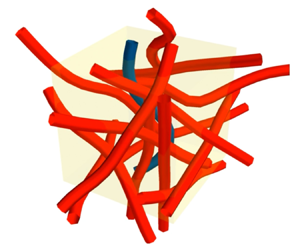
Many biological fluids are composed of suspended polymers immersed in a viscous fluid. A prime example is mucus, where the polymers are also known to form a network. While the presence of this microstructure is linked with an overall non-Newtonian response of the fluid, swimming cells and microorganisms similar in size to the network pores and polymer filaments instead experience the heterogeneous nature of the environment, interacting directly with the polymers as obstacles as they swim. To characterise and understand locomotion in these heterogeneous environments, we simulate the motion of an undulatory swimmer through three-dimensional suspensions and networks of elastic filaments, exploring the effects of filament and link compliance and filament concentration up to 20 % volume fraction. For compliant environments, the swimming speed increases with filament concentration to values approximately 10 % higher than in a viscous fluid. In stiffer environments, a non-monotonic dependence is observed, with an initial increase in speed to values 5 % greater than in a viscous fluid, followed by a dramatic reduction to speeds just a fraction of its value in a viscous fluid. Velocity fluctuations are also more pronounced in stiffer environments. We demonstrate that speed enhancements are linked to hydrodynamic interactions with the microstructure, while reductions are due to the filaments restricting the amplitude of the swimmer's propulsive wave. Unlike previous studies where interactions with obstacles allowed for significant enhancements in swimming speeds, the modest enhancements seen here are more comparable to those given by models where the environment is treated as a continuous viscoelastic fluid.
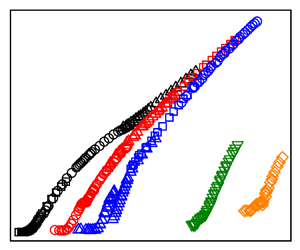
We present a systematic study on the effects of small aspect ratios $\varGamma$ on heat transport in liquid metal convection with a Prandtl number of $Pr=0.029$. The study covers $1/20\le \varGamma \le 1$ experimentally and $1/50\le \varGamma \le 1$ numerically, and a Rayleigh number $Ra$ range of $4\times 10^3 \le Ra \le 7\times 10^{9}$. It is found experimentally that the local effective heat transport scaling exponent $\gamma$ changes with both $Ra$ and $\varGamma$, attaining a $\varGamma$-dependent maximum value before transition-to-turbulence and approaches $\gamma =0.25$ in the turbulence state as $Ra$ increases. Just above the onset of convection, Shishkina (Phys. Rev. Fluids, vol 6, 2021, 090502) derived a length scale $\ell =H/(1+1.49\varGamma ^{-2})^{1/3}$. Our numerical study shows $Ra_{\ell }$, i.e. $Ra$ based on $\ell$, serves as a proper control parameter for heat transport above the onset with $Nu-1=0.018(1+0.34/\varGamma ^2)(Ra/Ra_{c,\varGamma }-1)$. Here $Ra_{c,\varGamma }$ represents the $\varGamma$-dependent critical $Ra$ for the onset of convection and $Nu$ is the Nusselt number. In the turbulent state, for a general scaling law of $Nu-1\sim Ra^\alpha$, we propose a length scale $\ell = H/(1+1.49\varGamma ^{-2})^{1/[3(1-\alpha )]}$. In the case of turbulent liquid metal convection with $\alpha =1/4$, our measurement shows that the heat transport will become weakly dependent on $\varGamma$ with $Ra_{\ell }\equiv Ra/(1+1.49\varGamma ^{-2})^{4/3} \ge 7\times 10^5$. Finally, once the flow becomes time-dependent, the growth rate of $Nu$ with $Ra$ declines compared with the linear growth rate in the convection state. A hysteresis is observed in a $\varGamma =1/3$ cell when the flow becomes time-dependent. Measurements of the large-scale circulation suggest the hysteresis is caused by the system switching from a single-roll-mode to a double-roll-mode in an oscillation state.





We present a case of a child with high-output heart failure and severe iron deficiency anaemia-induced dilated cardiomyopathy managed with serial blood transfusions, preload and afterload reducing agents, inotropic therapies, and long-term iron supplementation. The complete resolution of echocardiogram findings of moderate enlargement of all cardiac chambers and moderately depressed left ventricular systolic function was achieved.
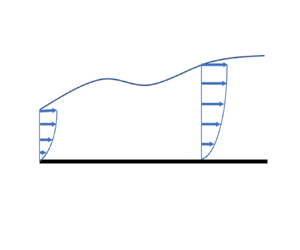
The mean flow in a turbulent boundary layer (TBL) deviates from the canonical law of the wall (LoW) when influenced by a pressure gradient. Consequently, LoW-based near-wall treatments are inadequate for such flows. Chen et al. (J. Fluid Mech., vol. 970, 2023, A3) derived a Navier–Stokes-based velocity transformation that accurately describes the mean flow in TBLs with arbitrary pressure gradients. However, this transformation requires information on total shear stress, which is not always readily available, limiting its predictive power. In this work, we invert the transformation and develop a predictive near-wall model. Our model includes an additional transport equation that tracks the Lagrangian integration of the total shear stress. Particularly noteworthy is that the model introduces no new parameters and requires no calibration. We validate the developed model against experimental and computational data in the literature, and the results are favourable. Furthermore, we compare our model with equilibrium models. These equilibrium models inevitably fail when there are strong pressure gradients, but they prove to be sufficient for boundary layers subjected to weak, moderate and even moderately high pressure gradients. These results compel us to conclude that history effects in mean flow, which negatively impact the validity of equilibrium models, can largely be accounted for by the material time derivative term and the pressure gradient term, both of which require no additional modelling.
The proliferation of social networks has caused an increase in the amount of textual content generated by users. The voluminous nature of such content poses a challenge to users, necessitating the development of technological solutions for automatic summarisation. This paper presents a two-stage framework for generating abstractive summaries from a collection of Twitter texts. In the first stage of the framework, event detection is carried out through clustering, followed by event summarisation in the second stage. Our approach involves generating contextualised vector representations of tweets and applying various clustering techniques to the vectors. The quality of the resulting clusters is evaluated, and the best clusters are selected for the summarisation task based on this evaluation. In contrast to previous studies, we experimented with various clustering techniques as a preprocessing step to obtain better event representations. For the summarisation task, we utilised pre-trained models of three state-of-the-art deep neural network architectures and evaluated their performance on abstractive summarisation of the event clusters. Summaries are generated from clusters that contain (a) unranked tweets, (b) all ranked tweets, and (c) the top 10 ranked tweets. Of these three sets of clusters, we obtained the best ROUGE scores from the top 10 ranked tweets. From the summaries generated from the clusters containing the top ten tweets, we obtained ROUGE-1 F score of 48%, ROUGE-2 F score of 37%, ROUGE-L F score of 44%, and ROUGE-SU F score of 33% which suggests that if relevant tweets are at the top of a cluster, and then better summaries are generated.
Improving community attitudes and behaviours is core to improving inclusion for people with disability. To identify ways to achieve such change, we analysed data from qualitative interviews with sixty-one expert stakeholders in Australia, informed by our preceding literature review on effective interventions. We identified five themes describing factors with the potential to change attitudes and behaviours to improve inclusion and reduce discrimination: ensuring people with disability have active presence across all life domains; leadership by people with disability, together with organisational and governmental leadership that values the diverse contribution of people with disability; a holistic approach to policy and interventions that targets multiple levels of change; long-term and adequately resourced initiatives to achieve structural and sustained change; and commitment to measuring and monitoring change interventions, to inform decisions and maintain accountability.
This paper explores how the years after World War II in Western Europe were an extreme case of working-class power. An initial theoretical discussion claims that while class can best be understood as a social category, at the same time politics in the broadest sense—and hence class-based movements—can shape social structure. This was the case in the in the post-World War II period when the working class dominated West European societies: especially perhaps in Britain, the “weight” of the working class shaped the nation. Trade union organization and state power ensured collective rights and were the basis for autonomous consumption; class identity was a source of pride. The end of this period saw trade union density continuing to increase. In the USA as well as in Western Europe, the power of management in the workplace was challenged. Especially in Western Europe, there was widespread radicalization of working-class youth. This was the last offensive of the working-class movement. However, power in the workplace remained essentially a veto-power. In the USA, oppositional politics became ethnic politics and even before de-industrialisation the white working class began to abandon its traditional politics. Nonetheless, in Western Europe the long shadow of the working-class movement ensured the partial survival of social rights long after the traditional social basis of the movement had withered away.
We examined brain and cognitive reserve related to bilingualism in older adults with, or at-risk for, Alzheimer's disease (AD) from the Canadian Consortium on Neurodegeneration in Aging and the Quebec Consortium for the Early Identification of Alzheimer's Disease. We used surface-based morphometry methods to measure cortical thickness and volume of language-related and AD-related brain regions. We did not observe evidence of brain reserve in language-related regions. However, reduced hippocampal volume was observed for monolingual, but not bilingual, older adults with AD. Thus, bilingualism is hypothesized to contribute to reserve in the form of brain maintenance in the context of AD.
The mobility of externally driven phoretic propulsion of particles is evaluated by simultaneously solving the solute conservation equation, interaction potential equation and the modified Stokes equation. While accurate, this approach is cumbersome, especially when the interaction potential decays slowly compared with the particle size. In contrast to external phoresis, the motion of self-phoretic particles is typically estimated by relating the translation and rotation velocities with the local slip velocity. While this approach is convenient and thus widely used, it is only valid when the interaction decay length is significantly smaller than the particle size. Here, by taking inspiration from Brady (J. Fluid Mech., vol. 922, 2021, A10), which combines the benefits of two approaches, we reproduce their unified mobility expressions with arbitrary interaction potentials and show that these expressions can conveniently recover the well-known mobility relationships of external electrophoresis and diffusiophoresis for arbitrary double-layer thickness. Additionally, we show that for a spherical microswimmer, the derived expressions relax to the slip velocity calculations in the limit of the thin interaction length scales. We also employ the derived mobility expressions to calculate the velocities of an autophoretic Janus particle. We find that there is significant dampening in the translation velocity even when the interaction length is an order of magnitude larger than the particle size. Finally, we study the motion of a catalytically self-propelled particle, while it also propels due to external concentration gradients, and demonstrate how the two propulsion modes compete with each other.
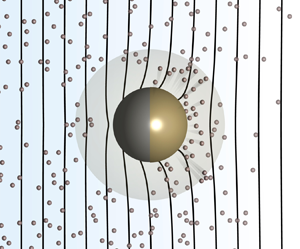
Adding polymers to turbulent Newtonian fluid flows can have dramatic effects. A well-known example is a significant drag reduction by flexible polymers in turbulent wall-bounded flows. In numerical studies of polymer drag reduction, polymers are often modelled as dumbbells of two beads connected by a finitely extensible nonlinear elastic (FENE) spring. There are natural queries whether this highly simplified coarse-grained model is adequate for describing a polymer macromolecule in turbulent flows. By carrying out Eulerian–Lagrangian simulations of polymers, described by different models, in a turbulent pipe flow, Serafini et al. (J. Fluid Mech., vol. 987, 2024, R1) have demonstrated that the FENE dumbbell model can accurately capture polymer extension statistics as compared with the realistic Kuhn chain model. Their work further reveals the surprising result that increasing the number of beads in a FENE chain worsens its accuracy in characterizing polymer spatial conformations at large Weissenberg numbers.
Hate speech against individuals and groups with certain demographics is a major issue in social media. Supervised models for hate speech detection mostly utilize labeled data collections to understand textual semantics. However, hate speech detection is a complex task that involves several aspects, including topic and writing style. The complexity of hate speech can be represented by an ensemble of models learned from different aspects of data. Moreover, ensemble members or base models can be modified to give attention to particular aspects of hate speech. In this study, we extract different aspects of hate speech to construct ensembles, thereby improving the performance of hate speech detection by ensemble learning. We conduct detailed experiments on five datasets in multiple languages to generalize our observations. The experimental results, supported by statistical significance tests, show that the performance of hate speech detection can be improved by capturing multiple aspects of hate speech. Our ensemble construction approach outperforms the baselines in terms of the F1 score of the Hate class in 80% of the cases, and the Offensive class in 75% of the cases. We also compare our approach with state-of-the-art ensemble methods from shared tasks and find that our highest-performing method can improve the performance of the Hate class in two out of three datasets. We further discuss our approach and experimental results in terms of ensemble parameters and writing style among ensemble members.
Bilinguals frequently switch between languages. The present study examined cued language switching (CLS) longitudinally in bilingual Turkish–Dutch children with (n = 11) and without (n = 30) developmental language disorder (DLD) in a three-wave design with one-year intervals. We studied effects of dominance, indexed by language proficiency and exposure, on overall switching performance and the costs associated with switching between languages. Results show limited evidence for overall costs associated with language switching (i.e., only mixing costs in reaction times [RTs]). Further, accuracy on CLS increased with increasing dominance in the trial language. Moreover, better performance, and larger switching costs, were found in the majority (Dutch) compared to the minority (Turkish) language. These results are discussed in light of the sociolinguistic context. As hypothesized, more errors, longer RTs and slightly larger mixing costs were observed in children with DLD, suggesting overall word retrieval difficulties and difficulties with cognitive control.
Since Russia's full-scale aggression against Ukraine, there have been thousands of instances of civilian casualties, damage to the natural environment and cultural property, destruction of buildings and infrastructure, blockading of ports, siege, capturing installations containing dangerous forces, and other consequences that accompany hostilities. In addition to the fatalities related to humans (civilians and combatants alike) and their property or environment, the war in Ukraine has also accounted for non-human tolls – namely, the destruction of animals or damage to their habitats.
The primary objective of this article is to study three patterns of animal suffering documented during Russia's invasion of Ukraine: (i) targeting zoos and killing zoo animals; (ii) extermination of the Black Sea dolphin population; and (iii) eating pigeons or other pets in besieged localities, and to analyse these patterns in the light of applicable rules of international humanitarian law (IHL).
The idea of this research is to underline that war can have a significant effect on various categories of animals, and Russia's invasion of Ukraine is just another example of this. The article also discusses how, and the extent to which international law can provide protection for animals in armed conflict, and whether there are any gaps in the applicable IHL rules related to the protection of animals.
Recent research shows that, even under direct insertion, loan verbs are subject to constraints: for instance, they enter non-finite categories more readily than finite categories. To deepen our understanding of such loan word accommodation biases we investigate two contact situations to test whether biases hold in contact between closely related languages. A corpus study on Norse and French loan verbs entering Middle English compares the proportions of their finite and non-finite usage to gauge the impact of etymology and temporal distance to direct contact on loan integration. We identify significant bias towards non-finite use for both etymologies, but it is stronger for French than for Norse loan verbs. This suggests that biases are stronger in some contexts than in others: they are more prominent at a smaller temporal distance to direct contact and in contact between languages that are less closely related.
Medical practitioners, inevitably scattered across the country, need frequent periodicals to communicate the latest medical information. Journals are an essential component of the infrastructure of modern medicine, yet they were slow to achieve firm roots in Britain during the eighteenth century, with few sustained quarterly periodicals and the only attempt at a monthly lasting a year. Then in 1799, Richard Phillips, owner of the Monthly Magazine, published the Medical and Physical Journal, the first sustained monthly medical journal, which lasted for thirty-four years. Ever since, Britain has never been without a monthly or weekly general medical journal. Responding to the need for a strong commercial focus, the Journal used a magazine format which blended reviews and abstracts of already published material with original contributions and medical news, and it quickly achieved a national circulation by close engagement with all types of practitioners across the country.
Contrary to the historiography, the Journal was distinctly different from the contemporaneous monthly science journals. The key to success was two-way communication with all practitioners, especially the numerous surgeons and surgeon-apothecaries who were increasingly better trained and confident of their status. Much of the content of the Journal was written by these readers, and with rapid, reliable distribution and quick publication of correspondence, controversial topics could be bounced back and forth between all practitioners, including the distinguished. Initially, the editors tried to maximise circulation by avoiding any controversy, but this started to change in the first few years of the next century.
Arterial oxygen saturation in single ventricle patients is dependent on systemic cardiac output. Here, we describe a case of a newborn with single ventricle physiology and an unusual mechanism to explain poor cardiac output and cyanosis. This case highlights the importance of identifying and considering ventricular morphology and ventricular-ventricular interactions to understand clinical challenges.
This article critically examines the significance of the relationship between past and present for understanding liberal democratic values in the European context. The article starts by reflecting on the terms used to evaluate the apparent decline in the rule of law in Europe, including ‘backsliding’. It argues that these terms are indicative of a conceptual framework of analysis that includes a temporal dimension but is only partly historical, demonstrating a presentist focus and a perception of the past as a separate period. The article links this perception with the conceptual construction of the rule of law itself, as well as national and transnational narratives about it, which evoke Europe’s non-democratic past as a definitional point of reference that is distinct from the present. Using examples of the legacies of Europe’s dark legal past, the article highlights the artificial nature of this distinction for a range of systems with differing historical experiences. The article argues that interpreting the past in terms of segmented and sequential temporal periods is conceptually contestable and it draws on the philosophy of history to show how the past can instead be understood to have ‘sedimentary’ layers and to endure over time. Ultimately, the article argues that the relationship between law’s past and law’s present needs to be reconceptualised in terms of metaphorical ‘fault lines’ in the rule of law, to acknowledge the potentially disruptive effects of history and to facilitate a critical reimagining of the rule of law’s theoretical and factual foundations.
To describe the prevalence of food poverty according to dimensions of socio-economic inequality and the food groups consumed by Brazilian children.
Design:
Dietary data from a structured qualitative questionnaire collected by the Brazilian National Survey on Child Nutrition (ENANI-2019) were used. The new UNICEF indicator classified children who consumed 3–4 and <3 out of the eight food groups as living in moderate and severe food poverty, respectively. The prevalence of consumption of each food group and ultra-processed foods (UPF) was estimated by level of food poverty according to age categories (6–23; 24–59 months). The most frequent combinations of food groups consumed by children living in severe food poverty were calculated. Prevalence of levels of food poverty were explored according to socio-economic variables.
Setting:
123 municipalities of the five Brazilian macro-regions.
Participants:
12 582 children aged 6–59 months.
Results:
The prevalence of moderate and severe food poverty was 32·5 % (95 % CI 30·1, 34·9) and 6·0 % (95 % CI 5·0, 6·9), respectively. Children whose mother/caregiver had lower education (<8 years) and income levels (per capita minimum wage <¼) had the highest severe food poverty prevalence of 8·3 % (95 % CI 6·2, 10·4) and 7·5 % (95 % CI 5·6, 9·4), respectively. The most consumed food groups among children living in food poverty in all age categories were ‘dairy products’, ‘grains, roots, tubers, and plantains’ and ‘ultra-processed foods’.
Conclusion:
Food poverty prevalence was high among Brazilian children. A significant occurrence of milk consumption associated with grains and a considerable prevalence of UPF consumption were found among those living in severe food poverty.
The primary objectives of this study were to assess the usefulness of C-reactive protein (CRP) and procalcitonin (PCT) in the diagnosis of bacterial co-infections in coronavirus disease 2019 (COVID-19) and if their incorporation in antimicrobial stewardship (AMS) programs is safe and useful, stratified by severity of disease as level of care, intensive care unit (ICU) or non-ICU. Our secondary objectives were to identify cut-off values for antibiotic decision-making and identify reported results from low- and middle-income countries (LMICs).
Design:
A scoping review of published literature, adhering to the PRISMA statement for Systematic Reviews and Meta-analyses Extension for Scoping Reviews guidelines. The last search was performed in January 2024.
Results:
Fifty-nine studies were included in this scoping review: 20 studies reporting predictive values and/or sensitivity/specificity results for PCT, 8 reporting clear objectives on AMS, and 3 studies from LMICs.
Conclusion:
In the context of non-ICU hospitalized COVID-19 patients in high-income countries, a PCT value below 0.25 mg/L can be a useful tool to rule out bacterial co-infection. The wide range of reported negative predictive values suggests that PCT should be interpreted in the context of other clinical findings. Our results do not support the use of CRP in the same manner as PCT. There is a clear need for more studies in LMICs.