Refine listing
Actions for selected content:
142927 results in Open Access
Intensifying Gender Inequality: Why Belgian Female Students (Sometimes) Gain Less Internal Political Efficacy from Citizenship Education Than Male Students
-
- Journal:
- Politics & Gender / Volume 20 / Issue 3 / September 2024
- Published online by Cambridge University Press:
- 30 July 2024, pp. 645-668
-
- Article
-
- You have access
- Open access
- HTML
- Export citation
Influence of in situ temperature and maternal provisioning on the medusa-to-polyp transition in a year-round population of the scyphozoan Aurelia aurita
-
- Journal:
- Journal of the Marine Biological Association of the United Kingdom / Volume 104 / 2024
- Published online by Cambridge University Press:
- 30 July 2024, e58
-
- Article
-
- You have access
- Open access
- HTML
- Export citation
The level and determinants of knowledge and attitude towards nutrition among pregnant women in Minjar Shenkora district, Ethiopia
-
- Journal:
- Journal of Nutritional Science / Volume 13 / 2024
- Published online by Cambridge University Press:
- 30 July 2024, e23
-
- Article
-
- You have access
- Open access
- HTML
- Export citation
Effect of behavioural activation for individuals with post-stroke depression: systematic review and meta-analysis
-
- Journal:
- BJPsych Open / Volume 10 / Issue 5 / September 2024
- Published online by Cambridge University Press:
- 30 July 2024, e134
-
- Article
-
- You have access
- Open access
- HTML
- Export citation
Coping strategies in young people during the COVID-19 pandemic: rapid review
-
- Journal:
- BJPsych Bulletin / Volume 49 / Issue 4 / August 2025
- Published online by Cambridge University Press:
- 30 July 2024, pp. 249-258
- Print publication:
- August 2025
-
- Article
-
- You have access
- Open access
- HTML
- Export citation
Getting the Race Wrong: A Case Study of Sampling Bias and Black Voters in Online, Opt-In Polls
-
- Journal:
- Journal of Race, Ethnicity and Politics / Volume 9 / Issue 3 / November 2024
- Published online by Cambridge University Press:
- 30 July 2024, pp. 429-441
-
- Article
-
- You have access
- Open access
- HTML
- Export citation
A transoceanic journey: Melanochlamys diomedea's first report in the North Atlantic
-
- Journal:
- Journal of the Marine Biological Association of the United Kingdom / Volume 104 / 2024
- Published online by Cambridge University Press:
- 30 July 2024, e59
-
- Article
-
- You have access
- Open access
- HTML
- Export citation
Molecular genetic biodiversity assessment of the Wallis Island sponge fauna in the Tropical Pacific
-
- Journal:
- Journal of the Marine Biological Association of the United Kingdom / Volume 104 / 2024
- Published online by Cambridge University Press:
- 30 July 2024, e56
-
- Article
-
- You have access
- Open access
- HTML
- Export citation
New records of Diplomoceras (Ammonoidea, Diplomoceratidae) from Koryak Upland, North-West Pacific Province: taxonomic, biostratigraphical and palaeogeographical implications
-
- Journal:
- Netherlands Journal of Geosciences / Volume 103 / 2024
- Published online by Cambridge University Press:
- 29 July 2024, e18
-
- Article
-
- You have access
- Open access
- HTML
- Export citation
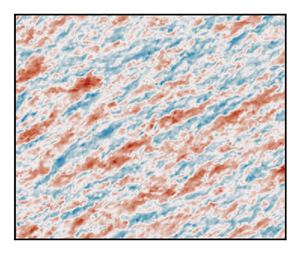
Coherent structures in stably stratified wall-bounded turbulent flows
-
- Journal:
- Journal of Fluid Mechanics / Volume 989 / 25 June 2024
- Published online by Cambridge University Press:
- 29 July 2024, A19
-
- Article
-
- You have access
- Open access
- HTML
- Export citation
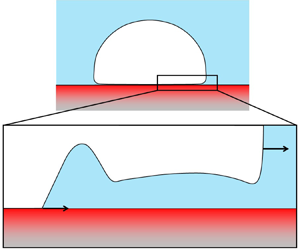
Microlayer in nucleate boiling seen as Landau–Levich film with dewetting and evaporation
-
- Journal:
- Journal of Fluid Mechanics / Volume 989 / 25 June 2024
- Published online by Cambridge University Press:
- 29 July 2024, A4
-
- Article
-
- You have access
- Open access
- HTML
- Export citation
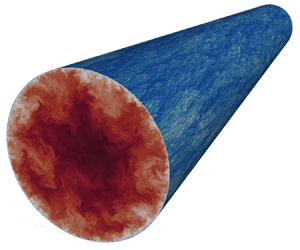
On the streamwise velocity variance in the near-wall region of turbulent flows
-
- Journal:
- Journal of Fluid Mechanics / Volume 989 / 25 June 2024
- Published online by Cambridge University Press:
- 29 July 2024, A5
-
- Article
-
- You have access
- Open access
- HTML
- Export citation
-
We study the behaviour of the streamwise velocity variance in turbulent wall-bounded flows using a direct numerical simulation (DNS) database of pipe flow up to friction Reynolds number ${{Re}}_{\tau } \approx 12000$. The analysis of the spanwise spectra in the viscous near-wall region strongly hints to the presence of an overlap layer between the inner- and the outer-scaled spectral ranges, featuring a $k_{\theta }^{-1+\alpha }$ decay (with $k_{\theta }$ the wavenumber in the azimuthal direction, and $\alpha \approx 0.18$), hence shallower than suggested by the classical formulation of the attached-eddy model. The key implication is that the contribution to the streamwise velocity variance $(\langle{u}^2\rangle)$ from the largest scales of motion (superstructures) slowly declines as ${{Re}}_{\tau }^{-\alpha }$, and the integrated inner-scaled variance follows a defect power law of the type $\langle u^2 \rangle ^+ = A - B \, {{Re}}_{\tau }^{-\alpha }$, with constants $A$ and $B$ depending on $y^+$. The DNS data very well support this behaviour, which implies that strict wall scaling is restored in the infinite-Reynolds-number limit. The extrapolated limit distribution of the streamwise velocity variance features a buffer-layer peak value of $\langle u^2 \rangle ^+ \approx 12.1$, and an additional outer peak with larger magnitude. The analysis of the velocity spectra also suggests a similar behaviour of the dissipation rate of the streamwise velocity variance at the wall, which is expected to attain a limiting value of approximately $0.28$, hence slightly exceeding the value $0.25$ which was assumed in previous analyses (Chen & Sreenivasan, J. Fluid Mech., vol. 908, 2021, R3). We have found evidence suggesting that the reduced near-wall influence of wall-attached eddies is likely linked to the formation of underlying turbulent Stokes layers.


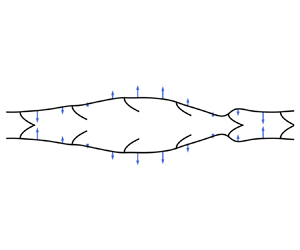
Operating principles of peristaltic pumping through a dense array of valves
-
- Journal:
- Journal of Fluid Mechanics / Volume 989 / 25 June 2024
- Published online by Cambridge University Press:
- 29 July 2024, A18
-
- Article
-
- You have access
- Open access
- HTML
- Export citation
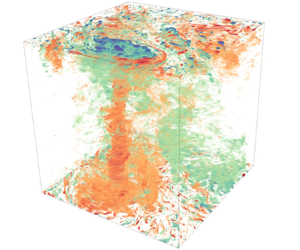
Direct numerical simulations of rapidly rotating Rayleigh–Bénard convection with Rayleigh number up to $5\times 10^{13}$
-
- Journal:
- Journal of Fluid Mechanics / Volume 989 / 25 June 2024
- Published online by Cambridge University Press:
- 29 July 2024, A3
-
- Article
-
- You have access
- Open access
- HTML
- Export citation
-
Three-dimensional direct numerical simulations of rotating Rayleigh–Bénard convection in the planar geometry with no-slip top and bottom and periodic lateral boundary conditions are performed for a broad parameter range with the Rayleigh number spanning in $5\times 10^{6}\leq Ra \leq 5\times 10^{13}$, Ekman number within $5\times 10^{-9}\leq Ek \leq 5\times 10^{-5}$ and Prandtl number $Pr=1$. The thermal and Ekman boundary layer (BL) statistics, temperature drop within the thermal BL, interior temperature gradient and scaling behaviours of the heat and momentum transports (reflected in the Nusselt $Nu$ and Reynolds numbers $Re$) as well as the convective length scale are investigated across various flow regimes. The global and local momentum transports are examined via the $Re$ scaling derived from the classical theoretical balances of viscous–Archimedean–Coriolis (VAC) and Coriolis–inertial–Archimedean (CIA) forces. The VAC-based $Re$ scaling is shown to agree well with the data in the cellular and columnar regimes, where the characteristic convective length scales as the onset length scale ${\sim } Ek^{1/3}$, while the CIA-based $Re$ scaling and the inertia length scale $\sim (ReEk)^{1/2}$ work well in the geostrophic turbulence regime for $Ek\leq 1.5\times 10^{-8}$. The examinations of $Nu$, global and local $Re$, and convective length scale as well as the temperature drop within the thermal BL and its thickness scaling behaviours, indicate that for extreme parameters of $Ek\leq 1.5\times 10^{-8}$ and $80\lesssim RaEk^{4/3}\lesssim 200$, we have reached the diffusion-free geostrophic turbulence regime.


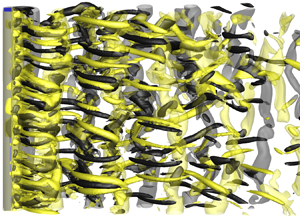
Two- and three-dimensional wake transitions of a rectangular cylinder and resultant hydrodynamic effects
-
- Journal:
- Journal of Fluid Mechanics / Volume 989 / 25 June 2024
- Published online by Cambridge University Press:
- 29 July 2024, A6
-
- Article
-
- You have access
- Open access
- HTML
- Export citation
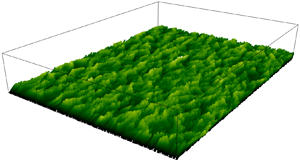
Dynamics and fluid–structure interaction in turbulent flows within and above flexible canopies
- Part of
-
- Journal:
- Journal of Fluid Mechanics / Volume 989 / 25 June 2024
- Published online by Cambridge University Press:
- 29 July 2024, A11
-
- Article
-
- You have access
- Open access
- HTML
- Export citation
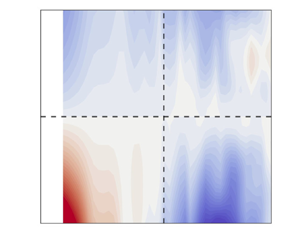
Variability of convection velocities and structure inclination angles in wall-bounded turbulence
-
- Journal:
- Journal of Fluid Mechanics / Volume 989 / 25 June 2024
- Published online by Cambridge University Press:
- 29 July 2024, A16
-
- Article
-
- You have access
- Open access
- HTML
- Export citation
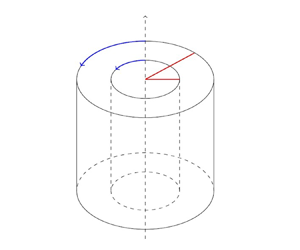
Liouville-type theorems for the Taylor–Couette–Poiseuille flow of the stationary Navier–Stokes equations
-
- Journal:
- Journal of Fluid Mechanics / Volume 989 / 25 June 2024
- Published online by Cambridge University Press:
- 29 July 2024, A7
-
- Article
-
- You have access
- Open access
- HTML
- Export citation
-
We study the stationary Navier–Stokes equations in the region between two rotating concentric cylinders. We first prove that, for a small Reynolds number, if the fluid flow is axisymmetric and if its velocity is sufficiently small in the $L^\infty$-norm, then it is necessarily the Taylor–Couette–Poiseuille flow. If, in addition, the associated pressure is bounded or periodic in the $z$ axis, then it coincides with the well-known canonical Taylor–Couette flow. We discuss the relation between uniqueness and stability of such a flow in terms of the Taylor number in the case of narrow gap of two cylinders. The investigation in comparison with two Reynolds numbers based on inner and outer cylinder rotational velocities is also conducted. Next, we give a certain bound of the Reynolds number and the $L^\infty$-norm of the velocity such that the fluid is, indeed, necessarily axisymmetric. As a result, it is clarified that smallness of Reynolds number of the fluid in the two rotating concentric cylinders governs both axisymmetry and the Taylor–Couette–Poiseuille flow with the exact form of the pressure.


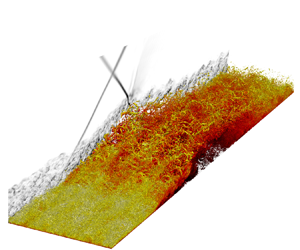
Reynolds number effects in shock-wave/turbulent boundary-layer interactions
-
- Journal:
- Journal of Fluid Mechanics / Volume 989 / 25 June 2024
- Published online by Cambridge University Press:
- 29 July 2024, A20
-
- Article
-
- You have access
- Open access
- HTML
- Export citation
-
We investigate Reynolds number effects in strong shock-wave/turbulent boundary-layer interactions (STBLI) by leveraging a new database of wall-resolved and long-integrated large-eddy simulations. The database encompasses STBLI with massive boundary-layer separation at Mach $2.0$, impinging-shock angle $40^{\circ }$ and friction Reynolds numbers ${\textit {Re}}_\tau$ $355$, $1226$ and $5118$. Our analysis shows that the shape of the reverse-flow bubble is notably different at low and high Reynolds number, while the mean-flow separation length, separation-shock angle and incipient plateau pressure are rather insensitive to Reynolds number variations. Velocity statistics reveal a shift in the peak location of the streamwise Reynolds stress from the separation-shock foot to the core of the detached shear layer at high Reynolds number, which we attribute to increased pressure transport in the separation-shock excursion domain. Additionally, in the high Reynolds case, the separation shock originates deep within the turbulent boundary, resulting in intensified wall-pressure fluctuations and spanwise variations associated with the passage of coherent velocity structures. Temporal spectra of various signals show energetic low-frequency content in all cases, along with a distinct peak in the bubble-volume spectra at a separation-length-based Strouhal number $St_{L_{sep}}\approx 0.1$. The separation shock is also found to lag behind bubble-volume variations, consistent with the acoustic propagation time from reattachment to separation and a downstream mechanism driving the shock motion. Finally, dynamic mode decomposition of three-dimensional fields suggests a Reynolds-independent statistical link among separation-shock excursions, velocity streaks and large-scale vortices at low frequencies.


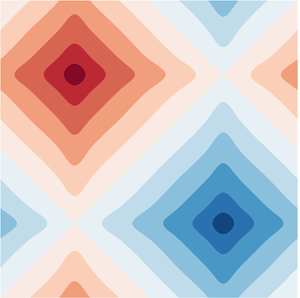
A crystallographic approach to symmetry-breaking in fluid layers
-
- Journal:
- Journal of Fluid Mechanics / Volume 989 / 25 June 2024
- Published online by Cambridge University Press:
- 29 July 2024, A2
-
- Article
-
- You have access
- Open access
- HTML
- Export citation
