Refine listing
Actions for selected content:
143443 results in Open Access
Multipronged strategy for protection and motivation of healthcare workers during the COVID-19 pandemic: a real-life study
-
- Journal:
- Antimicrobial Stewardship & Healthcare Epidemiology / Volume 4 / Issue 1 / 2024
- Published online by Cambridge University Press:
- 25 July 2024, e101
-
- Article
-
- You have access
- Open access
- HTML
- Export citation
Mitochondrial protective potential of fucoxanthin in brain disorders
-
- Journal:
- Journal of Nutritional Science / Volume 13 / 2024
- Published online by Cambridge University Press:
- 25 July 2024, e21
-
- Article
-
- You have access
- Open access
- HTML
- Export citation
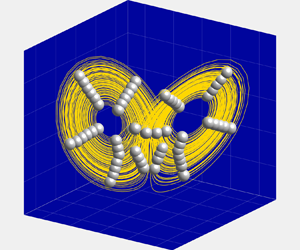
Dynamics-augmented cluster-based network model
-
- Journal:
- Journal of Fluid Mechanics / Volume 988 / 10 June 2024
- Published online by Cambridge University Press:
- 24 July 2024, A48
-
- Article
-
- You have access
- Open access
- HTML
- Export citation
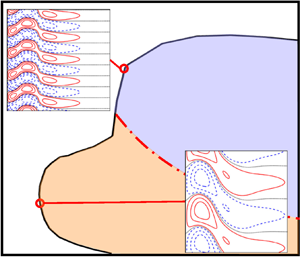
Non-Oberbeck–Boussinesq effects on the linear stability of a vertical natural convection boundary layer
-
- Journal:
- Journal of Fluid Mechanics / Volume 988 / 10 June 2024
- Published online by Cambridge University Press:
- 24 July 2024, A44
-
- Article
-
- You have access
- Open access
- HTML
- Export citation
-
The non-Oberbeck–Boussinesq effects on the stability of a vertical natural convection boundary layer are investigated using the linearised disturbance equations for air flows up to a temperature difference of $\Delta T=100\,{\rm K}$. Based on the linear stability results, the neutral curve is shown to be sensitive to the choice of reference temperature. When evaluated using the film temperature $T_f$, a lower film Grashof number is required to trigger the linear instability for larger $\Delta T$. The relative contributions of shear and buoyant production to the perturbation kinetic energy budget reveals that the marginally unstable modes are amplified based on different mechanisms: for lower wavenumbers at relatively small Grashof number, the instability is driven by buoyancy; whereas for higher wavenumbers and larger Grashof number, the flow becomes unstable due to a shear instability. The use of reference temperature is found to scale the shear- and buoyant-driven instabilities differently so that no single reference temperature definition would collapse the neutral curves. The linear stability result further demonstrates that at a given Grashof number a higher temperature difference would give a larger amplification rate of the perturbation, which then leads to an earlier onset of the nonlinearities when evaluated at $T_f$. Finally, by comparing the amplification rates obtained from direct numerical simulation and the linear stability results, the extent of the linear regime is determined for $\Delta T = 100\,{\rm K}$.


Change of measure in a Heston–Hawkes stochastic volatility model
- Part of
-
- Journal:
- Advances in Applied Probability / Volume 56 / Issue 4 / December 2024
- Published online by Cambridge University Press:
- 24 July 2024, pp. 1370-1399
- Print publication:
- December 2024
-
- Article
-
- You have access
- Open access
- HTML
- Export citation
Inherent linguistic preference outcompetes incidental alignment in cooperative partner choice
-
- Journal:
- Language and Cognition / Volume 16 / Issue 4 / December 2024
- Published online by Cambridge University Press:
- 24 July 2024, pp. 1834-1851
-
- Article
-
- You have access
- Open access
- HTML
- Export citation
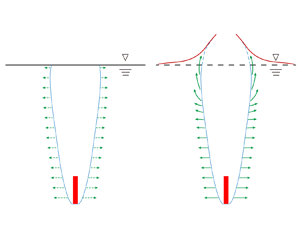
Investigation of free surface effect on the cavity expansion and contraction in high-speed water entry
-
- Journal:
- Journal of Fluid Mechanics / Volume 988 / 10 June 2024
- Published online by Cambridge University Press:
- 24 July 2024, A53
-
- Article
-
- You have access
- Open access
- HTML
- Export citation
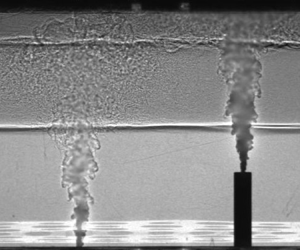
Flow regimes in emptying–filling boxes with two buoyancy sources of differing strengths and elevations
-
- Journal:
- Journal of Fluid Mechanics / Volume 988 / 10 June 2024
- Published online by Cambridge University Press:
- 24 July 2024, A12
-
- Article
-
- You have access
- Open access
- HTML
- Export citation
-
Emptying–filling boxes have been studied in a wide range of configurations for decades, but the flow created in the box by two plumes rising from sources of arbitrary strength and elevation was previously unsolved. Guided by experiments and simplified analytical modelling, we reveal a rich array of two- and three-layer stratifications across seven possible flow regimes. The governing equations for these regimes show how the prevailing regime and stratification properties vary with three key parameters: the relative strength of the plumes, the height difference between their sources and a parameter characterising the resistance of the box to emptying. We observe and explain new behaviours not described in previous studies that are crucial to understanding emptying–filling boxes with multiple plumes. In particular, we demonstrate that the oft-assumed premise that $n$ plumes leads to a stratification with $n+1$ layers is not necessarily true, even in the absence of mixing. Two emptying–filling box models are developed: an analytical model addressing all combinations of the governing parameters and an extended model for three-layer stratifications that incorporates two mixing processes observed in the experiments. The predictions of these two models are in generally excellent agreement with measurements from the experimental campaign covering 69 combinations of the governing parameters. This study improves our understanding of emptying–filling boxes and could facilitate improvements to natural ventilation building design, as demonstrated by an example scenario in which occupants feel cooler upon the addition of a second source of heat.


The need for integration of emotional intelligence and spirituality training in medical and nursing education curriculum
-
- Journal:
- Palliative & Supportive Care / Volume 22 / Issue 6 / December 2024
- Published online by Cambridge University Press:
- 19 July 2024, pp. 2253-2254
-
- Article
-
- You have access
- Open access
- HTML
- Export citation
Carotenoid pattern intake and relation to metabolic status, risk and syndrome, and its components – divergent findings from the ORISCAV-LUX-2 survey – ERRATUM
-
- Journal:
- British Journal of Nutrition / Volume 132 / Issue 1 / 14 July 2024
- Published online by Cambridge University Press:
- 09 August 2024, p. 67
- Print publication:
- 14 July 2024
-
- Article
-
- You have access
- Open access
- HTML
- Export citation
Fuel Subsidies in Ecuador: A Computable General Equilibrium Model for Targeting Evaluation
-
- Journal:
- Latin American Research Review / Volume 60 / Issue 2 / June 2025
- Published online by Cambridge University Press:
- 11 July 2024, pp. 337-365
-
- Article
-
- You have access
- Open access
- HTML
- Export citation
The Efficacy of Roman Silver in Iron Age Scotland: An Object Trajectory for Spiral Rings
-
- Journal:
- Cambridge Archaeological Journal / Volume 35 / Issue 1 / February 2025
- Published online by Cambridge University Press:
- 11 July 2024, pp. 89-108
-
- Article
-
- You have access
- Open access
- HTML
- Export citation
The IPCC and the Politics of Writing Climate Change
-
- Published online:
- 04 July 2024
- Print publication:
- 31 October 2024
-
- Book
-
- You have access
- Open access
- Export citation
Academia, Activism, and Popular Consciousness: A Response to Freedom Inc.
-
- Journal:
- Cambridge Journal of Postcolonial Literary Inquiry / Volume 11 / Issue 2 / April 2024
- Published online by Cambridge University Press:
- 03 July 2024, pp. 241-250
-
- Article
-
- You have access
- Open access
- HTML
- Export citation
Identifying determinants of waste management access in Nouakchott, Mauritania: a logistic regression model
-
- Journal:
- Data & Policy / Volume 6 / 2024
- Published online by Cambridge University Press:
- 02 July 2024, e29
-
- Article
-
- You have access
- Open access
- HTML
- Export citation
New insights into the glacial and relative sea-level history of the western Fraser Lowland based on sediment cores from geotechnical drilling for the Evergreen Tunnel, British Columbia, Canada
-
- Journal:
- Quaternary Research / Volume 122 / November 2024
- Published online by Cambridge University Press:
- 02 July 2024, pp. 40-61
-
- Article
-
- You have access
- Open access
- HTML
- Export citation
Experiences of patient organizations’ involvement in medicine appraisal and reimbursement processes in Finland – a qualitative study
-
- Journal:
- International Journal of Technology Assessment in Health Care / Volume 40 / Issue 1 / 2024
- Published online by Cambridge University Press:
- 02 July 2024, e26
-
- Article
-
- You have access
- Open access
- HTML
- Export citation
Retranslation in Mughal South Asia: The Impressive Failure of a Persian Panchatantra
-
- Journal:
- Iranian Studies / Volume 57 / Issue 3 / July 2024
- Published online by Cambridge University Press:
- 18 November 2024, pp. 377-398
- Print publication:
- July 2024
-
- Article
-
- You have access
- Open access
- HTML
- Export citation
The Stomach Purifies All Foods: Jesus’ Anatomical Argument in Mark 7.18–19
-
- Journal:
- New Testament Studies / Volume 70 / Issue 3 / July 2024
- Published online by Cambridge University Press:
- 30 September 2024, pp. 371-391
- Print publication:
- July 2024
-
- Article
-
- You have access
- Open access
- HTML
- Export citation
HABITUS, RESISTANCE AND THE PRODUCTION OF MUSICAL MEANING
-
- Article
-
- You have access
- Open access
- HTML
- Export citation
