Refine search
Actions for selected content:
316 results
A star is born: Explosive Crump–Mode–Jagers branching processes
- Part of
-
- Journal:
- Journal of Applied Probability , First View
- Published online by Cambridge University Press:
- 13 April 2026, pp. 1-19
-
- Article
-
- You have access
- Open access
- HTML
- Export citation
Asymptotic normality for triangle counting in the sparse $\beta$-model
- Part of
-
- Journal:
- Journal of Applied Probability , First View
- Published online by Cambridge University Press:
- 07 April 2026, pp. 1-16
-
- Article
-
- You have access
- Open access
- HTML
- Export citation
-
We study the number of triangles $T_n$ in the sparse $\beta$-model on n vertices, a random graph model that captures degree heterogeneity in real-world networks. Using the norms of the heterogeneity parameter vector, we first determine the asymptotic mean and variance of $T_n$. Next, by applying the Malliavin–Stein method, we derive a non-asymptotic upper bound on the Kolmogorov distance between the normalized $T_n$ and the standard normal distribution. Under an additional assumption on degree heterogeneity, we further prove the asymptotic normality for $T_n$ as $n\to\infty$.


Perfect partitions of a random set of integers
- Part of
-
- Journal:
- Journal of Applied Probability , First View
- Published online by Cambridge University Press:
- 06 April 2026, pp. 1-30
-
- Article
-
- You have access
- Open access
- HTML
- Export citation
-
Let $X_1,\ldots, X_n$ be independent integers distributed uniformly on [M], $M\ge 2$. A partition S of [n] into $\nu$ non-empty subsets $S_1,\ldots, S_{\nu}$ is called perfect if all $\nu$ values $\sum_{j\in S_{\alpha}}X_j$ are equal. For a perfect partition to exist, $\sum_j X_j$ has to be divisible by $\nu$. In 2001, for $\nu=2$, Christian Borgs, Jennifer Chayes, and the author proved that, conditioned on $\sum_j X_j$ being even, with high probability a perfect partition exists if $\kappa\;:\!=\; \lim {{n}/{\log M}}>{{1}/{\log 2}}$, and that with high probability no perfect partition exists if $\kappa<{{1}/{\log 2}}$. Responding to a question by George Varghese, we prove that for $\nu\ge 3$ with high probability no perfect partition exists if $\kappa<{{2}/{\log \nu}}$, which is twice as large as the naive threshold $1/\log 3$ for $\nu=3$. We identify the range of $\kappa$ where the expected number of perfect partitions is exponentially high. We show that for $\kappa> {{2(\nu-1)}/{\log[(1-2\nu^{-2})^{-1}]}}$ the total number of perfect partitions is exponentially high with probability $\gtrsim (1+\nu^2)^{-1}$, i.e. below $1/\nu$, the limiting probability that $\sum_j X_j$ is divisible by $\nu$.


Defect and transference versions of the Alon–Frankl–Lovász theorem
- Part of
-
- Journal:
- Combinatorics, Probability and Computing , First View
- Published online by Cambridge University Press:
- 27 March 2026, pp. 1-12
-
- Article
-
- You have access
- Open access
- HTML
- Export citation
-
Confirming a conjecture of Erdős on the chromatic number of Kneser hypergraphs, Alon, Frankl and Lovász proved that in any $q$-colouring of the edges of the complete $r$-uniform hypergraph, there exists a monochromatic matching of size $\lfloor \frac {n+q-1}{r+q-1}\rfloor$. In this paper, we prove a transference version of this theorem. More precisely, for fixed $q$ and $r$, we show that with high probability, a monochromatic matching of approximately the same size exists in any $q$-colouring of a random hypergraph, already when the average degree is a sufficiently large constant. In fact, our main new result is a defect version of the Alon–Frankl–Lovász theorem for almost complete hypergraphs. From this, the transference version is obtained via a variant of the weak hypergraph regularity lemma. The proof of the defect version uses tools from extremal set theory developed in the study of the Erdős matching conjecture.


Analysis of clustering and degree index in random graphs and complex networks
- Part of
-
- Journal:
- Journal of Applied Probability , First View
- Published online by Cambridge University Press:
- 05 March 2026, pp. 1-31
-
- Article
-
- You have access
- Open access
- HTML
- Export citation
Monochromatic subgraphs in randomly colored dense multiplex networks
- Part of
-
- Journal:
- Advances in Applied Probability , First View
- Published online by Cambridge University Press:
- 05 March 2026, pp. 1-36
-
- Article
- Export citation
-
Given a sequence of graphs $G_n$ and a fixed graph H, denote by $T(H, G_n)$ the number of monochromatic copies of the graph H in a uniformly random c-coloring of the vertices of $G_n$. In this paper we study the joint distribution of a finite collection of monochromatic graph counts in networks with multiple layers (multiplex networks). Specifically, given a finite collection of graphs $H_1, H_2, \ldots, H_d$ we derive the joint distribution of $(T(H_1, G_n^{(1)}), T(H_2, G_n^{(2)}), \ldots, T(H_d, G_n^{(d)}))$, where $\mathbf{G}_n = (G_n^{(1)}, G_n^{(2)}, \ldots, G_n^{(d)})$ is a collection of dense graphs on the same vertex set converging in the multiplex cut-metric. The limiting distribution is the sum of two independent components: a multivariate Gaussian and a sum of independent bivariate stochastic integrals. This extends previous results on the marginal convergence of monochromatic subgraphs in a sequence of graphs to the joint convergence of a finite collection of monochromatic subgraphs in a sequence of multiplex networks. Several applications and examples are discussed.


The largest subcritical component in inhomogeneous random graphs of preferential attachment type
- Part of
-
- Journal:
- Combinatorics, Probability and Computing , First View
- Published online by Cambridge University Press:
- 04 March 2026, pp. 1-19
-
- Article
-
- You have access
- Open access
- HTML
- Export citation
Sharp thresholds for Ramsey properties
- Part of
-
- Journal:
- Forum of Mathematics, Sigma / Volume 14 / 2026
- Published online by Cambridge University Press:
- 27 February 2026, e32
-
- Article
-
- You have access
- Open access
- HTML
- Export citation
-
In this work, we develop a unified framework for establishing sharp threshold results for various Ramsey properties. To achieve this, we view such properties as noncolourability of auxiliary hypergraphs. Our main technical result gives sufficient conditions on a sequence of such hypergraphs that guarantee that this noncolourability property has a sharp threshold in subhypergraphs induced by random subsets of the vertices.
Furthermore, we verify these conditions in several cases of interest. In the classical setting of Ramsey theory for graphs, we show that the property of being Ramsey for a graph H in r colours has a sharp threshold in $G_{n,p}$, for all $r \geqslant 2$ and all H in a class of graphs that includes all cliques and cycles. In the arithmetic setting, we establish sharpness of thresholds for the properties corresponding to van der Waerden’s theorem and Schur’s theorem, also in any number of colours.


Fluid limit of a distributed ledger model with random delay
- Part of
-
- Journal:
- Advances in Applied Probability , First View
- Published online by Cambridge University Press:
- 13 February 2026, pp. 1-41
-
- Article
-
- You have access
- Open access
- HTML
- Export citation
Degree-penalized contact processes
- Part of
-
- Journal:
- Forum of Mathematics, Sigma / Volume 14 / 2026
- Published online by Cambridge University Press:
- 15 January 2026, e6
-
- Article
-
- You have access
- Open access
- HTML
- Export citation
-
In this paper we study degree-penalized contact processes on Galton-Watson (GW) trees and the configuration model. The model we consider is a modification of the usual contact process on a graph. In particular, each vertex can be either infected or healthy. When infected, each vertex heals at rate one. Also, when infected, a vertex u with degree $d_u$ infects its neighboring vertex v with degree $d_v$ with rate $\lambda / f(d_u, d_v)$ for some positive function f. In the case $f(d_u, d_v)=\max (d_u, d_v)^\mu $ for some $\mu \ge 0$, the infection is slowed down to and from high-degree vertices. This is in line with arguments used in social network science: people with many contacts do not have the time to infect their neighbors at the same rate as people with fewer contacts.
We show that new phase transitions occur in terms of the parameter $\mu $ (at $1/2$) and the degree distribution D of the GW tree.
 • When $\mu \ge 1$, the process goes extinct for all distributions D for all sufficiently small $\lambda>0$;
• When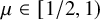 $\mu \in [1/2, 1)$, and the tail of D weakly follows a power law with tail-exponent less than $1-\mu $, the process survives globally but not locally for all $\lambda $ small enough;
• When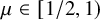 $\mu \in [1/2, 1)$, and $\mathbb {E}[D^{1-\mu }]<\infty $, the process goes extinct almost surely, for all $\lambda $ small enough;
• When $\mu <1/2$, and D is heavier than stretched exponential with stretch-exponent $1-2\mu $, the process survives (locally) with positive probability for all $\lambda>0$.
We also study the product case, where $f(d_u,d_v)=(d_u d_v)^\mu $. In that case, the situation for $\mu < 1/2$ is the same as the one described above, but $\mu \ge 1/2$ always leads to a subcritical contact process for small enough $\lambda>0$ on all graphs. Furthermore, for finite random graphs with prescribed degree sequences, we establish the corresponding phase transitions in terms of the length of survival.


Connectivity of a family of bilateral preference random graphs
- Part of
-
- Journal:
- Journal of Applied Probability , First View
- Published online by Cambridge University Press:
- 18 December 2025, pp. 1-28
-
- Article
-
- You have access
- Open access
- HTML
- Export citation
-
We study the bilateral preference graphs $\mathit{LK}(n, k)$ of La and Kabkab, obtained as follows. Put independent and uniform [0, 1] weights on the edges of the complete graph $K_n$. Then, each edge (i, j) is included in $\mathit{LK}(n,k)$ if it is bilaterally preferred, in the sense that it is among the k edges of lowest weight incident to vertex i, and among the k edges of lowest weight incident to vertex j. We show that $k = \log(n)$ is the connectivity threshold, solving a conjecture of La and Kabkab, and obtaining finer results about the window. We also investigate the asymptotic behavior of the average degree of vertices in $\mathit{LK}(n, k)$ as $n\rightarrow\infty$.


Canonization of a random circulant graph by counting walks
- Part of
-
- Journal:
- Combinatorics, Probability and Computing / Volume 35 / Issue 2 / March 2026
- Published online by Cambridge University Press:
- 26 November 2025, pp. 178-206
-
- Article
- Export citation
-
It is well known that almost all graphs are canonizable by a simple combinatorial routine known as colour refinement, also referred to as the 1-dimensional Weisfeiler–Leman algorithm. With high probability, this method assigns a unique label to each vertex of a random input graph and, hence, it is applicable only to asymmetric graphs. The strength of combinatorial refinement techniques becomes a subtle issue if the input graphs are highly symmetric. We prove that the combination of colour refinement and vertex individualization yields a canonical labelling for almost all circulant digraphs (i.e., Cayley digraphs of a cyclic group). This result provides first evidence of good average-case performance of combinatorial refinement within the class of vertex-transitive graphs. Remarkably, we do not even need the full power of the colour refinement algorithm. We show that the canonical label of a vertex $v$ can be obtained just by counting walks of each length from $v$ to an individualized vertex. Our analysis also implies that almost all circulant graphs are compact in the sense of Tinhofer, that is, their polytops of fractional automorphisms are integral. Finally, we show that a canonical Cayley representation can be constructed for almost all circulant graphs by the more powerful 2-dimensional Weisfeiler–Leman algorithm.


Local central limit theorem for triangle counts in sparse random graphs
- Part of
-
- Journal:
- Mathematical Proceedings of the Cambridge Philosophical Society / Volume 180 / Issue 2 / March 2026
- Published online by Cambridge University Press:
- 14 November 2025, pp. 459-475
- Print publication:
- March 2026
-
- Article
- Export citation
-
Let $X_H$ be the number of copies of a fixed graph H in G(n,p). In 2016, Gilmer and Kopparty conjectured that a local central limit theorem should hold for $X_H$ as long as H is connected, $p\gg n^{-1/m(H)}$ and $n^2(1-p)\gg 1$, where m(H) denotes the m-density of H. Recently, Sah and Sawhney showed that the Gilmer–Kopparty conjecture holds for constant p. In this paper, we show that the Gilmer–Kopparty conjecture holds for triangle counts in the sparse range. More precisely, if $p \in (4n^{-1/2}, 1/2)$, then where
 \[ {} {} {}\sup_{x\in \mathcal{L}}\left| \dfrac{1}{\sqrt{2\pi}}e^{-x^2/2}-\sigma\cdot \mathbb{P}(X^* = x)\right|=n^{-1/2+o(1)}p^{1/2}, {} {}\] $\sigma^2 = \mathbb{V}\text{ar}(X_{K_3})$, $X^{*}=(X_{K_3}-\mathbb{E}(X_{K_3}))/\sigma$ and $\mathcal{L}$ is the support of $X^*$. By combining our result with the results of Röllin–Ross and Gilmer–Kopparty, this establishes the Gilmer–Kopparty conjecture for triangle counts for $n^{-1}\ll p \lt c$, for any constant $c\in (0,1)$. Our quantitative result is enough to prove that the triangle counts converge to an associated normal distribution also in the $\ell_1$-distance. This is the first local central limit theorem for subgraph counts above the so-called $m_2$-density threshold.


Localized geometry detection in scale-free random graphs
- Part of
-
- Journal:
- Journal of Applied Probability , First View
- Published online by Cambridge University Press:
- 04 November 2025, pp. 1-17
-
- Article
-
- You have access
- Open access
- HTML
- Export citation
-
We consider the problem of detecting whether a power-law inhomogeneous random graph contains a geometric community, and we frame this as a hypothesis-testing problem. More precisely, we assume that we are given a sample from an unknown distribution on the space of graphs on n vertices. Under the null hypothesis, the sample originates from the inhomogeneous random graph with a heavy-tailed degree sequence. Under the alternative hypothesis, $k=o(n)$ vertices are given spatial locations and connect following the geometric inhomogeneous random graph connection rule. The remaining $n-k$ vertices follow the inhomogeneous random graph connection rule. We propose a simple and efficient test based on counting normalized triangles to differentiate between the two hypotheses. We prove that our test correctly detects the presence of the community with high probability as $n\to\infty$, and identifies large-degree vertices of the community with high probability.


Poisson approximation for cycles in the generalised random graph
- Part of
-
- Journal:
- Journal of Applied Probability / Volume 63 / Issue 1 / March 2026
- Published online by Cambridge University Press:
- 03 November 2025, pp. 433-457
- Print publication:
- March 2026
-
- Article
- Export citation
-
The generalised random graph contains n vertices with positive i.i.d. weights. The probability of adding an edge between two vertices is increasing in their weights. We require the weight distribution to have finite second moments, and study the point process $\mathcal{C}_n$ on $\{3,4,\ldots\}$, which counts how many cycles of the respective length are present in the graph. We establish convergence of $\mathcal{C}_n$ to a Poisson point process. Under the stronger assumption of the weights having finite fourth moments we provide the following results. When $\mathcal{C}_n$ is evaluated on a bounded set A, we provide a rate of convergence. If the graph is additionally subcritical, we extend this to unbounded sets A at the cost of a slower rate of convergence. From this we deduce the limiting distribution of the length of the shortest and longest cycles when the graph is subcritical, including rates of convergence. All mentioned results also apply to the Chung–Lu model and the Norros–Reittu model.


Ordering and convergence of large degrees in random hyperbolic graphs
- Part of
-
- Journal:
- Advances in Applied Probability , First View
- Published online by Cambridge University Press:
- 27 October 2025, pp. 1-36
-
- Article
-
- You have access
- Open access
- HTML
- Export citation
-
We describe the asymptotic behaviour of large degrees in random hyperbolic graphs for all values of the curvature parameter $\alpha$. We prove that, with high probability, the node degrees satisfy the following ordering property: the ranking of the nodes by decreasing degree coincides with the ranking of the nodes by increasing distance to the centre, at least up to any constant rank. In the sparse regime $\alpha>\tfrac{1}{2}$, the rank at which these two rankings cease to coincide is $n^{1/(1+8\alpha)+o(1)}$. We also provide a quantitative description of the large degrees by proving the convergence in distribution of the normalised degree process towards a Poisson point process. In particular, this establishes the convergence in distribution of the normalised maximum degree of the graph. A transition occurs at $\alpha = \tfrac{1}{2}$, which corresponds to the connectivity threshold of the model. For $\alpha < \tfrac{1}{2}$, the maximum degree is of order $n - O(n^{\alpha + 1/2})$, whereas for $\alpha \geq \tfrac{1}{2}$, the maximum degree is of order $n^{1/(2\alpha)}$. In the $\alpha < \tfrac{1}{2}$ and $\alpha > \tfrac{1}{2}$ cases, the limit distribution of the maximum degree belongs to the class of extreme value distributions (Weibull for $\alpha < \tfrac{1}{2}$ and Fréchet for $\alpha > \tfrac{1}{2}$). This refines previous estimates on the maximum degree for $\alpha > \tfrac{1}{2}$ and extends the study of large degrees to the dense regime $\alpha \leq \tfrac{1}{2}$.


Random embeddings of bounded-degree trees with optimal spread
- Part of
-
- Journal:
- Combinatorics, Probability and Computing / Volume 35 / Issue 1 / January 2026
- Published online by Cambridge University Press:
- 13 October 2025, pp. 71-82
-
- Article
-
- You have access
- Open access
- HTML
- Export citation
-
A seminal result of Komlós, Sárközy, and Szemerédi states that any $n$-vertex graph $G$ with minimum degree at least $(1/2+\alpha )n$ contains every $n$-vertex tree $T$ of bounded degree. Recently, Pham, Sah, Sawhney, and Simkin extended this result to show that such graphs $G$ in fact support an optimally spread distribution on copies of a given $T$, which implies, using the recent breakthroughs on the Kahn-Kalai conjecture, the robustness result that $T$ is a subgraph of sparse random subgraphs of $G$ as well. Pham, Sah, Sawhney, and Simkin construct their optimally spread distribution by following closely the original proof of the Komlós-Sárközy-Szemerédi theorem which uses the blow-up lemma and the Szemerédi regularity lemma. We give an alternative, regularity-free construction that instead uses the Komlós-Sárközy-Szemerédi theorem (which has a regularity-free proof due to Kathapurkar and Montgomery) as a black box. Our proof is based on the simple and general insight that, if $G$ has linear minimum degree, almost all constant-sized subgraphs of $G$ inherit the same minimum degree condition that $G$ has.


Estimation of on- and off-time distributions in a dynamic Erdős–Rényi random graph
- Part of
-
- Journal:
- Advances in Applied Probability , First View
- Published online by Cambridge University Press:
- 09 October 2025, pp. 1-30
-
- Article
- Export citation
Saturation in random hypergraphs
- Part of
-
- Journal:
- Combinatorics, Probability and Computing / Volume 35 / Issue 1 / January 2026
- Published online by Cambridge University Press:
- 07 October 2025, pp. 40-58
-
- Article
-
- You have access
- Open access
- HTML
- Export citation
-
Let $K^r_n$ be the complete $r$-uniform hypergraph on $n$ vertices, that is, the hypergraph whose vertex set is $[n] \, :\! = \{1,2,\ldots ,n\}$ and whose edge set is $\binom {[n]}{r}$. We form $G^r(n,p)$ by retaining each edge of $K^r_n$ independently with probability $p$. An $r$-uniform hypergraph $H\subseteq G$ is $F$-saturated if $H$ does not contain any copy of $F$, but any missing edge of $H$ in $G$ creates a copy of $F$. Furthermore, we say that $H$ is weakly $F$-saturated in $G$ if $H$ does not contain any copy of $F$, but the missing edges of $H$ in $G$ can be added back one-by-one, in some order, such that every edge creates a new copy of $F$. The smallest number of edges in an $F$-saturated hypergraph in $G$ is denoted by ${\textit {sat}}(G,F)$, and in a weakly $F$-saturated hypergraph in $G$ by $\mathop {\mbox{$w$-${sat}$}}\! (G,F)$. In 2017, Korándi and Sudakov initiated the study of saturation in random graphs, showing that for constant $p$, with high probability ${\textit {sat}}(G(n,p),K_s)=(1+o(1))n\log _{\frac {1}{1-p}}n$, and $\mathop {\mbox{$w$-${sat}$}}\! (G(n,p),K_s)=\mathop {\mbox{$w$-${sat}$}}\! (K_n,K_s)$. Generalising their results, in this paper, we solve the saturation problem for random hypergraphs $G^r(n,p)$ for cliques $K_s^r$, for every $2\le r \lt s$ and constant $p$.
$p$.


Large and moderate deviations in Poisson navigations
- Part of
-
- Journal:
- Advances in Applied Probability / Volume 58 / Issue 1 / March 2026
- Published online by Cambridge University Press:
- 10 September 2025, pp. 387-424
- Print publication:
- March 2026
-
- Article
-
- You have access
- Open access
- HTML
- Export citation
