To save content items to your account,
please confirm that you agree to abide by our usage policies.
If this is the first time you use this feature, you will be asked to authorise Cambridge Core to connect with your account.
Find out more about saving content to .
To save content items to your Kindle, first ensure no-reply@cambridge.org
is added to your Approved Personal Document E-mail List under your Personal Document Settings
on the Manage Your Content and Devices page of your Amazon account. Then enter the ‘name’ part
of your Kindle email address below.
Find out more about saving to your Kindle.
Note you can select to save to either the @free.kindle.com or @kindle.com variations.
‘@free.kindle.com’ emails are free but can only be saved to your device when it is connected to wi-fi.
‘@kindle.com’ emails can be delivered even when you are not connected to wi-fi, but note that service fees apply.
Flutter in lightweight airfoils under unsteady flows presents a critical challenge in aeroelastic stability and control. This study uncovers phase-dependent effects that drive the onset and suppression of flutter in a freely pitching airfoil at low Reynolds number. By introducing targeted impulsive stiffness perturbations, we identify critical phases that trigger instability. Using phase-sensitivity functions, energy-transfer metrics and dynamic mode decomposition, we show that flutter arises from phase lock-on between structural and fluid modes. Leveraging this insight, we design an energy-optimal, phase-based control strategy that applies transient heaving motions to disrupt synchronisation and arrest unstable growth. This minimal, time-localised control suppresses subharmonic amplification and restores stable periodic motion.
This study investigates the prevalence of coliform contamination in fresh milk and the occurrence of multidrug-resistant (MDR) bacteria within poultry environments on an integrated farm in Minna, Niger State. Bacterial isolates obtained from raw milk, poultry cloacal swabs, and intestinal swabs from commensal rats included Salmonella, Escherichia coli, and Klebsiella species. These isolates were screened for extended-spectrum beta-lactamase (ESBL) production and antimicrobial resistance (AMR) profiles. The results revealed a high level of bacterial contamination in milk samples, with significant associations between contamination levels and poor hygiene practices during milking and handling. Moreover, ESBL-producing bacteria displaying resistance to critically important antibiotics such as third-generation cephalosporins and fluoroquinolones were identified across both dairy and poultry sources. These findings highlight a pressing public health concern and emphasize the need for improved biosecurity, hygiene interventions and integrated AMR surveillance to safeguard food safety and reduce the spread of MDR pathogens in animal-source foods.
Research on water wave metamaterials based on local resonance has advanced rapidly. However, their application to floating structures for controlling surface gravity waves remains underexplored. In this work, we introduce the floating metaplate, a periodic array of resonators on a floating plate that leverages locally resonant bandgaps to effectively manipulate surface gravity waves. We employ the eigenfunction matching method combined with Bloch’s theorem to solve the wave–structure interaction problem and obtain the band structure of the floating metaplate. An effective model based on averaging is developed, which agrees well with the results of numerical simulation, elucidating the mechanism of bandgap formation. Both frequency- and time-domain simulations demonstrate the floating metaplate’s strong wave attenuation capabilities. Furthermore, by incorporating a gradient in the resonant frequencies of the resonators, we achieve the rainbow trapping effect, where waves of different frequencies are reflected at distinct locations. This enables the design of a broadband wave reflector with a tuneable operation frequency range. Our findings may lead to promising applications in coastal protection, wave energy harvesting and the design of resilient offshore renewable energy systems.
Antimicrobials are widely used to maintain animal health and productivity; however, their misuse contributes to antimicrobial resistance (AMR), a critical One Health and global health concern. This study assessed the knowledge, awareness, and practices of animal health practitioners regarding antimicrobial use and AMR in Niger State, Nigeria. A questionnaire-based cross-sectional survey was conducted using purposive sampling, and data were analyzed at a 95% confidence level. A total of 62.8% of targeted practitioners participated. About 42.3% used antimicrobials for treating infections, while 12.2% used them for growth promotion. Only 19.5% correctly identified misuse as under-dosing, and 13.0% were unaware of what misuse entailed. Although 69.1% adhered to daily dosages as prescribed, only 1.6% performed confirmatory diagnoses before administration. Tetracycline (99.2%) and penicillin-streptomycin (82.1%) were the most frequently used antimicrobials. Satisfactory knowledge of antimicrobial use was significantly associated with practitioners aged 50–59 years (p = 0.002) and veterinarians (p = 0.001). Factors influencing misuse included improper usage (p < 0.001), weak regulation (p = 0.005), poor client finances (p = 0.001), low expertise (p = 0.001), and counterfeit drugs (p = 0.001). The findings underscore the urgent need for antimicrobial stewardship, stricter regulation, and continuous education of animal health practitioners.
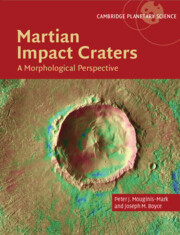
Our exploration of Mars has revealed a world as fascinating as Earth, with a changing climate, giant volcanoes, former oceans, polar ice caps, and numerous impact craters. This book provides a comprehensive summary of the morphology and distribution of meteorite craters on Mars, and the wealth of information these can provide on the crustal structure, surface geology, climate and evolution of the planet. The chapters present highly illustrated case studies of landforms associated with impact craters to highlight their morphological diversity, using high-resolution images and topographic data to compare these features with those on other bodies in the Solar System. Including research questions to inspire future work, this book will be valuable for researchers and graduate students interested in impact craters (both terrestrial and extra-terrestrial) and Mars geology, as well as planetary geologists, planetary climatologists and astrobiologists.
Chapter 5 traces the history of a number of existing UN mechanisms which represent the interests of particular vulnerable groups in the international system (persons with disabilities, women, and children). The aim of this analysis is to see what types of normative discourses have found traction and led to the development of institutions to represent these vulnerable groups, in order to ascertain the type of normative arguments that would gain support in arguing for international institutions to represent future generations. An important lesson from the case studies is that a normative discourse in which development concerns feature prominently, has been a common thread running through the history of these UN mechanisms. The chapter analyses the differences and similarities between arguments which justify the institutions which have been put in place to represent these vulnerable groups, with arguments used to justify institutions to represent future generations.
Prominent policy debates about environmental justice center on drinking water. In California’s Central Valley, this engages a complex, multilayered regulatory landscape. Traditionally, a key gap has been protecting access to groundwater for disadvantaged communities that rely on domestic wells. Addressing this gap requires conceptualizing "what matters" to include groundwater levels, and "who matters" to include these communities. California’s Sustainable Groundwater Management Act substantially reformed California’s groundwater law. It addresses groundwater levels but deals unevenly with disadvantaged communities. It also misses a regulatory opportunity to take a cumulative view of these communities that would recognize that a threat to drinking water is one burden among many that adds to environmental injustice. This chapter introduces the use of the CIRCle Framework to assess rules for conceptualization and how they link to the other CIRCle Framework functions of information, regulatory intervention and coordination. It reveals omissions and mismatches that pose an ongoing challenge to securing environmental justice for communities facing critical threats to groundwater resources used for drinking.
Chapter 2 demonstrates that traditional concepts of representation – including agency-based, and audience models – struggle in their application in relation to future generations. Direct and indirect forms of proxy representation are distinguished and legal forms of proxy representation. Various modes of proxy representation at the national level are set out, which are relevant due to the inspiration they provide for proposals at the international level. A range of existing forms of proxy representation in the international legal order are set out, in order to demonstrate that proxy representation of future generations represents a modest rather than radical reform. We then assess the extent to which indirect representation of future generations is incorporated in the international legal order in terms of environment-related principles. A matrix setting out the range of functions which proxy representation may perform is set out. By distinguishing these functions, a more nuanced understanding can be obtained as to the functions of existing modes of proxy representation as well as reform proposals.
Rules for regulatory intervention aim to ensure that cumulative impacts remain or fall below thresholds of acceptable cumulative harm. A rule has two key dimensions: (1) its strategy – how it changes cumulative harm by reducing impacts, offsetting impacts, restoring, or facilitating coping with impacts; and (2) its approach – how it influences actions that cause impacts by using mandates (sticks), incentives (carrots) or information and persuasion (sermons) to influence adverse actions, or by using direct state action (state rescue). Each strategy and approach has strengths and weaknesses in addressing cumulative harms, and a cumulative environmental problem will likely need a carefully designed mix. In designing this mix, important challenges are ensuring connected decision-making so that actions are not considered in isolation; ensuring comprehensiveness, to avoid overlooking actions, including "de minimis" actions that could cause cumulatively significant impacts; managing costs related to intervention; and adapting interventions to accommodate changes to impacts and new information. Real-world examples illustrate legal mechanisms that include features designed to address these challenges.
Cumulative environmental harms pose pronounced challenges for human recognition, understanding, acceptance, and action. This chapter harvests insights across a wide range of disciplines to unpack the challenges involved in dealing with cumulative environmental problems. These insights point to a crucial role for well-crafted law and policy in responding to cumulative environmental problems. Analyzing cross-disciplinary insights about key challenges produces a framework of four integrated functions required for effective regulatory responses to cumulative environmental problems – the CIRCle Framework: (1) conceptualization: clearly and consistently conceptualizing the matter of concern that experiences cumulative impacts; (2) information: collecting, sharing, and analyzing information about environmental conditions, threats and benefits, rules and activities; (3) regulatory intervention: intervening to ensure cumulative impacts remain within an acceptable range; and (4) coordination among governments and stakeholders to undertake or contribute to the other functions.
Dealing with cumulative environmental problems unavoidably requires repeated interactions (coordination) among multiple and often many actors relevant to the other three CIRCle functions (conceptualization, information, and regulatory intervention). Coordination can promote effective approaches, avoid policy drift, and resolve disputes. Key actors may include multiple agencies and levels of government, quasi-governmental organizations, supranational and international institutions, and nongovernmental organizations representing stakeholders of different kinds. Rules can help overcome significant cost, time, and political disincentives to establishing and maintaining coordination. Two broad types of formal rules for coordination emerge in mechanisms for coordinating conceptualization, information, and intervention: those that establish an institution, and those that provide for interaction in other ways, such as duties to notify or cooperate or undertake joint planning. Legal mechanisms can also expressly provide for dealing with policy drift and resolving disputes between regulatory actors. Real-world examples are provided of legal mechanisms to support these forms of coordination.
Chapter 4 involves a focus on the legitimacy and effectiveness of proxy-style institutions for future generations. It sets out criteria for assessing the legitimacy of such institutions based on Klaus Dingwerth, Sylvia Karlsson-Vinkhuyzen, and Antto Vihma. Criteria for assessing the legitimacy of international tribunals are developed based on an extension of Bogdandy and Venzke’s work with the idea of accountability to the demos being extended to include future generations. A concept of ‘future legitimacy’ is introduced which involves assessing institutions in operation now from the perspective of future generations when climate change is predicted to be ravaging the planet. Criteria for effectiveness are elaborated involving the Paris Agreement goals, as well as an assessment of the promotion of intergenerational justice and the values of inclusiveness, solidarity and addressing vulnerability. Particular challenges in application of these criteria in the context of international law and related institutions which represent future generations are discussed.
Information is critical for understanding the conditions of what we care about and cumulative threats to it, so that we can design rules for intervention to protect or restore it. This is about more than just predicting cumulative impacts in the context of project-level environmental impact assessment. It requires gathering and aggregating, in an ongoing way, comprehensive, high-quality and shareable data and analysis, allocating and managing the costs of doing so, and ensuring that information is shared and can be accessed by governments, affected communities, and other stakeholders. Regulatory systems for addressing cumulative environmental problems should be information-makers rather than information-takers. Rules should actively shape the information that is produced, aggregated, analyzed, shared, and understood as legitimate to understand and respond to cumulative environmental problems. More than just a technical issue, information is about power and accountability for cumulative harm and responding to it – a critical influence on environmental democracy, environmental justice, and the rule of law. Real-world examples are provided of regulatory mechanisms that deal with information-related barriers to addressing cumulative environmental problems.