Refine search
Actions for selected content:
179437 results in Earth and Environmental Sciences
Multi-class sewer defect detection with vision-language models
-
- Journal:
- Cambridge Prisms: Water / Volume 4 / 2026
- Published online by Cambridge University Press:
- 25 March 2026, e12
-
- Article
-
- You have access
- Open access
- HTML
- Export citation

Eddy thermal diffusivity model and mean temperature profiles in turbulent vertical convection
-
- Journal:
- Journal of Fluid Mechanics / Volume 1031 / 25 March 2026
- Published online by Cambridge University Press:
- 25 March 2026, A53
-
- Article
-
- You have access
- Open access
- HTML
- Export citation

A comparison of instabilities and dynamic states in active filament models
-
- Journal:
- Journal of Fluid Mechanics / Volume 1031 / 25 March 2026
- Published online by Cambridge University Press:
- 25 March 2026, A48
-
- Article
-
- You have access
- Open access
- HTML
- Export citation
Science diplomacy and the formation of an epistemic community: the case of the Water–Energy–Food Nexus (2011–2022)
- Part of
-
- Journal:
- Global Sustainability / Volume 9 / 2026
- Published online by Cambridge University Press:
- 25 March 2026, e18
-
- Article
-
- You have access
- Open access
- HTML
- Export citation
A 70 year chronicle of the evolution of Echaurren Norte Glacier, Central Andes of Chile
- Part of
-
- Journal:
- Annals of Glaciology / Volume 67 / 2026
- Published online by Cambridge University Press:
- 25 March 2026, e16
-
- Article
-
- You have access
- Open access
- HTML
- Export citation
Seasonal variability in ice velocity driven by subglacial hydrology of Drang Drung Glacier, Western Himalayas
-
- Journal:
- Journal of Glaciology / Volume 72 / 2026
- Published online by Cambridge University Press:
- 25 March 2026, e44
-
- Article
-
- You have access
- Open access
- HTML
- Export citation
-
Seasonal glacier dynamics are key to predicting hazards and glacier stability due to short-term events as well as improving glacier models. However, the short-term ice velocity variations remain poorly constrained for slow-moving glaciers in the Himalaya due to the scarcity of in situ observations and limitations of satellite data and methods. We present seasonal velocity variations of Drang Drung Glacier (western Himalaya) in 2021 using Sentinel-1 phase-based Interferometric Synthetic Aperture Radar and offset tracking. Smoothed velocity estimates reveal $\sim$400 % seasonal variability (3–13 m a $^{-1}$), with speedups in spring and autumn and slowdowns in summer and winter. We relate these patterns to changes in radar backscatter and seasonal widening of the proglacial stream observed in Planet imagery. To interpret the mechanisms, we simulate the evolution with the Subglacial Hydrology and Kinetic Transient Interactions model coupled to the Ice-sheet and Sea-level System Model. Results indicate that speedup–slowdown cycles and their upglacier migration are driven by meltwater-induced shifts in subglacial drainage efficiency. This study emphasizes the role of hydrology and basal sliding in Himalayan glacier dynamics, often oversimplified in existing models.


Urban Landscape Priorities, Opportunities and Prospect
-
- Published by:
- Anthem Press
- Published online:
- 24 March 2026
- Print publication:
- 15 July 2025
Observing the effect of morphology on the elastic properties of new snow using a non-contacting laser ultrasound system
-
- Journal:
- Journal of Glaciology / Volume 72 / 2026
- Published online by Cambridge University Press:
- 24 March 2026, e37
-
- Article
-
- You have access
- Open access
- HTML
- Export citation
Helm Glacier projected to vanish within a decade
- Part of
-
- Journal:
- Annals of Glaciology / Volume 67 / 2026
- Published online by Cambridge University Press:
- 24 March 2026, e13
-
- Article
-
- You have access
- Open access
- HTML
- Export citation
-
Helm Glacier is a World Glacier Monitoring Service reference glacier and is one of three glaciers in Western Canada with a mass balance record which exceeds 40 years. An ice-penetrating radar survey reveals a mean and maximum ice thickness of 13.0 and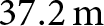 $37.2\,\mathrm{m}$, respectively. We combine ice thickness data and altimetric data from repeat LiDAR surveys to project ice disappearance. We use simple extrapolation and a multivariate linear regression to predict surface elevation change based on incoming shortwave radiation, end-of-winter snow depth, positive degree days, slope and aspect. Both approaches project the disappearance of Helm Glacier by 2035. We estimate that Helm Glacier has a current mass balance sensitivity to temperature of ${\mathrm C}_{\mathrm T}=-0.58\,{\mathrm m\boldsymbol\,\mathrm w.\mathrm e.\boldsymbol\,\mathrm a}^{-1}\,^\circ\,\mathrm C^{-1}$, which is slightly less negative than the balance sensitivity of ${\mathrm C}_{\mathrm T}=-0.64\,{\mathrm m\boldsymbol\,\mathrm w.\mathrm e.\boldsymbol\,\mathrm a}^{-1}\,^\circ\,\mathrm C^{-1}$ derived from the in situ balance record. Helm Glacier is more than 4 $\rm{^\circ}C$ out of balance with current climate conditions [2014–24].


The effects of section shape on the lift spectrum for a foil in turbulent flow
-
- Journal:
- Journal of Fluid Mechanics / Volume 1031 / 25 March 2026
- Published online by Cambridge University Press:
- 24 March 2026, A8
-
- Article
- Export citation
-
The effects of section shape, specifically thickness and camber, on the lift spectrum for a foil immersed in a turbulent flow are analytically and experimentally investigated. The lift response functions to incident cross-stream vortices drifting along streamlines offset from the foil within two chord lengths are computed using an analytical solution to the Blasius force equation, achieved by way of using an expanded Joukowsky mapping function that can map a circle in the complex plane to any selected foil shape. The vortex lift responses are convolved with the vorticity wavenumber–frequency spectrum for a homogenous turbulent flow to compute the overall foil lift due to incident turbulence. Calculations of the lift spectra for a series of foils with increasing maximum thickness, NACA 651A-0008, -0012 and -0016 foils, immersed in grid-generated turbulent flow agree very well with measurements up to the maximum measured frequency, $\omega C/2U \approx 40$, where $C$ is the chord and $U$ is the free-stream speed, which showed an increasing level of lift attenuation at high frequencies with increasing foil thickness. The analytical model showed that the high-frequency lift was controlled by the inertia of the incident vortices, and that the thickness of the foil near the leading-edge controls these high-frequency lift levels by decreasing the drift velocities of the approaching vortices. A simplified analytical model of the vortex inertia force, which avoided the need to implement the unsteady Kutta condition, was developed to estimate the high-frequency lift for thick foils with less computational demand. A wind tunnel experiment involving unsteady lift measurements for a foil in a turbulent flow was performed to physically confirm the model-based prediction that increasing the foil leading-edge thickness can significantly attenuate high-frequency lift, while maintaining the overall maximum thickness. Undesired components of the unsteady force measurements associated with foil vibration were removed using a novel technique of analysing measured force spectra over a series of wind tunnel speeds. The unsteady lift spectra measured for a NACA 0007-61 foil, modified to have constant thickness from 10 % to 50 % chord, showed an approximate attenuation of 8–10 decibels at reduced frequency, $\omega C/2U = 30$, relative to a NACA 0007-65 foil, which agreed well with the model-based predictions and confirmed that increasing the foil thickness in the vicinity of the leading edge yields significant high-frequency lift attenuation.


From Paper to Practitioner: Strategies for Incorporating Soil Microorganisms into Dryland Restoration
-
- Journal:
- Cambridge Prisms: Drylands / Accepted manuscript
- Published online by Cambridge University Press:
- 24 March 2026, pp. 1-51
-
- Article
-
- You have access
- Open access
- Export citation

On the rise: Impacts and challenges in management of invasive grasses in South American savannas
- Part of
-
- Journal:
- Cambridge Prisms: Drylands / Volume 3 / 2026
- Published online by Cambridge University Press:
- 24 March 2026, e10
-
- Article
-
- You have access
- Open access
- HTML
- Export citation

Modification of turbulence by the movement of a spherical vortex
-
- Journal:
- Journal of Fluid Mechanics / Volume 1031 / 25 March 2026
- Published online by Cambridge University Press:
- 24 March 2026, A46
-
- Article
-
- You have access
- Open access
- HTML
- Export citation
Fifty years of Himalayan glacier mass-balance monitoring: Recommendations in honour of IYGP 2025
-
- Journal:
- Journal of Glaciology / Volume 72 / 2026
- Published online by Cambridge University Press:
- 24 March 2026, e43
-
- Article
-
- You have access
- Open access
- HTML
- Export citation

Aerodynamic effects of rotor–rotor interaction on a twin-rotor system in ground effect
-
- Journal:
- Journal of Fluid Mechanics / Volume 1031 / 25 March 2026
- Published online by Cambridge University Press:
- 24 March 2026, A42
-
- Article
-
- You have access
- Open access
- HTML
- Export citation
-
This study experimentally investigates the aerodynamic effects of rotor–rotor interaction in a twin-rotor system operating in ground effect at a rotor-tip Reynolds number of $10^5$. The strength of the ground effect and the rotor interaction were controlled by adjusting the normalised ground standoff distance and rotor separation distance, respectively. For the single-rotor configuration, ground proximity generated a stagnation region within the wake, redirecting axial momentum radially outward to form a wall jet. As the rotor approached the ground, the stagnation region moved closer to the rotor disk, increasing the thrust coefficient. In the widely spaced twin-rotor case, the opposing wall jets from both rotors converged on the ground to form a stagnation point. From this point, the flow diverged outward, producing a fountain flow and transverse outflow. The fountain flow tilted the wakes toward each other, reducing thrust. As rotor spacing decreased, rotor-disk blockage intensified, suppressing the fountain flow. When the fountain-driven recirculating flow developed around the rotor tips, re-ingestion into the rotors caused substantial thrust reduction. Peak thrust loss could be identified using the momentum flux coefficient of the fountain flow. However, with very close rotor spacing, the weakened fountain flow contracted the recirculating region, suppressing wake deflection and largely restoring thrust. Importantly, the thrust loss induced by rotor interaction reached its maximum at smaller normalised rotor separation distances as the rotors operated closer to the ground. These findings quantitatively link the fountain-flow dynamics to thrust variation, offering new mechanistic insight into multirotor aerodynamics in ground effect.

Glacier processes from seismic recordings on Sørsdal Glacier, East Antarctica
-
- Journal:
- Journal of Glaciology / Volume 72 / 2026
- Published online by Cambridge University Press:
- 24 March 2026, e36
-
- Article
-
- You have access
- Open access
- HTML
- Export citation
Concerning the historical holotype of the Cretaceous bivalve Lahillia larseni
-
- Journal:
- Antarctic Science / Volume 38 / Issue 3 / June 2026
- Published online by Cambridge University Press:
- 24 March 2026, pp. 237-239
-
- Article
-
- You have access
- Open access
- HTML
- Export citation

Effects of rotation on kinetic energy and enstrophy in Rayleigh–Taylor turbulence
-
- Journal:
- Journal of Fluid Mechanics / Volume 1031 / 25 March 2026
- Published online by Cambridge University Press:
- 24 March 2026, A41
-
- Article
- Export citation
-
The study of rotating Rayleigh–Taylor (RT) turbulence is of fundamental significance for geophysical processes and certain engineering applications. This work systematically investigates the effects of rotation on RT turbulence using direct numerical simulation (DNS), focusing primarily on the generation of kinetic energy and enstrophy, as well as the scale-to-scale transfer of kinetic energy. Based on the DNS results, it is demonstrated that there is a notable delay and inhibition of the mixing layer growth with enhancing rotation (quantified as a decreasing Rossby number, $Ro$). That is, energy conversion efficiency drops substantially, from approximately $50\,\%$ in the non-rotating case $Ro = \infty$ to only $10\,\%$ in the strong rotating case $Ro=0.1$. This is because rotation amplifies the viscous dissipation associated with the shear stress components in the vertical direction within the mixing layer. Regarding enstrophy generation, baroclinic effects dominate during the early stage of flow evolution, while vortex stretching and tilting become the primary contributors in the later stage. Notably, the vortex stretching and tilting term is significantly suppressed by the rotation, resulting in three-dimensional RT turbulence exhibiting an enstrophy generation mechanism more akin to two-dimensional flow. Furthermore, analysis of scale-to-scale transfer of kinetic energy reveals an increased likelihood of local inverse energy transfer events under enhanced rotation. Specifically, strong rotation (e.g. $Ro=0.1$) results in strongly helical turbulence, which contains more high-helicity regions favourable for local inverse energy transfer. Moreover, the presence of rotation leads to more coherent and elongated flow structures and an enhanced efficiency of fluid mixing within the mixing layer.


Multiproxy reconstruction of environmental change from the late Pliocene to the Late Pleistocene in the Sauce Grande River basin, Argentina
-
- Journal:
- Quaternary Research , First View
- Published online by Cambridge University Press:
- 24 March 2026, pp. 1-18
-
- Article
- Export citation
Metagenomics of the Iberian Margin: IODP Site U1385
-
- Journal:
- Geo-Bio Interfaces / Volume 3 / 2026
- Published online by Cambridge University Press:
- 24 March 2026, e4
-
- Article
-
- You have access
- Open access
- HTML
- Export citation
