Refine listing
Actions for selected content:
92 results in 55Nxx
The connective $K$-theory of the Eilenberg–MacLane space $K\!\left({\mathbb{Z}}_p,\textrm{2}\right)$
- Part of
-
- Journal:
- Glasgow Mathematical Journal / Volume 66 / Issue 1 / January 2024
- Published online by Cambridge University Press:
- 11 December 2023, pp. 188-220
- Print publication:
- January 2024
-
- Article
- Export citation
-
We compute $ku^*\left(K\!\left({\mathbb{Z}}_p,2\right)\right)$ and $ku_*\left(K\!\left({\mathbb{Z}}_p,2\right)\right)$, the connective $KU$-cohomology and connective $KU$-homology groups of the mod- $p$ Eilenberg–MacLane space $K\!\left({\mathbb{Z}}_p,2\right)$, using the Adams spectral sequence. We obtain a striking interaction between $h_0$-extensions and exotic extensions. The mod- $p$ connective $KU$-cohomology groups, computed elsewhere, are needed in order to establish higher differentials and exotic extensions in the integral groups.


On equivariant topological modular forms
- Part of
-
- Journal:
- Compositio Mathematica / Volume 159 / Issue 12 / December 2023
- Published online by Cambridge University Press:
- 06 November 2023, pp. 2638-2693
- Print publication:
- December 2023
-
- Article
-
- You have access
- Open access
- HTML
- Export citation
From the Mayer–Vietoris spectral sequence to überhomology
- Part of
-
- Journal:
- Proceedings of the Royal Society of Edinburgh. Section A: Mathematics / Volume 155 / Issue 2 / April 2025
- Published online by Cambridge University Press:
- 02 October 2023, pp. 540-563
- Print publication:
- April 2025
-
- Article
-
- You have access
- Open access
- HTML
- Export citation
-
We prove that the second page of the Mayer–Vietoris spectral sequence, with respect to anti-star covers, can be identified with another homological invariant of simplicial complexes: the $0$
 -degree überhomology. Consequently, we obtain a combinatorial interpretation of the second page of the Mayer–Vietoris spectral sequence in this context. This interpretation is then used to extend the computations of bold homology, which categorifies the connected domination polynomial at $-1$
 .
.


Fixed point conditions for non-coprime actions
- Part of
-
- Journal:
- Proceedings of the Royal Society of Edinburgh. Section A: Mathematics / Volume 155 / Issue 1 / February 2025
- Published online by Cambridge University Press:
- 11 September 2023, pp. 345-351
- Print publication:
- February 2025
-
- Article
-
- You have access
- Open access
- HTML
- Export citation
-
In the setting of finite groups, suppose $J$
 acts on $N$
 via automorphisms so that the induced semidirect product $N\rtimes J$
 acts on some non-empty set $\Omega$
 , with $N$
 acting transitively. Glauberman proved that if the orders of $J$
 and $N$
 are coprime, then $J$
 fixes a point in $\Omega$
 . We consider the non-coprime case and show that if $N$
 is abelian and a Sylow $p$
 -subgroup of $J$
 fixes a point in $\Omega$
 for each prime $p$
 , then $J$
 fixes a point in $\Omega$
 . We also show that if $N$
 is nilpotent, $N\rtimes J$
 is supersoluble, and a Sylow $p$
 -subgroup of $J$
 fixes a point in $\Omega$
 for each prime $p$
 , then $J$
 fixes a point in $\Omega$
 .
.


Realization of GKM fibrations and new examples of Hamiltonian non-Kähler actions
- Part of
-
- Journal:
- Compositio Mathematica / Volume 159 / Issue 10 / October 2023
- Published online by Cambridge University Press:
- 24 August 2023, pp. 2149-2190
- Print publication:
- October 2023
-
- Article
- Export citation
-
We classify fibrations of abstract $3$-regular GKM graphs over $2$-regular ones, and show that all fibrations satisfying the known necessary conditions for realizability are, in fact, realized as the projectivization of equivariant complex rank- $2$ vector bundles over quasitoric $4$-manifolds or $S^4$. We investigate the existence of invariant (stable) almost complex, symplectic, and Kähler structures on the total space. In this way, we obtain infinitely many Kähler manifolds with Hamiltonian non-Kähler actions in dimension $6$ with prescribed one-skeleton, in particular with a prescribed number of isolated fixed points.


Reflexive homology
- Part of
-
- Journal:
- Proceedings of the Royal Society of Edinburgh. Section A: Mathematics / Volume 154 / Issue 5 / October 2024
- Published online by Cambridge University Press:
- 03 August 2023, pp. 1378-1405
- Print publication:
- October 2024
-
- Article
-
- You have access
- Open access
- HTML
- Export citation
-
Reflexive homology is the homology theory associated to the reflexive crossed simplicial group; one of the fundamental crossed simplicial groups. It is the most general way to extend Hochschild homology to detect an order-reversing involution. In this paper we study the relationship between reflexive homology and the $C_2$
 -equivariant homology of free loop spaces. We define reflexive homology in terms of functor homology. We give a bicomplex for computing reflexive homology together with some calculations, including the reflexive homology of a tensor algebra. We prove that the reflexive homology of a group algebra is isomorphic to the homology of the $C_2$
 -equivariant Borel construction on the free loop space of the classifying space. We give a direct sum decomposition of the reflexive homology of a group algebra indexed by conjugacy classes of group elements, where the summands are defined in terms of a reflexive analogue of group homology. We define a hyperhomology version of reflexive homology and use it to study the $C_2$
 -equivariant homology of certain free loop and free loop-suspension spaces. We show that reflexive homology satisfies Morita invariance. We prove that under nice conditions the involutive Hochschild homology studied by Braun and by Fernàndez-València and Giansiracusa coincides with reflexive homology.


Obstruction theory and the level n elliptic genus
- Part of
-
- Journal:
- Compositio Mathematica / Volume 159 / Issue 9 / September 2023
- Published online by Cambridge University Press:
- 03 August 2023, pp. 2000-2021
- Print publication:
- September 2023
-
- Article
- Export citation
-
Given a height at most two Landweber exact $\mathbb {E}_\infty$-ring $E$ whose homotopy is concentrated in even degrees, we show that any complex orientation of $E$ which satisfies the Ando criterion admits a unique lift to an $\mathbb {E}_\infty$-complex orientation $\mathrm {MU} \to E$. As a consequence, we give a short proof that the level $n$ elliptic genus lifts uniquely to an $\mathbb {E}_\infty$-complex orientation $\mathrm {MU} \to \mathrm {tmf}_1 (n)$ for all $n\, {\geq}\, 2$.


MORAVA K-THEORY AND FILTRATIONS BY POWERS
- Part of
-
- Journal:
- Journal of the Institute of Mathematics of Jussieu / Volume 24 / Issue 5 / September 2025
- Published online by Cambridge University Press:
- 04 July 2023, pp. 1655-1731
- Print publication:
- September 2025
-
- Article
-
- You have access
- Open access
- HTML
- Export citation
Girth, magnitude homology and phase transition of diagonality
- Part of
-
- Journal:
- Proceedings of the Royal Society of Edinburgh. Section A: Mathematics / Volume 154 / Issue 1 / February 2024
- Published online by Cambridge University Press:
- 09 February 2023, pp. 221-247
- Print publication:
- February 2024
-
- Article
- Export citation
Equivariant Brill–Noether theory for elliptic operators and superrigidity of J-holomorphic maps
- Part of
-
- Journal:
- Forum of Mathematics, Sigma / Volume 11 / 2023
- Published online by Cambridge University Press:
- 16 January 2023, e3
-
- Article
-
- You have access
- Open access
- HTML
- Export citation
ELLIPTIC COHOMOLOGY IS UNIQUE UP TO HOMOTOPY
- Part of
-
- Journal:
- Journal of the Australian Mathematical Society / Volume 115 / Issue 1 / August 2023
- Published online by Cambridge University Press:
- 15 November 2022, pp. 99-118
- Print publication:
- August 2023
-
- Article
-
- You have access
- Open access
- HTML
- Export citation
-
Homotopy theory folklore tells us that the sheaf defining the cohomology theory $\operatorname {\mathrm {Tmf}}$ of topological modular forms is unique up to homotopy. Here we provide a proof of this fact, although we claim no originality for the statement. This retroactively reconciles all previous constructions of $\operatorname {\mathrm {Tmf}}$.


Enough vector bundles on orbispaces
- Part of
-
- Journal:
- Compositio Mathematica / Volume 158 / Issue 11 / November 2022
- Published online by Cambridge University Press:
- 28 November 2022, pp. 2046-2081
- Print publication:
- November 2022
-
- Article
-
- You have access
- Open access
- HTML
- Export citation
-
We show that every orbispace satisfying certain mild hypotheses has ‘enough’ vector bundles. It follows that the $K$-theory of finite rank vector bundles on such orbispaces is a cohomology theory. Global presentation results for smooth orbifolds and derived smooth orbifolds also follow.

ON MORPHISMS KILLING WEIGHTS AND STABLE HUREWICZ-TYPE THEOREMS
- Part of
-
- Journal:
- Journal of the Institute of Mathematics of Jussieu / Volume 23 / Issue 2 / March 2024
- Published online by Cambridge University Press:
- 24 October 2022, pp. 521-556
- Print publication:
- March 2024
-
- Article
- Export citation
-
For a weight structure w on a triangulated category $\underline {C}$ we prove that the corresponding weight complex functor and some other (weight-exact) functors are ‘conservative up to weight-degenerate objects’; this improves earlier conservativity formulations. In the case $w=w^{sph}$ (the spherical weight structure on $SH$), we deduce the following converse to the stable Hurewicz theorem: $H^{sing}_{i}(M)=\{0\}$ for all $i<0$ if and only if $M\in SH$ is an extension of a connective spectrum by an acyclic one. We also prove an equivariant version of this statement.
The main idea is to study M that has no weights $m,\dots ,n$ (‘in the middle’). For $w=w^{sph}$, this is the case if there exists a distinguished triangle $LM\to M\to RM$, where $RM$ is an n-connected spectrum and $LM$ is an $m-1$-skeleton (of M) in the sense of Margolis’s definition; this happens whenever $H^{sing}_i(M)=\{0\}$ for $m\le i\le n$ and $H^{sing}_{m-1}(M)$ is a free abelian group. We also consider morphisms that kill weights $m,\dots ,n$; those ‘send n-w-skeleta into $m-1$-w-skeleta’.


Cohomology of algebraic varieties over non-archimedean fields
- Part of
-
- Journal:
- Forum of Mathematics, Sigma / Volume 10 / 2022
- Published online by Cambridge University Press:
- 21 October 2022, e94
-
- Article
-
- You have access
- Open access
- HTML
- Export citation
-
We develop a sheaf cohomology theory of algebraic varieties over an algebraically closed nontrivially valued nonarchimedean field K based on Hrushovski-Loeser’s stable completion. In parallel, we develop a sheaf cohomology of definable subsets in o-minimal expansions of the tropical semi-group $\Gamma _{\infty }$, where $\Gamma $ denotes the value group of K. For quasi-projective varieties, both cohomologies are strongly related by a deformation retraction of the stable completion homeomorphic to a definable subset of $\Gamma _{\infty }$. In both contexts, we show that the corresponding cohomology theory satisfies the Eilenberg-Steenrod axioms, finiteness and invariance, and we provide natural bounds of cohomological dimension in each case. As an application, we show that there are finitely many isomorphism types of cohomology groups in definable families. Moreover, due to the strong relation between the stable completion of an algebraic variety and its analytification in the sense of V. Berkovich, we recover and extend results on the singular cohomology of the analytification of algebraic varieties concerning finiteness and invariance.


Decoupling Decorations on Moduli Spaces of Manifolds
- Part of
-
- Journal:
- Mathematical Proceedings of the Cambridge Philosophical Society / Volume 174 / Issue 1 / January 2023
- Published online by Cambridge University Press:
- 10 May 2022, pp. 163-198
- Print publication:
- January 2023
-
- Article
- Export citation
-
We study moduli spaces of d-dimensional manifolds with embedded particles and discs, which we refer to as decorations. These spaces admit a model in which points are unparametrised d-dimensional manifolds in $\mathbb{R}^\infty$ with particles and discs constrained to it. We compare this to the space of d-dimensional manifolds in $\mathbb{R}^\infty$ with particles and discs that are no longer constrained, i.e. the decorations are decoupled. We show that under certain conditions these spaces cannot be distinguished by homology groups within a range. This generalises work by Bödigheimer–Tillmann for oriented surfaces to different tangential structures and also to higher dimensional manifolds. We also extend this result to moduli spaces with more general submanifolds as decorations and specialise in the case of decorations being embedded circles.


BP-cohomology of projective Stiefel manifolds
- Part of
-
- Journal:
- Proceedings of the Royal Society of Edinburgh. Section A: Mathematics / Volume 153 / Issue 2 / April 2023
- Published online by Cambridge University Press:
- 21 March 2022, pp. 679-701
- Print publication:
- April 2023
-
- Article
- Export citation
-
In this paper, we compute the $BP$
 -cohomology of complex projective Stiefel manifolds. The method involves the homotopy fixed point spectral sequence, and works for complex oriented cohomology theories. We also use these calculations and $BP$
 -operations to prove new results about equivariant maps between Stiefel manifolds.


Dimensions of Ordinals: Set Theory, Homology Theory, and the First Omega Alephs
- Part of
-
- Journal:
- Bulletin of Symbolic Logic / Volume 27 / Issue 4 / December 2021
- Published online by Cambridge University Press:
- 28 February 2022, pp. 526-527
- Print publication:
- December 2021
-
- Article
-
- You have access
- Export citation
-
We describe an organizing framework for the study of infinitary combinatorics. This framework is Čech cohomology. It describes
ZFC principles distinguishing among the ordinals of the form $\omega _n$. More precisely, this framework correlates each $\omega _n$ with an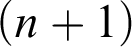 $(n+1)$-dimensional generalization of Todorcevic’s walks technique, and begins to account for that technique’s “unreasonable effectiveness” on $\omega _1$.
We show in contrast that on higher cardinals $\kappa $, the existence of these principles is frequently independent of the
 ZFC axioms. Finally, we detail implications of these phenomena for the computation of strong homology groups and higher derived limits, deriving independence results in algebraic topology and homological algebra, respectively, in the process.Abstract prepared by Jeffrey Bergfalk.
E-mail: jeffrey.bergfalk@univie.ac.at


The geometric index and attractors of homeomorphisms of $\mathbb {R}^3$
- Part of
-
- Journal:
- Ergodic Theory and Dynamical Systems / Volume 43 / Issue 1 / January 2023
- Published online by Cambridge University Press:
- 18 October 2021, pp. 50-77
- Print publication:
- January 2023
-
- Article
- Export citation
-
In this paper we focus on compacta $K \subseteq \mathbb {R}^3$ which possess a neighbourhood basis that consists of nested solid tori $T_i$. We call these sets toroidal. Making use of the classical notion of the geometric index of a curve inside a torus, we introduce the self-geometric index of a toroidal set K, which roughly captures how each torus $T_{i+1}$ winds inside the previous $T_i$ as $i \rightarrow +\infty $. We then use this index to obtain some results about the realizability of toroidal sets as attractors for homeomorphisms of $\mathbb {R}^3$.


Topological volumes of fibrations: a note on open covers
- Part of
-
- Journal:
- Proceedings of the Royal Society of Edinburgh. Section A: Mathematics / Volume 152 / Issue 5 / October 2022
- Published online by Cambridge University Press:
- 11 October 2021, pp. 1340-1360
- Print publication:
- October 2022
-
- Article
- Export citation
INTERSECTION COHOMOLOGY OF RANK 2 CHARACTER VARIETIES OF SURFACE GROUPS
- Part of
-
- Journal:
- Journal of the Institute of Mathematics of Jussieu / Volume 22 / Issue 4 / July 2023
- Published online by Cambridge University Press:
- 08 October 2021, pp. 1615-1654
- Print publication:
- July 2023
-
- Article
-
- You have access
- Open access
- HTML
- Export citation
-
For $G = \mathrm {GL}_2, \mathrm {SL}_2, \mathrm {PGL}_2$ we compute the intersection E-polynomials and the intersection Poincaré polynomials of the G-character variety of a compact Riemann surface C and of the moduli space of G-Higgs bundles on C of degree zero. We derive several results concerning the P=W conjectures for these singular moduli spaces.
