Refine listing
Actions for selected content:
1073 results in 05Cxx
Partial-dual polynomials and signed intersection graphs
- Part of
-
- Journal:
- Forum of Mathematics, Sigma / Volume 10 / 2022
- Published online by Cambridge University Press:
- 25 August 2022, e69
-
- Article
-
- You have access
- Open access
- HTML
- Export citation
Surprising identities for the greedy independent set on Cayley trees
- Part of
-
- Journal:
- Journal of Applied Probability / Volume 59 / Issue 4 / December 2022
- Published online by Cambridge University Press:
- 25 August 2022, pp. 1042-1058
- Print publication:
- December 2022
-
- Article
- Export citation
-
We prove a surprising symmetry between the law of the size $G_n$ of the greedy independent set on a uniform Cayley tree $ \mathcal{T}_n$ of size n and that of its complement. We show that $G_n$ has the same law as the number of vertices at even height in $ \mathcal{T}_n$ rooted at a uniform vertex. This enables us to compute the exact law of $G_n$. We also give a Markovian construction of the greedy independent set, which highlights the symmetry of $G_n$ and whose proof uses a new Markovian exploration of rooted Cayley trees that is of independent interest.


ON 2-TRANSITIVE SETS OF EQUIANGULAR LINES
- Part of
-
- Journal:
- Bulletin of the Australian Mathematical Society / Volume 107 / Issue 1 / February 2023
- Published online by Cambridge University Press:
- 22 August 2022, pp. 134-145
- Print publication:
- February 2023
-
- Article
- Export citation
Degree sequences of sufficiently dense random uniform hypergraphs
- Part of
-
- Journal:
- Combinatorics, Probability and Computing / Volume 32 / Issue 2 / March 2023
- Published online by Cambridge University Press:
- 15 August 2022, pp. 183-224
-
- Article
- Export citation
-
We find an asymptotic enumeration formula for the number of simple $r$-uniform hypergraphs with a given degree sequence, when the number of edges is sufficiently large. The formula is given in terms of the solution of a system of equations. We give sufficient conditions on the degree sequence which guarantee existence of a solution to this system. Furthermore, we solve the system and give an explicit asymptotic formula when the degree sequence is close to regular. This allows us to establish several properties of the degree sequence of a random $r$-uniform hypergraph with a given number of edges. More specifically, we compare the degree sequence of a random $r$-uniform hypergraph with a given number edges to certain models involving sequences of binomial or hypergeometric random variables conditioned on their sum.


ALMOST THEOREMS OF HYPERARITHMETIC ANALYSIS
- Part of
-
- Journal:
- The Journal of Symbolic Logic / Volume 88 / Issue 2 / June 2023
- Published online by Cambridge University Press:
- 01 August 2022, pp. 664-696
- Print publication:
- June 2023
-
- Article
-
- You have access
- Open access
- HTML
- Export citation
-
Theorems of hyperarithmetic analysis (THAs) occupy an unusual neighborhood in the realms of reverse mathematics and recursion theoretic complexity. They lie above all the fixed (recursive) iterations of the Turing Jump but below ATR $_{0}$ (and so $\Pi _{1}^{1}$-CA $_{0}$ or the hyperjump). There is a long history of proof theoretic principles which are THAs. Until Barnes, Goh, and Shore [ta] revealed an array of theorems in graph theory living in this neighborhood, there was only one mathematical denizen. In this paper we introduce a new neighborhood of theorems which are almost theorems of hyperarithmetic analysis (ATHAs). When combined with ACA $_{0}$ they are THAs but on their own they are very weak. We generalize several conservativity classes ( $\Pi _{1}^{1}$, r- $\Pi _{2}^{1}$, and Tanaka) and show that all our examples (and many others) are conservative over RCA $_{0}$ in all these senses and weak in other recursion theoretic ways as well. We provide denizens, both mathematical and logical. These results answer a question raised by Hirschfeldt and reported in Montalbán [2011] by providing a long list of pairs of principles one of which is very weak over RCA $_{0}$ but over ACA $_{0}$ is equivalent to the other which may be strong (THA) or very strong going up a standard hierarchy and at the end being stronger than full second order arithmetic.


On local weak limit and subgraph counts for sparse random graphs
- Part of
-
- Journal:
- Journal of Applied Probability / Volume 59 / Issue 3 / September 2022
- Published online by Cambridge University Press:
- 21 July 2022, pp. 755-776
- Print publication:
- September 2022
-
- Article
- Export citation
Many Turán exponents via subdivisions
- Part of
-
- Journal:
- Combinatorics, Probability and Computing / Volume 32 / Issue 1 / January 2023
- Published online by Cambridge University Press:
- 21 July 2022, pp. 134-150
-
- Article
- Export citation
-
Given a graph $H$ and a positive integer $n$, the Turán number $\mathrm{ex}(n,H)$ is the maximum number of edges in an $n$-vertex graph that does not contain $H$ as a subgraph. A real number $r\in (1,2)$ is called a Turán exponent if there exists a bipartite graph $H$ such that $\mathrm{ex}(n,H)=\Theta (n^r)$. A long-standing conjecture of Erdős and Simonovits states that $1+\frac{p}{q}$ is a Turán exponent for all positive integers $p$ and $q$ with $q\gt p$.
In this paper, we show that $1+\frac{p}{q}$ is a Turán exponent for all positive integers $p$ and $q$ with $q \gt p^{2}$. Our result also addresses a conjecture of Janzer [18].


Resilient tracking consensus over dynamic random graphs: A linear system approach
- Part of
-
- Journal:
- European Journal of Applied Mathematics / Volume 34 / Issue 2 / April 2023
- Published online by Cambridge University Press:
- 12 July 2022, pp. 408-423
-
- Article
-
- You have access
- Open access
- HTML
- Export citation
Clustered colouring of graph classes with bounded treedepth or pathwidth
- Part of
-
- Journal:
- Combinatorics, Probability and Computing / Volume 32 / Issue 1 / January 2023
- Published online by Cambridge University Press:
- 05 July 2022, pp. 122-133
-
- Article
- Export citation
-
The clustered chromatic number of a class of graphs is the minimum integer $k$ such that for some integer $c$ every graph in the class is $k$-colourable with monochromatic components of size at most $c$. We determine the clustered chromatic number of any minor-closed class with bounded treedepth, and prove a best possible upper bound on the clustered chromatic number of any minor-closed class with bounded pathwidth. As a consequence, we determine the fractional clustered chromatic number of every minor-closed class.


Triangles in randomly perturbed graphs
- Part of
-
- Journal:
- Combinatorics, Probability and Computing / Volume 32 / Issue 1 / January 2023
- Published online by Cambridge University Press:
- 05 July 2022, pp. 91-121
-
- Article
-
- You have access
- Open access
- HTML
- Export citation
-
We study the problem of finding pairwise vertex-disjoint triangles in the randomly perturbed graph model, which is the union of any $n$-vertex graph $G$ satisfying a given minimum degree condition and the binomial random graph $G(n,p)$. We prove that asymptotically almost surely $G \cup G(n,p)$ contains at least $\min \{\delta (G), \lfloor n/3 \rfloor \}$ pairwise vertex-disjoint triangles, provided $p \ge C \log n/n$, where $C$ is a large enough constant. This is a perturbed version of an old result of Dirac.
Our result is asymptotically optimal and answers a question of Han, Morris, and Treglown [RSA, 2021, no. 3, 480–516] in a strong form. We also prove a stability version of our result, which in the case of pairwise vertex-disjoint triangles extends a result of Han, Morris, and Treglown [RSA, 2021, no. 3, 480–516]. Together with a result of Balogh, Treglown, and Wagner [CPC, 2019, no. 2, 159–176], this fully resolves the existence of triangle factors in randomly perturbed graphs.
We believe that the methods introduced in this paper are useful for a variety of related problems: we discuss possible generalisations to clique factors, cycle factors, and $2$-universality.


MAKER–BREAKER GAMES ON $ K_{\omega _1}$ AND $K_{\omega ,\omega _1}$
- Part of
-
- Journal:
- The Journal of Symbolic Logic / Volume 88 / Issue 2 / June 2023
- Published online by Cambridge University Press:
- 30 June 2022, pp. 697-703
- Print publication:
- June 2023
-
- Article
-
- You have access
- Open access
- HTML
- Export citation
-
We investigate Maker–Breaker games on graphs of size $\aleph _1$ in which Maker’s goal is to build a copy of the host graph. We establish a firm dependence of the outcome of the game on the axiomatic framework. Relating to this, we prove that there is a winning strategy for Maker in the $K_{\omega ,\omega _1}$-game under ZFC+MA+ $\neg $CH and a winning strategy for Breaker under ZFC+CH. We prove a similar result for the $K_{\omega _1}$-game. Here, Maker has a winning strategy under ZF+DC+AD, while Breaker has one under ZFC+CH again.


Dynamical fitness models: evidence of universality classes for preferential attachment graphs
- Part of
-
- Journal:
- Journal of Applied Probability / Volume 59 / Issue 3 / September 2022
- Published online by Cambridge University Press:
- 21 June 2022, pp. 609-630
- Print publication:
- September 2022
-
- Article
- Export citation
A table of n-component handlebody links of genus n+1 up to six crossings
- Part of
-
- Journal:
- Mathematical Proceedings of the Cambridge Philosophical Society / Volume 174 / Issue 1 / January 2023
- Published online by Cambridge University Press:
- 17 June 2022, pp. 199-223
- Print publication:
- January 2023
-
- Article
- Export citation
-
A handlebody link is a union of handlebodies of positive genus embedded in 3-space, which generalises the notion of links in classical knot theory. In this paper, we consider handlebody links with a genus two handlebody and $n-1$ solid tori, $n>1$. Our main result is the classification of such handlebody links with six crossings or less, up to ambient isotopy.


Measuring reciprocity in a directed preferential attachment network
- Part of
-
- Journal:
- Advances in Applied Probability / Volume 54 / Issue 3 / September 2022
- Published online by Cambridge University Press:
- 15 June 2022, pp. 718-742
- Print publication:
- September 2022
-
- Article
- Export citation
Complete subgraphs in a multipartite graph
- Part of
-
- Journal:
- Combinatorics, Probability and Computing / Volume 31 / Issue 6 / November 2022
- Published online by Cambridge University Press:
- 13 June 2022, pp. 1092-1101
-
- Article
-
- You have access
- Open access
- HTML
- Export citation
-
In 1975 Bollobás, Erdős, and Szemerédi asked the following question: given positive integers $n, t, r$ with $2\le t\le r-1$, what is the largest minimum degree $\delta (G)$ among all $r$-partite graphs $G$ with parts of size $n$ and which do not contain a copy of $K_{t+1}$? The $r=t+1$ case has attracted a lot of attention and was fully resolved by Haxell and Szabó, and Szabó and Tardos in 2006. In this article, we investigate the $r\gt t+1$ case of the problem, which has remained dormant for over 40 years. We resolve the problem exactly in the case when $r \equiv -1 \pmod{t}$, and up to an additive constant for many other cases, including when $r \geq (3t-1)(t-1)$. Our approach utilizes a connection to the related problem of determining the maximum of the minimum degrees among the family of balanced $r$-partite $rn$-vertex graphs of chromatic number at most $t$.
$t$.


Sub-tree counts on hyperbolic random geometric graphs
- Part of
-
- Journal:
- Advances in Applied Probability / Volume 54 / Issue 4 / December 2022
- Published online by Cambridge University Press:
- 13 June 2022, pp. 1032-1069
- Print publication:
- December 2022
-
- Article
-
- You have access
- HTML
- Export citation
-
The hyperbolic random geometric graph was introduced by Krioukov et al. (Phys. Rev. E 82, 2010). Among many equivalent models for the hyperbolic space, we study the d-dimensional Poincaré ball ( $d\ge 2$), with a general connectivity radius. While many phase transitions are known for the expectation asymptotics of certain subgraph counts, very little is known about the second-order results. Two of the distinguishing characteristics of geometric graphs on the hyperbolic space are the presence of tree-like hierarchical structures and the power-law behaviour of the degree distribution. We aim to reveal such characteristics in detail by investigating the behaviour of sub-tree counts. We show multiple phase transitions for expectation and variance in the resulting hyperbolic geometric graph. In particular, the expectation and variance of the sub-tree counts exhibit an intricate dependence on the degree sequence of the tree under consideration. Additionally, unlike the thermodynamic regime of the Euclidean random geometric graph, the expectation and variance may exhibit different growth rates, which is indicative of power-law behaviour. Finally, we also prove a normal approximation for sub-tree counts using the Malliavin–Stein method of Last et al. (Prob. Theory Relat. Fields 165, 2016), along with the Palm calculus for Poisson point processes.

Hypergraphs without non-trivial intersecting subgraphs
- Part of
-
- Journal:
- Combinatorics, Probability and Computing / Volume 31 / Issue 6 / November 2022
- Published online by Cambridge University Press:
- 09 June 2022, pp. 1076-1091
-
- Article
- Export citation
-
A hypergraph $\mathcal{F}$ is non-trivial intersecting if every pair of edges in it have a nonempty intersection, but no vertex is contained in all edges of $\mathcal{F}$. Mubayi and Verstraëte showed that for every $k \ge d+1 \ge 3$ and $n \ge (d+1)k/d$ every $k$-graph $\mathcal{H}$ on $n$ vertices without a non-trivial intersecting subgraph of size $d+1$ contains at most $\binom{n-1}{k-1}$ edges. They conjectured that the same conclusion holds for all $d \ge k \ge 4$ and sufficiently large $n$. We confirm their conjecture by proving a stronger statement.
They also conjectured that for $m \ge 4$ and sufficiently large $n$ the maximum size of a $3$-graph on $n$ vertices without a non-trivial intersecting subgraph of size $3m+1$ is achieved by certain Steiner triple systems. We give a construction with more edges showing that their conjecture is not true in general.


Colouring graphs with forbidden bipartite subgraphs
- Part of
-
- Journal:
- Combinatorics, Probability and Computing / Volume 32 / Issue 1 / January 2023
- Published online by Cambridge University Press:
- 08 June 2022, pp. 45-67
-
- Article
-
- You have access
- Open access
- HTML
- Export citation
-
A conjecture of Alon, Krivelevich and Sudakov states that, for any graph $F$, there is a constant $c_F \gt 0$ such that if $G$ is an $F$-free graph of maximum degree $\Delta$, then $\chi\!(G) \leqslant c_F \Delta/ \log\!\Delta$. Alon, Krivelevich and Sudakov verified this conjecture for a class of graphs $F$ that includes all bipartite graphs. Moreover, it follows from recent work by Davies, Kang, Pirot and Sereni that if $G$ is $K_{t,t}$-free, then $\chi\!(G) \leqslant (t + o(1)) \Delta/ \log\!\Delta$ as $\Delta \to \infty$. We improve this bound to $(1+o(1)) \Delta/\log\!\Delta$, making the constant factor independent of $t$. We further extend our result to the DP-colouring setting (also known as correspondence colouring), introduced by Dvořák and Postle.


Sandwiching biregular random graphs
- Part of
-
- Journal:
- Combinatorics, Probability and Computing / Volume 32 / Issue 1 / January 2023
- Published online by Cambridge University Press:
- 06 June 2022, pp. 1-44
-
- Article
-
- You have access
- Open access
- HTML
- Export citation
-
Let ${\mathbb{G}(n_1,n_2,m)}$ be a uniformly random m-edge subgraph of the complete bipartite graph ${K_{n_1,n_2}}$ with bipartition $(V_1, V_2)$, where $n_i = |V_i|$, $i=1,2$. Given a real number $p \in [0,1]$ such that $d_1 \,{:\!=}\, pn_2$ and $d_2 \,{:\!=}\, pn_1$ are integers, let $\mathbb{R}(n_1,n_2,p)$ be a random subgraph of ${K_{n_1,n_2}}$ with every vertex $v \in V_i$ of degree $d_i$, $i = 1, 2$. In this paper we determine sufficient conditions on $n_1,n_2,p$ and m under which one can embed ${\mathbb{G}(n_1,n_2,m)}$ into $\mathbb{R}(n_1,n_2,p)$ and vice versa with probability tending to 1. In particular, in the balanced case $n_1=n_2$, we show that if $p\gg\log n/n$ and $1 - p \gg \left(\log n/n \right)^{1/4}$, then for some $m\sim pn^2$, asymptotically almost surely one can embed ${\mathbb{G}(n_1,n_2,m)}$ into $\mathbb{R}(n_1,n_2,p)$, while for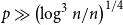 $p\gg\left(\log^{3} n/n\right)^{1/4}$ and $1-p\gg\log n/n$ the opposite embedding holds. As an extension, we confirm the Kim–Vu Sandwich Conjecture for degrees growing faster than $(n \log n)^{3/4}$.


On a random search tree: asymptotic enumeration of vertices by distance from leaves – CORRIGENDUM
- Part of
-
- Journal:
- Advances in Applied Probability / Volume 54 / Issue 2 / June 2022
- Published online by Cambridge University Press:
- 06 June 2022, pp. 337-339
- Print publication:
- June 2022
-
- Article
-
- You have access
- HTML
- Export citation
