Refine listing
Actions for selected content:
1073 results in 05Cxx
Concordance of spatial graphs
- Part of
-
- Journal:
- Canadian Mathematical Bulletin / Volume 66 / Issue 4 / December 2023
- Published online by Cambridge University Press:
- 15 March 2023, pp. 1091-1108
- Print publication:
- December 2023
-
- Article
-
- You have access
- Open access
- HTML
- Export citation
-
We define smooth notions of concordance and sliceness for spatial graphs. We prove that sliceness of a spatial graph is equivalent to a condition on a set of linking numbers together with sliceness of a link associated with the graph. This generalizes the result of Taniyama for $\theta $-curves.

Degree distributions in recursive trees with fitnesses
- Part of
-
- Journal:
- Advances in Applied Probability / Volume 55 / Issue 2 / June 2023
- Published online by Cambridge University Press:
- 06 March 2023, pp. 407-443
- Print publication:
- June 2023
-
- Article
- Export citation
-
We study a general model of recursive trees where vertices are equipped with independent weights and at each time-step a vertex is sampled with probability proportional to its fitness function, which is a function of its weight and degree, and connects to $\ell$ new-coming vertices. Under a certain technical assumption, applying the theory of Crump–Mode–Jagers branching processes, we derive formulas for the limiting distributions of the proportion of vertices with a given degree and weight, and proportion of edges with endpoint having a certain weight. As an application of this theorem, we rigorously prove observations of Bianconi related to the evolving Cayley tree (Phys. Rev. E 66, paper no. 036116, 2002). We also study the process in depth when the technical condition can fail in the particular case when the fitness function is affine, a model we call ‘generalised preferential attachment with fitness’. We show that this model can exhibit condensation, where a positive proportion of edges accumulates around vertices with maximal weight, or, more drastically, can have a degenerate limiting degree distribution, where the entire proportion of edges accumulates around these vertices. Finally, we prove stochastic convergence for the degree distribution under a different assumption of a strong law of large numbers for the partition function associated with the process.

Ramsey numbers of cycles versus general graphs
- Part of
-
- Journal:
- Forum of Mathematics, Sigma / Volume 11 / 2023
- Published online by Cambridge University Press:
- 17 February 2023, e10
-
- Article
-
- You have access
- Open access
- HTML
- Export citation
-
The Ramsey number $R(F,H)$ is the minimum number N such that any N-vertex graph either contains a copy of F or its complement contains H. Burr in 1981 proved a pleasingly general result that, for any graph H, provided n is sufficiently large, a natural lower bound construction gives the correct Ramsey number involving cycles: $R(C_n,H)=(n-1)(\chi (H)-1)+\sigma (H)$, where $\sigma (H)$ is the minimum possible size of a colour class in a $\chi (H)$-colouring of H. Allen, Brightwell and Skokan conjectured that the same should be true already when $n\geq \lvert H\rvert \chi (H)$.
We improve this 40-year-old result of Burr by giving quantitative bounds of the form $n\geq C\lvert H\rvert \log ^4\chi (H)$, which is optimal up to the logarithmic factor. In particular, this proves a strengthening of the Allen–Brightwell–Skokan conjecture for all graphs H with large chromatic number.


Multiple random walks on graphs: mixing few to cover many
- Part of
-
- Journal:
- Combinatorics, Probability and Computing / Volume 32 / Issue 4 / July 2023
- Published online by Cambridge University Press:
- 15 February 2023, pp. 594-637
-
- Article
-
- You have access
- Open access
- HTML
- Export citation
-
Random walks on graphs are an essential primitive for many randomised algorithms and stochastic processes. It is natural to ask how much can be gained by running $k$ multiple random walks independently and in parallel. Although the cover time of multiple walks has been investigated for many natural networks, the problem of finding a general characterisation of multiple cover times for worst-case start vertices (posed by Alon, Avin, Koucký, Kozma, Lotker and Tuttle in 2008) remains an open problem. First, we improve and tighten various bounds on the stationary cover time when $k$ random walks start from vertices sampled from the stationary distribution. For example, we prove an unconditional lower bound of $\Omega ((n/k) \log n)$ on the stationary cover time, holding for any $n$-vertex graph $G$ and any $1 \leq k =o(n\log n )$. Secondly, we establish the stationary cover times of multiple walks on several fundamental networks up to constant factors. Thirdly, we present a framework characterising worst-case cover times in terms of stationary cover times and a novel, relaxed notion of mixing time for multiple walks called the partial mixing time. Roughly speaking, the partial mixing time only requires a specific portion of all random walks to be mixed. Using these new concepts, we can establish (or recover) the worst-case cover times for many networks including expanders, preferential attachment graphs, grids, binary trees and hypercubes.


TRAVERSING A GRAPH IN GENERAL POSITION
- Part of
-
- Journal:
- Bulletin of the Australian Mathematical Society / Volume 108 / Issue 3 / December 2023
- Published online by Cambridge University Press:
- 13 February 2023, pp. 353-365
- Print publication:
- December 2023
-
- Article
- Export citation
-
Let G be a graph. Assume that to each vertex of a set of vertices $S\subseteq V(G)$ a robot is assigned. At each stage one robot can move to a neighbouring vertex. Then S is a mobile general position set of G if there exists a sequence of moves of the robots such that all the vertices of G are visited while maintaining the general position property at all times. The mobile general position number of G is the cardinality of a largest mobile general position set of G. We give bounds on the mobile general position number and determine exact values for certain common classes of graphs, including block graphs, rooted products, unicyclic graphs, Kneser graphs $K(n,2)$ and line graphs of complete graphs.


Random multi-hooking networks
- Part of
-
- Journal:
- Probability in the Engineering and Informational Sciences / Volume 38 / Issue 1 / January 2024
- Published online by Cambridge University Press:
- 13 February 2023, pp. 100-114
-
- Article
-
- You have access
- Open access
- HTML
- Export citation
A NOTE ON REGULAR SETS IN CAYLEY GRAPHS
- Part of
-
- Journal:
- Bulletin of the Australian Mathematical Society / Volume 109 / Issue 1 / February 2024
- Published online by Cambridge University Press:
- 09 February 2023, pp. 1-5
- Print publication:
- February 2024
-
- Article
- Export citation
-
A subset R of the vertex set of a graph $\Gamma $ is said to be $(\kappa ,\tau )$-regular if R induces a $\kappa $-regular subgraph and every vertex outside R is adjacent to exactly $\tau $ vertices in R. In particular, if R is a $(\kappa ,\tau )$-regular set of some Cayley graph on a finite group G, then R is called a $(\kappa ,\tau )$-regular set of G. Let H be a nontrivial normal subgroup of G, and $\kappa $ and $\tau $ a pair of integers satisfying $0\leq \kappa \leq |H|-1$, $1\leq \tau \leq |H|$ and $\gcd (2,|H|-1)\mid \kappa $. It is proved that (i) if $\tau $ is even, then H is a $(\kappa ,\tau )$-regular set of G; (ii) if $\tau $ is odd, then H is a $(\kappa ,\tau )$-regular set of G if and only if it is a $(0,1)$-regular set of G.


Girth, magnitude homology and phase transition of diagonality
- Part of
-
- Journal:
- Proceedings of the Royal Society of Edinburgh. Section A: Mathematics / Volume 154 / Issue 1 / February 2024
- Published online by Cambridge University Press:
- 09 February 2023, pp. 221-247
- Print publication:
- February 2024
-
- Article
- Export citation
On Tournaments and negative dependence
- Part of
-
- Journal:
- Journal of Applied Probability / Volume 60 / Issue 3 / September 2023
- Published online by Cambridge University Press:
- 07 February 2023, pp. 945-954
- Print publication:
- September 2023
-
- Article
- Export citation
Bipartite-ness under smooth conditions
- Part of
-
- Journal:
- Combinatorics, Probability and Computing / Volume 32 / Issue 4 / July 2023
- Published online by Cambridge University Press:
- 03 February 2023, pp. 546-558
-
- Article
- Export citation
-
Given a family $\mathcal{F}$ of bipartite graphs, the Zarankiewicz number $z(m,n,\mathcal{F})$ is the maximum number of edges in an $m$ by $n$ bipartite graph $G$ that does not contain any member of $\mathcal{F}$ as a subgraph (such $G$ is called $\mathcal{F}$-free). For $1\leq \beta \lt \alpha \lt 2$, a family $\mathcal{F}$ of bipartite graphs is $(\alpha,\beta )$-smooth if for some $\rho \gt 0$ and every $m\leq n$, $z(m,n,\mathcal{F})=\rho m n^{\alpha -1}+O(n^\beta )$. Motivated by their work on a conjecture of Erdős and Simonovits on compactness and a classic result of Andrásfai, Erdős and Sós, Allen, Keevash, Sudakov and Verstraëte proved that for any $(\alpha,\beta )$-smooth family $\mathcal{F}$, there exists $k_0$ such that for all odd $k\geq k_0$ and sufficiently large $n$, any $n$-vertex $\mathcal{F}\cup \{C_k\}$-free graph with minimum degree at least $\rho (\frac{2n}{5}+o(n))^{\alpha -1}$ is bipartite. In this paper, we strengthen their result by showing that for every real $\delta \gt 0$, there exists $k_0$ such that for all odd $k\geq k_0$ and sufficiently large $n$, any $n$-vertex $\mathcal{F}\cup \{C_k\}$-free graph with minimum degree at least $\delta n^{\alpha -1}$ is bipartite. Furthermore, our result holds under a more relaxed notion of smoothness, which include the families $\mathcal{F}$ consisting of the single graph $K_{s,t}$ when $t\gg s$. We also prove an analogous result for $C_{2\ell }$-free graphs for every $\ell \geq 2$, which complements a result of Keevash, Sudakov and Verstraëte.


Finite transitive groups having many suborbits of cardinality at most 2 and an application to the enumeration of Cayley graphs
- Part of
-
- Journal:
- Canadian Journal of Mathematics / Volume 76 / Issue 1 / February 2024
- Published online by Cambridge University Press:
- 30 January 2023, pp. 345-366
- Print publication:
- February 2024
-
- Article
-
- You have access
- Open access
- HTML
- Export citation
-
Let G be a finite transitive group on a set $\Omega $, let $\alpha \in \Omega $, and let $G_{\alpha }$ be the stabilizer of the point $\alpha $ in G. In this paper, we are interested in the proportion
  $$ \begin{align*} \frac{|\{\omega\in \Omega\mid \omega \textrm{ lies in a }G_{\alpha}\textrm{-orbit of cardinality at most 2}\}|}{|\Omega|}, \end{align*} $$
that is, the proportion of elements of $\Omega $ lying in a suborbit of cardinality at most 2. We show that, if this proportion is greater than $5/6$, then each element of $\Omega $ lies in a suborbit of cardinality at most 2, and hence G is classified by a result of Bergman and Lenstra. We also classify the permutation groups attaining the bound $5/6$.
We use these results to answer a question concerning the enumeration of Cayley graphs. Given a transitive group G containing a regular subgroup R, we determine an upper bound on the number of Cayley graphs on R containing G in their automorphism groups.


On the classification and description of quantum lens spaces as graph algebras
- Part of
-
- Journal:
- Canadian Journal of Mathematics / Volume 76 / Issue 1 / February 2024
- Published online by Cambridge University Press:
- 25 January 2023, pp. 246-282
- Print publication:
- February 2024
-
- Article
-
- You have access
- Open access
- HTML
- Export citation
-
We investigate quantum lens spaces,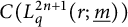 $C(L_q^{2n+1}(r;\underline {m}))$, introduced by Brzeziński and Szymański as graph $C^*$-algebras. We give a new description of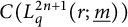 $C(L_q^{2n+1}(r;\underline {m}))$ as graph $C^*$-algebras amending an error in the original paper by Brzeziński and Szymański. Furthermore, for $n\leq 3$, we give a number-theoretic invariant, when all but one weight are coprime to the order of the acting group r. This builds upon the work of Eilers, Restorff, Ruiz, and Sørensen.


Battleship, tomography and quantum annealing
- Part of
-
- Journal:
- European Journal of Applied Mathematics / Volume 34 / Issue 4 / August 2023
- Published online by Cambridge University Press:
- 16 January 2023, pp. 758-773
-
- Article
-
- You have access
- Open access
- HTML
- Export citation
-
The classic game of Battleship involves two players taking turns attempting to guess the positions of a fleet of vertically or horizontally positioned enemy ships hidden on a $10\times 10$ grid. One variant of this game, also referred to as Battleship Solitaire, Bimaru or Yubotu, considers the game with the inclusion of X-ray data, represented by knowledge of how many spots are occupied in each row and column in the enemy board. This paper considers the Battleship puzzle problem: the problem of reconstructing an enemy fleet from its X-ray data. We generate non-unique solutions to Battleship puzzles via certain reflection transformations akin to Ryser interchanges. Furthermore, we demonstrate that solutions of Battleship puzzles may be reliably obtained by searching for solutions of the associated classical binary discrete tomography problem which minimise the discrete Laplacian. We reformulate this optimisation problem as a quadratic unconstrained binary optimisation problem and approximate solutions via a simulated annealer, emphasising the future practical applicability of quantum annealers to solving discrete tomography problems with predefined structure.

ON THE SIZE, SPECTRAL RADIUS, DISTANCE SPECTRAL RADIUS AND FRACTIONAL MATCHINGS IN GRAPHS
- Part of
-
- Journal:
- Bulletin of the Australian Mathematical Society / Volume 108 / Issue 2 / October 2023
- Published online by Cambridge University Press:
- 13 January 2023, pp. 187-199
- Print publication:
- October 2023
-
- Article
- Export citation
Convergence of blanket times for sequences of random walks on critical random graphs
- Part of
-
- Journal:
- Combinatorics, Probability and Computing / Volume 32 / Issue 3 / May 2023
- Published online by Cambridge University Press:
- 09 January 2023, pp. 478-515
-
- Article
- Export citation
-
Under the assumption that sequences of graphs equipped with resistances, associated measures, walks and local times converge in a suitable Gromov-Hausdorff topology, we establish asymptotic bounds on the distribution of the $\varepsilon$-blanket times of the random walks in the sequence. The precise nature of these bounds ensures convergence of the $\varepsilon$-blanket times of the random walks if the $\varepsilon$-blanket time of the limiting diffusion is continuous at $\varepsilon$ with probability 1. This result enables us to prove annealed convergence in various examples of critical random graphs, including critical Galton-Watson trees and the Erdős-Rényi random graph in the critical window. We highlight that proving continuity of the $\varepsilon$-blanket time of the limiting diffusion relies on the scale invariance of a finite measure that gives rise to realizations of the limiting compact random metric space, and therefore we expect our results to hold for other examples of random graphs with a similar scale invariance property.


Off-diagonal book Ramsey numbers
- Part of
-
- Journal:
- Combinatorics, Probability and Computing / Volume 32 / Issue 3 / May 2023
- Published online by Cambridge University Press:
- 09 January 2023, pp. 516-545
-
- Article
-
- You have access
- Open access
- HTML
- Export citation
-
The book graph $B_n ^{(k)}$ consists of $n$ copies of $K_{k+1}$ joined along a common $K_k$. In the prequel to this paper, we studied the diagonal Ramsey number $r(B_n ^{(k)}, B_n ^{(k)})$. Here we consider the natural off-diagonal variant $r(B_{cn} ^{(k)}, B_n^{(k)})$ for fixed $c \in (0,1]$. In this more general setting, we show that an interesting dichotomy emerges: for very small $c$, a simple $k$-partite construction dictates the Ramsey function and all nearly-extremal colourings are close to being $k$-partite, while, for $c$ bounded away from $0$, random colourings of an appropriate density are asymptotically optimal and all nearly-extremal colourings are quasirandom. Our investigations also open up a range of questions about what happens for intermediate values of $c$.
$c$.


A factor of i.i.d. with uniform marginals and infinite clusters spanned by equal labels
- Part of
-
- Journal:
- Ergodic Theory and Dynamical Systems / Volume 43 / Issue 11 / November 2023
- Published online by Cambridge University Press:
- 22 December 2022, pp. 3707-3725
- Print publication:
- November 2023
-
- Article
- Export citation
-
We give an example of an FIID vertex-labeling of ${\mathbb T}_3$ whose marginals are uniform on $[0,1]$, and if we delete the edges between those vertices whose labels are different, then some of the remaining clusters are infinite. We also show that no such process can be finitary.


The bunkbed conjecture holds in the $p\uparrow 1$ limit
- Part of
-
- Journal:
- Combinatorics, Probability and Computing / Volume 32 / Issue 3 / May 2023
- Published online by Cambridge University Press:
- 14 December 2022, pp. 363-369
-
- Article
- Export citation
-
Let $G=(V,E)$ be a countable graph. The Bunkbed graph of $G$ is the product graph $G \times K_2$, which has vertex set $V\times \{0,1\}$ with “horizontal” edges inherited from $G$ and additional “vertical” edges connecting $(w,0)$ and $(w,1)$ for each $w \in V$. Kasteleyn’s Bunkbed conjecture states that for each $u,v \in V$ and $p\in [0,1]$, the vertex $(u,0)$ is at least as likely to be connected to $(v,0)$ as to $(v,1)$ under Bernoulli- $p$ bond percolation on the bunkbed graph. We prove that the conjecture holds in the $p \uparrow 1$ limit in the sense that for each finite graph $G$ there exists $\varepsilon (G)\gt 0$ such that the bunkbed conjecture holds for $p \geqslant 1-\varepsilon (G)$.


A bipartite version of the Erdős–McKay conjecture
- Part of
-
- Journal:
- Combinatorics, Probability and Computing / Volume 32 / Issue 3 / May 2023
- Published online by Cambridge University Press:
- 09 December 2022, pp. 465-477
-
- Article
-
- You have access
- Open access
- HTML
- Export citation
-
An old conjecture of Erdős and McKay states that if all homogeneous sets in an $n$-vertex graph are of order $O(\!\log n)$ then the graph contains induced subgraphs of each size from $\{0,1,\ldots, \Omega \big(n^2\big)\}$. We prove a bipartite analogue of the conjecture: if all balanced homogeneous sets in an $n \times n$ bipartite graph are of order $O(\!\log n)$, then the graph contains induced subgraphs of each size from $\{0,1,\ldots, \Omega \big(n^2\big)\}$.


Fluctuations of subgraph counts in graphon based random graphs
- Part of
-
- Journal:
- Combinatorics, Probability and Computing / Volume 32 / Issue 3 / May 2023
- Published online by Cambridge University Press:
- 09 December 2022, pp. 428-464
-
- Article
- Export citation
-
Given a graphon $W$ and a finite simple graph $H$, with vertex set $V(H)$, denote by $X_n(H, W)$ the number of copies of $H$ in a $W$-random graph on $n$ vertices. The asymptotic distribution of $X_n(H, W)$ was recently obtained by Hladký, Pelekis, and Šileikis [17] in the case where $H$ is a clique. In this paper, we extend this result to any fixed graph $H$. Towards this we introduce a notion of $H$-regularity of graphons and show that if the graphon $W$ is not $H$-regular, then $X_n(H, W)$ has Gaussian fluctuations with scaling $n^{|V(H)|-\frac{1}{2}}$. On the other hand, if $W$ is $H$-regular, then the fluctuations are of order $n^{|V(H)|-1}$ and the limiting distribution of $X_n(H, W)$ can have both Gaussian and non-Gaussian components, where the non-Gaussian component is a (possibly) infinite weighted sum of centred chi-squared random variables with the weights determined by the spectral properties of a graphon derived from $W$. Our proofs use the asymptotic theory of generalised $U$-statistics developed by Janson and Nowicki [22]. We also investigate the structure of $H$-regular graphons for which either the Gaussian or the non-Gaussian component of the limiting distribution (but not both) is degenerate. Interestingly, there are also $H$-regular graphons $W$ for which both the Gaussian or the non-Gaussian components are degenerate, that is, $X_n(H, W)$ has a degenerate limit even under the scaling $n^{|V(H)|-1}$. We give an example of this degeneracy with $H=K_{1, 3}$ (the 3-star) and also establish non-degeneracy in a few examples. This naturally leads to interesting open questions on higher order degeneracies.


