Refine listing
Actions for selected content:
1073 results in 05Cxx
Improved lower bound for the list chromatic number of graphs with no Kt minor
- Part of
-
- Journal:
- Combinatorics, Probability and Computing / Volume 31 / Issue 6 / November 2022
- Published online by Cambridge University Press:
- 30 May 2022, pp. 1070-1075
-
- Article
-
- You have access
- Open access
- HTML
- Export citation
-
Hadwiger’s conjecture asserts that every graph without a $K_t$-minor is $(t-1)$-colourable. It is known that the exact version of Hadwiger’s conjecture does not extend to list colouring, but it has been conjectured by Kawarabayashi and Mohar (2007) that there exists a constant $c$ such that every graph with no $K_t$-minor has list chromatic number at most $ct$. More specifically, they also conjectured that this holds for $c=\frac{3}{2}$.
Refuting the latter conjecture, we show that the maximum list chromatic number of graphs with no $K_t$-minor is at least $(2-o(1))t$, and hence $c \ge 2$ in the above conjecture is necessary. This improves the previous best lower bound by Barát, Joret and Wood (2011), who proved that $c \ge \frac{4}{3}$. Our lower-bound examples are obtained via the probabilistic method.


Transversal Ck-factors in subgraphs of the balanced blow-up of Ck
- Part of
-
- Journal:
- Combinatorics, Probability and Computing / Volume 31 / Issue 6 / November 2022
- Published online by Cambridge University Press:
- 30 May 2022, pp. 1031-1047
-
- Article
- Export citation
-
For a subgraph $G$ of the blow-up of a graph $F$, we let $\delta ^*(G)$ be the smallest minimum degree over all of the bipartite subgraphs of $G$ induced by pairs of parts that correspond to edges of $F$. Johansson proved that if $G$ is a spanning subgraph of the blow-up of $C_3$ with parts of size $n$ and $\delta ^*(G) \ge \frac{2}{3}n + \sqrt{n}$, then $G$ contains $n$ vertex disjoint triangles, and presented the following conjecture of Häggkvist. If $G$ is a spanning subgraph of the blow-up of $C_k$ with parts of size $n$ and $\delta ^*(G) \ge \left(1 + \frac 1k\right)\frac n2 + 1$, then $G$ contains $n$ vertex disjoint copies of $C_k$ such that each $C_k$ intersects each of the $k$ parts exactly once. A similar conjecture was also made by Fischer and the case $k=3$ was proved for large $n$ by Magyar and Martin.
In this paper, we prove the conjecture of Häggkvist asymptotically. We also pose a conjecture which generalises this result by allowing the minimum degree conditions in each bipartite subgraph induced by pairs of parts of $G$ to vary. We support this new conjecture by proving the triangle case. This result generalises Johannson’s result asymptotically.


On tripartite common graphs
- Part of
-
- Journal:
- Combinatorics, Probability and Computing / Volume 31 / Issue 5 / September 2022
- Published online by Cambridge University Press:
- 25 May 2022, pp. 907-923
-
- Article
-
- You have access
- Open access
- HTML
- Export citation
-
A graph $H$ is common if the number of monochromatic copies of $H$ in a 2-edge-colouring of the complete graph $K_n$ is asymptotically minimised by the random colouring. Burr and Rosta, extending a famous conjecture of Erdős, conjectured that every graph is common. The conjectures of Erdős and of Burr and Rosta were disproved by Thomason and by Sidorenko, respectively, in the late 1980s. Collecting new examples of common graphs had not seen much progress since then, although very recently a few more graphs were verified to be common by the flag algebra method or the recent progress on Sidorenko’s conjecture. Our contribution here is to provide several new classes of tripartite common graphs. The first example is the class of so-called triangle trees, which generalises two theorems by Sidorenko and answers a question of Jagger, Šťovíček, and Thomason from 1996. We also prove that, somewhat surprisingly, given any tree $T$, there exists a triangle tree such that the graph obtained by adding $T$ as a pendant tree is still common. Furthermore, we show that adding arbitrarily many apex vertices to any connected bipartite graph on at most $5$ vertices yields a common graph.


The diameter of the uniform spanning tree of dense graphs
- Part of
-
- Journal:
- Combinatorics, Probability and Computing / Volume 31 / Issue 6 / November 2022
- Published online by Cambridge University Press:
- 13 May 2022, pp. 1010-1030
-
- Article
- Export citation
-
We show that the diameter of a uniformly drawn spanning tree of a simple connected graph on n vertices with minimal degree linear in n is typically of order $\sqrt{n}$. A byproduct of our proof, which is of independent interest, is that on such graphs the Cheeger constant and the spectral gap are comparable.

The critical mean-field Chayes–Machta dynamics
- Part of
-
- Journal:
- Combinatorics, Probability and Computing / Volume 31 / Issue 6 / November 2022
- Published online by Cambridge University Press:
- 11 May 2022, pp. 924-975
-
- Article
-
- You have access
- Open access
- HTML
- Export citation
-
The random-cluster model is a unifying framework for studying random graphs, spin systems and electrical networks that plays a fundamental role in designing efficient Markov Chain Monte Carlo (MCMC) sampling algorithms for the classical ferromagnetic Ising and Potts models. In this paper, we study a natural non-local Markov chain known as the Chayes–Machta (CM) dynamics for the mean-field case of the random-cluster model, where the underlying graph is the complete graph on n vertices. The random-cluster model is parametrised by an edge probability p and a cluster weight q. Our focus is on the critical regime: $p = p_c(q)$ and $q \in (1,2)$, where $p_c(q)$ is the threshold corresponding to the order–disorder phase transition of the model. We show that the mixing time of the CM dynamics is $O({\log}\ n \cdot \log \log n)$ in this parameter regime, which reveals that the dynamics does not undergo an exponential slowdown at criticality, a surprising fact that had been predicted (but not proved) by statistical physicists. This also provides a nearly optimal bound (up to the $\log\log n$ factor) for the mixing time of the mean-field CM dynamics in the only regime of parameters where no non-trivial bound was previously known. Our proof consists of a multi-phased coupling argument that combines several key ingredients, including a new local limit theorem, a precise bound on the maximum of symmetric random walks with varying step sizes and tailored estimates for critical random graphs. In addition, we derive an improved comparison inequality between the mixing time of the CM dynamics and that of the local Glauber dynamics on general graphs; this results in better mixing time bounds for the local dynamics in the mean-field setting.


ON THE CAYLEYNESS OF PRAEGER–XU GRAPHS
- Part of
-
- Journal:
- Bulletin of the Australian Mathematical Society / Volume 106 / Issue 3 / December 2022
- Published online by Cambridge University Press:
- 11 May 2022, pp. 353-356
- Print publication:
- December 2022
-
- Article
-
- You have access
- Open access
- HTML
- Export citation
The chromatic profile of locally colourable graphs
- Part of
-
- Journal:
- Combinatorics, Probability and Computing / Volume 31 / Issue 6 / November 2022
- Published online by Cambridge University Press:
- 10 May 2022, pp. 976-1009
-
- Article
-
- You have access
- Open access
- HTML
- Export citation
-
The classical Andrásfai-Erdős-Sós theorem considers the chromatic number of $K_{r + 1}$-free graphs with large minimum degree, and in the case, $r = 2$ says that any n-vertex triangle-free graph with minimum degree greater than $2/5 \cdot n$ is bipartite. This began the study of the chromatic profile of triangle-free graphs: for each k, what minimum degree guarantees that a triangle-free graph is k-colourable? The chromatic profile has been extensively studied and was finally determined by Brandt and Thomassé. Triangle-free graphs are exactly those in which each neighbourhood is one-colourable. As a natural variant, Luczak and Thomassé introduced the notion of a locally bipartite graph in which each neighbourhood is 2-colourable. Here we study the chromatic profile of the family of graphs in which every neighbourhood is b-colourable (locally b-partite graphs) as well as the family where the common neighbourhood of every a-clique is b-colourable. Our results include the chromatic thresholds of these families (extending a result of Allen, Böttcher, Griffiths, Kohayakawa and Morris) as well as showing that every n-vertex locally b-partite graph with minimum degree greater than $(1 - 1/(b + 1/7)) \cdot n$ is $(b + 1)$-colourable. Understanding these locally colourable graphs is crucial for extending the Andrásfai-Erdős-Sós theorem to non-complete graphs, which we develop elsewhere.


TREE FORCING AND DEFINABLE MAXIMAL INDEPENDENT SETS IN HYPERGRAPHS
- Part of
-
- Journal:
- The Journal of Symbolic Logic / Volume 87 / Issue 4 / December 2022
- Published online by Cambridge University Press:
- 29 April 2022, pp. 1419-1458
- Print publication:
- December 2022
-
- Article
-
- You have access
- Open access
- HTML
- Export citation
-
We show that after forcing with a countable support iteration or a finite product of Sacks or splitting forcing over L, every analytic hypergraph on a Polish space admits a $\mathbf {\Delta }^1_2$ maximal independent set. This extends an earlier result by Schrittesser (see [25]). As a main application we get the consistency of $\mathfrak {r} = \mathfrak {u} = \mathfrak {i} = \omega _2$ together with the existence of a $\Delta ^1_2$ ultrafilter, a $\Pi ^1_1$ maximal independent family, and a $\Delta ^1_2$ Hamel basis. This solves open problems of Brendle, Fischer, and Khomskii [5] and the author [23]. We also show in ZFC that $\mathfrak {d} \leq \mathfrak {i}_{cl}$, addressing another question from [5].


Distribution of tree parameters by martingale approach
- Part of
-
- Journal:
- Combinatorics, Probability and Computing / Volume 31 / Issue 5 / September 2022
- Published online by Cambridge University Press:
- 29 April 2022, pp. 737-764
-
- Article
-
- You have access
- Open access
- HTML
- Export citation
Giant descendant trees, matchings, and independent sets in age-biased attachment graphs
- Part of
-
- Journal:
- Journal of Applied Probability / Volume 59 / Issue 2 / June 2022
- Published online by Cambridge University Press:
- 25 April 2022, pp. 299-324
- Print publication:
- June 2022
-
- Article
- Export citation
-
We study two models of an age-biased graph process: the $\delta$-version of the preferential attachment graph model (PAM) and the uniform attachment graph model (UAM), with m attachments for each of the incoming vertices. We show that almost surely the scaled size of a breadth-first (descendant) tree rooted at a fixed vertex converges, for $m=1$, to a limit whose distribution is a mixture of two beta distributions and a single beta distribution respectively, and that for $m>1$ the limit is 1. We also analyze the likely performance of two greedy (online) algorithms, for a large matching set and a large independent set, and determine – for each model and each greedy algorithm – both a limiting fraction of vertices involved and an almost sure convergence rate.


Counting H-free orientations of graphs
- Part of
-
- Journal:
- Mathematical Proceedings of the Cambridge Philosophical Society / Volume 174 / Issue 1 / January 2023
- Published online by Cambridge University Press:
- 25 April 2022, pp. 79-95
- Print publication:
- January 2023
-
- Article
-
- You have access
- Open access
- HTML
- Export citation
A NOTE ON THE SINGULARITY OF ORIENTED GRAPHS
- Part of
-
- Journal:
- Bulletin of the Australian Mathematical Society / Volume 106 / Issue 3 / December 2022
- Published online by Cambridge University Press:
- 25 April 2022, pp. 357-362
- Print publication:
- December 2022
-
- Article
- Export citation
-
An oriented graph is called singular or nonsingular according as its adjacency matrix is singular or nonsingular. In this note, by a new approach, we determine the singularity of oriented quasi-trees. The main results of Chen et al. [‘Singularity of oriented graphs from several classes’, Bull. Aust. Math. Soc. 102(1) (2020), 7–14] follow as corollaries. Furthermore, we give a necessary condition for an oriented bipartite graph to be nonsingular. By applying this condition, we characterise nonsingular oriented bipartite graphs $B_{m,n}$ when $\min \{m,n\}\leq 3$.

CAYLEY–ABELS GRAPHS AND INVARIANTS OF TOTALLY DISCONNECTED, LOCALLY COMPACT GROUPS
- Part of
-
- Journal:
- Journal of the Australian Mathematical Society / Volume 114 / Issue 2 / April 2023
- Published online by Cambridge University Press:
- 13 April 2022, pp. 145-177
-
- Article
- Export citation
-
A connected, locally finite graph $\Gamma $ is a Cayley–Abels graph for a totally disconnected, locally compact group G if G acts vertex-transitively on $\Gamma $ with compact, open vertex stabilizers. Define the minimal degree of G as the minimal degree of a Cayley–Abels graph of G. We relate the minimal degree in various ways to the modular function, the scale function and the structure of compact open subgroups. As an application, we prove that if $T_{d}$ denotes the d-regular tree, then the minimal degree of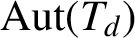 $\mathrm{Aut}(T_{d})$ is d for all $d\geq 2$.


Local limit theorems in relatively hyperbolic groups II: the non-spectrally degenerate case
- Part of
-
- Journal:
- Compositio Mathematica / Volume 158 / Issue 4 / April 2022
- Published online by Cambridge University Press:
- 15 June 2022, pp. 764-830
- Print publication:
- April 2022
-
- Article
-
- You have access
- Open access
- HTML
- Export citation
-
This is the second of a series of two papers dealing with local limit theorems in relatively hyperbolic groups. In this second paper, we restrict our attention to non-spectrally degenerate random walks and we prove precise asymptotics of the probability $p_n(e,e)$ of going back to the origin at time $n$. We combine techniques adapted from thermodynamic formalism with the rough estimates of the Green function given by part I to show that $p_n(e,e)\sim CR^{-n}n^{-3/2}$, where $R$ is the inverse of the spectral radius of the random walk. This both generalizes results of Woess for free products and results of Gouëzel for hyperbolic groups.


SOME EXTREMAL RESULTS ON THE CHROMATIC STABILITY INDEX
- Part of
-
- Journal:
- Bulletin of the Australian Mathematical Society / Volume 106 / Issue 2 / October 2022
- Published online by Cambridge University Press:
- 04 March 2022, pp. 185-194
- Print publication:
- October 2022
-
- Article
- Export citation
-
The $\chi $-stability index $\mathrm {es}_{\chi }(G)$ of a graph G is the minimum number of its edges whose removal results in a graph with chromatic number smaller than that of G. We consider three open problems from Akbari et al. [‘Nordhaus–Gaddum and other bounds for the chromatic edge-stability number’, European J. Combin. 84 (2020), Article no. 103042]. We show by examples that a known characterisation of k-regular ( $k\le 5$) graphs G with $\mathrm {es}_{\chi }(G) = 1$ does not extend to $k\ge 6$, and we characterise graphs G with $\chi (G)=3$ for which $\mathrm { es}_{\chi }(G)+\mathrm {es}_{\chi }(\overline {G}) = 2$. We derive necessary conditions on graphs G which attain a known upper bound on $\mathrm { es}_{\chi }(G)$ in terms of the order and the chromatic number of G and show that the conditions are sufficient when $n\equiv 2 \pmod 3$ and $\chi (G)=3$.


THEOREMS OF HYPERARITHMETIC ANALYSIS AND ALMOST THEOREMS OF HYPERARITHMETIC ANALYSIS
- Part of
-
- Journal:
- Bulletin of Symbolic Logic / Volume 28 / Issue 1 / March 2022
- Published online by Cambridge University Press:
- 31 March 2022, pp. 133-149
- Print publication:
- March 2022
-
- Article
-
- You have access
- Open access
- HTML
- Export citation
-
Theorems of hyperarithmetic analysis (THAs) occupy an unusual neighborhood in the realms of reverse mathematics and recursion-theoretic complexity. They lie above all the fixed (recursive) iterations of the Turing jump but below ATR $_{0}$ (and so $\Pi _{1}^{1}$-CA $_{0}$ or the hyperjump). There is a long history of proof-theoretic principles which are THAs. Until the papers reported on in this communication, there was only one mathematical example. Barnes, Goh, and Shore [1] analyze an array of ubiquity theorems in graph theory descended from Halin’s [9] work on rays in graphs. They seem to be typical applications of ACA $_{0}$ but are actually THAs. These results answer Question 30 of Montalbán’s Open Questions in Reverse Mathematics [19] and supply several other natural principles of different and unusual levels of complexity.
This work led in [25] to a new neighborhood of the reverse mathematical zoo: almost theorems of hyperarithmetic analysis (ATHAs). When combined with ACA $_{0}$ they are THAs but on their own are very weak. Denizens both mathematical and logical are provided. Generalizations of several conservativity classes ( $\Pi _{1}^{1}$, r- $\Pi _{1}^{1}$, and Tanaka) are defined and these ATHAs as well as many other principles are shown to be conservative over RCA $_{0}$ in all these senses and weak in other recursion-theoretic ways as well. These results answer a question raised by Hirschfeldt and reported in [19] by providing a long list of pairs of principles one of which is very weak over RCA $_{0}$ but over ACA $_{0}$ is equivalent to the other which may be strong (THA) or very strong going up a standard hierarchy and at the end being stronger than full second-order arithmetic.


Short proofs for long induced paths
- Part of
-
- Journal:
- Combinatorics, Probability and Computing / Volume 31 / Issue 5 / September 2022
- Published online by Cambridge University Press:
- 11 February 2022, pp. 870-878
-
- Article
-
- You have access
- Open access
- HTML
- Export citation
-
We present a modification of the Depth first search algorithm, suited for finding long induced paths. We use it to give simple proofs of the following results. We show that the induced size-Ramsey number of paths satisfies $\hat{R}_{\mathrm{ind}}(P_n)\leq 5 \cdot 10^7n$, thus giving an explicit constant in the linear bound, improving the previous bound with a large constant from a regularity lemma argument by Haxell, Kohayakawa and Łuczak. We also provide a bound for the k-colour version, showing that $\hat{R}_{\mathrm{ind}}^k(P_n)=O(k^3\log^4k)n$. Finally, we present a new short proof of the fact that the binomial random graph in the supercritical regime, $G(n,\frac{1+\varepsilon}{n})$, contains typically an induced path of length $\Theta(\varepsilon^2) n$.


Lee–Yang zeros and the complexity of the ferromagnetic Ising model on bounded-degree graphs
- Part of
-
- Journal:
- Forum of Mathematics, Sigma / Volume 10 / 2022
- Published online by Cambridge University Press:
- 07 February 2022, e7
-
- Article
-
- You have access
- Open access
- HTML
- Export citation
-
We study the computational complexity of approximating the partition function of the ferromagnetic Ising model with the external field parameter $\lambda $ on the unit circle in the complex plane. Complex-valued parameters for the Ising model are relevant for quantum circuit computations and phase transitions in statistical physics but have also been key in the recent deterministic approximation scheme for all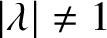 $|\lambda |\neq 1$ by Liu, Sinclair and Srivastava. Here, we focus on the unresolved complexity picture on the unit circle and on the tantalising question of what happens around $\lambda =1$, where, on one hand, the classical algorithm of Jerrum and Sinclair gives a randomised approximation scheme on the real axis suggesting tractability and, on the other hand, the presence of Lee–Yang zeros alludes to computational hardness. Our main result establishes a sharp computational transition at the point $\lambda =1$ and, more generally, on the entire unit circle. For an integer $\Delta \geq 3$ and edge interaction parameter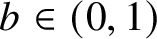 $b\in (0,1)$, we show $\mathsf {\#P}$-hardness for approximating the partition function on graphs of maximum degree $\Delta $ on the arc of the unit circle where the Lee–Yang zeros are dense. This result contrasts with known approximation algorithms when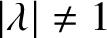 $|\lambda |\neq 1$ or when $\lambda $ is in the complementary arc around $1$ of the unit circle. Our work thus gives a direct connection between the presence/absence of Lee–Yang zeros and the tractability of efficiently approximating the partition function on bounded-degree graphs.


Proper Lie automorphisms of incidence algebras
- Part of
-
- Journal:
- Glasgow Mathematical Journal / Volume 64 / Issue 3 / September 2022
- Published online by Cambridge University Press:
- 07 February 2022, pp. 702-715
-
- Article
- Export citation
Prevalence of deficiency-zero reaction networks in an Erdös–Rényi framework
- Part of
-
- Journal:
- Journal of Applied Probability / Volume 59 / Issue 2 / June 2022
- Published online by Cambridge University Press:
- 28 January 2022, pp. 384-398
- Print publication:
- June 2022
-
- Article
- Export citation
-
Reaction networks are commonly used within the mathematical biology and mathematical chemistry communities to model the dynamics of interacting species. These models differ from the typical graphs found in random graph theory since their vertices are constructed from elementary building blocks, i.e. the species. We consider these networks in an Erdös–Rényi framework and, under suitable assumptions, derive a threshold function for the network to have a deficiency of zero, which is a property of great interest in the reaction network community. Specifically, if the number of species is denoted by n and the edge probability by $p_n$, then we prove that the probability of a random binary network being deficiency zero converges to 1 if $p_n\ll r(n)$ as $n \to \infty$, and converges to 0 if $p_n \gg r(n)$ as $n \to \infty$, where $r(n)=\frac{1}{n^3}$.


