Refine listing
Actions for selected content:
1073 results in 05Cxx
Removal lemmas and approximate homomorphisms
- Part of
-
- Journal:
- Combinatorics, Probability and Computing / Volume 31 / Issue 4 / July 2022
- Published online by Cambridge University Press:
- 24 January 2022, pp. 721-736
-
- Article
-
- You have access
- Open access
- HTML
- Export citation
-
We study quantitative relationships between the triangle removal lemma and several of its variants. One such variant, which we call the triangle-free lemma, states that for each $\epsilon>0$ there exists M such that every triangle-free graph G has an $\epsilon$-approximate homomorphism to a triangle-free graph F on at most M vertices (here an $\epsilon$-approximate homomorphism is a map $V(G) \to V(F)$ where all but at most $\epsilon \left\lvert{V(G)}\right\rvert^2$ edges of G are mapped to edges of F). One consequence of our results is that the least possible M in the triangle-free lemma grows faster than exponential in any polynomial in $\epsilon^{-1}$. We also prove more general results for arbitrary graphs, as well as arithmetic analogues over finite fields, where the bounds are close to optimal.


Exchangeable and sampling-consistent distributions on rooted binary trees
- Part of
-
- Journal:
- Journal of Applied Probability / Volume 59 / Issue 1 / March 2022
- Published online by Cambridge University Press:
- 14 January 2022, pp. 60-80
- Print publication:
- March 2022
-
- Article
- Export citation
Subgraph densities in a surface
- Part of
-
- Journal:
- Combinatorics, Probability and Computing / Volume 31 / Issue 5 / September 2022
- Published online by Cambridge University Press:
- 11 January 2022, pp. 812-839
-
- Article
- Export citation
-
Given a fixed graph H that embeds in a surface $\Sigma$, what is the maximum number of copies of H in an n-vertex graph G that embeds in $\Sigma$? We show that the answer is $\Theta(n^{f(H)})$, where f(H) is a graph invariant called the ‘flap-number’ of H, which is independent of $\Sigma$. This simultaneously answers two open problems posed by Eppstein ((1993) J. Graph Theory 17(3) 409–416.). The same proof also answers the question for minor-closed classes. That is, if H is a $K_{3,t}$ minor-free graph, then the maximum number of copies of H in an n-vertex $K_{3,t}$ minor-free graph G is $\Theta(n^{f'(H)})$, where f′(H) is a graph invariant closely related to the flap-number of H. Finally, when H is a complete graph we give more precise answers.


Independent sets of a given size and structure in the hypercube
- Part of
-
- Journal:
- Combinatorics, Probability and Computing / Volume 31 / Issue 4 / July 2022
- Published online by Cambridge University Press:
- 06 January 2022, pp. 702-720
-
- Article
- Export citation
-
We determine the asymptotics of the number of independent sets of size $\lfloor \beta 2^{d-1} \rfloor$ in the discrete hypercube $Q_d = \{0,1\}^d$ for any fixed $\beta \in (0,1)$ as $d \to \infty$, extending a result of Galvin for $\beta \in (1-1/\sqrt{2},1)$. Moreover, we prove a multivariate local central limit theorem for structural features of independent sets in $Q_d$ drawn according to the hard-core model at any fixed fugacity $\lambda>0$. In proving these results we develop several general tools for performing combinatorial enumeration using polymer models and the cluster expansion from statistical physics along with local central limit theorems.


Independent transversals in bipartite correspondence-covers
- Part of
-
- Journal:
- Canadian Mathematical Bulletin / Volume 65 / Issue 4 / December 2022
- Published online by Cambridge University Press:
- 13 December 2021, pp. 882-894
- Print publication:
- December 2022
-
- Article
-
- You have access
- Open access
- HTML
- Export citation
-
Suppose G and H are bipartite graphs and $L: V(G)\to 2^{V(H)}$ induces a partition of $V(H)$ such that the subgraph of H induced between $L(v)$ and $L(v')$ is a matching, whenever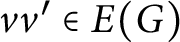 $vv'\in E(G)$. We show for each $\varepsilon>0$ that if H has maximum degree D and $|L(v)| \ge (1+\varepsilon )D/\log D$ for all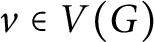 $v\in V(G)$, then H admits an independent transversal with respect to L, provided D is sufficiently large. This bound on the part sizes is asymptotically sharp up to a factor $2$. We also show some asymmetric variants of this result.


A spanning bandwidth theorem in random graphs
- Part of
-
- Journal:
- Combinatorics, Probability and Computing / Volume 31 / Issue 4 / July 2022
- Published online by Cambridge University Press:
- 13 December 2021, pp. 598-628
-
- Article
- Export citation
-
The bandwidth theorem of Böttcher, Schacht and Taraz states that any n-vertex graph G with minimum degree $\big(\tfrac{k-1}{k}+o(1)\big)n$ contains all n-vertex k-colourable graphs H with bounded maximum degree and bandwidth o(n). Recently, a subset of the authors proved a random graph analogue of this statement: for $p\gg \big(\tfrac{\log n}{n}\big)^{1/\Delta}$ a.a.s. each spanning subgraph G of G(n,p) with minimum degree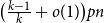 $\big(\tfrac{k-1}{k}+o(1)\big)pn$ contains all n-vertex k-colourable graphs H with maximum degree $\Delta$, bandwidth o(n), and at least $C p^{-2}$ vertices not contained in any triangle. This restriction on vertices in triangles is necessary, but limiting. In this paper, we consider how it can be avoided. A special case of our main result is that, under the same conditions, if additionally all vertex neighbourhoods in G contain many copies of $K_\Delta$ then we can drop the restriction on H that $Cp^{-2}$ vertices should not be in triangles.


TOUGHNESS, ISOLATED TOUGHNESS AND PATH FACTORS IN GRAPHS
- Part of
-
- Journal:
- Bulletin of the Australian Mathematical Society / Volume 106 / Issue 2 / October 2022
- Published online by Cambridge University Press:
- 03 December 2021, pp. 195-202
- Print publication:
- October 2022
-
- Article
- Export citation
-
A graph G is called a $(P_{\geq n},k)$-factor-critical covered graph if for any $Q\subseteq V(G)$ with $|Q|=k$ and any $e\in E(G-Q)$, $G-Q$ has a $P_{\geq n}$-factor covering e. We demonstrate that (i) a $(k+1)$-connected graph G with at least $k+3$ vertices is a $(P_{\geq 3},k)$-factor-critical covered graph if its toughness $t(G)>{(2+k)}/{3}$; (ii) a $(k+2)$-connected graph G is a $(P_{\geq 3},k)$-factor-critical covered graph if its isolated toughness $I(G)>{(5+k)}/{3}$. Furthermore, we show that the conditions on $t(G)$ and $I(G)$ are sharp.


Equitable colourings of Borel graphs
- Part of
-
- Journal:
- Forum of Mathematics, Pi / Volume 9 / 2021
- Published online by Cambridge University Press:
- 29 November 2021, e12
-
- Article
-
- You have access
- Open access
- HTML
- Export citation
-
Hajnal and Szemerédi proved that if G is a finite graph with maximum degree $\Delta $, then for every integer $k \geq \Delta +1$, G has a proper colouring with k colours in which every two colour classes differ in size at most by $1$; such colourings are called equitable. We obtain an analogue of this result for infinite graphs in the Borel setting. Specifically, we show that if G is an aperiodic Borel graph of finite maximum degree $\Delta $, then for each $k \geq \Delta + 1$, G has a Borel proper k-colouring in which every two colour classes are related by an element of the Borel full semigroup of G. In particular, such colourings are equitable with respect to every G-invariant probability measure. We also establish a measurable version of a result of Kostochka and Nakprasit on equitable $\Delta $-colourings of graphs with small average degree. Namely, we prove that if $\Delta \geq 3$, G does not contain a clique on $\Delta + 1$ vertices and $\mu $ is an atomless G-invariant probability measure such that the average degree of G with respect to $\mu $ is at most $\Delta /5$, then G has a $\mu $-equitable $\Delta $-colouring. As steps toward the proof of this result, we establish measurable and list-colouring extensions of a strengthening of Brooks’ theorem due to Kostochka and Nakprasit.


Topology of random $2$-dimensional cubical complexes
- Part of
-
- Journal:
- Forum of Mathematics, Sigma / Volume 9 / 2021
- Published online by Cambridge University Press:
- 29 November 2021, e76
-
- Article
-
- You have access
- Open access
- HTML
- Export citation
-
We study a natural model of a random $2$-dimensional cubical complex which is a subcomplex of an n-dimensional cube, and where every possible square $2$-face is included independently with probability p. Our main result exhibits a sharp threshold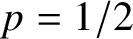 $p=1/2$ for homology vanishing as $n \to \infty $. This is a $2$-dimensional analogue of the Burtin and Erdoős–Spencer theorems characterising the connectivity threshold for random graphs on the $1$-skeleton of the n-dimensional cube.
Our main result can also be seen as a cubical counterpart to the Linial–Meshulam theorem for random $2$-dimensional simplicial complexes. However, the models exhibit strikingly different behaviours. We show that if $p> 1 - \sqrt {1/2} \approx 0.2929$, then with high probability the fundamental group is a free group with one generator for every maximal $1$-dimensional face. As a corollary, homology vanishing and simple connectivity have the same threshold, even in the strong ‘hitting time’ sense. This is in contrast with the simplicial case, where the thresholds are far apart. The proof depends on an iterative algorithm for contracting cycles – we show that with high probability, the algorithm rapidly and dramatically simplifies the fundamental group, converging after only a few steps.


The Frucht property in the quantum group setting
- Part of
-
- Journal:
- Glasgow Mathematical Journal / Volume 64 / Issue 3 / September 2022
- Published online by Cambridge University Press:
- 29 November 2021, pp. 603-633
-
- Article
- Export citation
Random intersection graphs with communities
- Part of
-
- Journal:
- Advances in Applied Probability / Volume 53 / Issue 4 / December 2021
- Published online by Cambridge University Press:
- 22 November 2021, pp. 1061-1089
- Print publication:
- December 2021
-
- Article
- Export citation
Sequential metric dimension for random graphs
- Part of
-
- Journal:
- Journal of Applied Probability / Volume 58 / Issue 4 / December 2021
- Published online by Cambridge University Press:
- 22 November 2021, pp. 909-951
- Print publication:
- December 2021
-
- Article
- Export citation
-
In the localization game on a graph, the goal is to find a fixed but unknown target node $v^\star$ with the least number of distance queries possible. In the jth step of the game, the player queries a single node $v_j$ and receives, as an answer to their query, the distance between the nodes $v_j$ and $v^\star$. The sequential metric dimension (SMD) is the minimal number of queries that the player needs to guess the target with absolute certainty, no matter where the target is.
The term SMD originates from the related notion of metric dimension (MD), which can be defined the same way as the SMD except that the player’s queries are non-adaptive. In this work we extend the results of Bollobás, Mitsche, and Prałat [4] on the MD of Erdős–Rényi graphs to the SMD. We find that, in connected Erdős–Rényi graphs, the MD and the SMD are a constant factor apart. For the lower bound we present a clean analysis by combining tools developed for the MD and a novel coupling argument. For the upper bound we show that a strategy that greedily minimizes the number of candidate targets in each step uses asymptotically optimal queries in Erdős–Rényi graphs. Connections with source localization, binary search on graphs, and the birthday problem are discussed.


Percolation phase transition in weight-dependent random connection models
- Part of
-
- Journal:
- Advances in Applied Probability / Volume 53 / Issue 4 / December 2021
- Published online by Cambridge University Press:
- 22 November 2021, pp. 1090-1114
- Print publication:
- December 2021
-
- Article
-
- You have access
- HTML
- Export citation
On point processes defined by angular conditions on Delaunay neighbors in the Poisson–Voronoi Tessellation
- Part of
-
- Journal:
- Journal of Applied Probability / Volume 58 / Issue 4 / December 2021
- Published online by Cambridge University Press:
- 22 November 2021, pp. 952-965
- Print publication:
- December 2021
-
- Article
- Export citation
-
Consider a homogeneous Poisson point process of the Euclidean plane and its Voronoi tessellation. The present note discusses the properties of two stationary point processes associated with the latter and depending on a parameter $\theta$. The first is the set of points that belong to some one-dimensional facet of the Voronoi tessellation and such that the angle with which they see the two nuclei defining the facet is $\theta$. The main question of interest on this first point process is its intensity. The second point process is that of the intersections of the said tessellation with a straight line having a random orientation. Its intensity is well known. The intersection points almost surely belong to one-dimensional facets. The main question here concerns the Palm distribution of the angle with which the points of this second point process see the two nuclei associated with the facet. We will give answers to these two questions and briefly discuss their practical motivations. We also discuss natural extensions to three dimensions.


A stochastic matching model on hypergraphs
- Part of
-
- Journal:
- Advances in Applied Probability / Volume 53 / Issue 4 / December 2021
- Published online by Cambridge University Press:
- 22 November 2021, pp. 951-980
- Print publication:
- December 2021
-
- Article
- Export citation
Clustering in preferential attachment random graphs with edge-step
- Part of
-
- Journal:
- Journal of Applied Probability / Volume 58 / Issue 4 / December 2021
- Published online by Cambridge University Press:
- 22 November 2021, pp. 890-908
- Print publication:
- December 2021
-
- Article
- Export citation
-
We prove concentration inequality results for geometric graph properties of an instance of the Cooper–Frieze [5] preferential attachment model with edge-steps. More precisely, we investigate a random graph model that at each time $t\in \mathbb{N}$, with probability p adds a new vertex to the graph (a vertex-step occurs) or with probability $1-p$ an edge connecting two existent vertices is added (an edge-step occurs). We prove concentration results for the global clustering coefficient as well as the clique number. More formally, we prove that the global clustering, with high probability, decays as $t^{-\gamma(p)}$ for a positive function $\gamma$ of p, whereas the clique number of these graphs is, up to subpolynomially small factors, of order $t^{(1-p)/(2-p)}$.


INTERACTING QUARTER-PLANE LATTICE WALK PROBLEMS: SOLUTIONS AND PROOFS
- Part of
-
- Journal:
- Bulletin of the Australian Mathematical Society / Volume 105 / Issue 2 / April 2022
- Published online by Cambridge University Press:
- 05 November 2021, pp. 339-340
- Print publication:
- April 2022
-
- Article
-
- You have access
- HTML
- Export citation
ON THE STRONG METRIC DIMENSION OF A TOTAL GRAPH OF NONZERO ANNIHILATING IDEALS
- Part of
-
- Journal:
- Bulletin of the Australian Mathematical Society / Volume 105 / Issue 3 / June 2022
- Published online by Cambridge University Press:
- 04 November 2021, pp. 431-439
- Print publication:
- June 2022
-
- Article
- Export citation
-
Let R be a commutative ring with identity which is not an integral domain. An ideal I of R is called an annihilating ideal if there exists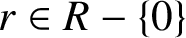 $r\in R- \{0\}$ such that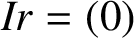 $Ir=(0)$. The total graph of nonzero annihilating ideals of R is the graph $\Omega (R)$ whose vertices are the nonzero annihilating ideals of R and two distinct vertices $I,J$ are joined if and only if $I+J$ is also an annihilating ideal of R. We study the strong metric dimension of $\Omega (R)$ and evaluate it in several cases.


FIRST-ORDER AXIOMATISATIONS OF REPRESENTABLE RELATION ALGEBRAS NEED FORMULAS OF UNBOUNDED QUANTIFIER DEPTH
- Part of
-
- Journal:
- The Journal of Symbolic Logic / Volume 87 / Issue 3 / September 2022
- Published online by Cambridge University Press:
- 29 October 2021, pp. 1283-1300
- Print publication:
- September 2022
-
- Article
- Export citation
Extending the Tutte and Bollobás–Riordan polynomials to rank 3 weakly coloured stranded graphs
- Part of
-
- Journal:
- Combinatorics, Probability and Computing / Volume 31 / Issue 3 / May 2022
- Published online by Cambridge University Press:
- 25 October 2021, pp. 507-549
-
- Article
- Export citation
