Refine listing
Actions for selected content:
124 results in 08xxx
CHARACTERIZATION OF CROSS VARIETIES OF $\boldsymbol {J}$-TRIVIAL MONOIDS
- Part of
-
- Journal:
- Journal of the Australian Mathematical Society , First View
- Published online by Cambridge University Press:
- 20 May 2026, pp. 1-29
-
- Article
-
- You have access
- Open access
- HTML
- Export citation

THE STRUCTURE OF ETALE BOOLEAN RIGHT RESTRICTION MONOIDS
- Part of
-
- Journal:
- Journal of the Australian Mathematical Society / Volume 121 / Issue 1 / August 2026
- Published online by Cambridge University Press:
- 24 April 2026, pp. 94-125
-
- Article
- Export citation
INTERPOLATION AND THE EXCHANGE RULE
- Part of
-
- Journal:
- The Journal of Symbolic Logic , First View
- Published online by Cambridge University Press:
- 09 March 2026, pp. 1-29
-
- Article
-
- You have access
- Open access
- HTML
- Export citation
FREE ALGEBRAS AND COPRODUCTS IN VARIETIES OF GÖDEL ALGEBRAS
- Part of
-
- Journal:
- The Journal of Symbolic Logic , First View
- Published online by Cambridge University Press:
- 26 February 2026, pp. 1-32
-
- Article
-
- You have access
- Open access
- HTML
- Export citation
-
Gödel algebras are the Heyting algebras satisfying the axiom $(x \to y) \vee (y \to x)=1$. We utilize Priestley and Esakia dualities to dually describe free Gödel algebras and coproducts of Gödel algebras. In particular, we realize the Esakia space dual to a Gödel algebra free over a distributive lattice as the, suitably topologized and ordered, collection of all nonempty closed chains of the Priestley dual of the lattice. This provides a tangible dual description of free Gödel algebras without any restriction on the number of free generators, which generalizes known results for the finitely generated case. A similar approach allows us to characterize the Esakia spaces dual to coproducts of arbitrary families of Gödel algebras. We also establish analogous dual descriptions of free algebras and coproducts in every variety of Gödel algebras. As consequences of these results, we obtain a formula to compute the depth of coproducts of Gödel algebras and show that all free Gödel algebras are bi-Heyting algebras.
MODULAR ELEMENTS IN THE LATTICE OF MONOID VARIETIES
- Part of
-
- Journal:
- Bulletin of the Australian Mathematical Society / Volume 113 / Issue 3 / June 2026
- Published online by Cambridge University Press:
- 29 January 2026, pp. 504-514
- Print publication:
- June 2026
-
- Article
- Export citation
Categorification of characteristic structures
- Part of
-
- Journal:
- Forum of Mathematics, Sigma / Volume 14 / 2026
- Published online by Cambridge University Press:
- 22 January 2026, e13
-
- Article
-
- You have access
- Open access
- HTML
- Export citation
Heaps of modules: categorical aspects
- Part of
-
- Journal:
- Forum of Mathematics, Sigma / Volume 13 / 2025
- Published online by Cambridge University Press:
- 06 October 2025, e166
-
- Article
-
- You have access
- Open access
- HTML
- Export citation
-
Connections between heaps of modules and (affine) modules over rings are explored. This leads to explicit, often constructive, descriptions of some categorical constructions and properties that are implicit in universal algebra and algebraic theories. In particular, it is shown that the category of groups with a compatible action of a truss T (also called pointed T-modules) is isomorphic to the category of modules over the ring $\mathrm {R}(T)$ universally associated to the truss. This is widely used in the explicit description of free objects. Next, it is proven that the category of heaps of modules over T is isomorphic to the category of affine modules over $\mathrm {R}(T)$ and, in order to make the picture complete, that (in the unital case) these are in turn equivalent to a specific subcategory of the slice category of pointed T-modules over $\mathrm {R}(T)$. These correspondences and properties are then used to describe explicitly various (co)limits and to compare short exact sequences in the Barr-exact category of heaps of T-modules with short exact sequences as defined previously.


Corrigendum: “On the representability of actions of Leibniz algebras and Poisson algebras”
- Part of
-
- Journal:
- Proceedings of the Edinburgh Mathematical Society / Volume 68 / Issue 4 / November 2025
- Published online by Cambridge University Press:
- 11 September 2025, pp. 1419-1420
-
- Article
-
- You have access
- HTML
- Export citation
Abelianness and centrality in inverse semigroups
- Part of
-
- Journal:
- Proceedings of the Edinburgh Mathematical Society / Volume 69 / Issue 1 / February 2026
- Published online by Cambridge University Press:
- 09 September 2025, pp. 160-176
-
- Article
- Export citation
Infinitely repeated partitions of Liouville numbers
- Part of
-
- Journal:
- Canadian Mathematical Bulletin / Volume 69 / Issue 1 / March 2026
- Published online by Cambridge University Press:
- 06 August 2025, pp. 142-149
- Print publication:
- March 2026
-
- Article
- Export citation
SEMIGROUP CONGRUENCES AND SUBSEMIGROUPS OF THE DIRECT SQUARE
- Part of
-
- Journal:
- Bulletin of the Australian Mathematical Society / Volume 113 / Issue 1 / February 2026
- Published online by Cambridge University Press:
- 07 July 2025, pp. 123-134
- Print publication:
- February 2026
-
- Article
-
- You have access
- Open access
- HTML
- Export citation
-
We investigate semigroups S which have the property that every subsemigroup of $S\times S$ which contains the diagonal $\{ (s,s)\colon s\in S\}$ is necessarily a congruence on S. We call such an S a DSC semigroup. It is well known that all finite groups are DSC, and easy to see that every DSC semigroup must be simple. Building on this, we show that for broad classes of semigroups, including periodic, stable, inverse and several well-known types of simple semigroups, the only DSC members are groups. However, it turns out that there exist nongroup DSC semigroups, which we obtain by utilising a construction introduced by Byleen for the purpose of constructing interesting congruence-free semigroups. Such examples can additionally be regular or bisimple.

DUALITY FOR CLANS: AN EXTENSION OF GABRIEL–ULMER DUALITY
- Part of
-
- Journal:
- The Journal of Symbolic Logic , First View
- Published online by Cambridge University Press:
- 15 May 2025, pp. 1-38
-
- Article
- Export citation
Cartesian closed varieties II: links to algebra and self-similarity
- Part of
-
- Journal:
- Proceedings of the Royal Society of Edinburgh. Section A: Mathematics , First View
- Published online by Cambridge University Press:
- 14 May 2025, pp. 1-45
-
- Article
- Export citation
-
This article is the second in a series investigating cartesian closed varieties. In first of these, we showed that every non-degenerate finitary cartesian variety is a variety of sets equipped with an action by a Boolean algebra B and a monoid M which interact to form what we call a matched pair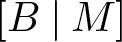 ${\left[\smash{{B} \mathbin{\mid}{M} }\right]}$. In this article, we show that such pairs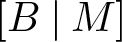 ${\left[\smash{{B} \mathbin{\mid}{M} }\right]}$ are equivalent to Boolean restriction monoids and also to ample source-étale topological categories; these are generalizations of the Boolean inverse monoids and ample étale topological groupoids used to encode self-similar structures such as Cuntz and Cuntz–Krieger $C^\ast$-algebras, Leavitt path algebras, and the $C^\ast$-algebras associated with self-similar group actions. We explain and illustrate these links and begin the programme of understanding how topological and algebraic properties of such groupoids can be understood from the logical perspective of the associated varieties.


RINGS WITH COMMON DIVISION, COMMON MEADOWS AND THEIR CONDITIONAL EQUATIONAL THEORIES
- Part of
-
- Journal:
- The Journal of Symbolic Logic , First View
- Published online by Cambridge University Press:
- 23 December 2024, pp. 1-31
-
- Article
- Export citation
-
We examine the consequences of having a total division operation $\frac {x}{y}$ on commutative rings. We consider two forms of binary division, one derived from a unary inverse, the other defined directly as a general operation; each are made total by setting $1/0$ equal to an error value $\bot $, which is added to the ring. Such totalised divisions we call common divisions. In a field the two forms are equivalent and we have a finite equational axiomatisation E that is complete for the equational theory of fields equipped with common division, which are called common meadows. These equational axioms E turn out to be true of commutative rings with common division but only when defined via inverses. We explore these axioms E and their role in seeking a completeness theorem for the conditional equational theory of common meadows. We prove they are complete for the conditional equational theory of commutative rings with inverse based common division. By adding a new proof rule, we can prove a completeness theorem for the conditional equational theory of common meadows. Although, the equational axioms E fail with common division defined directly, we observe that the direct division does satisfy the equations in E under a new congruence for partial terms called eager equality.


STRICTLY n-FINITE VARIETIES OF HEYTING ALGEBRAS
- Part of
-
- Journal:
- The Journal of Symbolic Logic / Volume 91 / Issue 1 / March 2026
- Published online by Cambridge University Press:
- 29 October 2024, pp. 473-488
- Print publication:
- March 2026
-
- Article
-
- You have access
- Open access
- HTML
- Export citation
-
For any $n<\omega $ we construct an infinite $(n+1)$-generated Heyting algebra whose n-generated subalgebras are of cardinality $\leq m_n$ for some positive integer $m_n$. From this we conclude that for every $n<\omega $ there exists a variety of Heyting algebras which contains an infinite $(n+1)$-generated algebra, but which contains only finite n-generated algebras. For the case $n=2$ this provides a negative answer to a question posed by G. Bezhanishvili and R. Grigolia in [4].


Minimal monoids generating varieties with complex subvariety lattices
- Part of
-
- Journal:
- Proceedings of the Edinburgh Mathematical Society / Volume 67 / Issue 2 / May 2024
- Published online by Cambridge University Press:
- 22 March 2024, pp. 617-642
-
- Article
- Export citation
DUALITY FOR COALGEBRAS FOR VIETORIS AND MONADICITY
- Part of
-
- Journal:
- The Journal of Symbolic Logic / Volume 90 / Issue 3 / September 2025
- Published online by Cambridge University Press:
- 04 March 2024, pp. 1022-1055
- Print publication:
- September 2025
-
- Article
-
- You have access
- Open access
- HTML
- Export citation
-
We prove that the opposite of the category of coalgebras for the Vietoris endofunctor on the category of compact Hausdorff spaces is monadic over $\mathsf {Set}$. We deliver an analogous result for the upper, lower, and convex Vietoris endofunctors acting on the category of stably compact spaces. We provide axiomatizations of the associated (infinitary) varieties. This can be seen as a version of Jónsson–Tarski duality for modal algebras beyond the zero-dimensional setting.

On the representability of actions of Leibniz algebras and Poisson algebras
- Part of
-
- Journal:
- Proceedings of the Edinburgh Mathematical Society / Volume 66 / Issue 4 / November 2023
- Published online by Cambridge University Press:
- 22 November 2023, pp. 998-1021
-
- Article
- Export citation
ON ENDOMORPHISMS OF EXTENSIONS IN TANNAKIAN CATEGORIES
- Part of
-
- Journal:
- Bulletin of the Australian Mathematical Society / Volume 110 / Issue 1 / August 2024
- Published online by Cambridge University Press:
- 07 November 2023, pp. 103-114
- Print publication:
- August 2024
-
- Article
-
- You have access
- Open access
- HTML
- Export citation
-
We prove analogues of Schur’s lemma for endomorphisms of extensions in Tannakian categories. More precisely, let $\mathbf {T}$ be a neutral Tannakian category over a field of characteristic zero. Let E be an extension of A by B in $\mathbf {T}$. We consider conditions under which every endomorphism of E that stabilises B induces a scalar map on $A\oplus B$. We give a result in this direction in the general setting of arbitrary $\mathbf {T}$ and E, and then a stronger result when $\mathbf {T}$ is filtered and the associated graded objects to A and B satisfy some conditions. We also discuss the sharpness of the results.


TESTING DEFINITIONAL EQUIVALENCE OF THEORIES VIA AUTOMORPHISM GROUPS
- Part of
-
- Journal:
- The Review of Symbolic Logic / Volume 17 / Issue 4 / December 2024
- Published online by Cambridge University Press:
- 17 July 2023, pp. 1097-1118
- Print publication:
- December 2024
-
- Article
- Export citation
