Refine listing
Actions for selected content:
1723 results in 60Jxx
Numerical method for solving impulse control problems in partially observed piecewise deterministic Markov processes
- Part of
-
- Journal:
- Advances in Applied Probability , First View
- Published online by Cambridge University Press:
- 15 December 2025, pp. 1-32
-
- Article
- Export citation
Intrinsic stochastic differential equations and the extended Itô formula on manifolds
- Part of
-
- Journal:
- Proceedings of the Royal Society of Edinburgh. Section A: Mathematics , First View
- Published online by Cambridge University Press:
- 12 December 2025, pp. 1-33
-
- Article
-
- You have access
- Open access
- HTML
- Export citation
-
A general way to represent stochastic differential equations (SDEs) on smooth manifolds is based on the Schwartz morphism. In this manuscript, we are interested in SDEs on a smooth manifold $M$ that are driven by p-dimensional Wiener process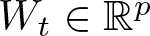 $W_t \in \mathbb{R}^p$ and time $t$. In terms of the Schwartz morphism, such an SDE is represented by a Schwartz morphism that morphs the semimartingale $(t,W_t)\in\mathbb{R}^{p+1}$ into a semimartingale on the manifold $M$. We show that it is possible to construct such Schwartz morphisms using special maps that we call diffusion generators. We show that one of the ways to construct a diffusion generator is by considering the flow of differential equations. One particular case is the construction of diffusion generators using Lagrangian vector fields. Using the diffusion generator approach, we also give the extended Itô formula (also known as generalized Itô formula or Itô–Wentzell formula) for SDEs on manifolds.


Branching particle systems with mutually catalytic interactions
- Part of
-
- Journal:
- Advances in Applied Probability , First View
- Published online by Cambridge University Press:
- 11 December 2025, pp. 1-38
-
- Article
-
- You have access
- Open access
- HTML
- Export citation
-
We study a continuous-time mutually catalytic branching model on the $\mathbb{Z}^{d}$. The model describes the behavior of two different populations of particles, performing random walk on the lattice in the presence of branching, that is, each particle dies at a certain rate and is replaced by a random number of offspring. The branching rate of a particle in one population is proportional to the number of particles of another population at the same site. We study the long time behavior for this model, in particular, coexistence and noncoexistence of two populations in the long run. Finally, we construct a sequence of renormalized processes and use duality techniques to investigate its limiting behavior.

Asymptotic analysis for stationary distributions of multiscaled reaction networks
- Part of
-
- Journal:
- Advances in Applied Probability , First View
- Published online by Cambridge University Press:
- 11 December 2025, pp. 1-31
-
- Article
-
- You have access
- Open access
- HTML
- Export citation
-
We study stationary distributions in the context of stochastic reaction networks. In particular, we are interested in complex balanced reaction networks and the reduction of such networks by assuming that a set of species (called non-interacting species) are degraded fast (and therefore essentially absent from the network), implying that some reaction rates are large relative to others. Technically, we assume that these reaction rates are scaled by a common parameter N and let $N\to\infty$. The limiting stationary distribution as $N\to\infty$ is compared with the stationary distribution of the reduced reaction network obtained by elimination of the non-interacting species. In general, the limiting stationary distribution could differ from the stationary distribution of the reduced reaction network. We identify various sufficient conditions under which these two distributions are the same, including when the reaction network is detailed balanced and when the set of non-interacting species consists of intermediate species. In the latter case, the limiting stationary distribution essentially retains the form of the complex balanced distribution. This finding is particularly surprising given that the reduced reaction network could be non-weakly reversible and might exhibit unconventional kinetics.


Distribution of integers with digit restrictions via Markov chains
- Part of
-
- Journal:
- Ergodic Theory and Dynamical Systems , First View
- Published online by Cambridge University Press:
- 01 December 2025, pp. 1-48
-
- Article
-
- You have access
- Open access
- HTML
- Export citation
On ergodicity and transience for a class of level-dependent GI/M/1-type Markov chains
- Part of
-
- Journal:
- Journal of Applied Probability / Volume 62 / Issue 4 / December 2025
- Published online by Cambridge University Press:
- 21 November 2025, pp. 1301-1317
- Print publication:
- December 2025
-
- Article
- Export citation
On approximating the Potts model with contracting Glauber dynamics
- Part of
-
- Journal:
- Advances in Applied Probability , First View
- Published online by Cambridge University Press:
- 07 November 2025, pp. 1-38
-
- Article
-
- You have access
- Open access
- HTML
- Export citation
A sequential stopping problem with costly reversibility
- Part of
-
- Journal:
- Journal of Applied Probability , First View
- Published online by Cambridge University Press:
- 03 November 2025, pp. 1-33
-
- Article
-
- You have access
- Open access
- HTML
- Export citation
Mixed-state branching evolution for cell division models
- Part of
-
- Journal:
- Journal of Applied Probability , First View
- Published online by Cambridge University Press:
- 29 September 2025, pp. 1-22
-
- Article
- Export citation
-
We prove a scaling limit theorem for two-type Galton–Watson branching processes with interaction. The limit theorem gives rise to a class of mixed-state branching processes with interaction used to simulate evolution for cell division affected by parasites. Such processes can also be obtained by the pathwise-unique solution to a stochastic equation system. Moreover, we present sufficient conditions for extinction with probability 1 and the exponential ergodicity in the $L^1$-Wasserstein distance of such processes in some cases.

Explicit pathwise expansion for multivariate diffusions with applications
- Part of
-
- Journal:
- Advances in Applied Probability , First View
- Published online by Cambridge University Press:
- 29 September 2025, pp. 1-34
-
- Article
- Export citation
Two-type branching processes with immigration, and the structured coalescents
- Part of
-
- Journal:
- Journal of Applied Probability , First View
- Published online by Cambridge University Press:
- 29 September 2025, pp. 1-29
-
- Article
- Export citation
Glauber dynamics for the hard-core model on bounded-degree $H$-free graphs
- Part of
-
- Journal:
- Combinatorics, Probability and Computing / Volume 34 / Issue 6 / November 2025
- Published online by Cambridge University Press:
- 19 September 2025, pp. 803-814
-
- Article
-
- You have access
- Open access
- HTML
- Export citation
-
The hard-core model has as its configurations the independent sets of some graph instance $G$. The probability distribution on independent sets is controlled by a ‘fugacity’ $\lambda \gt 0$, with higher $\lambda$ leading to denser configurations. We investigate the mixing time of Glauber (single-site) dynamics for the hard-core model on restricted classes of bounded-degree graphs in which a particular graph $H$ is excluded as an induced subgraph. If $H$ is a subdivided claw then, for all $\lambda$, the mixing time is $O(n\log n)$, where $n$ is the order of $G$. This extends a result of Chen and Gu for claw-free graphs. When $H$ is a path, the set of possible instances is finite. For all other $H$, the mixing time is exponential in $n$ for sufficiently large $\lambda$, depending on $H$ and the maximum degree of $G$.
$G$.


Conditioning Bienaymé–Galton–Watson trees to have large sub-populations
- Part of
-
- Journal:
- Advances in Applied Probability , First View
- Published online by Cambridge University Press:
- 10 September 2025, pp. 1-42
-
- Article
- Export citation
Quasi-stationary distributions for subcritical branching Markov chains
- Part of
-
- Journal:
- Advances in Applied Probability , First View
- Published online by Cambridge University Press:
- 10 September 2025, pp. 1-47
-
- Article
- Export citation
-
Consider a subcritical branching Markov chain. Let $Z_n$ denote the counting measure of particles of generation n. Under some conditions, we give a probabilistic proof for the existence of the Yaglom limit of $(Z_n)_{n\in\mathbb{N}}$ by the moment method, based on the spinal decomposition and the many-to-few formula. As a result, we give explicit integral representations of all quasi-stationary distributions of $(Z_n)_{n\in\mathbb{N}}$, whose proofs are direct and probabilistic, and do not rely on Martin boundary theory.


The distance on the slightly supercritical random series–parallel graph
- Part of
-
- Journal:
- Advances in Applied Probability , First View
- Published online by Cambridge University Press:
- 09 September 2025, pp. 1-42
-
- Article
-
- You have access
- Open access
- HTML
- Export citation
-
We consider the random series–parallel graph introduced by Hambly and Jordan (2004 Adv. Appl. Probab. 36, 824–838), which is a hierarchical graph with a parameter $p\in [0, \, 1]$. The graph is built recursively: at each step, every edge in the graph is either replaced with probability p by a series of two edges, or with probability $1-p$ by two parallel edges, and the replacements are independent of each other and of everything up to then. At the nth step of the recursive procedure, the distance between the extremal points on the graph is denoted by $D_n (p)$. It is known that $D_n(p)$ possesses a phase transition at $p=p_c \;:\!=\;\frac{1}{2}$; more precisely, $\frac{1}{n}\log {{\mathbb{E}}}[D_n(p)] \to \alpha(p)$ when $n \to \infty$, with $\alpha(p) >0$ for $p>p_c$ and $\alpha(p)=0$ for $p\le p_c$. We study the exponent $\alpha(p)$ in the slightly supercritical regime $p=p_c+\varepsilon$. Our main result says that as $\varepsilon\to 0^+$, $\alpha(p_c+\varepsilon)$ behaves like $\sqrt{\zeta(2) \, \varepsilon}$, where $\zeta(2) \;:\!=\; \frac{\pi^2}{6}$.


Optimal stopping with variable attention
- Part of
-
- Journal:
- Advances in Applied Probability , First View
- Published online by Cambridge University Press:
- 09 September 2025, pp. 1-34
-
- Article
-
- You have access
- Open access
- HTML
- Export citation
Bounds on some geometric functionals of high dimensional Brownian convex hulls and their inverse processes
- Part of
-
- Journal:
- Canadian Mathematical Bulletin , First View
- Published online by Cambridge University Press:
- 27 August 2025, pp. 1-14
-
- Article
-
- You have access
- Open access
- HTML
- Export citation
-
We prove two-sided bounds on the expected values of several geometric functionals of the convex hull of Brownian motion in $\mathbb {R}^n$ and their inverse processes. This extends some recent results of McRedmond and Xu (2017), Jovalekić (2021), and Cygan, Šebek, and the first author (2023) from the plane to higher dimensions. Our main result shows that the average time required for the convex hull in $\mathbb {R}^n$ to attain unit volume is at most $n\sqrt [n]{n!}$. The proof relies on a novel procedure that embeds an n-simplex of prescribed volume within the convex hull of the Brownian path run up to a certain stopping time. All of our bounds capture the correct order of asymptotic growth or decay in the dimension n.


On the variance reduction of Hamiltonian Monte Carlo via an approximation scheme
- Part of
-
- Journal:
- Journal of Applied Probability , First View
- Published online by Cambridge University Press:
- 19 August 2025, pp. 1-27
-
- Article
- Export citation
-
Let $\pi$ be a probability distribution in $\mathbb{R}^d$ and f a test function, and consider the problem of variance reduction in estimating $\mathbb{E}_\pi(f)$. We first construct a sequence of estimators for $\mathbb{E}_\pi (f)$, say $({1}/{k})\sum_{i=0}^{k-1} g_n(X_i)$, where the $X_i$ are samples from $\pi$ generated by the Metropolized Hamiltonian Monte Carlo algorithm and $g_n$ is the approximate solution of the Poisson equation through the weak approximate scheme recently invented by Mijatović and Vogrinc (2018). Then we prove under some regularity assumptions that the estimation error variance $\sigma_\pi^2(g_n)$ can be as arbitrarily small as the approximation order parameter $n\rightarrow\infty$. To illustrate, we confirm that the assumptions are satisfied by two typical concrete models, a Bayesian linear inverse problem and a two-component mixture of Gaussian distributions.


Colored interacting particle systems on the ring: Stationary measures from Yang–Baxter equations
- Part of
-
- Journal:
- Compositio Mathematica / Volume 161 / Issue 8 / August 2025
- Published online by Cambridge University Press:
- 03 October 2025, pp. 1855-1922
- Print publication:
- August 2025
-
- Article
- Export citation
-
Recently, there has been much progress in understanding stationary measures for colored (also called multi-species or multi-type) interacting particle systems, motivated by asymptotic phenomena and rich underlying algebraic and combinatorial structures (such as nonsymmetric Macdonald polynomials). In this paper, we present a unified approach to constructing stationary measures for most of the known colored particle systems on the ring and the line, including (1) the Asymmetric Simple Exclusion Process (multi-species ASEP, or mASEP); (2) the $q$-deformed Totally Asymmetric Zero Range Process (TAZRP) also known as the $q$-Boson particle system; (3) the $q$-deformed Pushing Totally Asymmetric Simple Exclusion Process ( $q$-PushTASEP). Our method is based on integrable stochastic vertex models and the Yang–Baxter equation. We express the stationary measures as partition functions of new ‘queue vertex models’ on the cylinder. The stationarity property is a direct consequence of the Yang–Baxter equation. For the mASEP on the ring, a particular case of our vertex model is equivalent to the multiline queues of Martin (Stationary distributions of the multi-type ASEP, Electron. J. Probab. 25 (2020), 1–41). For the colored $q$-Boson process and the $q$-PushTASEP on the ring, we recover and generalize known stationary measures constructed using multiline queues or other methods by Ayyer, Mandelshtam and Martin (Modified Macdonald polynomials and the multispecies zero range process: II, Algebr. Comb. 6 (2022), 243–284; Modified Macdonald polynomials and the multispecies zero-range process: I, Algebr. Comb. 6 (2023), 243–284) and Bukh and Cox (Periodic words, common subsequences and frogs, Ann. Appl. Probab. 32 (2022), 1295–1332). Our proofs of stationarity use the Yang–Baxter equation and bypass the Matrix Product Ansatz (used for the mASEP by Prolhac, Evans and Mallick (The matrix product solution of the multispecies partially asymmetric exclusion process, J. Phys. A. 42 (2009), 165004)). On the line and in a quadrant, we use the Yang–Baxter equation to establish a general colored Burke’s theorem, which implies that suitable specializations of our queue vertex models produce stationary measures for particle systems on the line. We also compute the colored particle currents in stationarity.


Noise sensitivity on affine Weyl groups
- Part of
-
- Journal:
- Combinatorics, Probability and Computing / Volume 34 / Issue 5 / September 2025
- Published online by Cambridge University Press:
- 31 July 2025, pp. 754-779
-
- Article
- Export citation
