To save content items to your account,
please confirm that you agree to abide by our usage policies.
If this is the first time you use this feature, you will be asked to authorise Cambridge Core to connect with your account.
Find out more about saving content to .
To save content items to your Kindle, first ensure no-reply@cambridge.org
is added to your Approved Personal Document E-mail List under your Personal Document Settings
on the Manage Your Content and Devices page of your Amazon account. Then enter the ‘name’ part
of your Kindle email address below.
Find out more about saving to your Kindle.
Note you can select to save to either the @free.kindle.com or @kindle.com variations.
‘@free.kindle.com’ emails are free but can only be saved to your device when it is connected to wi-fi.
‘@kindle.com’ emails can be delivered even when you are not connected to wi-fi, but note that service fees apply.
This study explores the impact of market-seeking internationalization, including exporting, industry linkages with foreign multinational enterprises (MNEs) at home (e.g., being a supplier), and market-seeking foreign direct investment (FDI) on the digital transformation of large manufacturing firms from an emerging economy. I revisit the springboard perspective, arguing that serving international customers contributes to emerging market firms gaining dynamic capabilities and eventually leads to the adoption of digital technologies. A four-step mediation analysis, as well as path analysis using structural equation modeling, is employed to test the hypotheses. The results show that dynamic capabilities mediate the relationship between internationalization and digital transformation for exporting and market-seeking FDI, while industry linkages with foreign MNEs at home directly lead to digital transformation. With strategic asset-seeking FDI being controlled, our findings highlight that capability upgrading is not only about acquiring knowledge from outward internationalization but also through the endogenous growth path of learning by doing and knowledge acquisition from inward internationalization.
How can everyday entertainment shape gender politics in authoritarian regimes? Despite autocrats’ heavy control over media, political scientists studying authoritarianism largely neglect television programming. Particularly surprising given their target demographics, cooking shows are absent in political science gender analyses. Drawing from over 600 hours of Turkish cooking show content, I introduce conservative gender edutainment to capture the mechanisms by which TV shows facilitate authoritarian regimes’ gender construction projects. Using quantitative analysis of cooking show content, I first identify two complementary pedagogies — modeling and othering — that respectively teach adherence to, and vilify deviation from, regime-specified behavioral norms. I then use intertextual analysis to extract content that engagingly instructs viewers in the ideal woman in “New Turkey,” the neoconservative vision articulated by Turkey’s ruling (Justice and Development Party) AKP. Findings provide novel insight into vernacular channels of gender construction, while underscoring the added value TV-as-data holds for studies of identity politics in authoritarian contexts.
Justin Garson has argued, contrary to the claims of proponents of purportedly ahistorical theories of functions, that there are no ahistorical theories of functions. In the interest of satisfying uncontroversial desiderata on a theory of functions, the most influential ahistorical views all smuggle in history. I argue that Garson’s case relies on a misinterpretation of the ahistorical accounts he targets and that the details of the misinterpretation are instructive. They highlight often unquestioned assumptions about how a theory of functions fits into a broader account of scientific practice and what theoretical work a definition of function should do.
Over the past 20–30 years, women’s parties have consistently formed across Europe, aiming to improve women’s substantive representation by politicizing gender issues. Despite their potential impact on the policy agenda, empirical knowledge of the full range and scope of issues these parties mobilize is limited. This paper presents a novel mixed-method text analysis of the issue concerns in an original dataset of European women’s parties’ manifestos spanning a 30-year period. I find that parties across contexts share concerns in social justice and social policy. However, two subtypes of women’s party can be differentiated based on issue focus and framing. Essentialist women’s parties predominantly represent women’s material interests, whereas feminist parties additionally tackle structural gender inequality issues, including gender-based violence and human security. These findings provide a foundation for incorporating women’s parties into growing research on party competition over gender issues.
We strengthen two results of Moretó. We prove that the index of the Fitting subgroup is bounded in terms of the degrees of the irreducible monomial Brauer characters of the finite solvable group G and it is also bounded in terms of the average degree of the irreducible Brauer characters of G that lie over a linear character of the Fitting subgroup.
In the second part of this series of papers, we address the same evolution problem that was considered in part 1 (see [16]), namely the nonlocal Fisher-KPP equation in one spatial dimension,
\begin{equation*} u_t = D u_{xx} + u(1-\phi *u), \end{equation*}
where $\phi *u$ is a spatial convolution with the top hat kernel, $\phi (y) \equiv H\left (\frac {1}{4}-y^2\right )$, except that now we modify this to an associated initial-boundary value problem on the finite spatial interval $[0,a]$ rather than the whole real line. Boundary conditions are required at the end points of the interval, and we address the situations when these are of either Dirichlet or Neumann type. This model is a natural extension of the classical Fisher-KPP model, with the introduction of the simplest possible nonlocal effect into the saturation term. Nonlocal reaction-diffusion models arise naturally in a variety of (frequently biological or ecological) contexts, and as such it is of fundamental interest to examine their properties in detail, and to compare and contrast these with the well known properties of the classical Fisher-KPP model.


To determine the feasibility of implementing a facility-based breastfeeding counselling (BFC) mentorship programme and its effect on mentee confidence and client perceptions of BFC.
Setting:
Mbagathi County Referral Hospital in Nairobi, Kenya.
Participants:
Health facility management, health workers (twenty-one mentees and seven mentors), 120 pregnant women in the third trimester who attended an antenatal care (ANC) appointment at Mbagathi Hospital and reported receiving BFC during a visit in the 2 weeks prior and 120 postpartum women in the postnatal care ward who delivered a full-term infant and reported receiving BFC.
Design:
Mixed-methods study incorporating online surveys, client exit interviews, key informant interviews and focus group discussions. The 4-month intervention involved facility-wide orientations, selection and training of mentors, assigning mentees to mentors and implementing mentorship activities.
Results:
The programme successfully maintained 90·5 % mentee retention (19/21) over 4 months. At baseline, mentees demonstrated high knowledge (94 % questions answered correctly), which was maintained at endline (92 %). Mentees showed significant improvement in confidence counselling on breastfeeding and infant feeding (67 % at baseline v. 95 % at endline, P = 0·014). The percentage of ANC clients who felt BFC gave them more knowledge increased from 73 % to 97 % (P < 0·001). Among postnatal care clients, those reporting friendly treatment increased from 89 % to 100 % (P = 0·007), verbal mistreatment declined from 7 % to 0 % (P = 0·044) and those feeling discriminated decreased from 11 % to 2 % (P = 0·03). Key enablers included administrative support, structured mentorship tools and peer learning communities. Implementation barriers included scheduling conflicts, staff shortages and high patient volumes.
Conclusions:
BFC mentorship was feasible in this setting and was associated with improved health worker confidence in BFC. The programme can be successfully implemented with supportive facility leadership, well-matched mentors and mentees and adaptable mentorship approaches.
LGBTQ+ people remain underrepresented in politics, leading scholars to examine a variety of barriers to office. Based on work on women in politics, this paper focuses on one possible barrier: political finance. Is there a political financing gap between straight cisgender and LGBTQ+ candidates? Are there inequalities among LGBTQ+ candidates? If so, what explains them? This article explores these questions by combining a dataset of out LGBTQ+ candidates in the 2015–21 federal elections with political donations data from Elections Canada. When we examine bivariate financing gaps, we find LGBTQ+ candidates receive less money than their straight cisgender counterparts. These gaps are gendered: queer cisgender women, transgender, and nonbinary candidates receive the least money. When we adjust for other variables, we still find LGBTQ+ candidates in the Conservative Party and transgender and nonbinary candidates across parties receive less money. This article contributes to work on gender and identity in campaign finance and LGBTQ+ representation.
Understanding the mechanisms of major depressive disorder (MDD) improvement is a key challenge to determining effective personalized treatments.
Methods
To identify a data-driven pattern of clinical improvement in MDD and to quantify neural-to-symptom relationships according to antidepressant treatment, we performed a secondary analysis of the publicly available dataset EMBARC (Establishing Moderators and Biosignatures of Antidepressant Response in Clinical Care). In EMBARC, participants with MDD were treated either by sertraline or placebo for 8 weeks (Stage 1), and then switched to bupropion according to clinical response (Stage 2). We computed a univariate measure of clinical improvement through a principal component (PC) analysis on the variations of individual items of four clinical scales measuring depression, anxiety, suicidal ideas, and manic-like symptoms. We then investigated how initial clinical and neural factors predicted this measure during Stage 1 by running a linear model for each brain parcel’s resting-state global brain connectivity (GBC) with individual improvement scores during Stage 1.
Results
The first PC (PC1) was similar across treatment groups at stages 1 and 2, suggesting a shared pattern of symptom improvement. PC1 patients’ scores significantly differed according to treatment, whereas no difference in response was evidenced between groups with the Clinical Global Impressions Scale. Baseline GBC correlated with Stage 1 PC1 scores in the sertraline but not in the placebo group.
Using data-driven reduction of symptom scales, we identified a common profile of symptom improvement with distinct intensity between sertraline and placebo.
Conclusions
Mapping from data-driven symptom improvement onto neural circuits revealed treatment-responsive neural profiles that may aid in optimal patient selection for future trials.
The rise of antagonism between the German and Czech nationalist activists in the mid-19th century has been neither clearly explained nor convincingly dated. Although this is a topic closely linked to the history of nationalism, the state of research has paradoxically been misguided by the nationalist approach adopted by historians analyzing it. The reason is that nationalism was not the cause but just one response to a greater phenomenon. The aim of the article is therefore to clarify the German-Czech relationship in the broader context of European history and the history of international relations using the perspective of geopolitics and security. As it claims, it was not cultural, linguistic, or constitutional issues but the fear of external threats that caused the mutual distrust of political activists that led to hostility and conflicting policies. Under the impact of international events and within the context of their relations to other international actors this process originated in 1839 by the latest. During subsequent years it developed rapidly and became obvious during the 1848 revolutions. The article thus reveals that this year did not represent the beginning but merely another chapter in a process that had begun nearly a decade earlier.
Measurements of the radiocarbon (14C) content of subannual wood cellulose samples over the 1963 bomb spike have revealed an apparent delay between the increase in atmospheric radiocarbon content and that of wood cellulose. This delay is apparent in both coniferous and deciduous tree species and is of a magnitude of approximately 4 weeks. The delay in wood cellulose 14C change as measured in a Sitka spruce from Washington state, USA, was previously used to estimate the relative influence of tree physiological effects contra environmental effects. We repeated the measurements with the increased measurement precision of today’s AMS systems and compare the new results to the ones of a Scots pine tree from Trondheim, central Norway and a white oak from Oregon state, USA. The results challenge the assumption that the 14C tree ring records directly show the atmospheric 14C concentration of a homogeneous, zonally well-mixed atmosphere. Instead, the apparent 1963 delay reflects local influences of the ecosystem and tree physiology. The 1963/1964 data allows for exploratory modeling of the effects of biospheric decay CO2 and local environmental influences assuming the absence of stored photosynthates from the previous year. Compared to the 10–30% contribution from biospheric CO2, the effects of delayed incorporation of carbon into the wood cellulose and the effect of stored photosynthate are small in the conifers. Highly detailed 14C records of stem cellulose can, in combination with stable isotope studies, contribute to our understanding of variability of the local carbon cycle, climate, and the environment.
Insight into plasma dynamics under usual pulsed laser deposition (PLD) conditions for NiO thin film growth is provided by implementing angle- and time-resolved Langmuir probe (LP) methods. The selective separation generated an acceleration region that separates ions based on nature and ionisation state. A maximum of the kinetic energy for most plasma components was found for 0.5–2 Pa Ar, while the time-resolved analysis revealed a multipeak evolution of the electron temperature, which widened and shifted with increasing pressure. Evidence of two temperature structures for NiO plasma is presented, and the estimation of the accelerating field generated between the two plasma structures reveals selective in acceleration in the first microsecond. The acceleration field has a maximum value for the O2 atmosphere at approximately 2 Pa, which shows the separation between drift-dominated kinetics and reaction-based dynamics. Further investigation in this 2 Pa region revealed the appearance of a perturbation consistent with the formation of a plasma fireball on the probe. The dynamics of these perturbations is affected by the nature of the gas having different incubation times.
The literature on vice presidencies fails to explain the women’s inclusion as vice-presidential candidates, as the strategies of ticket balancing predict a higher number of female running mates than what is observed. Based on theories of gender representation, this study develops hypotheses about the inclusion of women as vice-presidential candidates and tests them using an original dataset comprising 471 presidential tickets from Latin America (1978–2022), a region where women’s representation has expanded. The analysis reveals that small and left-wing parties nominate more women as vice presidents than major and right-wing parties. Although female vice-presidential candidates tend to have less political experience than their male presidential counterparts, they often add a diverse and complementary policy expertise to the ticket. The findings underscore that women’s inclusion as vice-presidential candidates depends mostly on partisan calculations, since gender quotas rarely apply to the vice presidency.
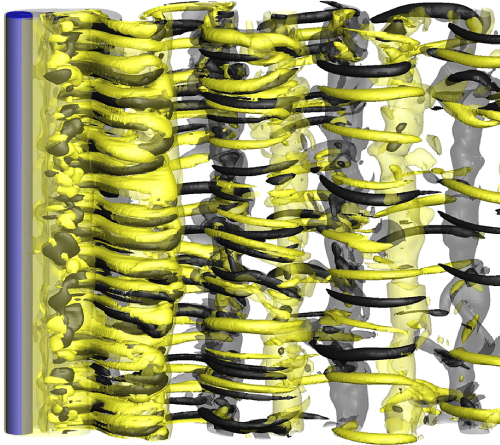
This study investigates the strong influence of a splitter plate on two- and three-dimensional wake transitions of a circular cylinder. Direct numerical simulations and Floquet analyses are conducted over a parameter space including Reynolds numbers (Re) of 10–480 and non-dimensional plate lengths (L/D) of 0–6. With the increase in L/D, the critical Re for the onset of vortex shedding (Recr2D) increases monotonically. The delayed onset of vortex shedding with elongation of the body is physically explained. The critical Re for the onset of three-dimensionality (Recr3D) and the three-dimensional wake instability modes and structures are also significantly altered by the splitter plate. Compared with an isolated cylinder, the Recr3D for L/D = 1 is significantly reduced via a long wavelength mode, whereas the Recr3D for L/D = 2–6 is significantly increased via other modes. For each L/D, with increasing Re over the wake transition process, the spanwise wavelength of the wake structure gradually decreases, and the wake structure becomes increasingly chaotic. The strong influence of the splitter plate on the formation of the primary vortices and three-dimensional wake structures alter the hydrodynamic characteristics strongly. In particular, optimal lift reduction is achieved at L/D ∼ 1. In addition, the existence/absence of a hysteresis effect at the onset of three-dimensionality is identified by three methods. Among which, the method involving the Landau equation may be contaminated by initial transients induced by stable Floquet modes and may thus lead to a false conclusion on the existence/absence of hysteresis.