To save content items to your account,
please confirm that you agree to abide by our usage policies.
If this is the first time you use this feature, you will be asked to authorise Cambridge Core to connect with your account.
Find out more about saving content to .
To save content items to your Kindle, first ensure no-reply@cambridge.org
is added to your Approved Personal Document E-mail List under your Personal Document Settings
on the Manage Your Content and Devices page of your Amazon account. Then enter the ‘name’ part
of your Kindle email address below.
Find out more about saving to your Kindle.
Note you can select to save to either the @free.kindle.com or @kindle.com variations.
‘@free.kindle.com’ emails are free but can only be saved to your device when it is connected to wi-fi.
‘@kindle.com’ emails can be delivered even when you are not connected to wi-fi, but note that service fees apply.
Detection approaches based on environmental DNA (eDNA) are widely used for free-living species but remain underutilized for parasite species. This study applies eDNA detection methods to elucidate the life cycle of the trematode Curtuteria arguinae, which infects the socioeconomically and ecologically important edible cockle (Cerastoderma edule) as its second intermediate host along the northeastern Atlantic coast, including Arcachon Bay, France. The first intermediate and definitive hosts remained unknown. To identify these hosts – presumed to be a gastropod and a shorebird – we developed a quantitative PCR (qPCR)-based eDNA approach targeting partial cox1 and SSU gene regions of C. arguinae. We tested for C. arguinae eDNA presence in water samples containing separately five dominant gastropod species and fecal samples from known cockle predators, the European oystercatcher (Haematopus ostralegus) and gulls (Larus spp.), collected in Arcachon Bay. C. arguinae eDNA was only detected in water containing the needle snail (Bittium reticulatum), with cercarial emergence confirming infection in 1.6% of individual hosts. Morphological analysis of the cercarial and metacercarial stages revealed variability in collar spine visibility. Additionally, C. arguinae was detected by qPCR in 42% of oystercatcher feces and no gull feces, suggesting oystercatchers are the definitive host. This study is the first to elucidate the complete life cycle of C. arguinae, identifying B. reticulatum as its first intermediate host and H. ostralegus as its definitive host. Our findings highlight the potential of eDNA approaches for resolving parasite life cycles and enabling advances in ecological research on C. arguinae.
Wild Mexican sunflower [Tithonia tubaeformis (Jacq.) Cass.] is one of the most important annual weeds for sugarcane (Saccharum spp. hybrid) and, to a lesser extent, for soybean [Glycine max (L.) Merr.] and bean (Phaseolus vulgaris L.) in the northwest of Argentina and some other countries. Currently, its management relies on chemical methods, and no information is available to develop alternative management methods. In the current study, we conducted laboratory germination assays in the presence of different conditions of light, temperature, and phytohormone (gibberellins and abscisic acid) concentrations, as well as fluridone, trinexapac-ethyl (TE), methyl viologen (MV), dry afterripening (DAR), cold stratification, and pericarp scarification. Likewise, a field experiment was carried out to assess the impact of various sugarcane crop residue amounts on seedling emergence. Darkness and constant temperatures (e.g., 20 C) reduced the germination of fresh seeds. The addition of TE, a gibberellic acid inhibitor, and abscisic acid reduced germination. In contrast, the addition of MV increased germination. Pericarp scarification and embryo excision stimulated germination, suggesting that the pericarp acts as a barrier to prevent germination. DAR did not promote germination. On the other hand, cold stratification enabled dormancy release, which in turn promoted germination when the stratified achenes germinated in light and at alternating temperatures of 20/30 C. Field experiments showed that increasing amounts of sugarcane crop residue were useful to reduce weed seedling emergence and biomass, probably by limiting the triggering effect of light and temperature alternation on seedling emergence. These findings provide information about the endogenous control of germination, which can be useful for developing a rational integrated management system for T. tubaeformis.
We consider stationary configurations of points in Euclidean space that are marked by positive random variables called scores. The scores are allowed to depend on the relative positions of other points and outside sources of randomness. Such models have been thoroughly studied in stochastic geometry, e.g. in the context of random tessellations or random geometric graphs. It turns out that in a neighborhood of a point with an extreme score it is possible to rescale positions and scores of nearby points to obtain a limiting point process, which we call the tail configuration. Under some assumptions on dependence between scores, this local limit determines the global asymptotics for extreme scores within increasing windows in $\mathbb{R}^d$. The main result establishes the convergence of rescaled positions and clusters of high scores to a Poisson cluster process, quantifying the idea of the Poisson clumping heuristic by Aldous (1989, in the point process setting). In contrast to the existing results, our framework allows for explicit calculation of essentially all extremal quantities related to the limiting behavior of extremes. We apply our results to models based on (marked) Poisson processes where the scores depend on the distance to the kth nearest neighbor and where scores are allowed to propagate through a random network of points depending on their locations.
Our overall goal was to enhance the usability and interactivity of the RE-AIM website (re-aim.org) and improve resources to support the application of the RE-AIM framework within the context of dissemination & implementation (D&I) research and practice.
Methods:
We applied a mixed-methods approach to obtain user feedback from 24 D&I researchers and practitioners. Usability (System Usability Scale) and interactivity (Interactivity Scale) were assessed through validated surveys, at baseline and after two iterative rounds of website modifications (Phase 1 and Phase 2). We also conducted qualitative assessments at each phase.
Results:
Qualitative baseline and Phase 1 findings indicated a need to simplify organization, enhance information accessibility, provide concrete guidance on applying RE-AIM, and clarify contextual factors related to RE-AIM constructs. After streamlining website and homepage organization, Phase 2 qualitative results suggested improved user navigation experience; users also requested greater interactivity. Modifications included: new interactive planning tool and a video introduction of contextual factors influencing RE-AIM outcomes. Significant improvements were found in the SUS score from baseline to Phase 1(64.2[SD18.7] to 80.8 [SD 12.1] (p < .05) and remained higher in Phase 2(77.1[SD 15] (p = 0.08). Interactivity also improved from baseline to Phase 2(3.5[SD1.2] to 41[0.9], though not statistically significant.
Conclusion:
User-centered feedback on online resources, as exemplified by this use case example of enhancements to the RE-AIM website, are important in bridging the gap between research and practice, and the revised website should be more accessible and useful to users.
Houses of worship hold specific political significance because they shape the political attitudes and behaviors of their congregations. I argue that they also have broader political significance because their impact extends beyond the congregation to the local community. I support this argument by analyzing the locations of more than 300,000 mosques in Indonesia and national panel data of more than 16,000 Muslim respondents. Employing a difference-in-difference approach, I find that the presence of new mosques in a kecamatan (district) correlates with increased exclusionary attitudes toward non-Muslims. To a more limited extent, the presence of more mosques also correlates with a greater emphasis on religious similarity in voting decisions. Further exploratory analysis suggests that mosques serving as channels for information and communication within the community plays a more significant role in producing these effects than their functions in enhancing religiosity or reinforcing religious identity.
Clinical and translational research (CTR) plays a vital role in improving health outcomes, but its success relies heavily on institutional support, infrastructure, and workforce capacity. This study aimed to explore the barriers, needs, and facilitators to conducting CTR in Oklahoma, highlighting both the strengths and gaps within the research ecosystem.
Methods:
A sequential, descriptive mixed-methods design was employed, combining survey data (n = 164) with four qualitative focus groups (n = 23 total participants). The survey assessed research infrastructure, funding, and workforce needs, while the focus groups explored researchers’ lived experiences and institutional challenges. Mixed-methods meta-inference approaches, such as convergence, complementarity, and explanatory integration, were used to identify overlapping and distinct patterns across data strands.
Results:
Key barriers included lack of protected research time (23.9%), limited pilot funding (15.3%), and administrative hurdles such as IRB delays. Researchers expressed a strong need for centralized tools to support networking, scientific writing, and data access. Qualitative findings revealed additional needs, such as bridge funding and mentorship, not fully captured in the survey. Facilitators included Oklahoma Shared Clinical and Translational Resources (OSCTR)-supported professional development and mentoring programs, though participants noted a heavy reliance on OSCTR as the primary support source, with few decentralized alternatives.
Conclusions:
While CTR infrastructure in Oklahoma has expanded, critical gaps remain in mentorship, data access, and institutional support. To build a more resilient and inclusive research environment, stakeholders should consider investing in decentralized systems, bridge funding, structured mentorship, and collaborative tools tailored to the state’s rural, tribal, and academic diversity. These findings may inform policy and strategic planning in Oklahoma and other underserved regions aiming to strengthen CTR capacity.
Model-based recursive partitioning (MOB) and its extension, metaMOB, are tools for identifying subgroups with differential treatment effects. When pooling data from various trials the metaMOB approach uses random effects to model the heterogeneity of treatment effects. In situations where interventions offer only small overall benefits and require extensive, costly trials with a large participant enrollment, leveraging individual-participant data (IPD) from multiple trials can help identify individuals who are most likely to benefit from the intervention. We explore the application of MOB and metaMOB in the context of non-specific low back pain treatment, using synthetic data based on a subset of the individual participant data meta-analysis by Patel et al.1 Our study underscores the need to explore heterogeneity in intercepts and treatment effects to identify subgroups with differential treatment effects in IPD meta-analyses.
Group interpersonal therapy (IPT) was introduced to Senegal to treat depression in people living with HIV (PLWH), using a task-shifting approach. Following successful implementation at a tertiary-level hospital in Dakar, we evaluate IPT’s acceptability, feasibility and benefits in primary and secondary-level suburban health facilities. We assess the impact of IPT adaptations and organizational changes and identify sustainability requirements. PLWH with depression received group IPT following the World Health Organization protocol. Acceptability, feasibility and implementation aspects were assessed quantitatively and qualitatively following specific conceptual frameworks. Depressive symptoms severity (PHQ-9) and functioning (WHODAS) were measured pre-, post-treatment and at 3-month follow-up. General linear mixed models were used to describe changes in outcomes over time. Qualitative data were analyzed thematically. Of 84 participants (median age: 45, female>50%), 81 completed group IPT. Enrolment refusal and dropout rates were 7% and 4%. Ninety-seven percent attended at least seven sessions out of eight. Depressive symptoms and functioning significantly improved by therapy’s end (β = 12,2, CI 95% [11.6, 12.8] and β = 8.5, CI 95% [7.3, 9.7], respectively) with gains being sustained 3 months later (p = 0.94 and 0.99, respectively). Adaptations and organizational changes proved successful, but depression screening and diagnosis communication to patients remained challenging. Emerging needs included a tailored patient care pathway and confidentiality. Participants advocated for depression care integration into HIV services. Group IPT’s successful implementation in various ecological and organizational contexts in Senegal indicates high acceptability and feasibility. Sustainability may be enhanced by addressing specific needs at multiple levels (individual, organizational, systemic). A comprehensive reflection on strategies to sustain and scale up group IPT is the next logical step.
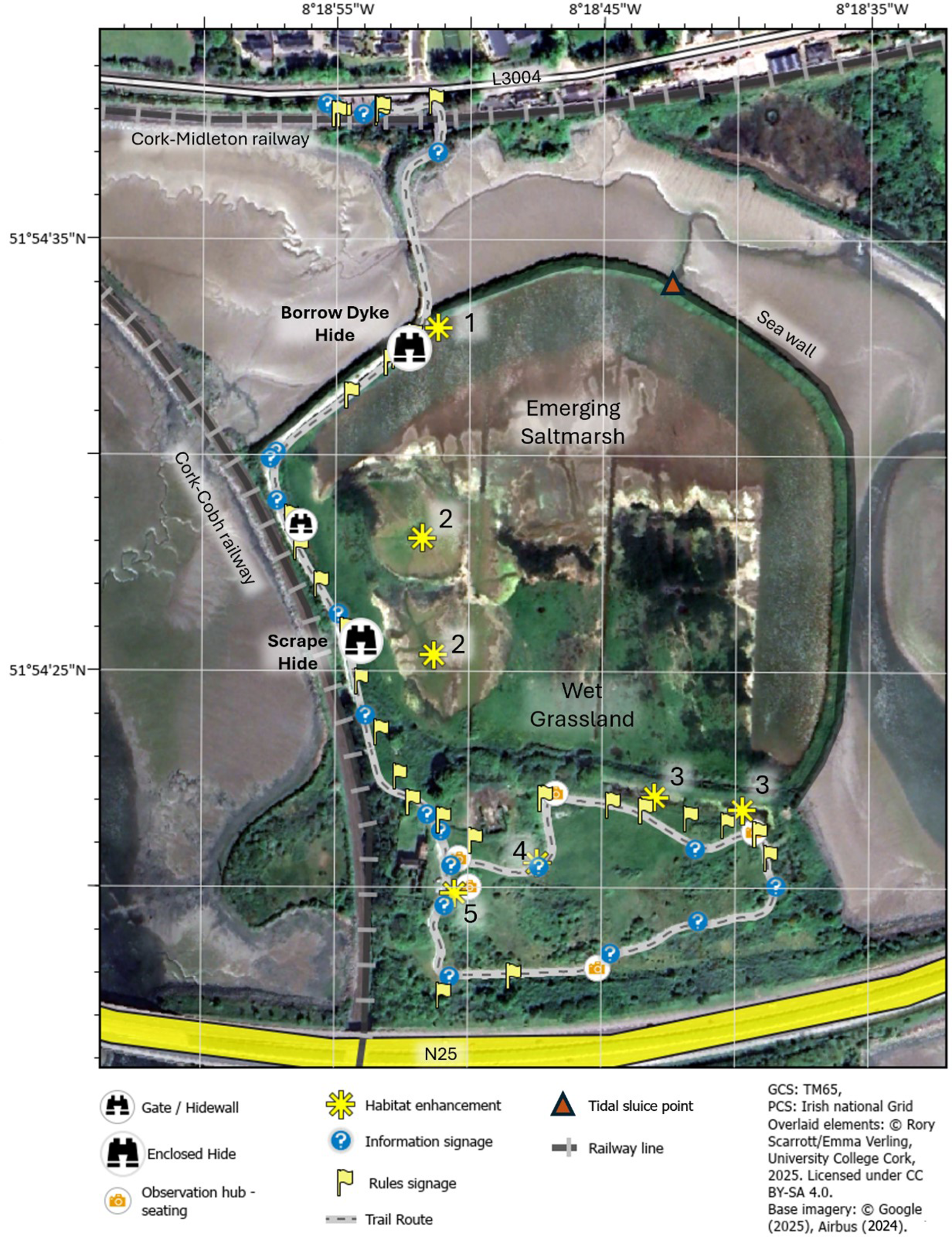
The impacts of climate change have become more widespread and frequent, and society is beginning to recognise the connection between it and the biodiversity crisis. Communities have the capacity to play a key role in the success of multi-stakeholder nature restoration projects, but examples of successful projects, in which communities are the architects of the action – as opposed to the recipients of it – are not well documented. This study used a participatory evaluation research approach to explore a multi-stakeholder, community-led restoration project at Harper’s Island Wetlands, Co. Cork, Ireland to understand the elements of success and to extract key learnings for other communities. In order to rapidly upscale nature restoration and biodiversity protection globally, there is an urgent need to gain speed and momentum, identifying innovative approaches and disseminating them appropriately. The insights from this case study highlight four key components to be considered by groups at the beginning of community-led projects: setting up a core committee, assigning clear roles within the committee, creating a short-, medium- and long-term strategy and beginning practical tasks as soon as possible. This research serves as a step towards preparing blueprints to inform research, policy and practice in this space to enable stakeholders to respond collectively
We investigate the dynamics of a cavitation bubble near rigid surfaces decorated with a single gas-entrapping hole to understand the competition between the attraction of the rigid and the repulsion of the free boundary. The dynamics of laser-induced bubbles near this gas-entrapping hole is studied as a function of the stand-off distance and diameter of the hole. Two kinds of toroidal collapses are observed that are the result of the collision of a wide microjet with the bubble wall. The bubble centroid displacement and the strength of the microjet are compared with the anisotropy parameter $\zeta$, which is derived from a Kelvin impulse analysis. We find that the non-dimensional displacement $\delta$ scales with $\zeta$.
Two members of the United States Congress, Representative Lane Evans (D-Illinois) and Representative Chris Smith (R-New Jersey), have introduced a non-binding resolution (H.Res. 759) in the current congressional session which calls on the government of Japan to “formally acknowledge and accept responsibility for its sexual enslavement of young women” during the 1930s and 40s.
The American Academy of Otolaryngology endorses using image-guided navigation systems in appropriately selected sinus and skull base cases. This study aimed to understand current practices, accessibility and use of image-guided navigation systems in otolaryngology departments across the UK.
Methods
A 13-point survey was distributed to UK otolaryngology consultants, with responses collated between May and December 2023.
Results
A total of 154 responses were received. Whilst 28.6 per cent felt it should be mandatory for a department undertaking endoscopic sinus surgery to have image-guided navigation systems, 33.1 per cent reported a lack of access, with financial cost the primary barrier. Half of the respondents reported using image-guided navigation systems for surgery involving the sphenoid sinus and “full-house” functional endoscopic sinus surgery. Over three-quarters felt image-guided navigation systems should be utilised for frontal sinus pathology or expanded approaches.
Conclusion
Our study highlights variations in access to image-guided navigation systems and a range of practices regarding its use for endoscopic sinus surgery amongst UK otolaryngologists.
This article examines the creation of an Urban Archive as an English Garden, a work that uses GPU-accelerated low-resolution wavefield synthesis (WFS) to combine field recordings, live performance and generative audio in real time. Owing to computational overhead, WFS is often pre-rendered, leading to a less dynamic and more static scope for the embodied and intersubjective nature of human sensory understanding, a tendency that can also be found in traditional soundscape composition. We argue that engagement with real-time WFS offers a new approach to soundscape composition, wherein musical-system design may have multiple agencies, or that of virtual environment, co-creator, archive and hybrid instrument. Through a post-phenomenological lens, an analysis of the work’s creation through different domains reveals how these technologies afford novel practices to engage with our sonic environments. Additionally, the article unpacks how this same process, grounded in site-responsive design offers new approaches to composition, performance and artistic collaboration across these practices.
Current food systems pose risks to both population and environmental health. Reducing the intake of animal-based foods, such as dairy products, and increasing consumption of plant-based foods align with priorities for addressing climate change and promoting overall health. Plant-based alternatives to cow’s milk can be readily substituted for cow’s milk without altering meal patterns and food habits, making them a popular choice among those reducing animal-product consumption. However, plant-based milk alternatives do not necessarily provide the same nutrients as cow’s milk, particularly essential micronutrients like iodine. While national data indicate that the UK is iodine-replete, certain population subgroups (such as pregnant women, women of reproductive age, and vegans) remain at risk of iodine deficiency. Young women are more likely than other age groups to consume plant-based milk alternatives, heightening public health concerns about iodine insufficiency in this demographic. Current consumers of plant-based milk alternatives in the UK have lower iodine intake and status compared to consumers of cow’s milk. Population-level effects of replacing milk with plant-based alternatives vary and depend on factors such as the role of plant-based milk alternatives in the diet (i.e. in addition to, or as a replacement for milk), the presence of other iodine sources in the diet, the consumer’s life stage, and whether the alternatives are fortified with iodine. This review examines the literature on plant-based milk alternatives and iodine intake, focusing on implications of this dietary shift and strategies to improve iodine intake in those opting for plant-based milk alternatives in the UK population.
Pineapple cultivation is of economic importance for farmers; however, pineapple production can be affected by pests and diseases. Recently, the presence of mealybugs and pineapple mealybug wilt-associated viruses (PMWaV)-1, -2, and -3 has been reported in the provinces of Satipo and Chanchamayo, in Peru’s central jungle. This study aimed to molecularly identify mealybugs collected from the Hawaiiana cultivar and the MD-2 hybrid in those provinces to determine if they are indeed hosts of the PMWaV-1, -2, and -3. Through amplification and sequencing of the internal transcribed spacer ribosomal genes, the mealybugs were identified as Dysmicoccus brevipes. In the phylogenetic analysis of these D. brevipes, Peruvian isolates were associated with isolates from India, China, Taiwan, and Japan. In addition, our results confirmed the presence of PMWaV-1, -2, and -3 in all mealybug specimens collected from both the Hawaiiana cultivar and the MD-2 hybrid tested, with these PMWaVs showing a 99% sequence identity with others recently reported in Peru. Therefore, D. brevipes is a host and probable vector of PMWaV-1, -2, and -3 for the cultivar Hawaiiana and the hybrid pineapple MD-2 in Satipo and Chanchamayo, Peru. Based on these findings and observations of crop management strategies in these provinces, we recommend integrated management practices to control this pest.
In this paper, we dissect how different regimes of labour were crucial to the success of the British and Brazilian expeditions which observed the 1919 total solar eclipse in Príncipe and Sobral. We connect regimes of labour with degrees of invisibility and discuss plausible justifications for various absences/presences in the written records. We discuss reasons for the inclusion of Cottingham, the artisan–technician expert on clockwork mechanisms, into the teams; the entanglements of forced labour with scientific and technical work in Príncipe; and the various regimes of labour in place at Sobral. We argue that the impact of various regimes of labour in Príncipe and Sobral cannot be confined to the provision of infrastructural support, but include critical location choices, the possibility of scientific success during the observations themselves, and the processing of plates following observations.
This paper presents the design and experimental validation of a robust flight control strategy for quadrotor unmanned aerial vehicles (UAVs) based on the Interconnection and Damping Assignment Passivity-Based Control (IDA-PBC) methodology. The proposed approach is specifically tailored to the Parrot Bebop 2, a commercial UAV. The IDA-PBC control law is derived using the Hamiltonian model of the UAV dynamics obtained from experimental data to represent the dynamics of all six degrees of freedom, including translational and rotational motions. The control strategy was validated through numerical simulations and experimental tests conducted in an indoor flight setup using MATLAB, Robot Operating System, and an OptiTrack motion capture system. Numerical and experimental results demonstrate that the controller effectively tracks desired flight trajectories, ensuring stable and robust performance.
The descriptive representation of stigmatized groups has numerous benefits both to group members and society at large. We study the extent to which LGB members of the US Congress provide increased support for LGBT rights. While LGBT substantive representation has been studied extensively, descriptive representation has been examined extensively at only the local and state levels. The absence of research at the federal level is important because federal policy is essential to expanding gay rights. We overcome issues related to the small number of openly LGBT Members of Congress and the few bills either introduced or receiving votes by examining LGB legislators over 24 years (i.e., 6,425 legislator–Congress pairs) using Human Rights Campaign scores. Using Coarsened Exact Matching, we find a substantively small but statistically significant and consistently positive effect: LGB members of Congress are more supportive of LGBT rights than other members with a similar background and from a similar district. The use of matching may provide a useful approach for scholars who are interested in studying the link between descriptive and substantive representation for other small groups.