To save content items to your account,
please confirm that you agree to abide by our usage policies.
If this is the first time you use this feature, you will be asked to authorise Cambridge Core to connect with your account.
Find out more about saving content to .
To save content items to your Kindle, first ensure no-reply@cambridge.org
is added to your Approved Personal Document E-mail List under your Personal Document Settings
on the Manage Your Content and Devices page of your Amazon account. Then enter the ‘name’ part
of your Kindle email address below.
Find out more about saving to your Kindle.
Note you can select to save to either the @free.kindle.com or @kindle.com variations.
‘@free.kindle.com’ emails are free but can only be saved to your device when it is connected to wi-fi.
‘@kindle.com’ emails can be delivered even when you are not connected to wi-fi, but note that service fees apply.
‘Positional goods’, a term coined by Fred Hirsch, is an important concept in economics, social sciences and philosophy; however, it is used in different ways. This paper recovers Hirsch’s concept of positional goods as scarce goods that are fixed or near-fixed in supply and argues for the usefulness of this concept. Hirsch’s concept may have explanatory power beyond the concept used by most economists – that of Robert Frank. Moreover, Hirsch’s concept is more explanatorily basic and useful than the concept used by most philosophers – that of Brighouse and Swift.
Thirty-five years have passed since the killing of the South African refugee Jerry Masslo in Villa Literno in 1989 to the death of the Indian labourer Satnam Singh in Latina in 2024, marked by exploitation, violence, and abuses in the Southern Italian countryside. Only a few journalistic reports have documented this situation, and the article aims to fill this historiographical gap with a timely investigation, calling for the start of an international debate on the inhuman working conditions of foreigners in the countryside of developed countries. The article highlights some variables that have remained steady over time: the absence of public policies to regularise agricultural labour, the widespread presence of informal settlements in the countryside with risks to the safety of farm labourers, the low wage levels that violate people’s dignity, the persistent illegality in recruiting labour through ‘caporalato’ (forced labour), deaths at work due to exploitation and climate change. These are elements of critical analysis that call for an in-depth reflection on how to improve the working conditions of labourers in the rural economy today. The contribution of foreigners, as emerges from the quantitative analysis in the article, is irreplaceable for the well-being of developed societies. This is why history has an essential ethical and civic mission in highlighting the conditions of severe exploitation in which they are forced to work.
Comparative histopathological and ultrastructural investigations were performed on the livers of 2 fish species, namely, flounder (Platichthys flesus (L.)) naturally infected with the nematode Anisakis simplex (s.l.) (Rudolphi, 1809) larvae (L3) and tuvira (Gymnotus inaequilabiatus) (Valenciennes, 1839) harbouring the nematode Brevimulticaecum sp. (L3) (Shikhobalova and Mozgovoi, 1952). The intensity of infection by A. simplex (s.l.) larvae (L3) in flounders ranged from 3 to 10 parasites per organ. The worms were encapsulated by the peritoneal visceral serosa on the external surface of the liver. Infected P. flesus livers showed hepatocyte cytoplasmic rarefaction and cell swelling. A few immune cell types, such as macrophages, limited numbers of mast cells (MCs), lymphocytes and some epithelioid cells, were observed within the granuloma. The intensity of infection by Brevimulticaecum sp. (L3) in G. inaequilabiatus ranged from 4 to over 340 larvae per organ, and the nematode larvae were encircled by round-to-oval granulomas. Each granuloma possessed 3 concentric layers of cells and tissue: an inner layer in close proximity to the Brevimulticaecum sp. (L3) cuticle, formed by densely packed layers of epithelioid cells showing several desmosomes between each other; a middle layer of numerous MCs entrapped in a thin fibroblast-connective mesh; and an outer layer of fibrous connective tissue with thin, elongated fibroblasts. High numbers of macrophages and macrophage aggregates were scattered within the granuloma. This is the first study to compare the cellular nature of granulomas and the immune responses in the livers of paratenic fish hosts of 2 nematode species.
Deep maps capture complex relationships to place and help trace the relationship between the abstract spaces of traditional maps and the cultural and literary history of the places that they represent. Using early modern Ireland as a template, this Element explores how deep-mapping techniques and a decolonial data ethic can be used to assemble a more culturally and linguistically representative archive and create more inclusive literary histories. It shows how deep mapping can disrupt colonial teleology and counter the monophone (and, specifically, anglophone) colonial record by bringing the long-neglected voices of the colonised back into the conversation. In doing so, it recovers a pre-conquest cultural vibrancy which colonisation, the language shift from Irish to English, and scholarly inattention successively occluded. More broadly, it offers a model for engaging with decolonial literary deep maps by developing reading strategies for 'juxtapuntal' reading that has the potential to decolonise the canon.
The medical workforce in psychiatry is increasingly diverse, but not necessarily in its senior leadership in the UK’s National Health Service (NHS). We aimed to describe the characteristics of psychiatrists with board-level responsibility in mental health trusts in England in 2024, comparing the current picture with that of 2016 and 2020, using publicly available data.
Results
The proportion of medical directors who are female has not changed, so women remain underrepresented, while the proportion who are international medical graduates has increased substantially, so they are no longer underrepresented. Although fewer in number, intellectual disability psychiatrists are underrepresented.
Clinical implications
Greater attention will need to be paid to developing female medical leaders if representative leadership is to be achieved.
This study investigated the factors influencing the mental health of rural doctors in Hebei Province, to provide a basis for improving the mental health of rural doctors and enhancing the level of primary health care.
Background:
The aim of this study was to understand the mental health of rural doctors in Hebei Province, identify the factors that influence it, and propose ways to improve their psychological status and the level of medical service of rural doctors.
Methods:
Rural doctors from 11 cities in Hebei Province were randomly selected, and their basic characteristics and mental health status were surveyed via a structured questionnaire and the Symptom Checklist-90 (SCL-90). The differences between the SCL-90 scores of rural doctors in Hebei Province and the Chinese population norm, as well as the proportion of doctors with mental health problems, were compared. Logistic regression was used to analyse the factors that affect the mental health of rural doctors.
Results:
A total of 2593 valid questionnaires were received. The results of the study revealed several findings: the younger the rural doctors, the greater the incidence of mental health problems (OR = 0.792); female rural doctors were more likely to experience mental health issues than their male counterparts (OR = 0.789); rural doctors with disabilities and chronic diseases faced a significantly greater risk of mental health problems compared to healthy rural doctors (OR = 2.268); rural doctors with longer working hours have a greater incidence of mental health problems; and rural doctors with higher education backgrounds have a higher prevalence of somatization (OR = 1.203).
Conclusion:
Rural doctors who are younger, male, have been in medical service longer, have a chronic illness or disability, and have a high degree of education are at greater risk of developing mental health problems. Attention should be given to the mental health of the rural doctor population to improve primary health care services.
Routine immunization programs may reduce antibiotic use, but few studies have comprehensively examined their impact on antibiotic utilization. We aimed to explore temporal trends in vaccination and antibiotic use among young children in the United States.
Design:
Ecological study using the Merative® MarketScan Commercial Claims and Encounters database.
Methods:
We analyzed claims data on pediatric vaccine uptake (pneumococcal conjugate, Haemophilus influenzae type b, diphtheria-tetanus-pertussis, and influenza) and antibiotic prescriptions and antibiotic-treated respiratory tract infections among US children <5 years during 2000–2019. Vaccination status was assessed annually, and children were categorized based on receipt of all four vaccines, 1–3 vaccines, or no vaccines. Antibiotic prescriptions were classified by spectrum and drug class. Respiratory infections included otitis media, pharyngitis, pneumonia, sinusitis, and viral infections.
Results:
Among 6.7 million children, vaccine uptake increased from 32.5% receiving all four vaccines in 2004 to 66.8% in 2019. During this period, overall antibiotic prescriptions decreased from 1.89 to 1.01 per person-year, with the greatest reductions in macrolides (73.3%) and broad-spectrum antibiotics (57.0%). Antibiotic-treated respiratory tract infections declined from 2.43 to 1.61 episodes per person-year, with the largest decreases in sinusitis (64.7%) and pharyngitis (39.8%).
Conclusions:
The findings suggest a temporal association between routine childhood immunization uptake and reduced antibiotic utilization. Although immunization programs are primarily aimed at protecting children from vaccine-preventable diseases, their potential role in complementing antimicrobial stewardship efforts and other factors influencing antibiotic reduction warrants further investigation through more rigorous study designs.
During nematode surveys conducted to investigate the biodiversity of plant-parasitic nematodes in Mediterranean olive groves with different management strategies (organic and conventional), a nematode population of the genus Neothada was detected in southern Spain. Application of integrative taxonomical approaches clearly demonstrated that it is a new species described herein as Neothada olearum sp. nov., also representing the first report of the genus in Spain. The new species is amphimictic, characterised by a short body (563–774 μm); cuticle widely annulated (2.5–3.0 μm); total number of body annuli 214–226; 16 longitudinal ridges giving a tessellate body surface; stylet without distinct basal knobs (9.0–11.0 μm); and tail elongate-conoid, with tip bluntly rounded. The results of molecular analysis of D2-D3 28S rRNA, ITS rRNA, partial 18S rRNA, and cytochrome oxidase c subunit 1 (COI) gene sequences support for the new species status and clearly separated from N. major and other species within Neothada. Phylogenetic analyses of ribosomal and mitochondrial markers of this study suggested that Neothada is a monophyletic genus, clearly separated from Thada.
This paper studies voter turnout and selective abstention on voting days with more than one election or referendum. We extend the rational choice model to a setting with multiple concurrent votes. The model is based on a voter’s net benefit, which includes a vote’s salience and information costs. It explains how the net benefit of different concurrent votes enters a voter’s utility function and thereby affects turnout and selective abstention, the tendency to vote in one but not all votes held on the same day. We test our theoretical predictions using data on concurrent propositions in Switzerland from 1988 to 2016. Our results suggest that the proposition with the highest net benefit and the sum of the net benefits of all concurrent propositions are relevant determinants of the individual turnout decision. We also find that a proposition’s net benefit explains variation in selective abstention.
How do authoritarian actors navigate the liberal international order, adopting democratic facades without committing to democratic principles? And why is it so difficult for the international normative system to debunk their pretence when it comes to the use of democratic values? This paper explores this question by introducing ‘profilicity’ and ‘performativity’ as key concepts to understand how autocratic regimes build powerful profiles within a liberal system that values authenticity. Unlike conventional theories, which assume that engagement with liberal norms requires genuine commitment, profilicity reveals that strategic image-building can be just as effective. Through this lens, we see how autocracies exploit liberalism’s own ideals, using performative adaptation to secure status and reshape norms. This paper suggests that the liberal order’s emphasis on sincerity may itself be a strategic weakness, one that autocratic actors skilfully navigate in a world increasingly driven by profiles over principles.
Medieval elite culture is often difficult to grasp among archaeological records from settlement sites. A silver-gilt amethyst setting, probably part of a brooch, from the moat of Castle Kolno in Poland represents an unusual high-status find from a context related to everyday activity.
A growing demand for wheat as a staple crop leads to an expansion of its production. The consequence is land use change and short rotations for wheat. But wheat grown in short rotations causes yield decline. To secure future food supplies, a deeper understanding of the physiological processes contributing to this yield reduction is needed. Therefore, a three-year data set from a long-term field trial in Northern Germany was analysed to investigate the impact of crop rotational position (CRP) (wheat grown in the first [W1] and in the third [W3] year in self sequence after break crop) in combination with three genotypes and four rates of nitrogen (N) fertilizer on intercepted radiation by the canopy (Q), radiation use efficiency (RUE), grain yield and yield components. All genotypes showed a reduction of Q, RUE and yields in W3. The focus was further set on differences in yield formation pre- and post-anthesis. This revealed a significant interaction between CRP and genotype. An overall reduction in intercepted radiation pre-anthesis as well as in kernels/m2 in W3 suggested, that yield formation under adverse pre-crop conditions was rather ‘source limited’. A possibility to compensate this limitation might be a prolonged phase of radiation interception post-anthesis.
The International Commission on Radiological Protection (ICRP) Task Group 120 (TG120) is developing ICRP recommendations for radiological protection for a wide range of radiation accidents and malicious events, complementing those given in ICRP Publication 146 (2020) for large nuclear accidents. The scope includes accidents involving criticalities, operating faults, and fires and explosions in nuclear facilities, inadvertent damage to sealed radiation sources, as well as malicious events, such as sabotage of nuclear facilities or materials, use of radiological dispersal devices, the contamination of food and drinking water supplies, and the deployment of nuclear weapons. A template has been designed to collate relevant information on a wide range of case studies and hypothetical malicious scenarios to ensure that the recommendations developed are broadly applicable and comprehensive. For all scenarios, a graded approach to protection is being taken, accepting that specific guidance may be required for some distinctive aspects, for example, protection during times of armed conflict. This paper provides an overview of the scenarios and scope of the work of TG120, including some of the radiological and non-radiological impacts of radiation emergencies, along the response and recovery timeline.
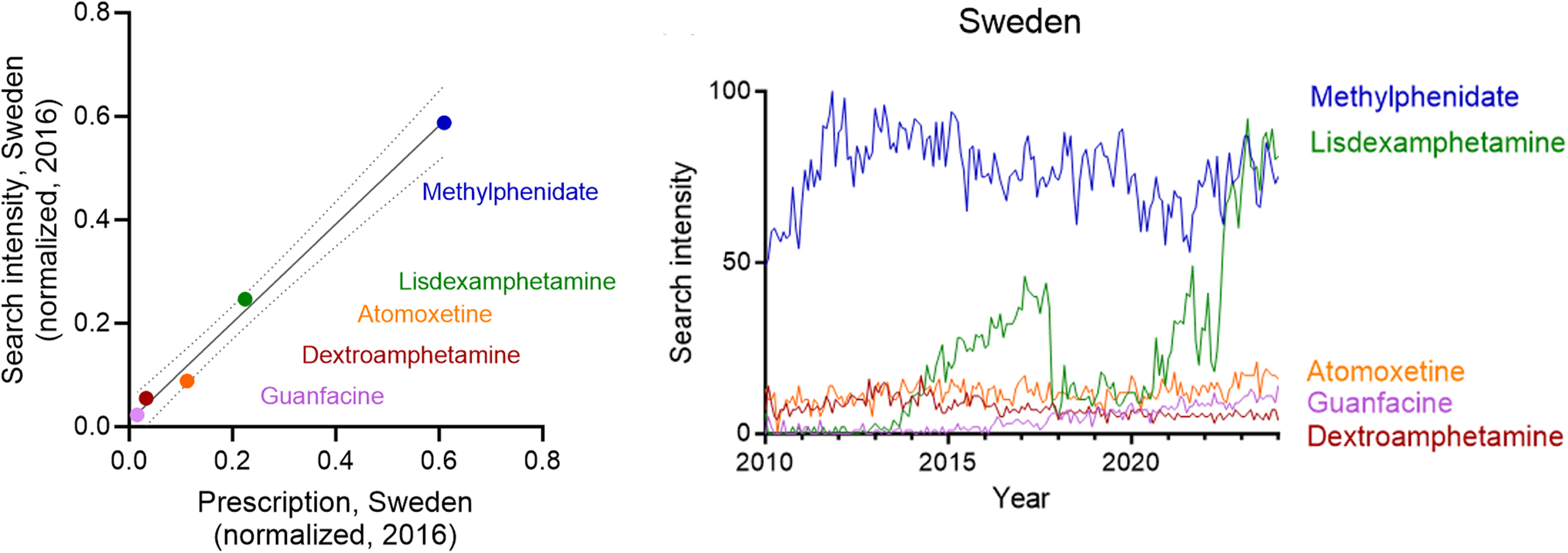
Pharmacological treatment of attention-deficit hyperactivity disorder (ADHD) involves central stimulants and non-stimulant drugs. Because treatment preferences may vary geographically, we hypothesize that prescription data can be estimated from publicly available sources. First, we explore the relevance of internet search trends as proxies for real-life drug prescription patterns. Second, we identify geographical variations in ADHD drug trends over time. Publicly available Google Trends data for five ADHD drugs were analysed for the years 2010–2023. Temporal and spatial patterns were compared within Scandinavia, and the preference for central stimulants over non-stimulant drugs was compared across 17 countries. We find that internet search trends correlate with ADHD drug prescriptions. In the Scandinavian countries, a dominance of methylphenidate is observed, with rising internet search trends over time in Norway and Denmark. Furthermore, interest in lisdexamphetamine, relative to dextroamphetamine and atomoxetine, has increased sharply in recent years in the Scandinavian countries. The search proportion of central stimulants to non-stimulant drugs in Scandinavia ranges from 81% (Denmark) to 93% (Norway). Overall, internet search trends for ADHD drugs mirror reported prescription patterns and identify a dominance of methylphenidate, with an increasing interest in lisdexamphetamine. As such, search trends may serve as a feasible source for identifying geographical drug preferences.
Some individuals experience abnormally persistent and intense symptoms of grief that significantly interfere with daily functioning. This condition has been described using terms such as complicated or prolonged grief and prolonged grief disorder (PGD).
Aims
To identify the availability of evidence addressing a range of policy relevant issues related to grief, bereavement and PGD. In this paper we focus on the availability of evidence from systematic reviews.
Method
We searched 12 databases and the websites of 18 grief- or bereavement-related organisations. Using key characteristics extracted from included reviews, we produced a high-level overview of the available evidence that enabled potential research gaps to be identified.
Results
We identified 212 reviews – 103 focused on people’s experiences of grief/bereavement including service use; 22 reported on PGD prevalence, 42 on PGD risk factors, 37 on factors that influence grief more broadly and 80 on the effectiveness of grief-related interventions. Fifty-five reviews focused on multiple issues of interest. Half of reviews focused on a specific cause/type of death (n = 108). Of these reviews, most focused on three main causes/types of death: a specific health condition or terminal illness (n = 36), perinatal loss (n = 34) and suicide (n = 20).
Conclusions
We identified a large number of reviews, but key evidence gaps exist, particularly in relation to intervention cost-effectiveness and social, organisational or structural-level interventions that are needed for addressing inequities and other modifiable factors that can impair grieving and potentially increase the risk of PGD.
Teaching volumetric modulated arc therapy (VMAT) treatment planning to therapeutic radiography students faces challenges, including time constraints and resource limitations. Gamification, an active learning strategy incorporating game-based elements, may enhance engagement and understanding of VMAT treatment planning.
Methods:
A VMAT treatment planning session was implemented for 15 second-year undergraduate and postgraduate therapeutic radiography students using gamification. Participants were tasked with optimising a VMAT plan for a palliative prostate cancer patient using Eclipse treatment planning software. Students completed pre- and post-session questionnaires assessing perceived understanding and enjoyment. Plans were evaluated against clinical goals, and a leaderboard was used to rank top performers. Thematic analysis was applied to qualitative feedback.
Results:
About 86·7% of participants initially reported a limited understanding of VMAT planning structures. Post-session, all participants reported improved perceived understanding, with 93·3% finding the session beneficial and recommending its inclusion in the programme. While 66·6% enjoyed the gamified approach, technical issues limited individual optimisation time. Qualitative feedback highlighted increased confidence and engagement despite challenges.
Conclusions:
Gamification enhanced student-reported understanding, enjoyment and engagement in VMAT planning. While technical issues affected session efficiency, feedback supports the integration of gamification in treatment planning sessions but should not be overused as its usefulness can wear off.
Assessment of new genotypes in on-farm trials and under different tillage options is a current strategy for in-station experiments to enhance the breeding process and its final output in farmers’ fields, which can help increase productivity and sustainability in variable rainfed conditions. The objectives were to evaluate the agronomic performance of barley genotypes under different tillage systems in farmers’ fields and to provide suggestions to help farmers use resources more efficiently and sustainably for their proper field management. Five barley genotypes including four cultivars (Abider, Sararood1, Nader, Efes-3) and a promising breeding line (Yea168) were tested in three tillage methods, that is, conventional tillage (CT), reduced tillage (RT) and no tillage (NT) in on-farm trials in two locations (Sarabnilofar and Dalahoo) and three cropping seasons (2018–2021). The results revealed high variability in productivity and other studied traits in farmers’ conditions that were significantly affected by genotypes, tillage managements, locations, and years. Barley genotypes, except Efes-3, positively interacted with CT. The highest grain yield was observed in CT conditions (2613 kg/ha), followed by NT (2520 kg/ha) and RT (2470 kg/ha), showing about 5.8% and 3.6% better performance in CT than in RT and NT, respectively. Across locations and years, breeding line Yea168 outperformed all four cultivars in all three tillage systems and should be recommended for cultivation under rainfed conditions. The results of genotype by trait (GT) biplot analysis indicated that the traits relations and traits profiles of genotypes are different among tillage systems and locations. High-yielding genotypes had their own specific traits that resulted in their better performance. Breeding line Yea168, followed by Nader cultivar performed well in Sarabnilofar location, where 1000-kernel weight (TKW), plant height (PLH), number of grains per spike (NGPS), normalised difference vegetation index (NDVI) and spike per square metre (spike/m2) were the most important traits in deciding grain yield in this location, whereas in Dalahoo location, Sararood1 performed well and TKW, SPAD (chlorophyll content), NGPS, and spike/m2 had considerable contributions to grain yield. The findings demonstrated the breeding line Yea168 as the best-performing genotype across tillage systems, making it highly recommended for cultivation in rainfed areas of western Iran.
Contraceptive use among women of reproductive age has increased significantly worldwide. However, little is known about contraceptive use and mental health among women in sub-Saharan African countries.
Aims
This study sought to investigate contraceptive use and self-reported measures of depression and anxiety symptoms among reproductive-age women in Mozambique using the most recent national data.
Method
The study used secondary data from the 2022–2023 Demographic and Health Survey of Mozambique. A total of 6910 (weighted) sexually active women aged 15–49 years were included in this analysis. Anxiety and depression scores were measured using self-report questionnaires. Linear regression analysis was conducted to assess the associations between depression and anxiety and contraceptive use.
Results
The prevalence of contraceptive use was 36.41%. About half of the hormonal contraceptive users (49.38%) were using injectables and 25.99% were using implants. In total, 9.14 and 2.83% of the women had moderate or high scores of self-reported anxiety respectively. Additionally, 5.24 and 5.42% reported moderate or high scores of depressive symptoms respectively. The use of hormonal contraceptives decreased anxiety symptoms by 0.47 units (β = −0.47; 95% CI −0.75 to −0.18; P < 0.001) compared with no contraceptive use. The use of hormonal contraceptives decreased depressive symptoms by 0.75 units (β = −0.75; 95% CI −1.11 to −0.39; P < 0.001) compared with no contraceptive use.
Conclusions
This study has demonstrated a naturalistic association between contraceptive use, particularly hormonal contraceptives, and decreased anxiety and depression among Mozambican women of reproductive age. This likely reflects a complex, bi-directional relationship, the nature and mechanism of which should be investigated in further experimental research.