Refine listing
Actions for selected content:
153969 results in Open Access
A rare discovery: a new Loimos species (Monocotylidae: Loimoinae) from the gills of Rhizoprionodon taylori (Carcharhinidae) off the southern Great Barrier Reef, Australia
-
- Journal:
- Journal of Helminthology / Volume 99 / 2025
- Published online by Cambridge University Press:
- 10 July 2025, e69
-
- Article
-
- You have access
- Open access
- HTML
- Export citation
A Multifunctional Account of Political Feasibility
-
- Journal:
- Canadian Journal of Philosophy / Volume 54 / Issue 6 / August 2024
- Published online by Cambridge University Press:
- 10 July 2025, pp. 451-465
-
- Article
-
- You have access
- Open access
- HTML
- Export citation
Abbreviations
-
- Book:
- Selling Sexual Knowledge
- Published online:
- 24 June 2025
- Print publication:
- 10 July 2025, pp xiv-xiv
-
- Chapter
-
- You have access
- Open access
- HTML
- Export citation
Spectral signatures of young radio galaxies
-
- Journal:
- Publications of the Astronomical Society of Australia / Volume 42 / 2025
- Published online by Cambridge University Press:
- 10 July 2025, e100
-
- Article
-
- You have access
- Open access
- HTML
- Export citation
-
We investigate the evolution of active galactic nucleus jets on kiloparsec-scales due to their interaction with the clumpy interstellar medium (ISM) of the host galaxy and, subsequently, the surrounding circumgalactic environment. Hydrodynamic simulations of this jet–environment interaction are presented for a range of jet kinetic powers, peak densities of the multiphase ISM, and scale radii of the larger-scale environment – characteristic of either a galaxy cluster or poor group. Synthetic radio images are generated by considering the combination of synchrotron radiation from the jet plasma and free-free absorption from the multiphase ISM. We find that jet propagation is slowed by interactions with a few very dense clouds in the host galaxy ISM, producing asymmetries in lobe length and brightness which persist to scales of tens of kpc for poor group environments. The classification of kiloparsec-scale jets is highly dependent on surface brightness sensitivity and resolution. Our simulations of young active sources can appear as restarted sources, showing double-double lobe morphology, high core prominence (CP $\gt 0.1$), and the expected radio spectra for both the inner- and outer-lobe components. We qualitatively reproduce the observed inverse correlation between peak frequency and source size and find that the peak frequency of the integrated radio spectrum depends on ISM density but not the jet power. Spectral turnover in resolved young radio sources therefore provides a new probe of the ISM.

Endozoochorous seed dispersal potential of five major southern U.S. weeds
-
- Journal:
- Weed Science / Volume 73 / Issue 1 / 2025
- Published online by Cambridge University Press:
- 10 July 2025, e54
-
- Article
-
- You have access
- Open access
- HTML
- Export citation
Evolutionary map of the Universe: Detection and analysis of the shell surrounding the runaway Wolf-Rayet star WR16
-
- Journal:
- Publications of the Astronomical Society of Australia / Volume 42 / 2025
- Published online by Cambridge University Press:
- 10 July 2025, e101
-
- Article
-
- You have access
- Open access
- HTML
- Export citation
-
We present the first radio–continuum detection of the circumstellar shell around the well-known WN8 type Wolf-Rayet star WR16 at 943.5 MHz using the Australian Square Kilometre Array Pathfinder (ASKAP) Evolutionary Map of the Universe (EMU) survey. At this frequency, the shell has a measured flux density of 72.2 $\pm$7.2 mJy. Using previous Australia Telescope Compact Array (ATCA) measurements at 2.4, 4.8, and 8.64 GHz, as well as the Evolutionary Map of the Universe (EMU) observations of the star itself, we determine a spectral index of $\alpha\,=\,+0.74\pm0.02$, indicating thermal emission. We propose that the shell and star both exhibit thermal emission, supported by the its appearance in near-infrared and H $\alpha$ observations. The latest Gaia parallax is used to determine a distance of 2.28 $\pm$0.09 kpc. This star is well known for its surrounding circular nebulosity, and using the distance and an angular diameter of $8.^{\prime}42$, we determine the shell size to be 5.57 $\pm$0.22 pc. We use the Gaia proper motion (PM) of WR16 to determine peculiar velocities of the star as $V_{\alpha}(pec) =$ –45.3 $\pm$5.4 km s $^{-1}$ and $V_{\delta}(pec) =$ 22.8 $\pm$4.7 km s $^{-1}$, which indicates that the star is moving in a north-west direction, and translates to a peculiar tangential velocity to be 50.7 $\pm$6.9 km s $^{-1}$. We also use these proper motion (PM) to determine the shell’s origin, estimate an age of $\sim 9500\pm 1300$ yr, and determine its average expansion velocity to be $280\pm40$ km s $^{-1}$. This average expansion velocity suggests that the previous transitional phase is a Luminous Blue Variable (LBV) phase, rather than a Red Super Giant (RSG) phase. We also use the measured flux at 943.5 MHz to determine a mass-loss rate of $1.753\times 10^{-5}\,{\rm M}_\odot\,$yr $^{-1}$, and use this to determine a lower-limit on ionising photons of $N_{UV} \gt 1.406\times 10^{47}\,\textit{s}^{-1}$.


3 - Publishing for Professional Advantage
-
- Book:
- Selling Sexual Knowledge
- Published online:
- 24 June 2025
- Print publication:
- 10 July 2025, pp 90-120
-
- Chapter
-
- You have access
- Open access
- HTML
- Export citation
Icelandic intertidal fish communities and effects of knotted wrack (Ascophyllum nodosum) harvesting
-
- Journal:
- Journal of the Marine Biological Association of the United Kingdom / Volume 105 / 2025
- Published online by Cambridge University Press:
- 10 July 2025, e75
-
- Article
-
- You have access
- Open access
- HTML
- Export citation
Arcaded houses in urban planning: Silesia (Poland) in the European context
-
- Journal:
- Urban History , First View
- Published online by Cambridge University Press:
- 10 July 2025, pp. 1-29
-
- Article
-
- You have access
- Open access
- HTML
- Export citation
Parliamentary Culture and Indigenous Traditions of Assembly in the Americas and South and East Asia, c.1500–1700: Comparative Perspectives
- Part of
-
- Journal:
- Transactions of the Royal Historical Society / Volume 3 / December 2025
- Published online by Cambridge University Press:
- 10 July 2025, pp. 469-477
- Print publication:
- December 2025
-
- Article
-
- You have access
- Open access
- HTML
- Export citation
Pandemic Precarity: Labour Dispute Resolution for Overseas Chinese Workers during COVID-19
-
- Journal:
- The China Quarterly / Volume 263 / September 2025
- Published online by Cambridge University Press:
- 10 July 2025, pp. 796-812
- Print publication:
- September 2025
-
- Article
-
- You have access
- Open access
- HTML
- Export citation
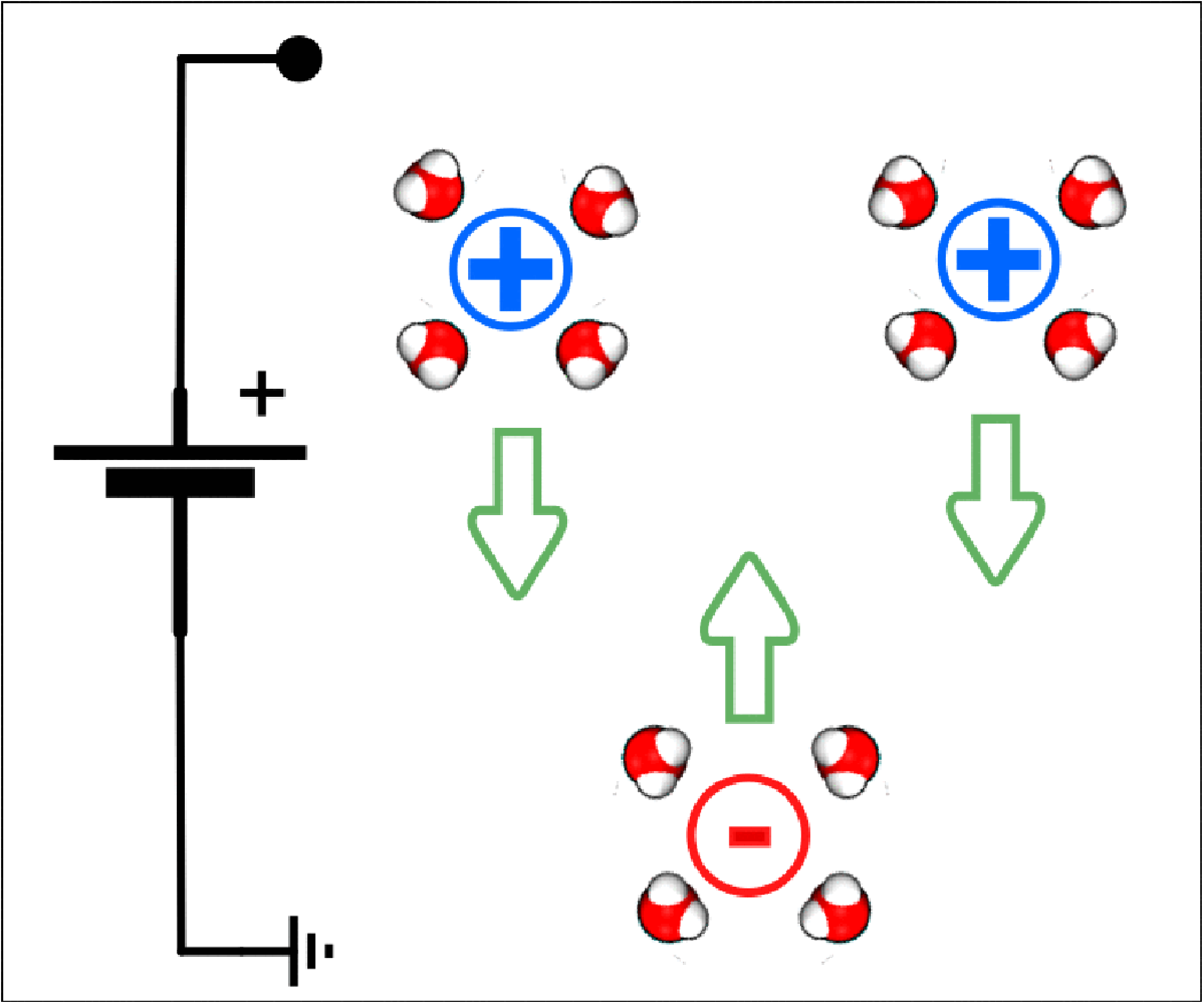
Validity of approximated expressions for electro-osmotic flow in nanopores evaluated by continuum electrohydrodynamics and atomistic simulations
- Part of
-
- Journal:
- Flow: Applications of Fluid Mechanics / Volume 5 / 2025
- Published online by Cambridge University Press:
- 10 July 2025, E28
-
- Article
-
- You have access
- Open access
- HTML
- Export citation
Three-dimensional tearing instability of flux-tube-like magnetic fields
-
- Journal:
- Journal of Plasma Physics / Volume 91 / Issue 4 / August 2025
- Published online by Cambridge University Press:
- 10 July 2025, E99
-
- Article
-
- You have access
- Open access
- HTML
- Export citation
-
Magnetic reconnection, a fundamental plasma process, is pivotal in understanding energy conversion and particle acceleration in astrophysical systems. While extensively studied in two-dimensional (2-D) configurations, the dynamics of reconnection in three-dimensional (3-D) systems remains under-explored. In this work, we extend the classical tearing mode instability to three dimensions by introducing a modulation along the otherwise uniform direction in a 2-D equilibrium, given by $g(y)$, mimicking a flux-tube-like configuration. We perform linear stability analysis (both analytically and numerically) and direct numerical simulations to investigate the effects of three-dimensionality. Remarkably, we find that a tearing-like instability arises in three dimensions as well, even without the presence of guide fields. Further, our findings reveal that the 3-D tearing instability exhibits reduced growth rates compared with two dimensions by a factor of $\int g(y)^{1/2} {\rm d}y\,/\int {\rm d}y$, with the dispersion relation maintaining similar scaling characteristics. We show that the modulation introduces spatially varying resistive layer properties, which influence the reconnection dynamics.

Turbulent boundary layer development over an air cavity – ERRATUM
-
- Journal:
- Flow: Applications of Fluid Mechanics / Volume 5 / 2025
- Published online by Cambridge University Press:
- 10 July 2025, E27
-
- Article
-
- You have access
- Open access
- HTML
- Export citation
2 - Stereotyped Knowledge
-
- Book:
- Selling Sexual Knowledge
- Published online:
- 24 June 2025
- Print publication:
- 10 July 2025, pp 57-89
-
- Chapter
-
- You have access
- Open access
- HTML
- Export citation
Emancipation and the Business of Compensation in the Cape Colony
-
- Journal:
- Enterprise & Society / Volume 27 / Issue 1 / March 2026
- Published online by Cambridge University Press:
- 10 July 2025, pp. 88-111
- Print publication:
- March 2026
-
- Article
-
- You have access
- Open access
- HTML
- Export citation
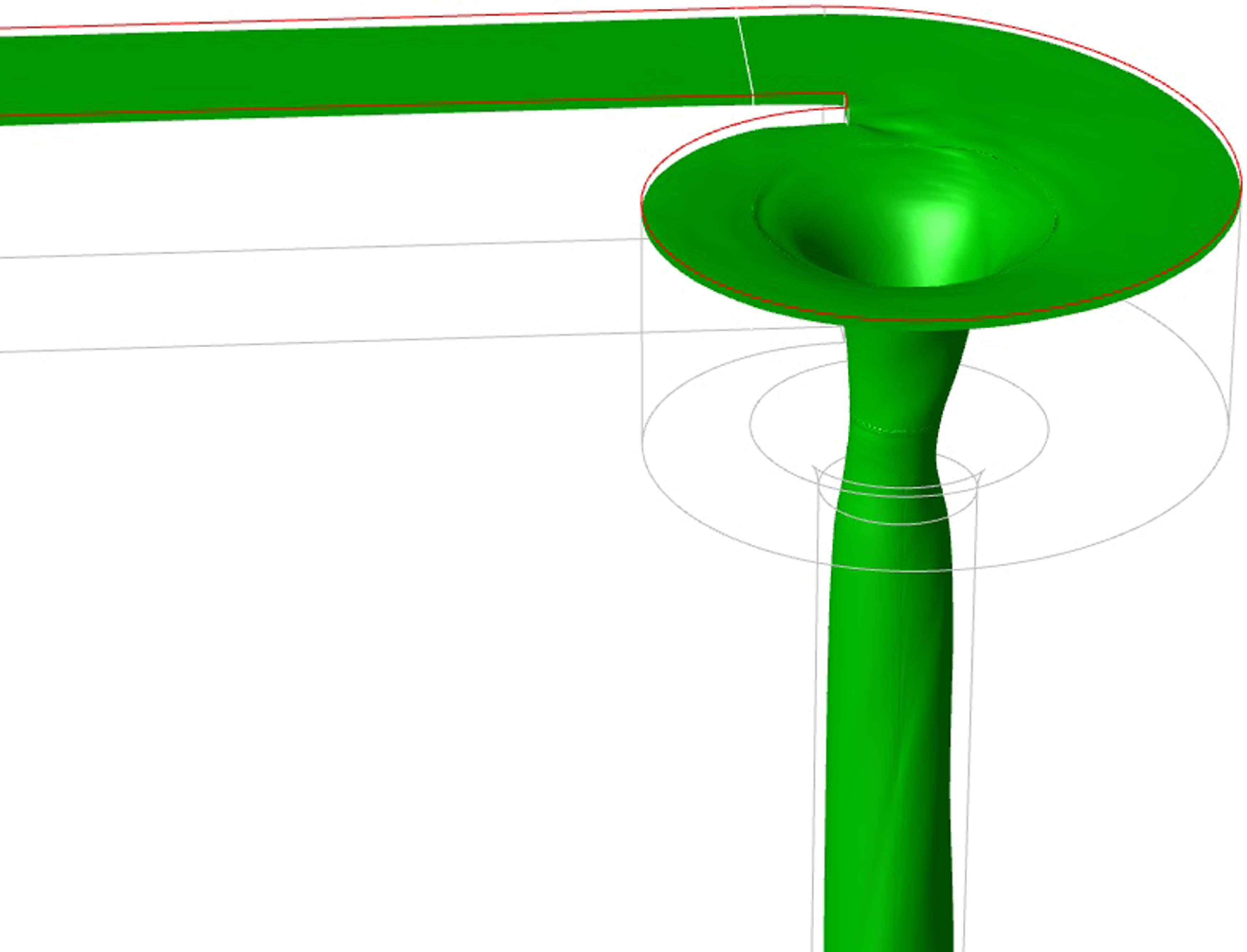
Large eddy simulations of transient flow characteristics in a drop shaft with a scroll vortex intake
-
- Journal:
- Flow: Applications of Fluid Mechanics / Volume 5 / 2025
- Published online by Cambridge University Press:
- 10 July 2025, E29
-
- Article
-
- You have access
- Open access
- HTML
- Export citation
-
Drop shafts play a vital role in urban drainage and tunnel sewerage systems. To gain an insight into the magnitude of transient flow fluctuations inside a drop shaft attached to a scroll vortex intake, large eddy simulations (LESs) are performed in this study. First, the LES predictions are validated against experimental data from Guo (2012), demonstrating good agreement for both the time-averaged head-discharge relationship and the minimum air-core percentage. Subsequently, the transient fluctuations of the air core inside the drop shaft are investigated, with the worst-case scenario being choking of the air core inside the drop shaft, which might lead to a grave consequence to the system response. The transient fluctuations of the air core are found to have up to 13 % variation in the non-dimensional air-core area due to dynamic contraction and expansion. Additionally, velocity characteristics at different vertical and angular locations within the drop shaft are analysed, offering new insights into vortex structures and challenging assumptions from existing analytical models. The transient simulation results also reveal a global vortex structure together with embedded small-scale vortices using the $\Omega$-criterion vortex identification method.

Multi-Voice Commentary for Sample-Based Music: An Inclusive Approach
-
- Journal:
- Journal of the Royal Musical Association / Volume 150 / Issue 2 / November 2025
- Published online by Cambridge University Press:
- 10 July 2025, pp. 319-342
- Print publication:
- November 2025
-
- Article
-
- You have access
- Open access
- HTML
- Export citation
283,821 concretions, how do you measure the Mazon Creek? Assessing the paleoenvironmental and taphonomic nature of the Braidwood and Essex assemblages
-
- Journal:
- Paleobiology / Volume 51 / Issue 3 / August 2025
- Published online by Cambridge University Press:
- 10 July 2025, pp. 488-506
-
- Article
-
- You have access
- Open access
- HTML
- Export citation
The First General Assembly of Virginia: Deerskin, Ruffs and the View from Tsenacommacah
- Part of
-
- Journal:
- Transactions of the Royal Historical Society / Volume 3 / December 2025
- Published online by Cambridge University Press:
- 10 July 2025, pp. 521-537
- Print publication:
- December 2025
-
- Article
-
- You have access
- Open access
- HTML
- Export citation
