To save content items to your account,
please confirm that you agree to abide by our usage policies.
If this is the first time you use this feature, you will be asked to authorise Cambridge Core to connect with your account.
Find out more about saving content to .
To save content items to your Kindle, first ensure no-reply@cambridge.org
is added to your Approved Personal Document E-mail List under your Personal Document Settings
on the Manage Your Content and Devices page of your Amazon account. Then enter the ‘name’ part
of your Kindle email address below.
Find out more about saving to your Kindle.
Note you can select to save to either the @free.kindle.com or @kindle.com variations.
‘@free.kindle.com’ emails are free but can only be saved to your device when it is connected to wi-fi.
‘@kindle.com’ emails can be delivered even when you are not connected to wi-fi, but note that service fees apply.
Using National Healthcare Safety Network data, an interrupted time series of intravenous antimicrobial starts (IVAS) among hemodialysis patients was performed. Annual adjusted rates decreased by 6.64% (January 2012–March 2020) and then further decreased by 8.91% until December 2021. IVAS incidence trends have decreased since 2012, including during the early COVID-19 pandemic.
Despite a trend of increasing multilevel government across the globe, there are surprisingly few studies on public support for decisions taken by different government levels. Decentralization is likely to boost government support because it increases congruence between citizens and their representatives. We argue that citizens’ preferences for subnational authority are key for their willingness to accept governmental decisions. Citizens who prefer decentralization are more supportive of subnational decisions, and their support for national decisions increases when subnational governments are involved in the decision-making process. We fielded a survey that asked 1,855 Norwegian respondents their willingness to accept decisions taken by their municipality, county, and national government to close an educational institution in their municipality. We find substantial empirical evidence for our hypotheses. Norway is a least-likely-case because government tiers enjoy high levels of trust. Therefore, the results have also important implications for the legitimacy of multilevel government in other countries.
As new concepts to protect marine structures from ocean waves, we propose the use of a floating elastic annulus. In this paper, two types of annuli are demonstrated. The first is a ‘wave shield’, which creates a calm free surface within an inner domain of the annulus by preventing wave penetration. The second is a ‘cloak’, which not only creates a calm space within the inner domain but also prevents wave scattering outside the annulus. To evaluate the calmness of the inner domain of the annulus, an inlet wave energy factor is newly defined. The wave shield is designed to minimise the inlet wave energy factor to nearly zero. However, the cloak is designed to minimise both the inlet wave energy factor and scattered-wave energy which evaluates the amount of wave scattering at far-field. Each annulus consists of several horizontal concentric annular plates, and the flexural rigidities of the plates are optimised to minimise objective functions at a target frequency. Numerical simulations demonstrate that both the wave shield and the cloak can create calm free surfaces within their inner domains. In addition, the cloak effectively suppresses the outgoing scattering waves and reduces the resultant wave drift force.
How do the effects of climate regulation on businesses impact public attitudes toward climate policy? While emissions intensity is the primary frame for understanding the effects of climate policy on business, theoretical scholarship and public discourse often emphasize that large firms will adjust to climate regulations easily while smaller firms will struggle. Because small businesses are sympathetic and large firms are unpopular, individuals who view climate regulation’s effects in line with this firm size account should be less likely to support climate change mitigation. To test this theory, we conduct an original survey of climate policy beliefs and then a survey experiment. We find evidence that distaste for large corporations increases opposition to climate action among people exposed to the idea that big companies can more easily navigate climate regulations than small companies. This work contributes to the literature on moral political economy and on the enduring difficulty of enacting effective climate change regulation within the United States.
Transoral robotic surgery is a minimally invasive technique used in the management of head and neck cancer, though post-operative odynophagia can be a significant issue. There is debate about the necessity of elective nasogastric tube placement during the peri-operative period. This study examines the proportion of patients requiring elective nasogastric tube placement and evaluates whether pre-operative factors predict the need for nasogastric tube feeding.
Methods
Data from patients who underwent transoral robotic surgery in Oxford were analysed to assess correlations between pre-operative factors and nasogastric tube feeding.
Results
Fifty-three patients undergoing transoral robotic surgery underwent elective nasogastric tube placement; 43 per cent required the nasogastric tube for feeding or medication. Multivariate analysis showed significant associations between nasogastric tube feeding and sex (p = 0.028), peri-neural invasion (p = 0.024), tumour size (p = 0.012) and concurrent neck dissection (p = 0.019).
Conclusion
Although nearly half of the patients benefited from elective nasogastric tube placement, the remainder did not. Benefits and risks of elective nasogastric tube placement should be carefully considered.
In this paper, I discuss dual collective action problems in which a resource pool has simultaneous common pool and public good aspects in its usage, such as hunting (consumption) and conservation of wildlife. I then implement laboratory experiments to evaluate how spillovers between the two related uses of nature affect the consumption and conservation habits of stakeholders. The Nash predictions suggest that even the most selfish of profit-maximizing agents have an incentive to provide equally towards resource consumption and conservation when resource spillovers are present. Results from laboratory experiments are consistent with this hypothesis. As a policy intervention, I introduced and later revoked a common pool licensing policy based on U.S. hunting and fishing licensing. Under the same theoretical framework, removing a common pool licensing policy would increase welfare for all resource stakeholders. Contrary to this, experimental evidence indicates no overall change in welfare.
We revisit the nonconsensual econometric works – although the natural resource curse may have flourished – on the relationship between natural resources and economic performance. We first question the two terms of the relationship. We consider the role of institutions (separately and in interaction with the variable of interest) and of a number of usual or new control variables (income inequality and current account). The model, based on development accounting, is tested using four econometric techniques on the full sample (130 countries, 1990–2019) and by sub-samples according to per capita income, illustrating the non-linearity of the relationship. Three stylized facts emerge: first, the overall results converge towards a strong blessing of resource rents on GDP per capita. This can be explained mainly by the role of these rents in countries with very high GDP per capita. Second, institutional variables significantly mitigate the negative effect or reinforce the positive effect of these resources on development. Finally, among the categories of resources considered, it is the oil rent that favors this strong natural resource blessing. The effects of the observed categories may offset each other. Detailed analyses of estimation’s results in sub-samples and articulated with the results of the full sample are also proposed.
We prove several results showing that every locally finite Borel graph whose large-scale geometry is ‘tree-like’ induces a treeable equivalence relation. In particular, our hypotheses hold if each component of the original graph either has bounded tree-width or is quasi-isometric to a tree, answering a question of Tucker-Drob. In the latter case, we moreover show that there exists a Borel quasi-isometry to a Borel forest, under the additional assumption of (componentwise) bounded degree. We also extend these results on quasi-treeings to Borel proper metric spaces. In fact, our most general result shows treeability of countable Borel equivalence relations equipped with an abstract wallspace structure on each class obeying some local finiteness conditions, which we call a proper walling. The proof is based on the Stone duality between proper wallings and median graphs (i.e., CAT(0) cube complexes). Finally, we strengthen the conclusion of treeability in these results to hyperfiniteness in the case where the original graph has one (selected) end per component, generalizing the same result for trees due to Dougherty–Jackson–Kechris.
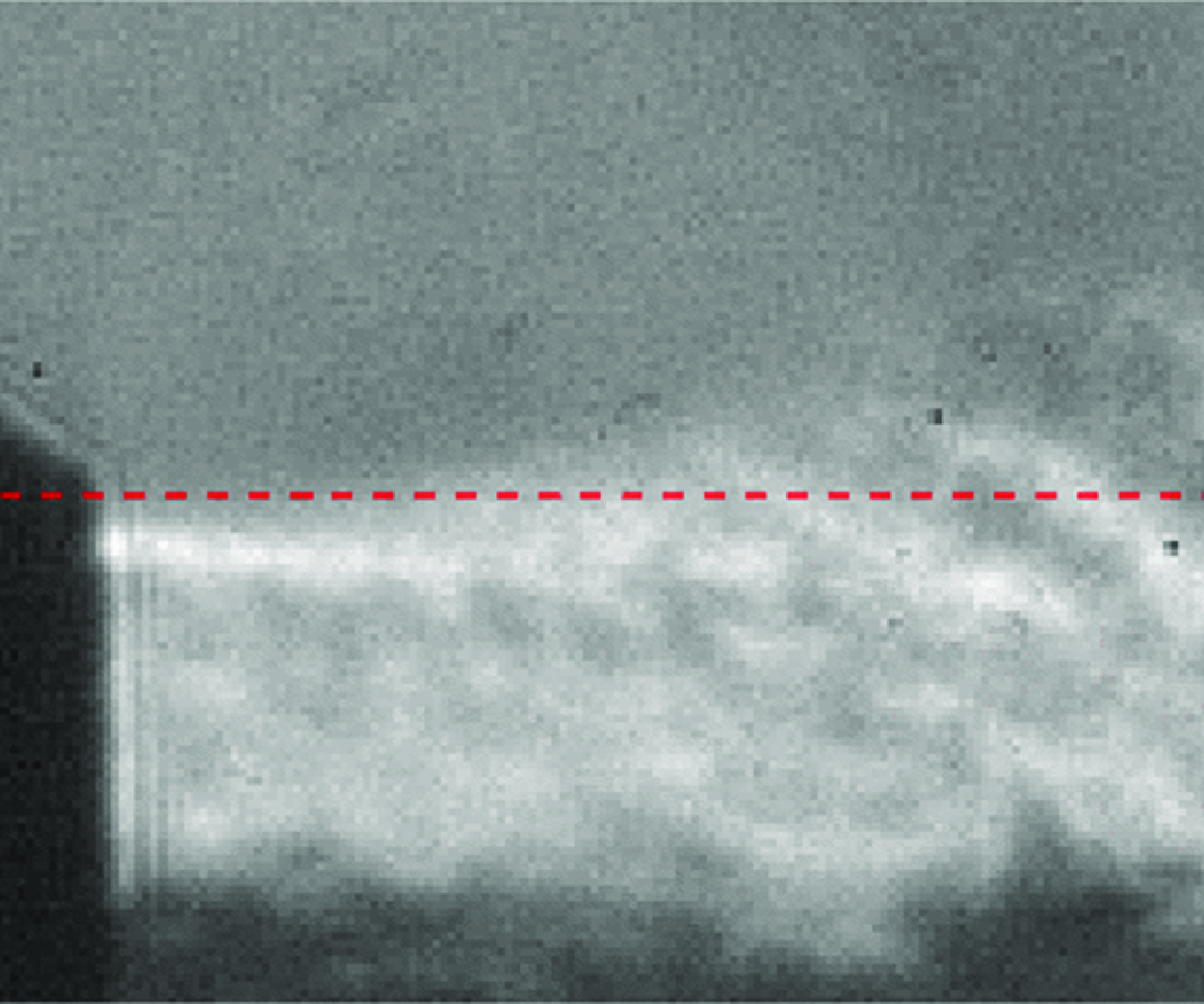
We conduct direct numerical simulations (DNS) to investigate the attenuation of turbulence in a periodic cube due to the addition of prolate spheroidal solid particles. Even with a dilute volume fraction of $O(10^{-2})$, particles can drastically attenuate the turbulence. Our DNS show that the turbulent kinetic energy reduces more significantly when the particles’ Stokes number is larger, size is smaller or aspect ratio is larger. We can explain these results based on the formula proposed by Oka and Goto (2022 J. Fluid Mech.949, A45), which relates the turbulence attenuation rate to the energy dissipation rate $\epsilon _p$ around particles. More precisely, under the condition that the volume fraction of particles is fixed, $\epsilon _p$ is larger when the Stokes number and, therefore, the relative velocity between fluid and particles are larger, the particle size is smaller or the aspect ratio is larger. These results also imply that the rotation of the anisotropic particles plays only a limited role in the attenuation of turbulence when the Stokes number of particles is sufficiently large, because the main cause of the attenuation is the relative translational velocity between fluid and particles.
This article provides a global ranking of research productivity of political science departments. We collected data on 115,427 articles and 12,696 books—written in both English and other languages—from 5,586 faculty members in 178 departments in North America, Europe, Asia, Latin America, Oceania, and Africa. Departments are ranked in terms of citations to articles published by faculty members, impact factors of journals in which they published, and number of top publications in which they published. Results are presented for overall and more recent research productivity.
Disinfection is a standard water treatment process. Plastics are found in various components of water infrastructure and the presence of microplastics in the water cycle raises environmental and human health concerns. Thus, this research investigated the physicochemical impacts of chlorination and chloramination on seven types of virgin and biofouled polymers (125–250 μm) under three disinfectant doses, three pH conditions in potable and recycled water. Our results indicated that both chlorination and chloramination impacted the seven polymers, with polypropylene (PP), expanded polystyrene (EPS) and polyamide (PA) being most impacted, signalling these as polymers of concern. Surface morphological changes were observed. FTIR spectra revealed cleavage of bonds and formation of carbonyl groups indicating degradation. While disinfection is helpful for treating pathogenic microorganisms, the risks of generating microplastics below detection limits are highlighted. Microplastics in disinfected water can lead to biofilm formation, increased adsorption of contaminants and disinfection by-products, compromising water quality and posing challenges for treatment. This research provides valuable insights into the physicochemical impacts of chlorination and chloramination on polymers, enhancing our understanding of their behaviour and fate in water and wastewater environments. While additional ecotoxicological research is needed to fully understand health implications, our study emphasizes the need for targeted intervention strategies of high-use polymers of concern.
In our study, we aim to compare the resistance profiles of Acinetobacter baumannii and Pseudomonas aeruginosa isolates from intensive care unit (ICU) patients before and during the COVID-19 pandemic.
Materials:
The study involved adult patients monitored in the ICUs of a secondary-level hospital from January 2019 to December 2022. Isolates of A. baumannii and P. aeruginosa were obtained from blood, urine, and respiratory samples. Identification and antibiotic susceptibility tests were conducted using the disk diffusion method and the VITEK 2 system.
Results:
The average age of the patients was 61.3 ± 21.9 years (range: 18–95), with a majority of 1306 (51.6%) being male. During the pandemic, A. baumannii isolates showed a significant increase in resistance rates for several antibiotics compared to the pre-pandemic period: imipenem (96% vs 35.1%), amikacin (84.1% vs 14.4%), ciprofloxacin (96.9% vs 36.9%), trimethoprim-sulfamethoxazole (66.4% vs 27%), and ceftazidime (96.5% vs 33.3%) (all with P < .001). However, there was no significant change in colistin resistance rates in these isolates (0.9% vs 0%; P = .307). Similarly, Pseudomonas aeruginosa isolates exhibited significant increases in resistance rates during the pandemic compared to the pre-pandemic period: imipenem (51.5% vs 18.8%; P < .001), colistin (4.9% vs 0.6%; P = .009), amikacin (23.5% vs 4.4%; P < .001), ciprofloxacin (53.3% vs 13.8%; P < .001), and ceftazidime (39.2% vs 12.7%; P < .001).
Conclusion:
Our results demonstrate a significant increase in antibiotic resistance levels in Acinetobacter and Pseudomonas strains associated with hospital-acquired infections or colonization during the COVID-19 pandemic.
Generalist and specialist parasites are predicted to trade off transmission efficiency with host virulence, depending on host range. However, very few empirical studies test this trade-off in parasites at both ends of this spectrum simultaneously. Here, we examine parasitaemia (as a proxy for transmission efficiency) and virulence (assessed through 2 metrics of host immunity) in birds infected by a generalist lineage of Haemoproteus, comparing these with birds infected by more specialist Haemoproteus lineages, and birds uninfected by any haemoparasite. We compared the same metrics for specialist-infected birds, depending on whether a species was a ‘usual’ host or ‘spillover’ host. Immune metrics of specialist-infected birds did not differ from those of uninfected birds, but generalist-infected birds had elevated heterophil:lymphocyte (H:L) ratios and elevated white blood cell (WBC) counts compared to both other groups. Parasitaemia of specialist lineages was nearly 5 times higher than that of generalist lineages. Moreover, specialist-infected spillover hosts had higher H:L ratios and higher WBC counts compared to usual hosts for these lineages, with parasitaemia nearly 10 times lower in spillover hosts compared to usual hosts, although sample sizes of spillover hosts are, by definition, small. Our data provide support for the evolution of tolerance in specialist host-parasite interactions, with increased transmission efficiency for the parasite and reduced impacts on the host.
Beginning in the late 1990s, a debate emerged whether Edmund Burke might be read as a significant critic of empire because of his impeachment of Warren Hastings. The debate that ensued, I argue in this article, revealed ambiguities and paradoxes in the category of anti-imperialism. Rather than imperialism and anti-imperialism representing a clean binary, anti-imperial projects, events, and figures may embody the very sorts of politics that many disciplinary debates about anti-imperialism wish to critique. Foregrounding “anti-imperialism” in the history of political thought, I conclude, may obfuscate as much as it illuminates—even when examining the twentieth-century experience of decolonization.
MicroRNAs (miRNAs), derived from extracellular vesicles (EVs) are circulating intercellular communicators which influence pathogenesis and could be used as potential diagnostic markers. In this study, plasma-derived EVs from Plasmodium knowlesi-infected patients (n = 13) and healthy individuals (n = 10) were isolated using size exclusion chromatography and ultracentrifugation. The presence of EVs was confirmed by transmission electron microscopy and Western immunoblotting, and quantified by nanoparticle tracking analysis. The EVs isolated from patients exhibited a larger size, accompanied by an elevated concentration of EVs. The relative expression levels of 8 human miRNAs were quantified using reverse transcriptase quantitative polymerase chain reaction. Compared to uninfected groups, hsa-miR-223-5p (P-value = 0.0002) and hsa-miR-486-5p (P-value = 0.025) were upregulated in P. knowlesi-infected patients. Bioinformatic analysis revealed that these miRNAs are predicted to target both human host and parasite genes, and they were found to be enriched in various malaria-related pathways. The areas under the receiver operating characteristic curve of hsa-miR-223-5p and hsa-miR-486-5p were 0.9154 and 0.8231, respectively, suggesting the potential of EV-miRNAs as diagnostic markers. Results revealed that EV-miRNAs may play a significant role in the progression of P. knowlesi infection. Further investigations should explore their potential impact on gene expression regulation as diagnostic biomarkers or targets for therapeutic interventions.
Although ample research links social factors and suicidality, there remains a gap in understanding how distinct processes within social communication relate to suicidality. We demonstrate how reciprocity of eye-gaze and facial expressions of happiness differ during parent-adolescent conflict based on adolescents’ future suicidal ideation (SI). Facial affect analyses were based on 103 girls (ages 11–13; M = 12.28; 75% White) and their parents. Eye-gaze analyses were conducted in subset of these dyads (N = 70). Participants completed a conflict discussion during which gaze to their partners’ eyes was assessed using mobile eye-tracking glasses and facial affect was coded using FaceReader Observer XT. Adolescents’ SI was assessed 12-months later. Actor-partner interdependence models tested whether participants’ gaze and affect predicted their own and their partners’ gaze and affect one second later and if these intra and interpersonal dynamics differed based on adolescents’ future levels of SI. Girls from dyads with less parental reciprocity of eye-gaze and happiness reported higher levels of SI 12-months later. During early adolescence, girls whose parents reciprocate their eye-contact or positive affect less during conflict may be at heightened risk for SI. If replicated, social communication could provide a promising intervention target to reduce suicidality prospectively.
This article uses the literature on subnational undemocratic regimes (SURs) and regime juxtaposition in Latin America to gain analytical leverage on the recent process of subnational democratic erosion in the United States. Based on a review of five key dimensions of federalism, we argue that the institutional landscape for the emergence and continuity of SURs is, comparatively speaking, more favorable in the US than in any of Latin America’s three federations (Argentina, Brazil, and Mexico). In addition to showing how federal structures are more detrimental for subnational democracy in the US, we assess how the two main theoretical approaches that have been developed to understand SURs in Latin America and elsewhere can be applied to the US.
Antenatal steroids (ANS) are one of the most widely prescribed medications in pregnancy, being administered to women at risk of preterm delivery. In the setting of preterm delivery at or below 35 weeks’ gestation, systematic review data show ANS reduce perinatal morbidity and mortality, primarily by promoting fetal lung maturation. However, with the expanding use of this intervention has come a growing appreciation for the potential off-target, adverse effects of ANS therapy on wider fetal development. We undertook a narrative literature review of the animal and clinical literature to assess current evidence for adverse effects of ANS exposure and fetal development. This review presents a summary of the evidence relating to the potential for wide-ranging, off-target, adverse effects of ANS therapy on fetal development and programming. We highlight an urgent need for further animal and clinical studies investigating the effects of ANS on the fetal immune, cardiovascular, renal and hepatic systems given a current sparsity of evidence. We also strongly suggest an emphasis on open disclosure, discussion and education of clinicians and patients with regard to the potential benefits and risks of ANS therapy, particularly in late preterm and term gestations where infants derive relatively few benefits from these drugs. We also propose further studies on the optimisation of ANS therapy through improved patient selection and improved dosing regimens based on a pharmacokinetic-pharmacodynamic informed understanding of ANS action on the fetal lung.
Why did Meiji Japan succeed in modernizing its state apparatus while Qing China failed? According to neorealists, states respond to threats by balancing. Successful balancing requires an efficient bureaucracy to extract enough resources from society to sustain a formidable military. Yet not all states are equal when it comes to modernizing. We argue that a state’s ability to adopt best practices depends on its past position in the international system. States suffering from a longstanding material weakness will tend to adopt new practices from abroad more quickly than states that have enjoyed a dominant position for a long time. Embeddedness decides whether or not the state perceives its model’s crisis. Therefore, we propose a theory of neorealist imitation success or failure that counts three variables: embeddedness as the independent variable, political leadership’s willingness to adopt best practices, and elite cohesion as intervening variables.