To save content items to your account,
please confirm that you agree to abide by our usage policies.
If this is the first time you use this feature, you will be asked to authorise Cambridge Core to connect with your account.
Find out more about saving content to .
To save content items to your Kindle, first ensure no-reply@cambridge.org
is added to your Approved Personal Document E-mail List under your Personal Document Settings
on the Manage Your Content and Devices page of your Amazon account. Then enter the ‘name’ part
of your Kindle email address below.
Find out more about saving to your Kindle.
Note you can select to save to either the @free.kindle.com or @kindle.com variations.
‘@free.kindle.com’ emails are free but can only be saved to your device when it is connected to wi-fi.
‘@kindle.com’ emails can be delivered even when you are not connected to wi-fi, but note that service fees apply.
The burgeoning China–Africa debates often fail to consider questions of African agency and, in particular, the role played by non-state actors (NSAs)—such as civil society organizations (CSOs), the media, and local groups—to give greater voice to African agency in Sino–African relations (SRA). Drawing on qualitative methods (i.e., interviews and content analysis), this study examines the relationship and focuses primarily on the case of Ghana to investigate how these NSAs engage, negotiate, influence, and resist Chinese actors’ involvement in Africa. It answers the question: “To what extent do NSAs (i.e., CSOs, the media, and local groups) exert agency in Sino–Ghana relations?”
This paper addresses the question of whether two-way powers – powers to act in some way (to ɸ) or to refrain from acting in that way (to refrain from ɸ-ing) – are causal powers. That is, the question is whether the power to ɸ or refrain from ɸ-ing could amount to the power to cause an effect of some kind, E, or refrain from causing an E-effect. It is argued that, for the incompatibilist regarding two-way powers, though not for the compatibilist, two-way powers cannot be causal powers. But an alternative account of two-way powers as powers of non-causal determination is presented as available and favourable.
The concept of identifiability remains a foundational yet contentious criterion in European Union (EU) data protection law. Similarly, anonymisation has sparked intense debate.
This paper examines recent developments that have shaped the EU’s approaches to identifiability and anonymisation, including trends in the Court of Justice of the European Union (CJEU) case law, national supervisory authority (SA) assessments of anonymisation processes, and the recent European Data Protection Board (EDPB) Opinion 28/2024 addressing the anonymity of artificial intelligence models and EDPB Guidelines 01/2025 on pseudonymisation.
The paper explores how the balance between over-inclusiveness and under-inclusiveness is being calibrated, suggesting the emergence of a functional definition of personal data in CJEU case law. It underscores the importance of the burden of proof in evaluating anonymisation processes, as confirmed by national SA assessments. Finally, it highlights how to ensure consistency between the GDPR and data sharing mandates stemming from the new generation of EU data regulations.
This paper revisits Philippe Pinel’s (1745–1826) psychiatric legacy, on the occasion of the 200th anniversary of his death, to challenge the enduring dichotomy between madness and criminality. While Pinel is celebrated for separating the insane from the criminal, his deeper insight – that madness is always partial and never fully negates agency – has been largely overlooked. Drawing on this dialectical view, the paper critiques the persistence of rigid classifications in psychiatry and forensic contexts. It argues for a model of mental illness as a dynamic interplay between vulnerability and self-awareness, with profound implications for clinical practice, legal judgment, and public perception. By highlighting psychiatry’s double bind – caught between therapeutic nuance and legal absolutism – the paper calls for a renewed ethical stance that embraces complexity and reclaims psychiatry’s role as a bridge-builder rather than a boundary enforcer.
Polyploidization is known to cause changes in the ploidy levels of plant somatic cells that affect the morphological, physiological and chemical composition. The aim of this research was to investigate the effects of tetraploidization in olive. To do this, several characteristics of 1-year-old shoots of two olive genotypes were compared: the diploid cultivar Leccino (L), and its tetraploid mutant Leccino Compact (LC), considered a slow-growing genotype. LC differed significantly from L in the morphological characteristics, with higher values of diameter, dry mass and volume of the stem (46%, 103%, 102%, respectively), and higher area, mass and volume of the individual leaf (43%, 66%, 73%, respectively). LC also had thicker, longer and wider leaves (30%, 10%, 34%, respectively) and significantly lower leaf density (7%) and lower specific leaf area, leaf mass ratio and leaf area ratio (17%, 4%, 18%, respectively). Internode length and stem density were not significantly different. The results allowed us to thoroughly characterize the effects of tetraploidy on 1-year-old shoots in olive, and also suggest that the slow growth of LC is due to its lower leaf area per unit of total biomass, which reduces leaf area production and, consequently, light interception, resource availability and tree growth. These results will be useful for genetic improvement programmes and for planning further exploitation of tetraploidy in horticulture.
This paper explores a new direction for archaeological historiography by applying the Yale approach in deconstruction to a selection of archaeological texts discussing the Neolithization process in Norway. Focus is on the cultural-historical research paradigm and publications from the period 1906–38. The analysis discovers that scholars from this period did not consider foragers and farmers to be essential social identities in the past; foragers could become farmers, and farmers could turn back to foraging. Some scholars argued that farming was practiced before the Neolithic period, while others promoted a sense of care and awe towards prehistoric foragers. On the basis of these readings, it is argued that previous accounts of the cultural-historical research paradigm in Norway focused too narrowly on the social contexts of older research. A change of focus from contexts to the texts themselves and how they present the world can explore further the complexity of this research period.
We evaluated the impact of recent revisions to the Clinical and Laboratory Standards Institute (CLSI) aminoglycoside breakpoints on susceptibility within Enterobacterales and Pseudomonas aeruginosa at a Canadian academic hospital. While the aminoglycoside breakpoint changes minimally affected overall susceptibility, the impact of these changes was notable within beta-lactamase producing Enterobacterales.
Coherent beam combining (CBC) of laser arrays is increasingly attracting attention for generating free-space structured light, unlocking greater potential in aspects such as power scaling, editing flexibility and high-quality light field creation. However, achieving stable phase locking in a CBC system with massive laser channels still remains a great challenge, especially in the presence of heavy phase noise. Here, we propose an efficient phase-locking method for a laser array with more than 1000 channels by leveraging a deep convolutional neural network for the first time. The key insight is that, by elegantly designing the generation strategy of training samples, the learning burden can be dramatically relieved from the structured data, which enables accurate prediction of the phase distribution. We demonstrate our method in a simulated tiled aperture CBC system with dynamic phase noise and extend it to simultaneously generate orbital angular momentum (OAM) beams with a substantial number of OAM modes.
Many mission-critical systems today have stringent timing requirements. Especially for cyber-physical systems (CPS) that directly interact with real-world entities, violating correct timing may cause accidents, damage or endanger life, property or the environment. To ensure the timely execution of time-sensitive software, a suitable system architecture is essential. This paper proposes a novel conceptual system architecture based on well-established technologies, including transition systems, process algebras, Petri Nets and time-triggered communications (TTC). This architecture for time-sensitive software execution is described as a conceptual model backed by an extensive list of references and opens up several additional research topics. This paper focuses on the conceptual level and defers implementation issues to further research and subsequent publications.
Many views of moral agency include, implicitly or explicitly, a consciousness requirement—namely, the claim that phenomenal consciousness is a necessary condition of moral agency. This paper casts doubt on the consciousness requirement. I argue that consciousness is not necessary for instantiating four key capacities necessary for moral agency: action, moral concept possession, responsiveness to moral reasons, and moral understanding. I defend my picture of nonconscious moral agency as a plausible account of an entity that can act for moral reasons and can be morally responsible. Lastly, I discuss broader implications of my argument, especially on the possibility of artificial moral agency.
The development of childcare policy can be understood as a process shaped by conflicts across multiple, interconnected dimensions of policymaking. Whilst existing literature often emphasises tensions between established policy legacies and emerging paradigms such as work–family reconciliation and social investment, this study introduces a multi-dimensional framework that includes conflict and negotiation processes between competing policies co-existing within the policy domain but also within policies themselves, emphasising the dynamics of self-reinforcing and self-undermining feedbacks. Our analysis reveals how efforts to resolve tensions in one policy dimension can inadvertently trigger new conflicts in other dimensions. By examining the South Korean case over three decades, we demonstrate how such interwoven tensions drive long-term policy change, offering scholars a more nuanced understanding of the complex mechanisms underlying policy evolution.
Specialists globally employ various clinical scales and instruments to assess balance, gait, and motor functions in children with cerebral palsy (CP). Selecting appropriate assessment tools is essential for planning studies, developing effective treatment strategies, and tracking clinical outcomes. Given the diversity in assessment needs – whether evaluating dynamic, functional, or static balance – there is a need to identify the most suitable tools for each aspect. Therefore, the primary objective of this review is to critically analyze current clinical and instrument-based assessment methods in the literature to determine the most effective approaches for pediatric CP. This systematic review retrieved 1,812 papers, of which only 23 met the inclusion criteria and presented assessment methods for evaluating balance and motor functions in pediatric CP. These methods were further organized into clinical and instrument-based assessment groups. Among clinical examinations, the Pediatric Balance Scale and Gross Motor Function Measures were considered gold standards and featured in eight studies. In contrast, postural sway measured with the Biodex Balance System, Gait Stability Indices from the GAITRite system, and EMG sensing were the predominant instrument-based observations. Despite this variety, a consensus on the best assessment methods remains lacking. This review highlights the potential of integrating AI-driven metrics that combine clinical and instrument-based data to enhance precision and individualized care. Future research should focus on creating integrated, individualized profiles to better capture the unique capabilities of children with CP, enabling more personalized and effective intervention strategies.
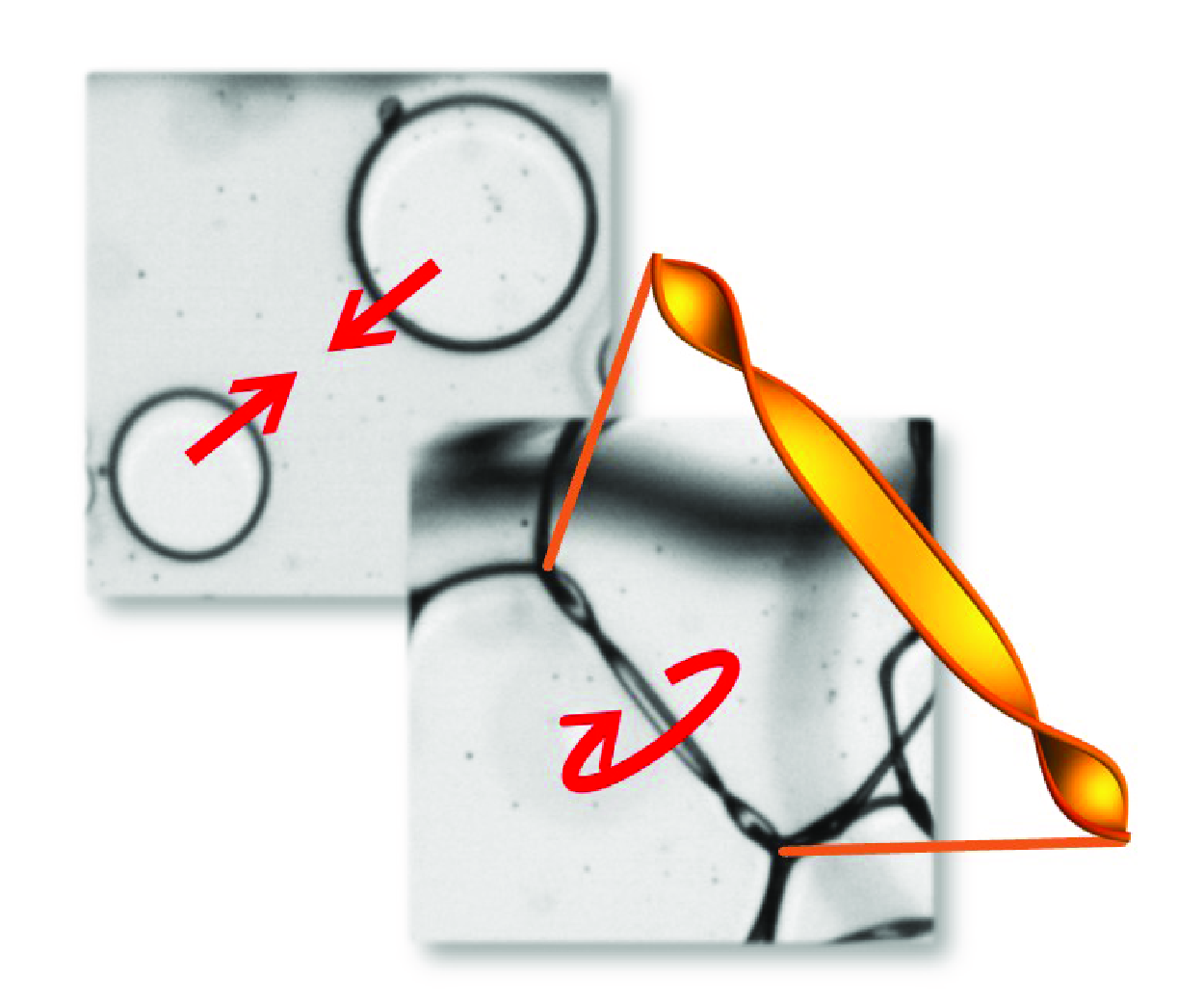
The rupture of a liquid film, where a thin liquid layer between two other fluids breaks and forms holes, commonly occurs in both natural phenomena and industrial applications. The post-rupture dynamics, from initial hole formation to the complete collapse of the film, are crucial because they govern droplet formation, which plays a significant role in many applications such as disease transmission, aerosol formation, spray drying nanodrugs, oil spill remediation, inkjet printing and spray coating. While single-hole rupture has been extensively studied, the dynamics of multiple-hole ruptures, especially the interactions between neighbouring holes, are less well understood. Here, this study reveals that when two holes ‘meet’ on a curved film, the film evolves into a spinning twisted ribbon before breaking into droplets, distinctly different from what occurs on flat films. We explain the formation and evolution of the spinning twisted ribbon, including its geometry, orbits, corrugations and ligaments, and compare the experimental observations with models. We compare and contrast this phenomena with its counterpart on planar films. While our experiments are based on the multiple-hole ruptures in corona splash, the underlying principles are likely applicable to other systems. This study sheds light on understanding and controlling droplet formation in multiple-hole rupture, improving public health, climate science and various industrial applications.
We conducted an analysis of a nationwide survey of US physician offices between 2016 and 2019 and calculated annualized prevalence rates of urinary tract infections (UTIs). During the 3-year study period, UTI was the most common infection in US physician offices, accounting for approximately 10 million annualized encounters.