To save content items to your account,
please confirm that you agree to abide by our usage policies.
If this is the first time you use this feature, you will be asked to authorise Cambridge Core to connect with your account.
Find out more about saving content to .
To save content items to your Kindle, first ensure no-reply@cambridge.org
is added to your Approved Personal Document E-mail List under your Personal Document Settings
on the Manage Your Content and Devices page of your Amazon account. Then enter the ‘name’ part
of your Kindle email address below.
Find out more about saving to your Kindle.
Note you can select to save to either the @free.kindle.com or @kindle.com variations.
‘@free.kindle.com’ emails are free but can only be saved to your device when it is connected to wi-fi.
‘@kindle.com’ emails can be delivered even when you are not connected to wi-fi, but note that service fees apply.
Working memory encompasses the limited incoming information that can be held in mind for cognitive processing. To date, we have little information on the effects of bilingualism on working memory because, absent evidence, working memory tasks cannot be assumed to measure the same constructs across language groups. To garner evidence regarding the measurement equivalence in Spanish and English, we examined second-grade children with typical development, including 80 bilingual Spanish–English speakers and 167 monolingual English speakers in the United States, using a test battery for which structural equation models have been tested – the Comprehensive Assessment Battery for Children – Working Memory (CABC-WM). Results established measurement invariance across groups up to the level of scalar invariance.
Nearly 25% of people with intellectual disability (PwID) have epilepsy compared to 1% of the UK general population. PwID are commonly excluded from research, eventually affecting their care. Understanding seizures in PwID is particularly challenging because of reliance on subjective external observation and poor objective validation. Remote electroencephalography (EEG) monitoring could capture objective data, but particular challenges and implementation strategies for this population need to be understood.
Aim
This co-production aimed to explore the accessibility and potential impact of a remote, long-term EEG tool (UnEEG 24/7 SubQ) for PwID and epilepsy.
Method
We conducted six, 2-hour long workshops; three with people with mild intellectual disability and three with families/carers of people with moderate–profound intellectual disability. Brief presentations, easy read information and model demonstrations were used to explain the problem and device. A semi-structured guide developed by a communication specialist and art-based techniques facilitated discussion with PwID. For family/carers, active listening was employed. All conversations were recorded and transcribed. Artificial intelligence-based coding and thematic analysis (ATLAS.ti and ChatGPT) were synthesised with manual theming to generate insights.
Results
Co-production included four PwID, five family members and seven care professionals. Three main themes were identified: (1) perceived benefits for improving seizure understanding, informing care and reducing family and carer responsibility to accurately identify seizures; (2) the device was feasible for some PwID but not all; and (3) appropriate person-centred communication is essential for all stakeholders to reduce concerns.
Conclusions
The workshops identified key benefits and implementing barriers to SubQ in PwID.
The Earth magnetopause, when sufficiently plane and stationary at a local scale, can be considered as a ‘quasi-tangential’ discontinuity, since the normal component of the magnetic field $B_n$ is typically very small but not zero. Contrary to observations, the ‘classic theory of discontinuities’ predicts that rotational and compressional jumps should be mutually exclusive in the general case $B_n \ne 0$, but allows only one exception: the tangential discontinuity provided that $B_n$ is strictly zero. Here we show that finite Larmor radius (FLR) effects play an important role in the quasi-tangential case, whenever the ion Larmor radius is not fully negligible with respect to the magnetopause thickness. By including FLR effects, the results suggest that a rotational discontinuity undergoes a change comparable to the change of a shear Alfvén into a kinetic Alfvén wave when considering linear modes. For this new kind of discontinuity, the co-existence of rotational and compressional variations at the magnetopause does no more imply that this boundary is a strict tangential discontinuity, even in one-dimensional (1-D)-like regions far from X lines if any. This result may lead to important consequences concerning the oldest and most basic questions of magnetospheric physics: how can the magnetopause be open, where and when? While the role of FLR is established theoretically, in this paper we show that it can be proved experimentally. For this, we make use of magnetospheric multiscale mission (MMS) data and process them with the most recent available four spacecraft tools. First, we present the different processing techniques that we use to estimate spatial derivatives, such as $grad(B)$ and $div(P)$, and the magnetopause normal direction. We point out why this normal direction must be determined with extremely high accuracy to make the conclusions unambiguous. Then, the results obtained by these techniques are presented in a detailed case study and on a statistical basis.
Diet indices are quantitative assessments of the quality of population intake. Understanding diet quality is crucial to support health and well-being; however, knowledge of diet quality across racial groups is limited. To examine diet quality of acial groups ‘White’, ‘Black’, ‘Asian’, and ‘Other’ in the United Kingdom (U.K.) and United States (U.S.), U.K. and U.S. national survey data were used to calculate Alternative Healthy Eating Index (AHEI-2010), Diet Quality Index-International (DQI-I), and EAT-Lancet scores. ANCOVA tests compared median total quality scores across racial groups adjusting for covariates. Kruskal–Wallis tests examined differences in individual component scores. Spearman correlations identified association of diet quality scores across indices. Highest diet quality scores were reported for U.K. and U.S. Asian groups. Most noticeable differences were apparent between U.S. Asian and White/Black groups (62% Asians within highest tertile of AHEI-2010 score vs. 29% Whites; P < 0.001). All racial groups demonstrated poor diet quality in terms of sustainability; EAT-Lancet scores were <40% of maximum total score for U.S. White, Black, and Other groups. AHEI-2010 diet quality scores were moderately associated with EAT-Lancet scores, evident across all groups (r = 0.53–0.65; P < 0.001). There is a need for all groups to increase intake of wholegrains, especially Black groups (mean Wholegrain score for U.S. Black group within DQI-I was 0.60 (maximum score of 5)) as demonstrated within AHEI-2010, DQI-I, and EAT-Lancet component scores. Additionally, increased intake of vegetables and legumes and decreased intake of processed and red meat would improve the adequacy, healthiness, and sustainability of U.K. and U.S. racial diets.
Under what conditions are people more likely to support judicial invalidation of legislative acts? We theorize that constitutional recency confers greater democratic legitimacy on constitutional provisions, reducing concerns that judges may use dated language to impose their own will on a living majority. Exploiting differences among US state constitutions, we show in a pre-registered vignette experiment and conjoint analysis that Americans are more supportive of judicial review and original intent interpretation when presented with a younger constitutional provision or constitution. These results imply that Americans might alter their approach to the US Constitution if it were changed as easily and as often as a typical state constitution.
Cestodiases, like echinococcoses and cysticercoses, represent a global health problem. Currently available anthelmintics, as benzimidazoles and praziquantel, have limited effectiveness against these cestodiases, creating a demand for the identification of new and more effective drugs. Here, the potential of statins (simvastatin and fluvastatin), for repositioning as novel anthelmintic is explored. Statins are inhibitors of 3-hydroxy-3-methylglutaryl coenzyme A (HMG-CoA) reductase, a main enzyme in the mevalonate pathway, which is vital for the synthesis of non-steroidal isoprenoids and the maintenance of normal cell functioning. A survey for HMG-CoA reductase encoding genes showed that they are present in a single copy in the genomes of parasitic helminths and their mammal hosts. Sequence alignments and phylogenetic analyses showed 20–95% overall identities among ortholog HMG-CoA reductases, with special conservation of their catalytic domains. The HMG-CoA reductase 3D-structure was predicted for orthologs from 3 cestodes of medical importance (Echinococcus multilocularis, Echinococcus granulosus sensu lato, and Taenia solium), and from a model cestode species (Mesocestoides corti). Molecular docking between cestode HMG-CoA reductase orthologs with simvastatin demonstrated that the Arg, Ser, Lys, and Glu residues in conserved positions of the active site interact with this drug, similarly to the interactions predicted for the human reference ortholog enzyme. Furthermore, in vitro assays demonstrated that simvastatin produced a significant reduction of M. corti viability, being able to reduce 100% of parasite viability at 150 μm. Fluvastatin was also assessed showing a lower, although significant anthelmintic effect. The predicted overall structures and interactions together with in vitro assays suggest that cestodes HMG-CoA reductases are inhibited by simvastatin, being a potential therapeutic target for the repurposing of simvastatin as anthelmintic drug. Furthermore, these results pave the way for the in vivo evaluation of the potential effects of simvastatin on cestode larvae.
This study investigated the role of temperament in oral language development in over 200 Mandarin and Cantonese speakers in the Growing Up in New Zealand pre-birth longitudinal cohort study. Mothers assessed infant temperament at nine months using a five-factor Infant Behaviour Questionnaire-Revised Very Short Form. They also reported on children’s vocabulary and word combinations at age two using adapted MacArthur-Bates Communicative Development Inventory short forms. Regression analyses were employed to examine unique links between infant temperament and language, respectively, controlling for demographic factors. Fear was associated with larger English vocabularies for English-Mandarin speakers and larger Cantonese vocabularies for Cantonese speakers. Orienting capacity was associated with more advanced word combinations for Mandarin speakers, whereas negative emotionality was associated with less advanced word combinations for Cantonese speakers. Positive affect/surgency was associated with more advanced word combinations for English-Cantonese speakers. This study revealed predictive patterns of infant temperament across Chinese-speaking children’s multiple languages.
Gas furnaces are the prevalent heating systems in Europe, but efforts to decarbonize the energy sector advocate for their replacement with heat pumps. However, this transition poses challenges for power grids due to increased electricity consumption. Estimating this consumption relies on the seasonal performance factor (SPF) of heat pumps, a metric that is complex to model and hard to measure accurately. We propose using an unpaired dataset of smart meter data at the building level to model the heat consumption and the SPF. We compare the distributions of the annual gas and heat pump electricity consumption by applying either the Jensen–Shannon Divergence or the Kolmogorov–Smirnov test. Through evaluation of a real-world dataset, we prove the ability of the methodology to predict the electricity consumption of future heat pumps replacing existing gas furnaces with a focus on single- and two-family buildings. Our results indicate anticipated SPFs ranging between 2.8 and 3.4, based on the Kolmogorov–Smirnov test. However, it is essential to note that the analysis reveals challenges associated with interpreting results when there are single-sided shifts in the input data, such as those induced by external factors like the European gas crisis in 2022. In summary, this extended version of a conference paper shows the viability of utilizing smart meter data to model heat consumption and seasonal performance factor for future retrofitted heat pumps.
We study the $\mathscr {D}\mathrm {isc}$-structure space $S^{\mathscr {D}\mathrm {isc}}_\partial (M)$ of a compact smooth manifold M. Informally speaking, this space measures the difference between M, together with its diffeomorphisms, and the diagram of ordered framed configuration spaces of M with point-forgetting and point-splitting maps between them, together with its derived automorphisms. As the main results, we show that in high dimensions, the $\mathscr {D}\mathrm {isc}$-structure space a) only depends on the tangential $2$-type of M, b) is an infinite loop space, and c) is nontrivial as long as M is spin. The proofs involve intermediate results that may be of independent interest, including an enhancement of embedding calculus to the level of bordism categories, results on the behaviour of derived mapping spaces between operads under rationalisation, and an answer to a question of Dwyer and Hess in that we show that the map $\mathrm {BTop}(d)\rightarrow \mathrm {BAut}(E_d)$ is an equivalence if and only if d is at most $2$.
Prandtl's secondary flows of the second kind generated by laterally varying roughness are studied using the linearised Reynolds-averaged Navier–Stokes approach proposed by Zampino et al. (J. Fluid Mech., vol. 944, 2022, p. A4). The momentum equations are coupled to the Spalart–Allmaras model while the roughness is captured by adapting established strategies for homogeneous roughness to heterogeneous surfaces. Linearisation of the governing equations yields a framework that enables a rapid exploration of the parameter space associated with heterogeneous surfaces, in the limiting case of small spanwise variations of the roughness properties. Channel flow is considered, with longitudinal high- and low-roughness strips arranged symmetrically. By varying the strip width, it is found that linear mechanisms play a dominant role in determining the size and intensity of secondary flows. In this setting, secondary flows may be interpreted as the time-averaged output response of the turbulent mean flow subjected to a steady forcing produced by the wall heterogeneity. In fact, the linear model predicts that secondary flows are most intense when the strip width is about 0.7 times the half-channel height, in excellent agreement with available data. Furthermore, a unified framework to analyse combinations of heterogeneous roughness properties and laterally varying topographies, common in applications, is discussed. Noting that the framework assumes small spanwise variations of the surface properties, two separate secondary-flow-inducing source mechanisms are identified, i.e. the lateral variation of the virtual origin from which the turbulent structure develops and the lateral variation of the streamwise velocity slip, capturing the acceleration/deceleration perceived by the bulk flow over troughs and crests of non-planar topographies.
The aim of this study was to analyse the validity and reliability of the Turkish version of the renal inpatient nutrition screening tool (Renal iNUT) for haemodialysis patients. The Renal iNUT and the malnutrition universal screening tool (MUST) were used in adult haemodialysis patients at two different centres to identify malnutrition. The subjective global assessment (SGA), regarded as the gold standard for nutritional status assessment, was utilised for comparison. Structural validity was assessed using biochemical values and anthropometric measurements, while reliability was assessed using repeated the Renal iNUT assessment. Of the 260 patients admitted, 42·3 % were malnourished (SGA score was B or C). According to the Renal iNUT, 59·6 % of the patients were at increased risk for malnutrition (score ≥ 1) and 3·8 % required referral to a dietitian (score ≥ 2). According to the MUST, 13·1 % of the patients were at increased risk for malnutrition and 8·5 % required referral to a dietitian. The Renal iNUT was found to be more sensitive in detecting increased risk of malnutrition in haemodialysis patients compared with the MUST (59·6 % v. 13·1 %). According to the SGA, the sensitivity of the Renal iNUT is higher compared to the MUST (89 % and 45 %, respectively). Kappa-assessed reliability of the Renal iNUT was 0·48 (95 % CI, 0·58, 0·9) and a moderate concordance was observed. The Renal iNUT is a valid and reliable nutritional screening tool for evaluating haemodialysis patients to determine their nutritional status. The use of the Renal iNUT by dietitians will contribute to the identification of malnutrition and its treatment.
Previous research has found that individuals harboring hostile sexist attitudes are more likely to support the use of political violence. In this study, we examine this relationship further. We theorize that the impact of hostile sexism on support for political violence is mediated through two mutually reinforcing factors: social dominance orientation and political illiberalism. We test this argument using an original survey we administered to over 1,400 subjects in the United States. We employ two operationalizations of individuals’ support for political violence: support in the abstract and support for specific acts of political violence. We find that individuals who exhibit hostile sexism are substantially more likely to support political violence, both abstract and specific. Moreover, we find that both social dominance orientation and political illiberalism together mediate 64.9% of the effect of hostile sexism on support for political violence in the abstract and 80.5% of the effect on support for specific acts of political violence. We conclude with a discussion of the implications of these findings.
Digital multimodal composing (DMC) has been valued as an engaging pedagogy in language teaching and learning in recent decades. Although research on DMC is flourishing and evidences its benefits for students' development as second language (L2) users and writers, there are some missing links between research findings and classroom practices. In this article, we examine three kinds of relationships between research and practice with regard to DMC: areas in which research findings have not been well applied, areas in which research findings have been reasonably well applied, and areas in which research findings have been usefully applied. As recent research–practice frameworks in education research emphasize a collaborative relationship between researchers and practitioners, we argue that L2 writing researchers' and teacher educators' reflections and experiences are crucial to facilitate the dialogue between DMC research and practice in writing contexts. We suggest that DMC should be incorporated into L2 teacher education programs so that instructors are equipped with the necessary knowledge and competence to design, implement, and assess students' DMC productions.
When considering the implications of the shareholder-stakeholder debate in defining the purpose of a company, epistemological clarity is vital in this emerging theory of the firm. Such clarity can prevent recurrence based solely on rephrasing key terms. To understand how various stakeholders develop and interpret a shared purpose, I argue for the necessity of a pragmatist approach that is normative and process-oriented. Mental models play a crucial role in interpretive processes that define decision-making, where individual perspectives converge. The figures of Milton Friedman and Ed Freeman serve as “beacons,” as artefacts, in the transmission of knowledge through which we, as individuals, shape a shared understanding. In current societies, profound polarization obstructs solutions to grand challenges. Pragmatism starts by questioning the underlying values of everyone involved. It assumes that sound deliberative processes are the only way to reach real solutions—not only for the mind but, above all, for the heart.
An identity that is reminiscent of the Littlewood identity plays a fundamental role in recent proofs of the facts that alternating sign triangles are equinumerous with totally symmetric self-complementary plane partitions and that alternating sign trapezoids are equinumerous with holey cyclically symmetric lozenge tilings of a hexagon. We establish a bounded version of a generalization of this identity. Further, we provide combinatorial interpretations of both sides of the identity. The ultimate goal would be to construct a combinatorial proof of this identity (possibly via an appropriate variant of the Robinson-Schensted-Knuth correspondence) and its unbounded version, as this would improve the understanding of the mysterious relation between alternating sign trapezoids and plane partition objects.
Anxiety affects around one in five women during pregnancy and after birth. However, there is no systematic information on the proportion of women with perinatal anxiety disorders who want or receive treatment.
Aims
To examine (a) the prevalence of anxiety disorders during pregnancy and after birth in a population-based sample, and (b) the proportion of women with anxiety disorders who want treatment and receive treatment.
Method
This study conducted 403 diagnostic interviews in early pregnancy (n = 102), mid-pregnancy (n = 99), late pregnancy (n = 102) or postpartum (n = 100). Participants also completed self-report measures of previous/current mental health problems and desire for treatment at every time point.
Results
The prevalence of anxiety disorders over all time points combined was 19.9% (95% CI 16.1–24.1), with greatest prevalence in early pregnancy (25.5%, 95% CI 17.4–35.1). The most prevalent disorders were obsessive–compulsive disorder (8.2%, 95% CI 5.7–11.3) and generalised anxiety disorder (5.7%, 95% CI 3.7–8.4). The majority of women with anxiety disorders did not want professional help or treatment (79.8%). Most women with anxiety disorders who did want treatment (20.2%) were receiving treatment. The majority of participants with anxiety disorders had a history of mental health problems (64.6%).
Conclusions
Prevalence rates overall are consistent with previous research, lending validity to the findings. However, findings challenge the assumption that everyone with a psychological disorder wants treatment. These findings highlight the importance of relationship-based care, where individual needs and contextual barriers to treatment can be explored.
By harnessing optical memories based on electromagnetically induced transparency in warm vapors of gaseous alkali metals and cold atomic clouds, this article presents new methods for motion sensing. The proposed scheme for velocimetry can substantially increase the sensitivity of some recent works based on the light-dragging effect in a moving medium, and on the other hand, our proposal, when realized using cold atoms, opens new research questions with regard to limits of light storage in cold atomic clouds. Ultimately, a detailed experimental setup is presented for the realization of the velocimetry scheme using stopped light, which includes considerations for the choice of the medium, laser configuration and control. By investigating the limits of optical memories in motion sensing applications, this research opens up new avenues for employing optical memories beyond applications in quantum information science.
Network science was used to create and examine semantic networks of cue and response words from a word association task in learners of Kaqchikel (an endangered language indigenous to Guatemala) and monolingual English speakers. English speakers provided a wide range of responses indicative of creative language use, whereas the Kaqchikel learners provided straightforward and utilitarian responses. The observed differences in network structure in the English/Kaqchikel learners resembled the structural differences previously observed in more/less creative individuals, suggesting an alternative account of the “foreign language effect” based on the size and structure of the semantic network in the native/foreign language.
The complex field, equipped with the multivalued functions of raising to each complex power, is quasiminimal, proving a conjecture of Zilber and providing evidence towards his stronger conjecture that the complex exponential field is quasiminimal.
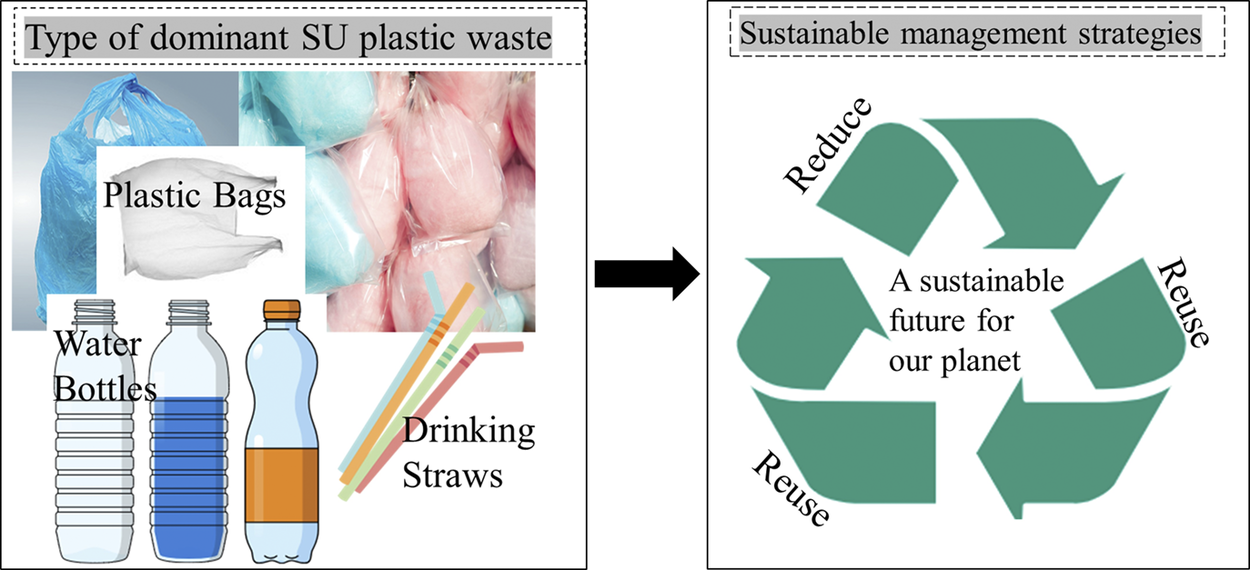
Since 1979, plastic companies have significantly expanded their markets. Evidence suggests that excessive plastic use in Ethiopia has exacerbated environmental pollution, contributing to a “quadruple crisis” involving climate change, biodiversity loss, pollution and public health and economic impacts. To address this, the Ethiopian government needs to establish effective plastic waste management strategies. Key future direction and recommendation include (1) Developing and enforcing national strategies, including a ban on many single-use plastics, for sustainable plastic waste management; (2) adopting international best practices and policies to move toward a zero-waste approach; (3) investing in a circular economy and plastic waste management systems; (4) strengthening policies through comprehensive legislation and extended producer responsibility frameworks; (5) establishing a council to integrate scientific research into policymaking; (6) promoting green technologies and innovations, such as plastic waste-to-energy and smart waste management; (7) engaging in global efforts to monitor hazardous chemicals in plastics and support transparency in a toxic-free circular economy to ensure the public’s right to information.