To save content items to your account,
please confirm that you agree to abide by our usage policies.
If this is the first time you use this feature, you will be asked to authorise Cambridge Core to connect with your account.
Find out more about saving content to .
To save content items to your Kindle, first ensure no-reply@cambridge.org
is added to your Approved Personal Document E-mail List under your Personal Document Settings
on the Manage Your Content and Devices page of your Amazon account. Then enter the ‘name’ part
of your Kindle email address below.
Find out more about saving to your Kindle.
Note you can select to save to either the @free.kindle.com or @kindle.com variations.
‘@free.kindle.com’ emails are free but can only be saved to your device when it is connected to wi-fi.
‘@kindle.com’ emails can be delivered even when you are not connected to wi-fi, but note that service fees apply.
Data on associations between inflammation and depressive symptoms largely originate from high income population settings, despite the greatest disease burden in major depressive disorder being attributed to populations in lower-middle income countries (LMICs).
Aims
We assessed the prevalence of low-grade inflammation in adults with treatment-resistant depression (TRD) in Pakistan, an LMIC, and investigated associations between peripheral C-reactive protein (CRP) levels and depressive symptoms.
Method
This is a secondary analysis of two randomised controlled trials investigating adjunctive immunomodulatory agents (minocycline and simvastatin) for Pakistani adults with TRD (n = 191). Logistic regression models were built to assess the relationship between pre-treatment CRP (≥ or <3 mg/L) and individual depressive symptoms measured using the Hamilton Depression Rating Scale. Descriptive statistics and regression were used to assess treatment response for inflammation-associated symptoms.
Results
High plasma CRP (≥3 mg/L) was detected in 87% (n = 146) of participants. Early night insomnia (odds ratio 2.33, 95% CI 1.16–5.25), early morning waking (odds ratio 2.65, 95% CI 1.29–6.38) and psychic anxiety (odds ratio 3.79, 95% CI 1.39–21.7) were positively associated, while gastrointestinal (odds ratio 0.38, 95% CI 0.14–0.86) and general somatic symptoms (odds ratio 0.34, 95% CI 0.14–0.74) were negatively associated with inflammation. Minocycline, but not simvastatin, improved symptoms positively associated with inflammation.
Conclusions
The prevalence of inflammation in this LMIC sample with TRD was higher than that reported in high income countries. Insomnia and anxiety symptoms may represent possible targets for personalised treatment with immunomodulatory agents in people with elevated CRP. These findings require replication in independent clinical samples.
Healthy food retail programmes (HFRP) in the USA generally aim to increase healthy foods access to improve diet quality and health, yet the impact is mixed. These programmes primarily target adults, even though adolescents frequently and independently visit stores to purchase snacks. This study’s aims are to explore successes and challenges of implementing HFRP (Aim 1) and examine how HFRP can be tailored to adolescents (Aim 2).
Design:
One-time, virtual, semi-structured interviews with individuals who were involved in a HFRP, followed by a socio-demographic characteristics survey. Interviews were designed based on the RE-AIM framework and the Hexagon Tool and analysed using Braun and Clark’s (2006) thematic analysis approach. Descriptive statistics were used to summarise participants’ socio-demographic characteristics.
Setting:
New York City (NYC).
Participants:
Adults (18 years or older) who have designed, implemented and/or evaluated an HFRP in NYC and speak/understand English (n 21).
Results:
Aim 1: For successes, strategies to build relationships with the community were most discussed. Regarding challenges, securing reliable funding was the hardest to overcome. Suggested solutions included designing profitable HFRP, targeting shortcomings in food distribution systems and increasing consumer demand. Aim 2: Most participants had not considered adolescents in previous HFRP but suggested involving youth in developing HFRP to encourage youth-driven solutions and promote youth advocacy.
Conclusions:
Future HFRP should focus on activities that help store owners purchase affordable healthy foods from distributors, which translates to affordability for customers. Federal and local policies can assist by funding complementary programmes. Additionally, adolescents should be considered in these efforts.
Rock glaciers support alpine biodiversity and may respond more slowly to warming than snow or glaciers. While responses of snow and glaciers to climate change are relatively well understood, a robust assessment of rock glacier environmental niche, future distributions of rock glaciers and potential for development of rock glaciers from current glaciers is lacking. Using process-relevant, high-resolution environmental descriptors, we develop a species distribution model of the topographic, geologic and hydroclimatic niche of rock glaciers that provides novel estimates of potential rock glacier distributions for different climates. We identify mean annual air temperature and headwall area as the dominant controls on rock glacier spatial distributions, with rock glaciers more likely to be found in areas with mean annual temperatures close to −5°C, little rain, northern aspects and broad headwalls. While rock glacier climate equilibration may take hundreds of years, we find that equilibration to present climate will result in a 50% reduction in rock glacier habitat and equilibration to late 21st-century climate under a high-end warming scenario will result in a 99% reduction in rock glacier habitat across the western USA. Under future conditions, we find limited potential for glacier to rock glacier transformation (3% of glacierized area), concentrated in cold, high elevation, moderate precipitation areas.
Civil War allegiance has long been a preoccupation of early modern British historians. They have weighed geographical, religious, political, and pragmatic reasons for British people to choose sides in 1642. A study of the changes of allegiance in the years that followed is just as important. Side-changing reveals the fractures and difficulties that war, regime change, and an uneasy peace created. Most scholarship has examined figures whose ideas and beliefs remained consistent as the world around them changed. This article argues that others changed their minds (and their side) because their ideas fundamentally shifted, through an engagement with oppositional literature, a royalist social environment, and relationships built with royalist agents. Through a case study of the parliamentarian Major-General Sir Thomas Myddelton it examines this process of change. The article takes the study of allegiance into the Interregnum and beyond to the Restoration, tracing the impact of Myddelton's reading, experiences, and actions upon his declared loyalty. To do this, the article proposes a methodology that cuts across historical approaches, using evidence from financial accounts, libraries, and legal cases alongside surviving correspondence and printed pamphlets to build a composite image of a changing mind.
Existing theoretical results for attenuation of surface waves propagating on water of random fluctuating depth are shown to over-predict the rate of decay due to the way in which ensemble averaging is performed. A revised approach is presented which corrects this and is shown to conserve energy. New theoretical predictions are supported by numerical results which use averaging of simulations of wave scattering over finite sections of random bathymetry for which transfer matrix eigenvalues are used to accurately measure decay. The model of wave propagation used in this paper is derived from a linearised long-wavelength assumption whereby depth averaging leads to time harmonic waves being represented as solutions to a simple ordinary differential equation. In this paper it is shown how this can be adapted to incorporate a model of a continuous covering of the surface by fragmented floating ice. Attenuation of waves through broken ice of random thickness is then analysed in a similar manner as bed variations have been previously. General features of the predicted attenuation are discussed in relation to existing theoretical models for attenuation due to multiple scattering through random ice environments and to field data, particularly in the model's ability to capture a ‘rollover effect’ at higher frequencies.
We present the unusual case of an 8-month-old female with tetralogy of Fallot, coarctation of aorta, and complete presentation of pentalogy of Cantrell. A meta-analysis of 236 cases of Cantrell’s syndrome reported in the literature was performed to compare intracardiac findings.
The intervocalic position favors voicing in stops. Yet, some languages have been reported to feature the opposite (unnatural) process of intervocalic devoicing. This paper investigates two such case studies. Pre-Berawan intervocalic *b and *g have developed into Berawan k. Pre-Kiput intervocalic *g, *ɟʝ, and *v have developed into Kiput k, cç, and f, respectively. To account for the data, we invoke Beguš’s (2018, 2019) blurring process model of sound change. The model proposes that unnatural phonology derives from a sequence of at least three phonetically motivated sound changes. We argue that the steps involved in intervocalic devoicing are (i) the intervocalic fricativization of voiced stops, (ii) devoicing of fricatives, and (iii) the occlusion of devoiced fricatives. Each of the steps is independently attested and motivated. We demonstrate that our blurring process proposal explains aspects of the historical development unaccounted for by previous approaches, and present new evidence suggesting that a single sound change could not have operated in the prehistory of Berawan. Thus, we maintain the conservative position that unnatural diachronic developments arise from sequences of natural and phonetically grounded sound changes.
How should historians of environmental and climate sciences respond to the Earth's move from the blank canvas to a foreground feature of ‘big-picture’ scholarship? This article highlights three crucial themes for histories of science in the Anthropocene: categories of scale and methods of scaling, the relationship between history of science and the disciplines it historicizes, and the entanglement of environmental damage and environmental knowledge. Critically engaging a wide range of recent literature across history of science, environmental history, and environmental humanities, alongside an array of case studies, the article puts forward an agenda for ‘planetary pictures’. These are analyses that actively contribute to the vital political and ethical task to make visible, and force a reckoning with, the perpetrators and victims of Anthropocene violence.
This study aims to explore the concept of future orientation, which encompasses individuals’ thoughts about the future, goal-setting, planning, response to challenges and behavioural adjustments in evolving situations. Often viewed as a psychological resource, future orientation is believed to be developed from psychological resilience. The study investigates the curvilinear relationship between childhood maltreatment and future orientation while examining the moderating effects of genotype.
Methods
A total of 14,675 Chinese adults self-reported their experiences of childhood maltreatment and their future orientation. The influence of genetic polymorphism was evaluated through genome-wide interaction studies (GWIS; genome-wide association study [GWAS] using gene × environment interaction) and a candidate genes approach.
Results
Both GWAS and candidate genes analyses consistently indicated that rs4498771 and its linked single-nucleotide polymorphisms, located in the intergenic area surrounding CSF3R, significantly interacted with early trauma to influence future orientation. Nonlinear regression analyses identified a quadratic or cubic association between future orientation and childhood maltreatment across some genotypes. Specifically, as levels of childhood maltreatment increased, future orientation declined for all genotypes. However, upon reaching a certain threshold, future orientation exhibited a rebound in individuals with specific genotypes.
Conclusions
The findings suggest that individuals with certain genotypes exhibit greater resilience to childhood maltreatment. Based on these results, we propose a new threshold model of stress-related growth.
Vowel-initial glottalization constitutes a cue to prosodic prominence, realized on a strength continuum from creaky phonation to complete glottal stops. While there is considerable research on children’s early utilization of acoustic cues for stress marking, less is understood about the specific implementation of vowel-initial glottalization in American English. Eight sequences of function + novel words were elicited from groups of 5-to-8-year-olds, 8-to-11-year-olds, and adults. Children exhibit a similar rate of prevocalic glottalization to adults but differ in its phonetic implementation, producing a higher rate of glottal stops compared to creaky phonation with respect to adults.
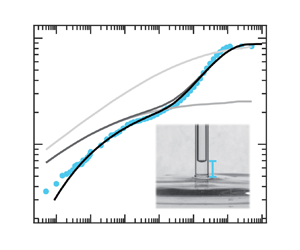
When subjected to external stress exceeding their yield stress ($\sigma _{Y}$), yield stress fluids (YSFs) undergo transition from solid to liquid. While the flow dynamics of capillary flows – including wetting, coating, spreading, and wicking – can be predicted accurately for fluids without yield stress, only a few asymptotic solutions have been validated against experiments for YSFs. In this study, we explore experimentally and theoretically the entire dynamics and solidifying process during capillary imbibition of YSFs, representing the fundamental aspect of capillarity-driven flow. We observe that during the gradual deceleration of capillary rise, YSFs exhibit apparent flow below $\sigma _{Y}$. This unexpected behaviour is linked to wall slip, manifested as plug flow in particle image velocimetry analyses. We introduce a model with numerical solutions, grounded in the rheological properties of YSFs and slip mechanisms, to accurately describe this liquid–solid transitional behaviour.
Fear of positive evaluation (FPE) has recently emerged as an important aspect of social anxiety, alongside fear of negative evaluation. These evaluation fears peak during adolescence, a developmental stage that is also often accompanied by difficulties in emotion regulation, thereby increasing young individuals’ vulnerability to mental disorders, such as social anxiety. We aimed to examine the longitudinal within-person associations between fears of evaluation, social anxiety, and three emotion regulation strategies (i.e., acceptance, suppression, rumination) in adolescents. Data were collected from a sample of 684 adolescents through an online survey three times over the course of 6 months and were analyzed using random intercept cross-lagged panel models. At the between-person level, FPE was linked to all three emotion regulation strategies, whereas fear of negative evaluation and social anxiety were associated with acceptance and rumination. At the within-person level, difficulties in accepting emotions predicted FPE, suppression predicted social anxiety, and social anxiety predicted rumination over time. These findings reveal complex interdependencies between emotion regulation, social anxiety, and evaluation fears, both reflecting individual differences and predicting changes within individuals, and further elucidate the developmental trajectory of social anxiety in adolescence.
Europe has recently struggled with democratic backsliding and autocratization. This autocratization has accompanied a decline in academic freedom in many backsliding countries, as reported by the Academic Freedom Index. Can the standards set by the European supranational courts effectively safeguard academic freedom? This article provides answers to this question. It argues that despite differences in their approaches, the theoretical conceptions of scholarship held by the European Court of Human Rights (ECtHR) and the Court of Justice of the European Union (ECJ) share an essential feature: both have moved towards embracing the ‘liberal science script’ by protecting academic freedom. The main difference between the two courts’ approaches is the subject of protection. The ECtHR focuses on the individual rights of academics: It protects free speech in the academic context by establishing a high standard for holding academics liable for publicly expressing their views inside and outside of academia. The ECJ has applied the concept of institutional autonomy, thereby setting a high standard for safeguarding the freedom of academic institutions. This standard can be applied with regard to the demands placed by policy-makers on academia regarding its role in democracy, including gender equality requirements for EU research funding.
The time-evolution of glacier basal motion remains poorly constrained, despite its importance in understanding the response of glaciers to climate warming. Athabasca Glacier provides an ideal site for observing changes in basal motion over long timescales. Studies from the 1960s provide an in situ baseline dataset constraining ice deformation and basal motion. We use two complementary numerical flow models to investigate changes along a well-studied transverse profile and throughout a larger study area. A cross-sectional flow model allows us to calculate transverse englacial velocity fields to simulate modern and historical conditions. We subsequently use a 3-D numerical ice flow model, Icepack, to estimate changes in basal friction by inverting known surface velocities. Our results reproduce observed velocities well using standard values for flow parameters. They show that basal motion declined significantly (30–40%) and this constitutes the majority (50–80%) of the observed decrease in surface velocities. At the same time, basal resistive stress has remained nearly constant and now balances a much larger fraction of the driving stress. The decline in basal motion over multiple decades of climate warming could serve as a stabilizing feedback mechanism, slowing ice transport to lower elevations, and therefore moderating future mass loss rates.
The relationship between frailty and glycemic control in older adults with diabetes remains uncertain, mainly due to the fact that previous studies have not accounted for measures of body composition. In older adults with diabetes, we examined the association between three types of frailty measures and glycemic control, while accounting for fat-free mass (FFM) and waist circumference (WC). Eighty older adults (age ≥65, 27 women and 53 men, mean age 80.5 ± 0.6 years) had gait speed, Cardiovascular Health Study Index (CHSI), Rockwood Clinical Frailty Scale (RCFS), and glycosylated hemoglobin (HgA1C) measured. HgA1C showed a negative association only with CHSI (standardized β = −0.255 ± 0.120, p = 0.038), but no association with gait speed or the RCFS. Even after accounting for FFM and WC, we demonstrated a negative association between glycated hemoglobin and increasing frailty in older adults with diabetes.
In a 1998 article, Bohman argued that the contemporary deliberative turn in democratic theory had reached its ‘coming of age’, as deliberative democrats began to show greater interest in the institutionalization of their proposal. Moreover, Bohman referred to this growing interest with an expression that was unprecedented at the time: ‘deliberative constitutionalism’. At present, deliberative constitutionalism has become one of the most original and relevant contemporary proposals. In this context, my article proceeds as follows. I begin by arguing that the contemporary deliberative turn in democratic theory also gave rise to a deliberative turn in constitutionalism—that is, a trend aimed at orienting constitutionalism and judicial review towards democratic deliberation. Next, I argue that, at that embryonic yet promising stage, deliberative constitutionalism had shortcomings that hindered the aim assumed since its origins. Finally, I argue that, over recent decades, these shortcomings have been finessed, which shows that deliberative constitutionalism has also reached its coming of age.
We present an arrow calculus with operations and handlers and its operational and denotational semantics. The calculus is an extension of Lindley, Wadler and Yallop’s arrow calculus.
The denotational semantics is given using a strong (pro)monad $\mathcal{A}$ in the bicategory of categories and profunctors. The construction of this strong monad $\mathcal{A}$ is not trivial because of a size problem. To build denotational semantics, we investigate what $\mathcal{A}$-algebras are, and a handler is interpreted as an $\mathcal{A}$-homomorphisms between $\mathcal{A}$-algebras.
The syntax and operational semantics are derived from the observations on $\mathcal{A}$-algebras. We prove the soundness and adequacy theorem of the operational semantics for the denotational semantics.