Refine listing
Actions for selected content:
142571 results in Open Access

Enhanced bubble growth near an advancing solidification front
-
- Journal:
- Journal of Fluid Mechanics / Volume 996 / 10 October 2024
- Published online by Cambridge University Press:
- 02 October 2024, A22
-
- Article
-
- You have access
- Open access
- HTML
- Export citation
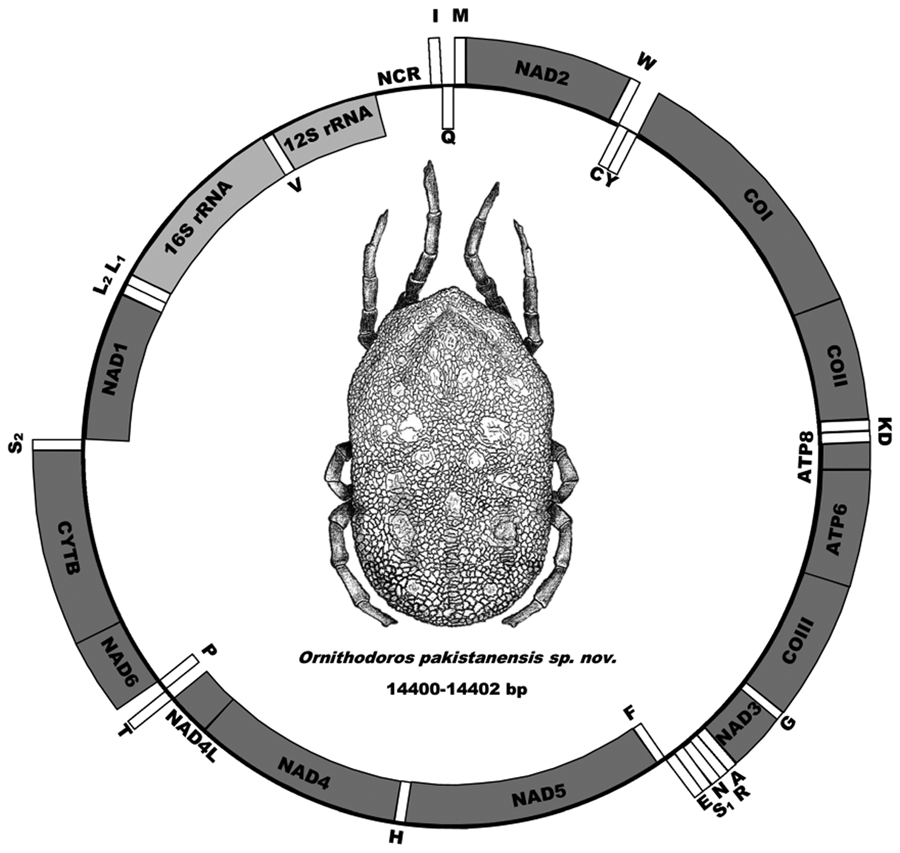
Description of a new Ornithodoros (Pavlovskyella) (Ixodida: Argasidae) tick species from Pakistan
-
- Journal:
- Parasitology / Volume 151 / Issue 9 / August 2024
- Published online by Cambridge University Press:
- 02 October 2024, pp. 919-932
-
- Article
-
- You have access
- Open access
- HTML
- Export citation
Against the Odds: Explaining Mainstream Montenegrin Parties Domination of Bosniak and Albanian Minority Representation in Postcommunist Montenegro
-
- Journal:
- Nationalities Papers / Volume 52 / Issue 6 / November 2024
- Published online by Cambridge University Press:
- 02 October 2024, pp. 1351-1374
-
- Article
-
- You have access
- Open access
- HTML
- Export citation
Estimation of travel time reduction for ice-breaking ships when considering ice information data
- Part of
-
- Journal:
- Annals of Glaciology / Volume 65 / 2024
- Published online by Cambridge University Press:
- 02 October 2024, e27
-
- Article
-
- You have access
- Open access
- HTML
- Export citation
Risk factors for COVID-19 transmission in England: a multilevel modelling study using routine contact tracing data
-
- Journal:
- Epidemiology & Infection / Volume 152 / 2024
- Published online by Cambridge University Press:
- 02 October 2024, e112
-
- Article
-
- You have access
- Open access
- HTML
- Export citation
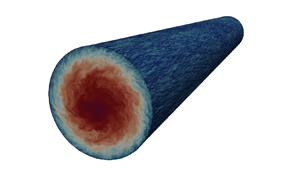
Direct numerical simulation of drag reduction in rotating pipe flow up to $\boldsymbol{Re_\tau \approx 3000}$
-
- Journal:
- Journal of Fluid Mechanics / Volume 996 / 10 October 2024
- Published online by Cambridge University Press:
- 02 October 2024, A24
-
- Article
-
- You have access
- Open access
- HTML
- Export citation
-
Direct numerical simulation (DNS) of rotating pipe flows up to $Re_\tau \approx 3000$ is carried out to investigate drag reduction effects associated with axial rotation, extending previous studies carried out at a modest Reynolds number (Orlandi & Fatica, J. Fluid Mech., vol. 343, 1997, pp. 43–72; Orlandi & Ebstein, Intl J. Heat Fluid Flow, vol. 21, 2000, pp. 499–505). The results show that the drag reduction, which we theoretically show to be equivalent to net power saving assuming no mechanical losses, monotonically increases as either the Reynolds number or the rotation number increases, proportionally to the inner-scaled rotational speed. Net drag reduction up to approximately $70\,\%$ is observed, while being far from flow relaminarisation. Scaling laws for the mean axial and azimuthal velocity are proposed, from which a predictive formula for the friction factor is derived. The formula can correctly represent the dependency of the friction factor on the Reynolds and rotation numbers, maintaining good accuracy for low-to-moderate rotation numbers. Examination of the turbulent structures highlights the role of rotation in widening and elongating the small-scale streaks, with subsequent suppression of sweeps and ejections. In the core part of the flow, clear weakening of large-scale turbulent motions is observed at high Reynolds numbers, with subsequent suppression of the outer-layer peak in the pre-multiplied spectra. The Fukagata–Iwamoto–Kasagi decomposition indicates that, consistent with a theoretically derived formula, the outer layer yields the largest contribution to drag reduction at increasingly high Reynolds numbers. In contrast, both the inner and the outer layers contribute to drag reduction as the rotation number increases.


Which political entities are “Friendly” to religion? The interplay of entity, identity congruence, and Christian nationalism
-
- Journal:
- Politics and Religion / Volume 17 / Issue 3 / September 2024
- Published online by Cambridge University Press:
- 02 October 2024, pp. 454-467
-
- Article
-
- You have access
- Open access
- HTML
- Export citation
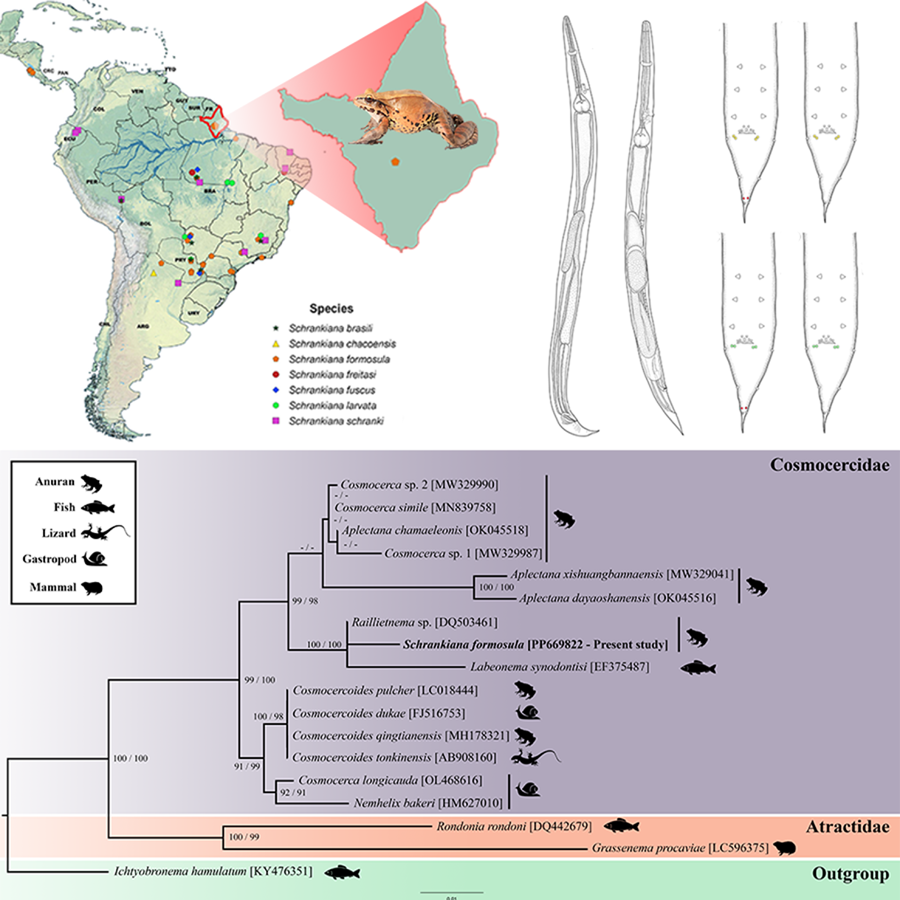
Two names, one species: redescription and phylogenetic position of Schrankiana formosula Freitas, 1959 provides new insights into the evolutionary history of the Cosmocercidae
-
- Journal:
- Parasitology / Volume 151 / Issue 8 / July 2024
- Published online by Cambridge University Press:
- 02 October 2024, pp. 832-847
-
- Article
-
- You have access
- Open access
- HTML
- Export citation
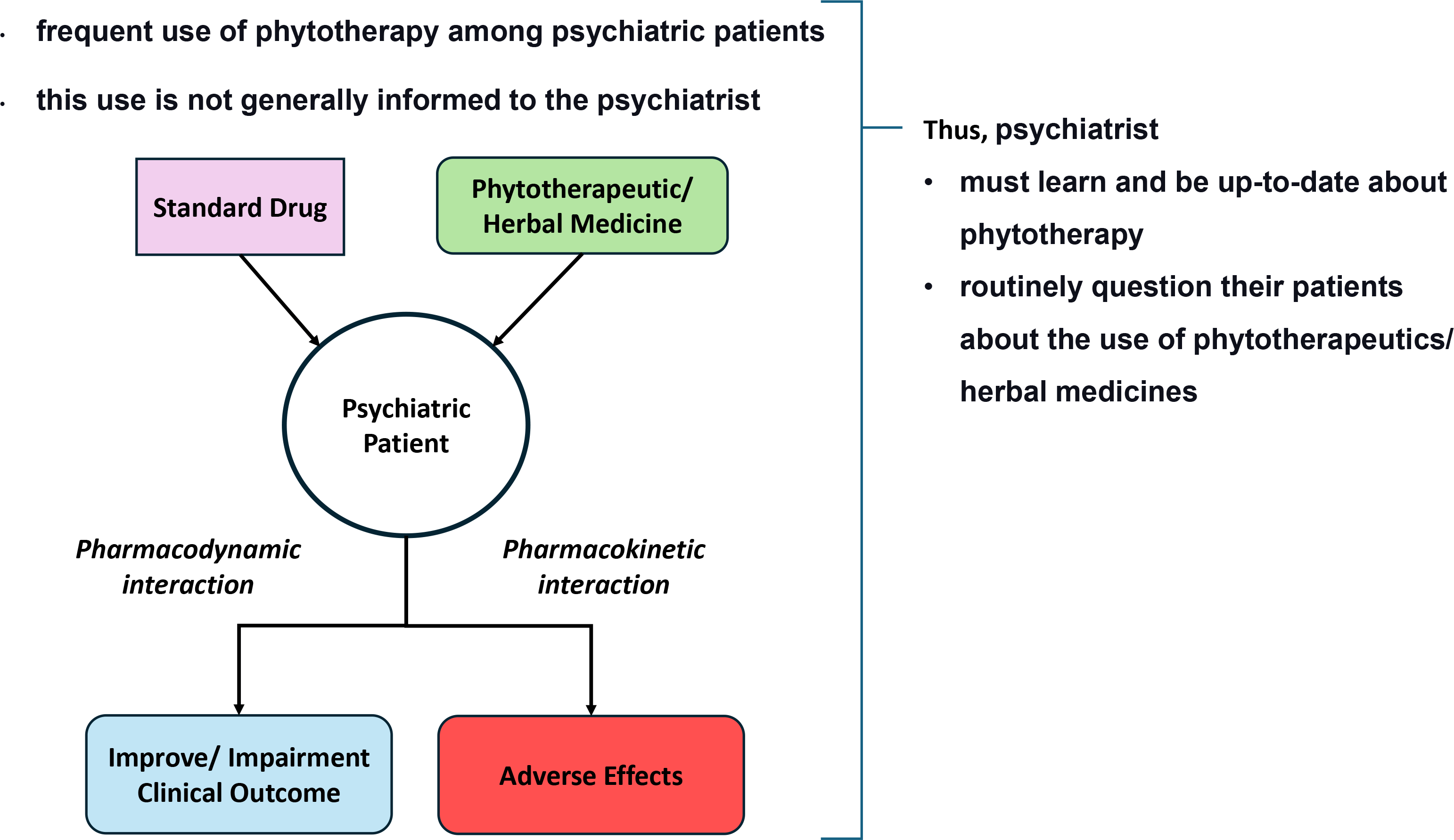
Phytotherapy in psychiatry: why psychiatrists should know about it
-
- Journal:
- Acta Neuropsychiatrica / Volume 36 / Issue 4 / August 2024
- Published online by Cambridge University Press:
- 02 October 2024, pp. 189-194
-
- Article
-
- You have access
- Open access
- HTML
- Export citation
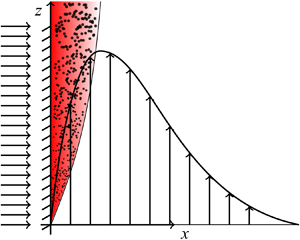
Self-similar solution for laminar bubbly flow evolving from a vertical plate
-
- Journal:
- Journal of Fluid Mechanics / Volume 996 / 10 October 2024
- Published online by Cambridge University Press:
- 02 October 2024, A38
-
- Article
-
- You have access
- Open access
- HTML
- Export citation
Comparison of the impact of a system tele-antimicrobial stewardship program on the conversion of intravenous-to-oral antimicrobials in community hospitals
-
- Journal:
- Antimicrobial Stewardship & Healthcare Epidemiology / Volume 4 / Issue 1 / 2024
- Published online by Cambridge University Press:
- 02 October 2024, e159
-
- Article
-
- You have access
- Open access
- HTML
- Export citation
New horizons in community engagement: Virtual community engagement studios amplifying community voices about health research in New Mexico
-
- Journal:
- Journal of Clinical and Translational Science / Volume 8 / Issue 1 / 2024
- Published online by Cambridge University Press:
- 02 October 2024, e140
-
- Article
-
- You have access
- Open access
- HTML
- Export citation
Monitoring sodium content in processed and ultraprocessed foods in Argentina 2022: compliance with National Legislation and Regional Targets
- Part of
-
- Journal:
- Public Health Nutrition / Volume 27 / Issue 1 / 2024
- Published online by Cambridge University Press:
- 02 October 2024, e193
-
- Article
-
- You have access
- Open access
- HTML
- Export citation
Adding an implication to logics of perfect paradefinite algebras
-
- Journal:
- Mathematical Structures in Computer Science / Volume 34 / Issue 10 / November 2024
- Published online by Cambridge University Press:
- 02 October 2024, pp. 1138-1183
-
- Article
-
- You have access
- Open access
- HTML
- Export citation
-
Perfect paradefinite algebras are De Morgan algebras expanded with an operation that allows for the full behavior of classical negation to be restored. They form a variety that is term-equivalent to the variety of involutive Stone algebras. Their associated multiple-conclusion (Set-Set) and single-conclusion (
 ) order-preserving logics are non-algebraizable self-extensional logics of formal inconsistency and undeterminedness determined by a six-valued matrix. We studied these logics extensively in Gomes et al. ((2022). Electronic Proceedings in Theoretical Computer Science 357 56–76.) from both the algebraic and the proof-theoretical perspectives. In the present paper, we continue that study by investigating directions for conservatively expanding these logics with an implication connective (essentially, one that admits the deduction-detachment theorem). We first consider logics given by very simple and manageable non-deterministic semantics whose implication (in isolation) is classical. These, nevertheless, fail to be self-extensional. We then consider the implication realized by the relative pseudo-complement over the six-valued perfect paradefinite algebra. Our strategy is to expand the language of the latter algebra with this connective and study the (self-extensional) Set-Set and
  order-preserving and $\top$-assertional logics of the variety induced by the resulting algebra. We provide axiomatizations for such new variety and for such logics, drawing parallels with the class of symmetric Heyting algebras and with Moisil’s “symmetric modal logic.” For the order-preserving Set-Set logic, in particular, we obtain a Set-Set axiomatization that is analytic. We close by studying interpolation properties for these logics and concluding that the new variety has the Maehara amalgamation property.
 ) order-preserving logics are non-algebraizable self-extensional logics of formal inconsistency and undeterminedness determined by a six-valued matrix. We studied these logics extensively in Gomes et al. ((2022).
  order-preserving and
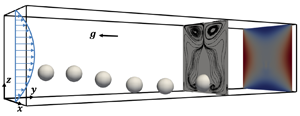
Lateral migration of a deformable fluid particle in a square channel flow of viscoelastic fluid
-
- Journal:
- Journal of Fluid Mechanics / Volume 996 / 10 October 2024
- Published online by Cambridge University Press:
- 02 October 2024, A31
-
- Article
-
- You have access
- Open access
- HTML
- Export citation
“If it is not too paradoxical”: archaeology in İstanbul under occupation as a window into understanding the creation of a post-war cultural heritage regime
-
- Journal:
- New Perspectives on Turkey / Volume 71 / November 2024
- Published online by Cambridge University Press:
- 02 October 2024, pp. 62-82
-
- Article
-
- You have access
- Open access
- HTML
- Export citation
Two-dimensional thermal and dynamical strain in landfast sea ice from InSAR: results from a new analytical inverse method and field observations
- Part of
-
- Journal:
- Annals of Glaciology / Volume 65 / 2024
- Published online by Cambridge University Press:
- 02 October 2024, e28
-
- Article
-
- You have access
- Open access
- HTML
- Export citation
Back to Kahneman
-
- Journal:
- Behavioural Public Policy / Volume 9 / Issue 2 / April 2025
- Published online by Cambridge University Press:
- 02 October 2024, pp. 301-310
-
- Article
-
- You have access
- Open access
- HTML
- Export citation
The Inarticulate Few: Agrarian voices during the modernisation of agriculture in Leicestershire 1935–1955
-
- Journal:
- Rural History / Volume 36 / Issue 1 / April 2025
- Published online by Cambridge University Press:
- 02 October 2024, pp. 55-71
-
- Article
-
- You have access
- Open access
- HTML
- Export citation
The semiotic repertoire of dairy cows
-
- Journal:
- Language in Society / Volume 54 / Issue 4 / September 2025
- Published online by Cambridge University Press:
- 02 October 2024, pp. 731-755
-
- Article
-
- You have access
- Open access
- HTML
- Export citation
