Refine listing
Actions for selected content:
142571 results in Open Access
TRANS PARENTHOOD IN THE UK: THE “UNANSWERED QUESTIONS” OF THE MCCONNELL LITIGATION
-
- Journal:
- The Cambridge Law Journal / Volume 83 / Issue 3 / November 2024
- Published online by Cambridge University Press:
- 03 October 2024, pp. 490-518
- Print publication:
- November 2024
-
- Article
-
- You have access
- Open access
- HTML
- Export citation
The ‘hangar of the future’ for sustainable aviation
-
- Journal:
- The Aeronautical Journal / Volume 128 / Issue 1329 / November 2024
- Published online by Cambridge University Press:
- 03 October 2024, pp. 2429-2450
-
- Article
-
- You have access
- Open access
- HTML
- Export citation
The dawn is quiet here: Rise in [ $\alpha$/Fe] is a signature of massive gas accretion that fueled the proto-Milky Way
-
- Journal:
- Publications of the Astronomical Society of Australia / Volume 41 / 2024
- Published online by Cambridge University Press:
- 03 October 2024, e063
-
- Article
-
- You have access
- Open access
- HTML
- Export citation
-
The proto-Milky Way epoch forms the earliest stars in our galaxy and sets the initial conditions for the subsequent disk formation. Recent observations showed that the [ $\alpha$/Fe] ratio among in situ metal-poor stars declined between [Fe/H] $=-3$ and $-1.3$ until it reached the lowest value ( $\sim$0.25) and rose to the traditional value associated with the high-[ $\alpha$/Fe] thick disk ( $\sim$0.3) at [Fe/H] $\approx$ -1.0. It was suggested that the rise in [ $\alpha$/Fe] could be caused by an increase in the star formation efficiency (SFE), known as the ‘simmering’ phase scenario. However, gas inflow also plays a vital role in shaping the star formation history and chemical evolution of galaxies, especially during the earliest epoch of the universe. We investigate this unexpected [ $\alpha$/Fe]-rise with an experiment involving a galactic chemical evolution model. Our model has five free parameters: the mass of the initial reservoir of the cold interstellar medium (ISM) at birth, the frequency of Type Ia supernovae (SNe Ia), the cooling timescale of the warm ISM, the SFE, and the inflow rate of fresh gas. The last two free parameters were allowed to change after [ $\alpha$/Fe] reached its lowest value, dividing the proto-Galaxy epoch into two phases. The models that reproduced the observed [Fe/H]-[ $\alpha$/Fe]-track provided estimates for these fundamental parameters of the proto-Milky Way. We find that the rise in [ $\alpha$/Fe] could also be caused by a large inflow of high-[ $\alpha$/Fe] gas and conclude that the [ $\alpha$/Fe]-rise could be a signature of the gas accretion that fuelled the formation of the Milky Way disk.


Elasto-inertial rectification of oscillatory flow in an elastic tube
-
- Journal:
- Journal of Fluid Mechanics / Volume 996 / 10 October 2024
- Published online by Cambridge University Press:
- 03 October 2024, A16
-
- Article
-
- You have access
- Open access
- HTML
- Export citation
Thiamine deficiency as a differential diagnosis for severe fatigue in terminally ill cancer patients
-
- Journal:
- Palliative & Supportive Care / Volume 22 / Issue 6 / December 2024
- Published online by Cambridge University Press:
- 03 October 2024, pp. 2122-2124
-
- Article
-
- You have access
- Open access
- HTML
- Export citation
Understanding the medication regimens associated with anticholinergic burden in older people's mental health services in the UK
-
- Journal:
- BJPsych Open / Volume 10 / Issue 5 / September 2024
- Published online by Cambridge University Press:
- 03 October 2024, e167
-
- Article
-
- You have access
- Open access
- HTML
- Export citation
How small a nanoplastic can be? A discussion on the size of this ubiquitous pollutant
-
- Journal:
- Cambridge Prisms: Plastics / Volume 2 / 2024
- Published online by Cambridge University Press:
- 03 October 2024, e23
-
- Article
-
- You have access
- Open access
- HTML
- Export citation
Subclinical attention-deficit hyperactivity disorder symptoms and unhealthy lifestyle behaviours
-
- Journal:
- BJPsych Open / Volume 10 / Issue 5 / September 2024
- Published online by Cambridge University Press:
- 03 October 2024, e168
-
- Article
-
- You have access
- Open access
- HTML
- Export citation
Model-theoretic syntax for the working syntactician
-
- Journal:
- Journal of Linguistics , First View
- Published online by Cambridge University Press:
- 03 October 2024, pp. 1-14
-
- Article
-
- You have access
- Open access
- HTML
- Export citation
Experiences and support needs of psychiatrists under investigation
-
- Journal:
- BJPsych Bulletin / Volume 49 / Issue 5 / October 2025
- Published online by Cambridge University Press:
- 03 October 2024, pp. 307-314
- Print publication:
- October 2025
-
- Article
-
- You have access
- Open access
- HTML
- Export citation
Bioethics and the Value of Human Life
-
- Journal:
- Cambridge Quarterly of Healthcare Ethics / Volume 34 / Issue 2 / April 2025
- Published online by Cambridge University Press:
- 03 October 2024, pp. 220-230
-
- Article
-
- You have access
- Open access
- HTML
- Export citation
Geomorphological and historical records of the surge-type behaviour of Hansbreen (Svalbard)
- Part of
-
- Journal:
- Annals of Glaciology / Volume 65 / 2024
- Published online by Cambridge University Press:
- 02 October 2024, e31
-
- Article
-
- You have access
- Open access
- HTML
- Export citation
Learning fluid physics from highly turbulent data using sparse physics-informed discovery of empirical relations (SPIDER)
-
- Journal:
- Journal of Fluid Mechanics / Volume 996 / 10 October 2024
- Published online by Cambridge University Press:
- 02 October 2024, A25
-
- Article
-
- You have access
- Open access
- HTML
- Export citation
The Imported Challenge: Economic Impact of Fresh Fruit and Vegetable Imports on U.S. Producers
-
- Journal:
- Journal of Agricultural and Applied Economics / Volume 56 / Issue 4 / November 2024
- Published online by Cambridge University Press:
- 02 October 2024, pp. 544-574
-
- Article
-
- You have access
- Open access
- HTML
- Export citation
Linear stability theory and molecular simulations of nanofilm dewetting with disjoining pressure, strong liquid–solid slip and thermal fluctuations
-
- Journal:
- Journal of Fluid Mechanics / Volume 996 / 10 October 2024
- Published online by Cambridge University Press:
- 02 October 2024, A19
-
- Article
-
- You have access
- Open access
- HTML
- Export citation
-
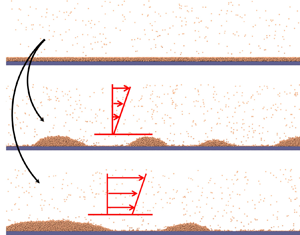
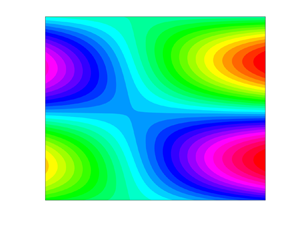
The dewetting of thin nanofilms is significantly affected by thermal fluctuations, liquid–solid slip and disjoining pressure, which can be described by lubrication equations augmented by appropriately scaled noise terms, known as stochastic lubrication equations. Here molecular dynamics simulations along with a newly proposed slip-generating method are adopted to study the instability of nanofilms with arbitrary slip. These simulations show that strong-slip dewetting is distinct from weak-slip dewetting by faster growth of perturbations and fewer droplets after dewetting, which cannot be predicted by the existing stochastic lubrication equation. A new stochastic lubrication equation considering the strong-slip boundary condition is thus derived using a long-wave approximation to the equations of fluctuating hydrodynamics. The linear stability analysis of this equation, i.e. surface spectrum, agrees well with molecular simulations. Interestingly, strong slip can break down the usual Stokes limits adopted in weak-slip dewetting and bring the inertia into effect. The evolution of the standard deviation of the film height $W^2(t)={\overline {h^2}-{\bar {h}}^2}$ at the initial stage of the strong-slip dewetting is found to be $W\sim t^{1/4}$ in contrast to $W\sim t^{1/8}$ for the weak-slip dewetting.


Propagation of underwater wave groups in a compressible ocean coupled with an elastic seafloor
-
- Journal:
- Journal of Fluid Mechanics / Volume 996 / 10 October 2024
- Published online by Cambridge University Press:
- 02 October 2024, A18
-
- Article
-
- You have access
- Open access
- HTML
- Export citation
Stød and stress location in Danish: A nonce word study
-
- Journal:
- Nordic Journal of Linguistics , First View
- Published online by Cambridge University Press:
- 02 October 2024, pp. 1-20
-
- Article
-
- You have access
- Open access
- HTML
- Export citation
Supraglacial lake evolution and its drivers in Dronning Maud Land, East Antarctica
-
- Journal:
- Journal of Glaciology / Volume 70 / 2024
- Published online by Cambridge University Press:
- 02 October 2024, e49
-
- Article
-
- You have access
- Open access
- HTML
- Export citation
The narrative that should guide applied behavioural science
-
- Journal:
- Behavioural Public Policy / Volume 9 / Issue 2 / April 2025
- Published online by Cambridge University Press:
- 02 October 2024, pp. 338-344
-
- Article
-
- You have access
- Open access
- HTML
- Export citation
Drag reduction utilizing a wall-attached ferrofluid film in turbulent channel flow
-
- Journal:
- Journal of Fluid Mechanics / Volume 996 / 10 October 2024
- Published online by Cambridge University Press:
- 02 October 2024, A35
-
- Article
-
- You have access
- Open access
- HTML
- Export citation
-
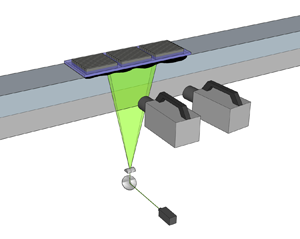
This study explores the application of a wall-attached ferrofluid film to decrease skin-friction drag in turbulent channel flow. We conduct experiments using water as a working fluid in a turbulent channel flow set-up, where one wall is coated with a ferrofluid layer held in place by external permanent magnets. Depending on the flow conditions, the interface between the two fluids is observed to form unstable travelling waves. While ferrofluid coating has been previously employed in laminar and moderately turbulent flows (Reynolds number $Re<4000$) to reduce drag by creating a slip condition at the fluid interface, its effectiveness in fully developed turbulent conditions, particularly when the interface exhibits instability, remains uncertain. Our primary objective is to assess the effectiveness of ferrofluid coating in reducing turbulent drag with particular focus on scenarios when the ferrofluid layer forms unstable waves. To achieve this, we measure flow velocity using two-dimensional particle tracking velocimetry (2D-PTV), and the interface contour between the fluids is determined using an interface tracking algorithm. Our results reveal the significant potential of ferrofluid coating for drag reduction, even in scenarios where the interface between the surrounding fluid and ferrofluid exhibits instability, with observed drag reduction rates up to 95 %. In particular, waves with an amplitude significantly smaller than a viscous length scale positively contribute to drag reduction, while larger waves are detrimental, because of induced turbulent fluctuations. However, for the latter case, slip outcompetes the extra turbulence so that drag is still reduced.

