To save content items to your account,
please confirm that you agree to abide by our usage policies.
If this is the first time you use this feature, you will be asked to authorise Cambridge Core to connect with your account.
Find out more about saving content to .
To save content items to your Kindle, first ensure no-reply@cambridge.org
is added to your Approved Personal Document E-mail List under your Personal Document Settings
on the Manage Your Content and Devices page of your Amazon account. Then enter the ‘name’ part
of your Kindle email address below.
Find out more about saving to your Kindle.
Note you can select to save to either the @free.kindle.com or @kindle.com variations.
‘@free.kindle.com’ emails are free but can only be saved to your device when it is connected to wi-fi.
‘@kindle.com’ emails can be delivered even when you are not connected to wi-fi, but note that service fees apply.
To evaluate postoperative outcomes among patients undergoing colon surgery who receive perioperative prophylaxis with ertapenem compared to other antibiotic regimens.
Design and setting:
Multicenter retrospective cohort study among adults undergoing colon surgery in seven hospitals across three health systems from 1/1/2010 to 9/1/2015.
Methods:
Generalized linear mixed logistic regression models were applied to assess differential odds of select outcomes among patients who received perioperative prophylaxis with ertapenem compared to other regimens. Postoperative outcomes of interest included surgical site infection (SSI), Clostridioides difficile infection (CDI) and clinical culture positivity for carbapenem-resistant Enterobacteraciae (CRE). Inverse probability weights were applied to account for differing covariate distributions across ertapenem and non-ertapenem groups.
Results:
A total of 2,109 patients were included for analysis. The odds of postoperative SSI was 1.56 times higher among individuals who received ertapenem than among those receiving other perioperative antimicrobial prophylaxis regimens in our cohort (46 [3.5%] vs 20 [2.5%]; IPW-weighted OR 1.56, [95% CI, 1.08–2.26], P = .02). No statistically significant differences in odds of postoperative CDI (24 [1.8%] vs 16 [2.0%]; IPW-weighted OR 1.07 [95% CI, .68–1.68], P = .78) were observed between patients who received ertapenem prophylaxis compared to other regimens. Clinical CRE culture positivity was rare in both groups (.2%–.5%) and did not differ statistically.
Conclusions:
Ertapenem use for perioperative prophylaxis was associated with increased odds of SSI among patients undergoing colon surgery in our study population, though no differences in CDI or clinical CRE culture positivity were identified. Further study and replication of these findings are needed.
Many years ago, I taught a course at the University of Aberdeen on the ‘4As’ of anthropology, archaeology, art and architecture (Ingold 2013). As we had been discussing flint-knapping, I invited the master-knapper, John Lord, to give a demonstration. We watched in awe as he skilfully detached flakes from a flint nodule of irregular shape to reveal the classical, bifacial form of an Acheulean handaxe. Then it was our turn to use wooden or antler hammers to detach flakes from fragments of flint. After an hour or two, none of us had made any headway. What looked simple in practised hands would have required years to learn, not a single afternoon! Nevertheless, the workshop taught us an important lesson. As Bentley and O'Brien (2024) remind us, mastering the skills to make an Acheulean biface requires hundreds of hours of practice. The question is, why does it need so long? What is going on during these many hours?
Is childhood something that we can leave behind, or indeed should? In their latest article for Think, Emma Swinn and Steven Campbell-Harris challenge the conventional understanding of children and adults, revealing how these rigid categories create problems in our education system, democracies and personal lives. Through the revolutionary education movement ‘Philosophy for children’ (P4C), they explore how retaining the ‘childlike’ qualities of questioning, playing and embracing uncertainty can transform our approach to learning and paradoxically help us to live more fulfilled adult lives.
Flumioxazin and S-metolachlor are widely used in conventional sweetpotato production in North Carolina and other states; however, some growers have recently expressed concerns about potential effects of these herbicides on sweetpotato yield and quality. Previous research indicates that activated charcoal has the potential to reduce herbicide injury. Field studies were conducted in 2021 and 2022 to determine whether flumioxazin applied preplant and S-metolachlor applied before and after transplanting negatively affect sweetpotato yield and quality when activated charcoal is applied with transplant water. The studies evaluated five herbicide treatments and two activated charcoal treatments. Herbicide treatments included two flumioxazin rates, one S-metolachlor rate applied immediately before and immediately after transplanting, and no herbicide. Charcoal treatments consisted of activated charcoal applied at 9 kg ha−1, and no charcoal. No visual injury from herbicides or charcoal was observed. Likewise, no effect of herbicide or charcoal treatment on no. 1, marketable (sum of no. 1 and jumbo grades), or total yield (sum of canner, no. 1, and jumbo grades) was observed. Additionally, shape analysis conducted on calculated length-to-width ratio (LWR) for no. 1 sweetpotato roots found no effect from flumioxazin at either rate on sweetpotato root shape. However, both S-metolachlor treatments resulted in lower LWR of no. 1 sweetpotato roots in 2021. Results are consistent with prior research and indicate that flumioxazin and S-metolachlor are safe for continued use on sweetpotato at registered rates.
In recent years, a growing number of countries have courted controversy by regulating activities outside their borders. They have used extraterritorial lawmaking to cultivate competitive global markets, strengthen or weaken data privacy, combat foreign terrorism and military aggression, promote human rights abroad, and suppress political dissent at home. This Article explores whether extraterritorial lawmaking can be reconciled with the right to self-determination under international law. I argue that the right to self-determination entitles each national polity to determine the laws and institutions by which it is governed within its territory. Extraterritorial lawmaking violates the right to self-determination when it subjects peoples to legal norms they have not freely endorsed. This insight calls for a paradigm shift in how international lawyers evaluate extraterritoriality, with broad ramifications for legal theory and practice.
The available choices of political responses to disruption in the global climatic system depend in part on how the problem is conceptualized. Researchers and policymakers often invoke a “climate crisis” or “climate emergency,” but such language fits poorly with current knowledge of the problem's physical causes and social impacts. This article argues that climate change is instead more like a political epic. It involves neither sudden onset, as in the concept of emergency, nor decisive resolution, as in the concept of crisis, but rather a protracted ordeal of (temporally) obscure origins and uncertain outcomes. This alternative ontology of climate change highlights its novel temporal properties, including unusually slow-moving or time-lagged causal dynamics, with unsettling implications for academic research on the climatic-institutional nexus. Normatively, it undermines arguments for democracies’ environmental superiority over autocracies that rely on the former's general superiority at resolving crises and responding to emergencies. At the same time, some new arguments for democratic distributions of power become possible within the epic frame. More broadly, embracing the assumption of epic climate change may redirect attention from Promethean, managerial, or technocratic solutions to questions about which values or identities deserve preservation amid presumptively interminable and imperfectly remediable sources of disorder.
Scholarship assumes no significant differences among various “terms for anger” in the Hebrew Bible, but it does assume an essential difference between human and divine anger. This article challenges these preconceptions by presenting a novel semantic analysis of כעס, considered a “term for anger.” It shows that in Classical Biblical Hebrew, כעס does not denote anger but rather sorrow or insult associated with קנאה, “jealousy.” This analysis leads to a new, deeper, and more precise understanding of the phrase “to cause כעס to Yhwh” and of its meaning in biblical literature and theology in general and in Deuteronomistic writings in particular.
This article explores the 1932 visit to India of a delegation of Labour party figures associated with the India League, a prominent anticolonial organisation based in London, charged with investigating the colonial state violence unleashed by ‘Ordinance Rule’. It also examines efforts taken by the Government of India, India Office and Indian Political Intelligence to suppress their findings, through which it explores a dialectic between anticolonial knowledge-making and agnotological imperialism, which often took the form of the latter ‘exceptioning’ examples produced by the former of excessive colonial state violence. It offers the conclusion that the contradictions between liberal imperialism and the rule of colonial difference and repression in the age of mass nationalism in India and mass democracy in Britain meant that liberal imperialism in India increasingly flowed, paradoxically, from illiberalism in Britain.
This article concerns itself with how archaeologists and other heritage studies professionals contend with temporal collapse on landscapes that hold African Diasporic histories. Coral stones lay the foundation of colonial architecture on the island of St. Croix in the US Virgin Islands. This article explores how buildings constructed of coral stones during the colonial era are still in use today, either restored or repurposed, along with examples of how coral is being used as an artistic medium in contemporary sculptures that collapse time and demand heritage studies professionals to tend to the persistence of colonial violence in the present. Here, coral—via the structures built out of it—is discussed as a mnemonic device for the biophysical afterlife of slavery. In this article, linear temporal distinctions of past, present, and future are called into question on St. Croix, where colonial structures act as ruptures in conceptualizations of time and serve as palimpsestual reminders of the past in the present.
This article addresses derivational issues related to palatalization in Khotanese, focusing on action nouns of the kīra- type (< *-i̯a-). It is argued that diachronic palatalization conforms to the rules of synchronic palatalization and that the origin of the hapax legomenon jsīna- “killing” (Z 13.124), which apparently violates these rules, needs to be interpreted differently. It is traced back to a reduplicated Indo-Iranian verbal stem *ǰa-ghn- (cf. Young Avestan jaɣn-) < Proto-Indo-European *gwhé-gwhn- “to strike repeatedly” → “to kill”. This stem is also reflected in the Khotanese gerundive jsīñaa- “to be killed” < *dzai̯n-i̯a- ← *dzaɣn- < Iranian *ǰa-gn-. The article contributes additional evidence supporting the development of the preconsonantal voiced velar fricative *ɣ into *i̯ in pre-Khotanese.
Most commentators, as well as the editors of both the NA28 and UBS5, identify Acts 3.22–3 as a composite citation of Deut 18.15–19 and Lev 23.29. Problems arise, however, when they try to explain why Luke combines these two texts. Luke’s typical practice for composite citations is to combine texts which share a common theme or otherwise mutually interpret each other, but none of the suggested connections between Deut 18.15–19 and Lev 23.29 have proven convincing. This paper demonstrates that while scholars have correctly identified Deut 18.15–19 as one of the texts cited, the text with which Luke combines it ought to be identified as Num 15.30 rather than Lev 23.29. Both Deut 18.18–19 and Num 15.30–1 describe the consequences of deliberately rejecting the ‘word of the Lord’. Correctly identifying these texts confirms Luke’s general practice in composite citations and also clarifies the function of this citation in its context in Acts 3.12–26. Using this composite citation, Peter warns those who had previously acted in ignorance against now opposing God deliberately.
Frailty is a common but complex phenomenon that is approached from theoretical and professional perspectives but rarely from the perspectives of older people and their essential stakeholders. Different or opposing perspectives on frailty at personal, organisational, and community levels can negatively affect care for frail older people. This systematic integrative review synthesises the perspectives on frailty of older people, health/social care professionals, informal caregivers, managers and policymakers, using thematic analysis. We use the Joanna Briggs Institute–Critical Appraisal Checklist to appraise the quality of 52 qualitative and mixed-method studies drawn from the PubMed/MEDLINE, CINAHL, PsycINFO, Embase, and Web of Science databases (inception–December 2023). Of these, 33 include the perspectives of older people, 27 of health/social care professionals, four of managers, and six of informal caregivers. Structuring the perspectives along six themes – ‘the multi-dimensional nature of frailty’, ‘the dynamics of frailty’, ‘the complexity of frailty’, ‘frailty in relation to age’, ‘frailty in relation to health’ and ‘frailty in relation to dependence’ – revealed substantive similarities in the conceptualisation of frailty between older people and professionals, e.g. regarding frailty’s dynamic and multi-dimensional nature. However, older people and professionals differ in their interpretations of frailty: older people take a personal view, while professionals take a more practical view. The identified discrepancies in perspectives may affect care relationships and care for frail older people. Therefore, we advocate a systems approach that incorporates multiple perspectives to form a comprehensive view of frailty and allows for a situation-specific shared understanding of frailty in older people.
To describe factors in an outbreak of multidrug-resistant Enterobacter cloacae (MRE) in an intensive care unit (ICU) over a 20-month period including the likely contribution of cockroaches to the outbreak.
Design:
This is a retrospective descriptive study.
Setting:
ICU in an urban hospital.
Patients:
All patients admitted to the ICU during the 20-month outbreak period were included in the study.
Interventions:
Infection prevention interventions included contact isolation, hand hygiene, dedicated patient equipment, environmental cultures, and pest control.
Results:
25 patients were identified as being colonized or infected with MRE. Relatedness of the outbreak strain and strains found in cockroaches was demonstrated by pulse field gel electrophoresis. Standard IP interventions did not have an impact on the outbreak until pest control was added. Once additional pest control measures were put in place, the outbreak ended.
Conclusions:
Insects have a potential role in transmission of pathogens in hospitals and their role should be considered when outbreaks are being investigated.
Self-deprecating, self-belittling, stand-up comedy is a staple. Comedians invite their audience to laugh at them, and their failures. If they are successful, they will report on their failure in a way that is amusing, and the audience will laugh. In this paper, I want to think about such invitations. I will try to characterise what the stand-up comedian might be doing when they do that: what are they doing? I also want to ask why they are doing it, and why are they doing it before an audience. I argue that a self-deprecating performance is a highly distinctive form of reflective activity that allows a comedian to ministrate in the philosophical task of exploring, and guiding their audience in, the art of human existential absurdity. Their being able to do this is one of the reasons we value such comedy as the artform it is.
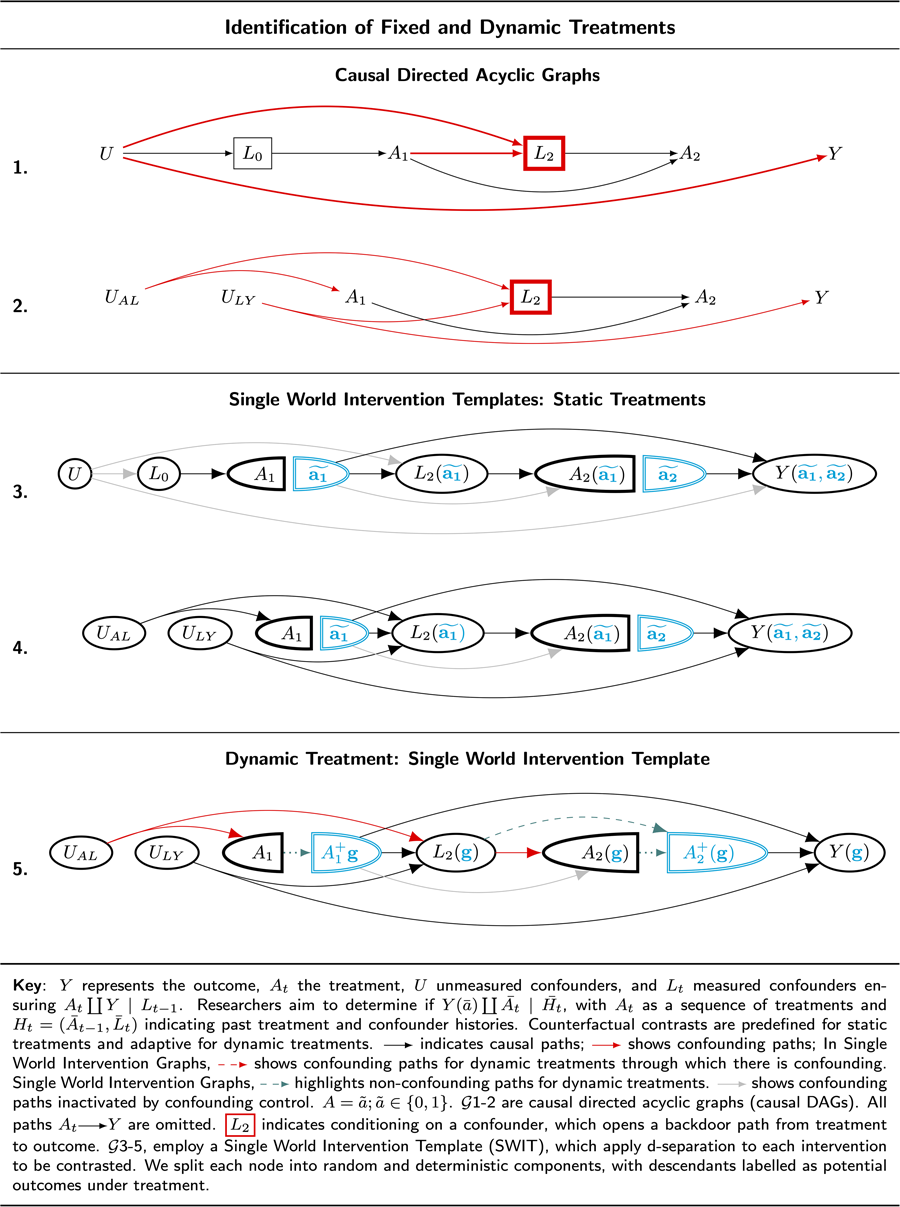
The analysis of ‘moderation’, ‘interaction’, ‘mediation’ and ‘longitudinal growth’ is widespread in the human sciences, yet subject to confusion. To clarify these concepts, it is essential to state causal estimands, which requires the specification of counterfactual contrasts for a target population on an appropriate scale. Once causal estimands are defined, we must consider their identification. I employ causal directed acyclic graphs and single world intervention graphs to elucidate identification workflows. I show that when multiple treatments exist, common methods for statistical inference, such as multi-level regressions and statistical structural equation models, cannot typically recover the causal quantities we seek. By properly framing and addressing causal questions of interaction, mediation, and time-varying treatments, we can expose the limitations of popular methods and guide researchers to a clearer understanding of the causal questions that animate our interests.
Preoperative nasopharyngeal viral screening may reduce clinical uncertainty of upper respiratory infections prior to pediatric cardiac surgery but with unclear benefit. From March 2018 to March 2020, patients aged <3 years were screened for respiratory viruses and had substantial rates of viral detection (40%) but no observed differences in outcomes.