Refine listing
Actions for selected content:
643 results in 16xxx
Partial Hopf actions on generalized matrix algebras
- Part of
-
- Journal:
- Glasgow Mathematical Journal , First View
- Published online by Cambridge University Press:
- 26 November 2025, pp. 1-22
-
- Article
- Export citation
-
Let $\Bbbk$ be a field, $H$ a Hopf algebra over $\Bbbk$, and $R = (_iM_j)_{1 \leq i,j \leq n}$ a generalized matrix algebra. In this work, we establish necessary and sufficient conditions for $H$ to act partially on $R$. To achieve this, we introduce the concept of an opposite covariant pair and demonstrate that it satisfies a universal property. In the special case where $H = \Bbbk G$ is the group algebra of a group $G$, we recover the conditions given in [7] for the existence of a unital partial action of $G$ on $R$.
$R$.


Reflexive homology and involutive Hochschild homology as equivariant Loday constructions
- Part of
-
- Journal:
- Proceedings of the Royal Society of Edinburgh. Section A: Mathematics , First View
- Published online by Cambridge University Press:
- 17 November 2025, pp. 1-26
-
- Article
-
- You have access
- Open access
- HTML
- Export citation
Signature maps from positive cones on algebras with involution
- Part of
-
- Journal:
- Canadian Journal of Mathematics , First View
- Published online by Cambridge University Press:
- 12 November 2025, pp. 1-26
-
- Article
-
- You have access
- Open access
- HTML
- Export citation
Moduli of objects in finite length abelian categories
- Part of
-
- Article
-
- You have access
- Open access
- HTML
- Export citation
Silting, cosilting and extensions of commutative rings
- Part of
-
- Journal:
- Mathematical Proceedings of the Cambridge Philosophical Society , First View
- Published online by Cambridge University Press:
- 27 October 2025, pp. 1-26
-
- Article
-
- You have access
- Open access
- HTML
- Export citation
Heaps of modules: categorical aspects
- Part of
-
- Journal:
- Forum of Mathematics, Sigma / Volume 13 / 2025
- Published online by Cambridge University Press:
- 06 October 2025, e166
-
- Article
-
- You have access
- Open access
- HTML
- Export citation
-
Connections between heaps of modules and (affine) modules over rings are explored. This leads to explicit, often constructive, descriptions of some categorical constructions and properties that are implicit in universal algebra and algebraic theories. In particular, it is shown that the category of groups with a compatible action of a truss T (also called pointed T-modules) is isomorphic to the category of modules over the ring $\mathrm {R}(T)$ universally associated to the truss. This is widely used in the explicit description of free objects. Next, it is proven that the category of heaps of modules over T is isomorphic to the category of affine modules over $\mathrm {R}(T)$ and, in order to make the picture complete, that (in the unital case) these are in turn equivalent to a specific subcategory of the slice category of pointed T-modules over $\mathrm {R}(T)$. These correspondences and properties are then used to describe explicitly various (co)limits and to compare short exact sequences in the Barr-exact category of heaps of T-modules with short exact sequences as defined previously.


On the central exponent of superalgebras with superinvolution
- Part of
-
- Journal:
- Canadian Mathematical Bulletin , First View
- Published online by Cambridge University Press:
- 22 September 2025, pp. 1-18
-
- Article
- Export citation
-
The growth of central polynomials for matrix algebras over a field of characteristic zero was first studied by Regev in $2016$. This problem can be generalized by analyzing the behavior of the dimension $c_n^z(A)$ of the space of multilinear polynomials of degree n modulo the central polynomials of an algebra A. In $2018$, Giambruno and Zaicev established the existence of the limit $\lim \limits _{n \to \infty }\sqrt [n]{c_n^{z}(A)}.$ In this article, we extend this framework to superalgebras equipped with a superinvolution, proving both the existence and the finiteness of the corresponding limit.


On integral decomposition of unipotent elements in integral group rings
- Part of
-
- Journal:
- Proceedings of the Royal Society of Edinburgh. Section A: Mathematics , First View
- Published online by Cambridge University Press:
- 12 September 2025, pp. 1-61
-
- Article
-
- You have access
- Open access
- HTML
- Export citation
-
Jespers and Sun conjectured in [27] that if a finite group G has the property ND, i.e. for every nilpotent element n in the integral group ring $\mathbb{Z}G$ and every primitive central idempotent $e \in \mathbb{Q}G$ one still has $ne \in \mathbb{Z}G$, then at most one of the simple components of the group algebra $\mathbb{Q} G$ has reduced degree bigger than 1. With the exception of one very special series of groups we are able to answer their conjecture, showing that it is true—up to exactly one exception. To do so, we first classify groups with the so-called SN property which was introduced by Liu and Passman in their investigation of the Multiplicative Jordan Decomposition for integral group rings.
The conjecture of Jespers and Sun can also be formulated in terms of a group q(G) made from the group generated by the unipotent units, which is trivial if and only if the ND property holds for the group ring. We answer two more open questions about q(G) and notice that this notion allows to interpret the studied properties in the general context of linear semisimple algebraic groups. Here we show that q(G) is finite for lattices of big rank but can contain elements of infinite order in small rank cases.
We then study further two properties which appeared naturally in these investigations. A first which shows that property ND has a representation theoretical interpretation, while the other can be regarded as indicating that it might be hard to decide ND. Among others we show these two notions are equivalent for groups with SN.


Corrigendum: “On the representability of actions of Leibniz algebras and Poisson algebras”
- Part of
-
- Journal:
- Proceedings of the Edinburgh Mathematical Society / Volume 68 / Issue 4 / November 2025
- Published online by Cambridge University Press:
- 11 September 2025, pp. 1419-1420
-
- Article
-
- You have access
- HTML
- Export citation
The algebraic structure of Dyson–Schwinger equations with multiple insertion places
- Part of
-
- Journal:
- Canadian Mathematical Communications / Volume 1 / 2025
- Published online by Cambridge University Press:
- 29 August 2025, e2
-
- Article
-
- You have access
- Open access
- HTML
- Export citation
FROBENIUS-PERRON DIMENSIONS OF CONJUGACY CLASSES AND AN ITO-MICHLER-TYPE RESULT IN MODULAR FUSION CATEGORIES
- Part of
-
- Journal:
- Journal of the Institute of Mathematics of Jussieu / Volume 24 / Issue 6 / November 2025
- Published online by Cambridge University Press:
- 28 August 2025, pp. 2523-2542
- Print publication:
- November 2025
-
- Article
- Export citation
Operator realizations of non-commutative analytic functions
- Part of
-
- Journal:
- Forum of Mathematics, Sigma / Volume 13 / 2025
- Published online by Cambridge University Press:
- 22 August 2025, e137
-
- Article
-
- You have access
- Open access
- HTML
- Export citation
-
A realization is a triple, $(A,b,c)$, consisting of a $d-$tuple, $A= (A_1, \cdots , A_d )$, $d\in \mathbb {N}$, of bounded linear operators on a separable, complex Hilbert space, $\mathcal {H}$, and vectors $b,c \in \mathcal {H}$. Any such realization defines an analytic non-commutative (NC) function in an open neighbourhood of the origin, $0:= (0, \cdots , 0)$, of the NC universe of $d-$tuples of square matrices of any fixed size. For example, a univariate realization, i.e., where A is a single bounded linear operator, defines a holomorphic function of a single complex variable, z, in an open neighbourhood of the origin via the realization formula $b^{*} (I-zA)^{-1} c$.
It is well known that an NC function has a finite-dimensional realization if and only if it is a non-commutative rational function that is defined at $0$. Such finite realizations contain valuable information about the NC rational functions they generate. By extending to infinite-dimensional realizations, we construct, study and characterize more general classes of analytic NC functions. In particular, we show that an NC function is (uniformly) entire if and only if it has a jointly compact and quasinilpotent realization. Restricting our results to one variable shows that a formal Taylor series extends globally to an entire or meromorphic function in the complex plane, $\mathbb {C}$, if and only if it has a realization whose component operator is compact and quasinilpotent, or compact, respectively. This motivates our definition of the field of global (uniformly) meromorphic NC functions as the field of fractions generated by NC rational expressions in the ring of NC functions with jointly compact realizations. This definition recovers the field of meromorphic functions in $\mathbb {C}$ when restricted to one variable.


Colored interacting particle systems on the ring: Stationary measures from Yang–Baxter equations
- Part of
-
- Journal:
- Compositio Mathematica / Volume 161 / Issue 8 / August 2025
- Published online by Cambridge University Press:
- 03 October 2025, pp. 1855-1922
- Print publication:
- August 2025
-
- Article
- Export citation
-
Recently, there has been much progress in understanding stationary measures for colored (also called multi-species or multi-type) interacting particle systems, motivated by asymptotic phenomena and rich underlying algebraic and combinatorial structures (such as nonsymmetric Macdonald polynomials). In this paper, we present a unified approach to constructing stationary measures for most of the known colored particle systems on the ring and the line, including (1) the Asymmetric Simple Exclusion Process (multi-species ASEP, or mASEP); (2) the $q$-deformed Totally Asymmetric Zero Range Process (TAZRP) also known as the $q$-Boson particle system; (3) the $q$-deformed Pushing Totally Asymmetric Simple Exclusion Process ( $q$-PushTASEP). Our method is based on integrable stochastic vertex models and the Yang–Baxter equation. We express the stationary measures as partition functions of new ‘queue vertex models’ on the cylinder. The stationarity property is a direct consequence of the Yang–Baxter equation. For the mASEP on the ring, a particular case of our vertex model is equivalent to the multiline queues of Martin (Stationary distributions of the multi-type ASEP, Electron. J. Probab. 25 (2020), 1–41). For the colored $q$-Boson process and the $q$-PushTASEP on the ring, we recover and generalize known stationary measures constructed using multiline queues or other methods by Ayyer, Mandelshtam and Martin (Modified Macdonald polynomials and the multispecies zero range process: II, Algebr. Comb. 6 (2022), 243–284; Modified Macdonald polynomials and the multispecies zero-range process: I, Algebr. Comb. 6 (2023), 243–284) and Bukh and Cox (Periodic words, common subsequences and frogs, Ann. Appl. Probab. 32 (2022), 1295–1332). Our proofs of stationarity use the Yang–Baxter equation and bypass the Matrix Product Ansatz (used for the mASEP by Prolhac, Evans and Mallick (The matrix product solution of the multispecies partially asymmetric exclusion process, J. Phys. A. 42 (2009), 165004)). On the line and in a quadrant, we use the Yang–Baxter equation to establish a general colored Burke’s theorem, which implies that suitable specializations of our queue vertex models produce stationary measures for particle systems on the line. We also compute the colored particle currents in stationarity.


G-dimensions for DG-modules over commutative DG-rings
- Part of
-
- Journal:
- Proceedings of the Edinburgh Mathematical Society / Volume 68 / Issue 4 / November 2025
- Published online by Cambridge University Press:
- 01 August 2025, pp. 1370-1389
-
- Article
- Export citation
Mutation graph of support $\tau $-tilting modules over a skew-gentle algebra
- Part of
-
- Journal:
- Forum of Mathematics, Sigma / Volume 13 / 2025
- Published online by Cambridge University Press:
- 10 July 2025, e113
-
- Article
-
- You have access
- Open access
- HTML
- Export citation
-
Let $\mathcal {D}$ be a Hom-finite, Krull-Schmidt, 2-Calabi-Yau triangulated category with a rigid object R. Let $\Lambda =\operatorname {End}_{\mathcal {D}}R$ be the endomorphism algebra of R. We introduce the notion of mutation of maximal rigid objects in the two-term subcategory $R\ast R[1]$ via exchange triangles, which is shown to be compatible with the mutation of support $\tau $-tilting $\Lambda $-modules. In the case that $\mathcal {D}$ is the cluster category arising from a punctured marked surface, it is shown that the graph of mutations of support $\tau $-tilting $\Lambda $-modules is isomorphic to the graph of flips of certain collections of tagged arcs on the surface, which is moreover proved to be connected. Consequently, the mutation graph of support $\tau $-tilting modules over a skew-gentle algebra is connected. This generalizes one main result in [49].


Consistent dimer models on surfaces with boundary
- Part of
-
- Journal:
- Forum of Mathematics, Sigma / Volume 13 / 2025
- Published online by Cambridge University Press:
- 10 July 2025, e114
-
- Article
-
- You have access
- Open access
- HTML
- Export citation
FISHING FOR COMPLEMENTS
- Part of
-
- Journal:
- Nagoya Mathematical Journal , First View
- Published online by Cambridge University Press:
- 07 July 2025, pp. 1-26
-
- Article
-
- You have access
- Open access
- HTML
- Export citation
Reflective centers of module categories and quantum K-matrices
- Part of
-
- Journal:
- Forum of Mathematics, Sigma / Volume 13 / 2025
- Published online by Cambridge University Press:
- 16 June 2025, e95
-
- Article
-
- You have access
- Open access
- HTML
- Export citation
-
Our work is motivated by obtaining solutions to the quantum reflection equation (qRE) by categorical methods. To start, given a braided monoidal category ${\mathcal {C}}$ and ${\mathcal {C}}$-module category ${\mathcal {M}}$, we introduce a version of the Drinfeld center ${\mathcal {Z}}({\mathcal {C}})$ of ${\mathcal {C}}$ adapted for ${\mathcal {M}}$; we refer to this category as the reflective center ${\mathcal {E}}_{\mathcal {C}}({\mathcal {M}})$ of ${\mathcal {M}}$. Just like ${\mathcal {Z}}({\mathcal {C}})$ is a canonical braided monoidal category attached to ${\mathcal {C}}$, we show that ${\mathcal {E}}_{\mathcal {C}}({\mathcal {M}})$ is a canonical braided module category attached to ${\mathcal {M}}$; its properties are investigated in detail.
Our second goal pertains to when ${\mathcal {C}}$ is the category of modules over a quasitriangular Hopf algebra H, and ${\mathcal {M}}$ is the category of modules over an H-comodule algebra A. We show that the reflective center ${\mathcal {E}}_{\mathcal {C}}({\mathcal {M}})$ here is equivalent to a category of modules over an explicit algebra, denoted by $R_H(A)$, which we call the reflective algebra of A. This result is akin to ${\mathcal {Z}}({\mathcal {C}})$ being represented by the Drinfeld double ${\operatorname {Drin}}(H)$ of H. We also study the properties of reflective algebras.
Our third set of results is also in the Hopf setting above. We show that reflective algebras are quasitriangular H-comodule algebras, and we examine their corresponding quantum K-matrices; this yields solutions to the qRE. We also establish that the reflective algebra $R_H(\mathbb {k})$ is an initial object in the category of quasitriangular H-comodule algebras, where $\mathbb {k}$ is the ground field. The case when H is the Drinfeld double of a finite group is illustrated.


Property (◇) for Ore extensions of small Krull dimension
- Part of
-
- Journal:
- Proceedings of the Edinburgh Mathematical Society / Volume 68 / Issue 4 / November 2025
- Published online by Cambridge University Press:
- 21 May 2025, pp. 1169-1187
-
- Article
- Export citation
-
This paper is a continuation of a project to determine which skew polynomial algebras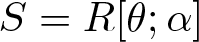 $S = R[\theta; \alpha]$ satisfy property $(\diamond)$, namely that the injective hull of every simple S-module is locally Artinian, where k is a field, R is a commutative Noetherian k-algebra and α is a k-algebra automorphism of R. Earlier work (which we review) and further analysis done here lead us to focus on the case where S is a primitive domain and R has Krull dimension 1 and contains an uncountable field. Then we show first that if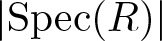 $|\mathrm{Spec}(R)|$ is infinite then S does not satisfy $(\diamond)$. Secondly, we show that when $R = k[X]_{ \lt X \gt }$ and $\alpha (X) = qX$ where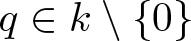 $q \in k \setminus \{0\}$ is not a root of unity then S does not satisfy $(\diamond)$. This is in complete contrast to our earlier result that, when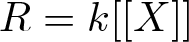 $R = k[[X]]$ and α is an arbitrary k-algebra automorphism of infinite order, S satisfies $(\diamond)$. A number of open questions are stated.


Homological full-and-faithfulness of comodule inclusion and contramodule forgetful functors
- Part of
-
- Journal:
- Glasgow Mathematical Journal , First View
- Published online by Cambridge University Press:
- 21 May 2025, pp. 1-34
-
- Article
-
- You have access
- Open access
- HTML
- Export citation
-
In this paper, we consider a conilpotent coalgebra $C$ over a field $k$. Let $\Upsilon :\ C{{-\mathsf{Comod}}}\longrightarrow C^*{{-\mathsf{Mod}}}$ be the natural functor of inclusion of the category of $C$-comodules into the category of $C^*$-modules, and let $\Theta :\ C{{-\mathsf{Contra}}}\longrightarrow C^*{{-\mathsf{Mod}}}$ be the natural forgetful functor. We prove that the functor $\Upsilon$ induces a fully faithful triangulated functor on bounded (below) derived categories if and only if the functor $\Theta$ induces a fully faithful triangulated functor on bounded (above) derived categories, and if and only if the $k$-vector space $\textrm {Ext}_C^n(k,k)$ is finite-dimensional for all $n\ge 0$. We call such coalgebras “weakly finitely Koszul”.


