Refine listing
Actions for selected content:
2102725 results in Journals
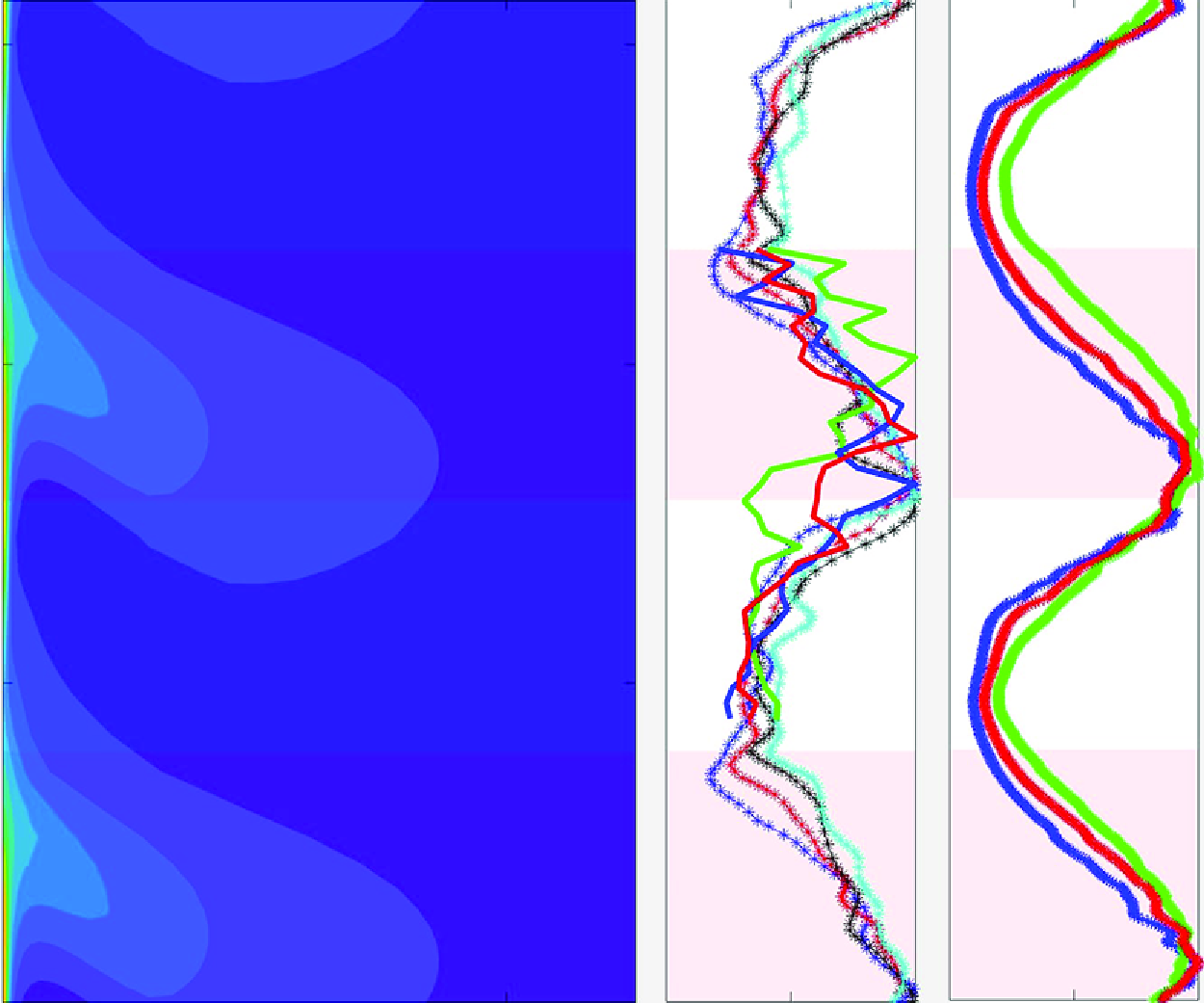
On the intracyclic instability in Stokes layers
-
- Journal:
- Journal of Fluid Mechanics / Volume 1013 / 25 June 2025
- Published online by Cambridge University Press:
- 24 June 2025, A50
-
- Article
-
- You have access
- Open access
- HTML
- Export citation
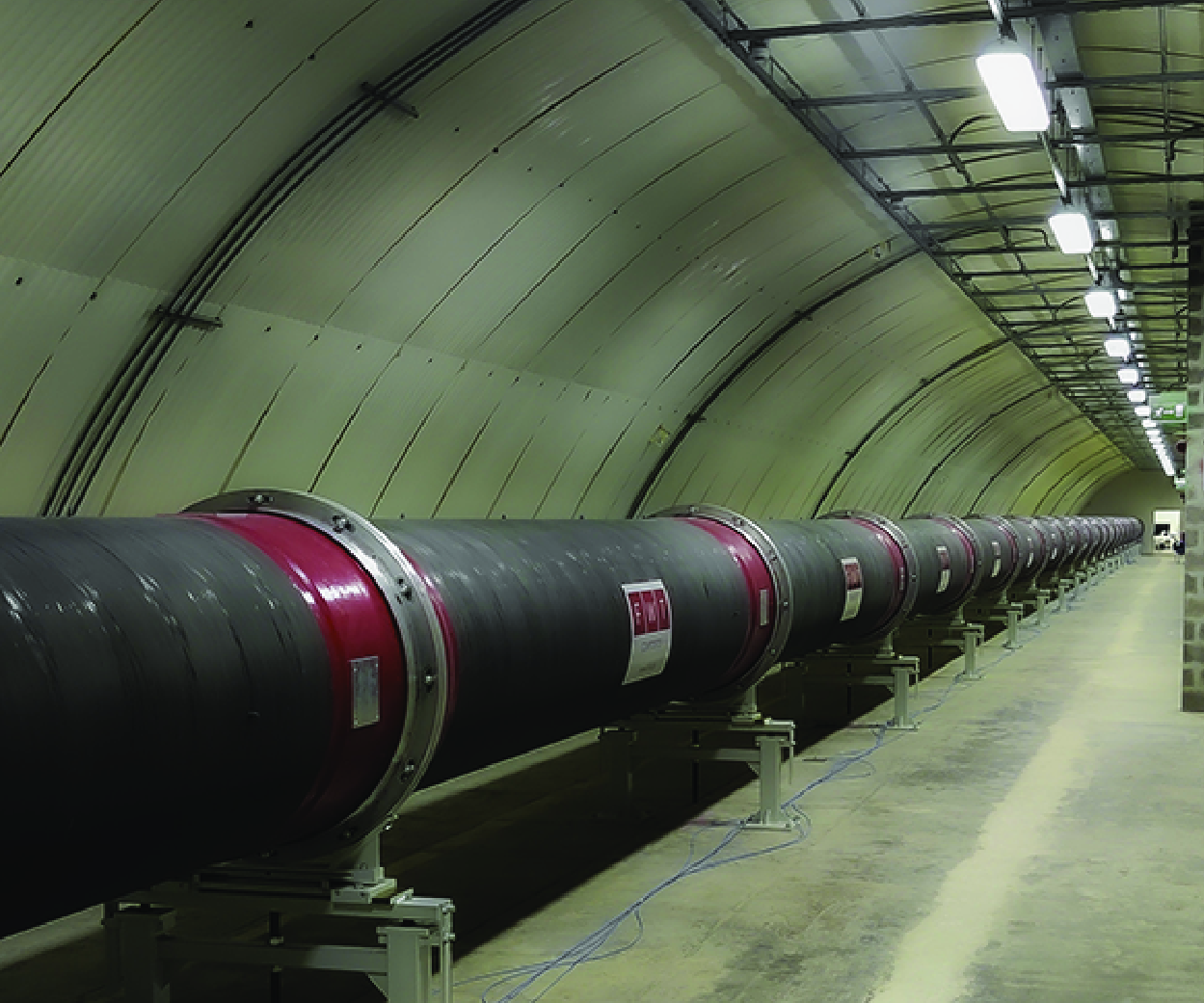
Scaling of wall-pressure–velocity correlations in high-Reynolds-number turbulent pipe flow
-
- Journal:
- Journal of Fluid Mechanics / Volume 1013 / 25 June 2025
- Published online by Cambridge University Press:
- 24 June 2025, A48
-
- Article
-
- You have access
- Open access
- HTML
- Export citation
-
An experimental study was conducted in the CICLoPE long-pipe facility to investigate the correlation between wall-pressure and turbulent velocity fluctuations in the logarithmic region, at high friction Reynolds numbers ( $4794 \lesssim Re_\tau \lesssim 47\,015$). Hereby, we explore the scalability of employing wall-pressure to effectively estimate off-the-wall velocity states (e.g. to be of use in real-time control of wall-turbulence). Coherence spectra for wall-pressure and streamwise (or wall-normal) velocity fluctuations collapse when plotted against $\lambda _x/y$ and thus reveals a Reynolds-number-independent scaling with distance-from-the-wall. When the squared wall-pressure fluctuations are considered instead of the linear wall-pressure term, the coherence spectra for the wall-pressure-squared and velocity are higher in amplitude at wavelengths corresponding to large-scale streamwise velocity fluctuations (e.g. at $\lambda _x/y = 60$, the coherence value increases from roughly 0.1 up to 0.3). This higher coherence typifies a modulation effect, because low-frequency content is introduced when squaring the wall-pressure time series. Finally, quadratic stochastic estimation is employed to estimate turbulent velocity fluctuations from the wall-pressure time series only. For each $Re_\tau$ investigated, the estimated time series and a true temporal measurement of velocity inside the turbulent pipe flow yield a normalised correlation coefficient of $\rho \approx 0.6$ for all cases. This suggests that wall-pressure sensing can be employed for meaningful estimation of off-the-wall velocity fluctuations and thus for real-time control of energetic turbulent velocity fluctuations at high- $Re_\tau$ applications.


Asymmetrical cognate facilitation effects: the orthographic depth hypothesis revisited in bi-script readers
-
- Journal:
- Bilingualism: Language and Cognition / Volume 29 / Issue 2 / March 2026
- Published online by Cambridge University Press:
- 24 June 2025, pp. 490-500
-
- Article
-
- You have access
- Open access
- HTML
- Export citation
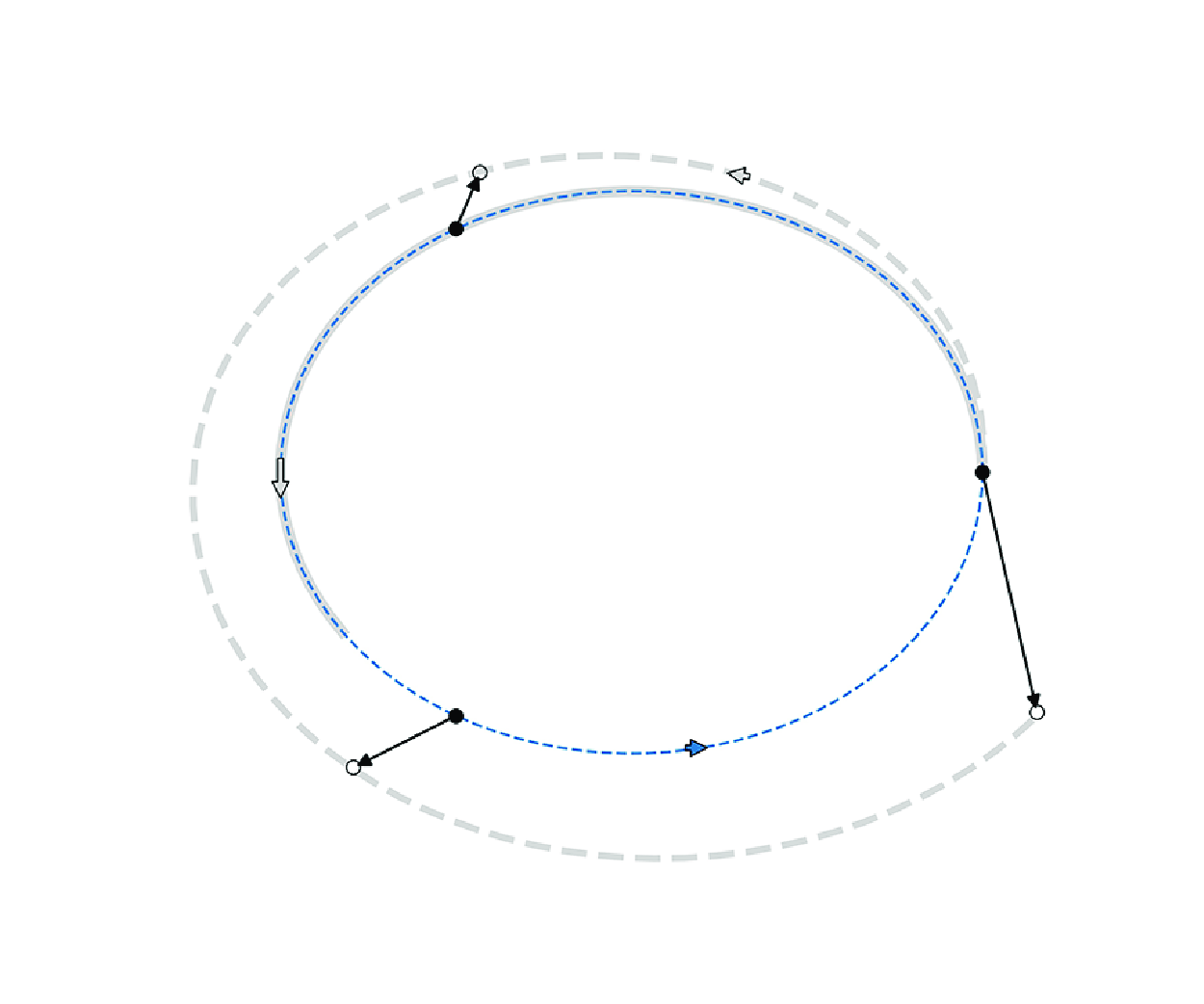
Search for unstable relative periodic orbits in channel flow using symmetry-reduced dynamic mode decomposition
-
- Journal:
- Journal of Fluid Mechanics / Volume 1013 / 25 June 2025
- Published online by Cambridge University Press:
- 24 June 2025, A45
-
- Article
-
- You have access
- Open access
- HTML
- Export citation
-
In the dynamical systems approach to turbulence, unstable periodic orbits (UPOs) provide valuable insights into system dynamics. Such UPOs are usually found by shooting-based Newton searches, where constructing sufficiently accurate initial guesses is difficult. A common technique for constructing initial guesses involves detecting recurrence events by comparing past and future flow states using their $L_2$-distance. An alternative method uses dynamic mode decomposition (DMD) to generate initial guesses based on dominant frequencies identified from a short time series, which are signatures of a nearby UPO. However, DMD struggles with continuous symmetries. To address this drawback, we combine symmetry-reduced DMD (SRDMD) introduced by Marensi et al. (2023, J. Fluid Mech., vol. 954, A10), with sparsity promotion. This combination provides optimal low-dimensional representations of the given time series as a time-periodic function, allowing any time instant along this function to serve as an initial guess for a Newton solver. We also discuss how multi-shooting methods operate on the reconstructed trajectories, and we extend the method to generate initial guesses for travelling waves. We demonstrate SRDMD as a method complementary to recurrent flow analysis by applying it to data obtained by direct numerical simulations of three-dimensional plane Poiseuille flow at the friction Reynolds number $\textit{Re}_\tau \approx51$ ( $\textit{Re}=802$), explicitly taking a continuous shift symmetry in the streamwise direction into account. The resulting unstable relative periodic orbits cover relevant regions of the state space, highlighting their potential for describing the flow.


The causal effect of smoking on psychiatric disorders: an examination of brain volume as a potential pathway
-
- Journal:
- Psychological Medicine / Volume 55 / 2025
- Published online by Cambridge University Press:
- 24 June 2025, e171
-
- Article
-
- You have access
- Open access
- HTML
- Export citation
Microphytoplankton biometry as prospective vector for sulphide ore deposits: a case study in the Iberian Pyrite Belt
-
- Journal:
- Geological Magazine / Volume 162 / 2025
- Published online by Cambridge University Press:
- 24 June 2025, e17
-
- Article
-
- You have access
- Open access
- HTML
- Export citation
The value of dignity appeals: evidence from a social media experiment
-
- Journal:
- Political Science Research and Methods , First View
- Published online by Cambridge University Press:
- 24 June 2025, pp. 1-6
-
- Article
-
- You have access
- Open access
- HTML
- Export citation
A large outbreak of invasive Group B Streptococcus Sequence Type 283 infection linked to physical contact of freshwater fish
-
- Journal:
- Epidemiology & Infection / Volume 153 / 2025
- Published online by Cambridge University Press:
- 24 June 2025, e76
-
- Article
-
- You have access
- Open access
- HTML
- Export citation
Language, but not music, shapes tactile perception
-
- Journal:
- Language and Cognition / Volume 17 / 2025
- Published online by Cambridge University Press:
- 24 June 2025, e53
-
- Article
-
- You have access
- Open access
- HTML
- Export citation
EAP volume 41 issue 2 Cover and Front matter
-
- Journal:
- Economics & Philosophy / Volume 41 / Issue 2 / July 2025
- Published online by Cambridge University Press:
- 24 June 2025, p. f1
-
- Article
-
- You have access
- Export citation
Resolving heterogeneity in first-episode and drug-naive major depressive disorder based on individualized structural covariance network: evidence from the REST-meta-MDD consortium
-
- Journal:
- Psychological Medicine / Volume 55 / 2025
- Published online by Cambridge University Press:
- 24 June 2025, e174
-
- Article
-
- You have access
- Open access
- HTML
- Export citation
Splines on Cayley graphs of the symmetric group
- Part of
-
- Journal:
- Forum of Mathematics, Sigma / Volume 13 / 2025
- Published online by Cambridge University Press:
- 24 June 2025, e96
-
- Article
-
- You have access
- Open access
- HTML
- Export citation
-
A spline is an assignment of polynomials to the vertices of a graph whose edges are labeled by ideals, where the difference of two polynomials labeling adjacent vertices must belong to the corresponding ideal. The set of splines forms a ring. We consider spline rings where the underlying graph is the Cayley graph of a symmetric group generated by a collection of transpositions. These rings generalize the GKM construction for equivariant cohomology rings of flag, regular semisimple Hessenberg and permutohedral varieties. These cohomology rings carry two actions of the symmetric group $S_n$ whose graded characters are both of general interest in algebraic combinatorics. In this paper, we generalize the graded $S_n$-representations from the cohomologies of the above varieties to splines on Cayley graphs of $S_n$ and then (1) give explicit module and ring generators for whenever the $S_n$-generating set is minimal, (2) give a combinatorial characterization of when graded pieces of one $S_n$-representation is trivial, and (3) compute the first degree piece of both graded characters for all generating sets.


Thought flow nets: From single predictions to trains of model thought – ERRATUM
-
- Journal:
- Natural Language Processing / Volume 31 / Issue 5 / September 2025
- Published online by Cambridge University Press:
- 24 June 2025, p. 1322
-
- Article
-
- You have access
- Open access
- HTML
- Export citation
From Understanding to Mindreading: The Role of Scenario Comprehension and Verbal Demand on Theory of Mind
-
- Journal:
- Journal of Child Language , First View
- Published online by Cambridge University Press:
- 24 June 2025, pp. 1-18
-
- Article
-
- You have access
- Open access
- HTML
- Export citation
Border Memory and the Politics of Territoriality in the Russian-Finnish Borderland
-
- Journal:
- Nationalities Papers / Volume 53 / Issue 6 / November 2025
- Published online by Cambridge University Press:
- 24 June 2025, pp. 1221-1245
-
- Article
-
- You have access
- Open access
- HTML
- Export citation
Representation, Performative Exchange and Afropolitanism: Rethinking Opera Production in Nigeria through The Magic Flute
-
- Journal:
- Cambridge Opera Journal / Volume 37 / Issue 1 / March 2025
- Published online by Cambridge University Press:
- 24 June 2025, pp. 27-52
-
- Article
-
- You have access
- Open access
- HTML
- Export citation
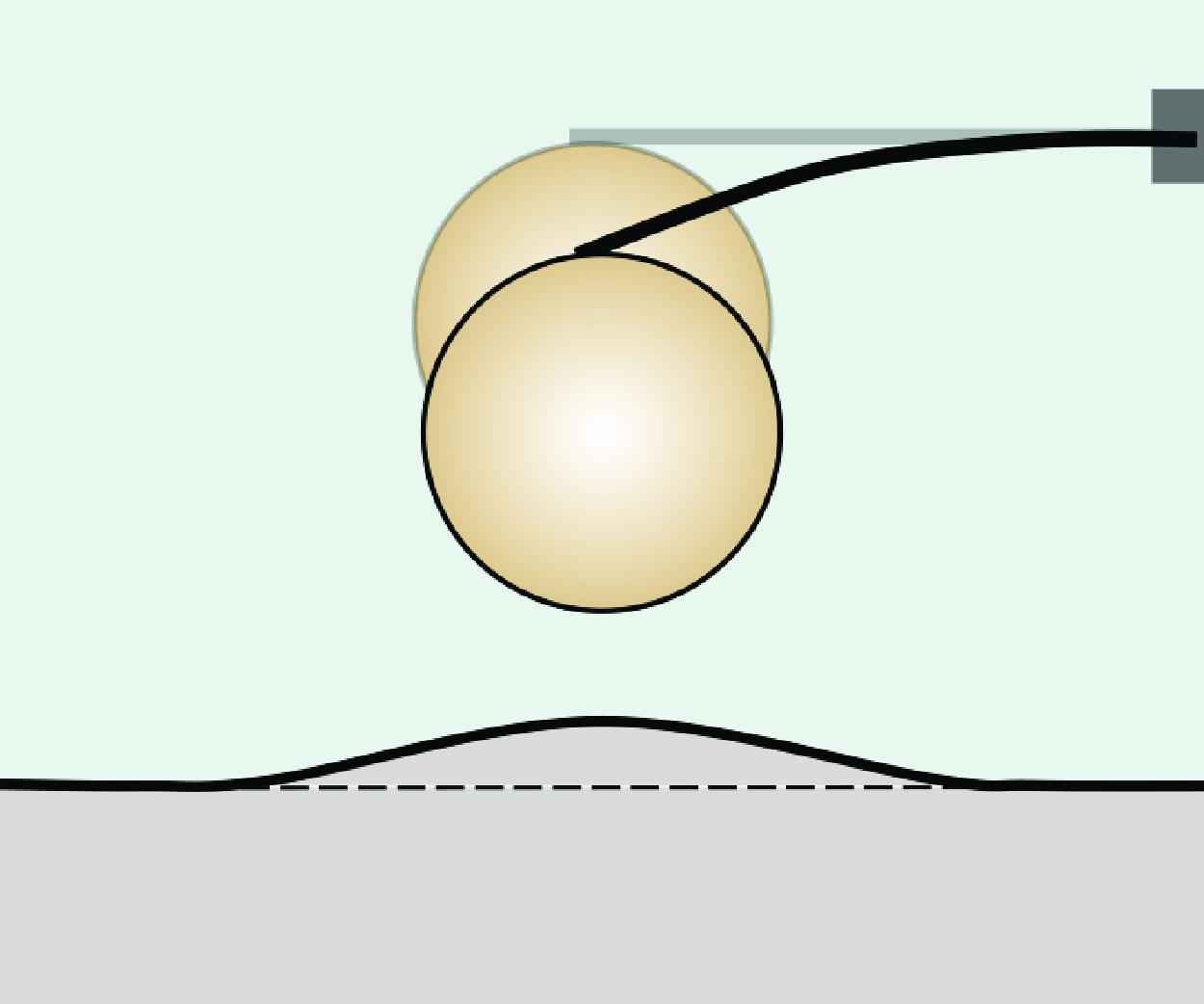
Jump of an atomic force microscopy probe towards an elastic substrate in a liquid environment
-
- Journal:
- Journal of Fluid Mechanics / Volume 1013 / 25 June 2025
- Published online by Cambridge University Press:
- 24 June 2025, A49
-
- Article
- Export citation
The harat of Sétif: living together in a colonial Algerian town
-
- Journal:
- Urban History / Volume 53 / Issue 1 / February 2026
- Published online by Cambridge University Press:
- 24 June 2025, pp. 77-98
-
- Article
-
- You have access
- Open access
- HTML
- Export citation
Beyond frequency: duration, intensity, and quality of life in Ménière’s disease
-
- Journal:
- The Journal of Laryngology & Otology / Volume 139 / Issue 8 / August 2025
- Published online by Cambridge University Press:
- 24 June 2025, pp. 723-729
- Print publication:
- August 2025
-
- Article
- Export citation
Evaluating the Role of Post-Thrombectomy MRI in Predicting Functional Recovery in Basilar Artery Occlusion
-
- Journal:
- Canadian Journal of Neurological Sciences , First View
- Published online by Cambridge University Press:
- 24 June 2025, pp. 1-8
-
- Article
-
- You have access
- Open access
- HTML
- Export citation
