To save content items to your account,
please confirm that you agree to abide by our usage policies.
If this is the first time you use this feature, you will be asked to authorise Cambridge Core to connect with your account.
Find out more about saving content to .
To save content items to your Kindle, first ensure no-reply@cambridge.org
is added to your Approved Personal Document E-mail List under your Personal Document Settings
on the Manage Your Content and Devices page of your Amazon account. Then enter the ‘name’ part
of your Kindle email address below.
Find out more about saving to your Kindle.
Note you can select to save to either the @free.kindle.com or @kindle.com variations.
‘@free.kindle.com’ emails are free but can only be saved to your device when it is connected to wi-fi.
‘@kindle.com’ emails can be delivered even when you are not connected to wi-fi, but note that service fees apply.
We describe caudal analgesia agent, dose, reported adverse events, and outcomes in a single-centre, retrospective cohort study of 200 patients undergoing cardiac surgery from October 2020 to April 2023. Median (interquartile range) doses of clonidine and morphine were 2.7 (2.1–3) mCg/kg and 0.12 (0.1–1.12) mg/kg, respectively. Our findings suggest that a clonidine/morphine caudal was tolerated in cardiac surgical patients.
The Geneva Conventions invite the parties to a non-international armed conflict (NIAC) to conclude special agreements (SAs) according to common Article 3(3). However, the lack of definition and insufficient coverage of such agreements by scholars and legal authorities increase the confusion between that mechanism and other agreements occurring in NIACs. This paper offers a contemporary and functional definition of SAs in order to better demonstrate their importance for NIAC regulation based on practice-informed lessons and, incidentally, to advocate for an increased use of those instruments. The data analyzed throughout this article reveal various lessons that will illustrate the potential of SAs. Among the teachings revealed by practice is the expanded material scope of these instruments or the possible ways in which the parties can choose to draft their commitments. In addition, the records of practice reveal how SAs concretely improve the regime of NIACs, and the implementation approaches generally adopted. For a more complete study of the dynamics of SAs, the paper equally draws attention to their formal and personal characteristics. All these features turn SAs into powerful international humanitarian law (IHL) tools that are flexible enough to upgrade the applicable law of NIACs while respecting some necessary boundaries in order to guarantee the validity of the obligations embedded. This is an essential balance for IHL and international legal order consistency.
Despite geopolitical pressures toward harmonization, Latin American countries enjoy a long history of legal innovation. Yet these local legal differences – when considered at all – mostly figure as diagnoses of legal underdevelopment. In addition to making heterodox laws and legal institutions better known in the legal literature, the structural bias against their recognition must be frontally addressed. This chapter contributes to that work by challenging one of the main elements of this hierarchical arrangement: specifically, legal informality as a marker of underdevelopment. The chapter first examines the notion of legal heterodoxy itself and introduces the theory of heterodox legal informality as Latin America’s pre-eminent contribution to modern law. In a number of legal domains in Latin America, the locus of informality is – or has been –simply different from where global hegemonic models prescribe. It then examines two instances of heterodoxy in private law in Latin America: (i) its previous model of selective secured lending, which has been largely replaced by the liberalizing approach to secured transactions modeled after the US Uniform Commercial Code; and (ii) the innovative property law regime within the context of private law transitional justice in Colombia.
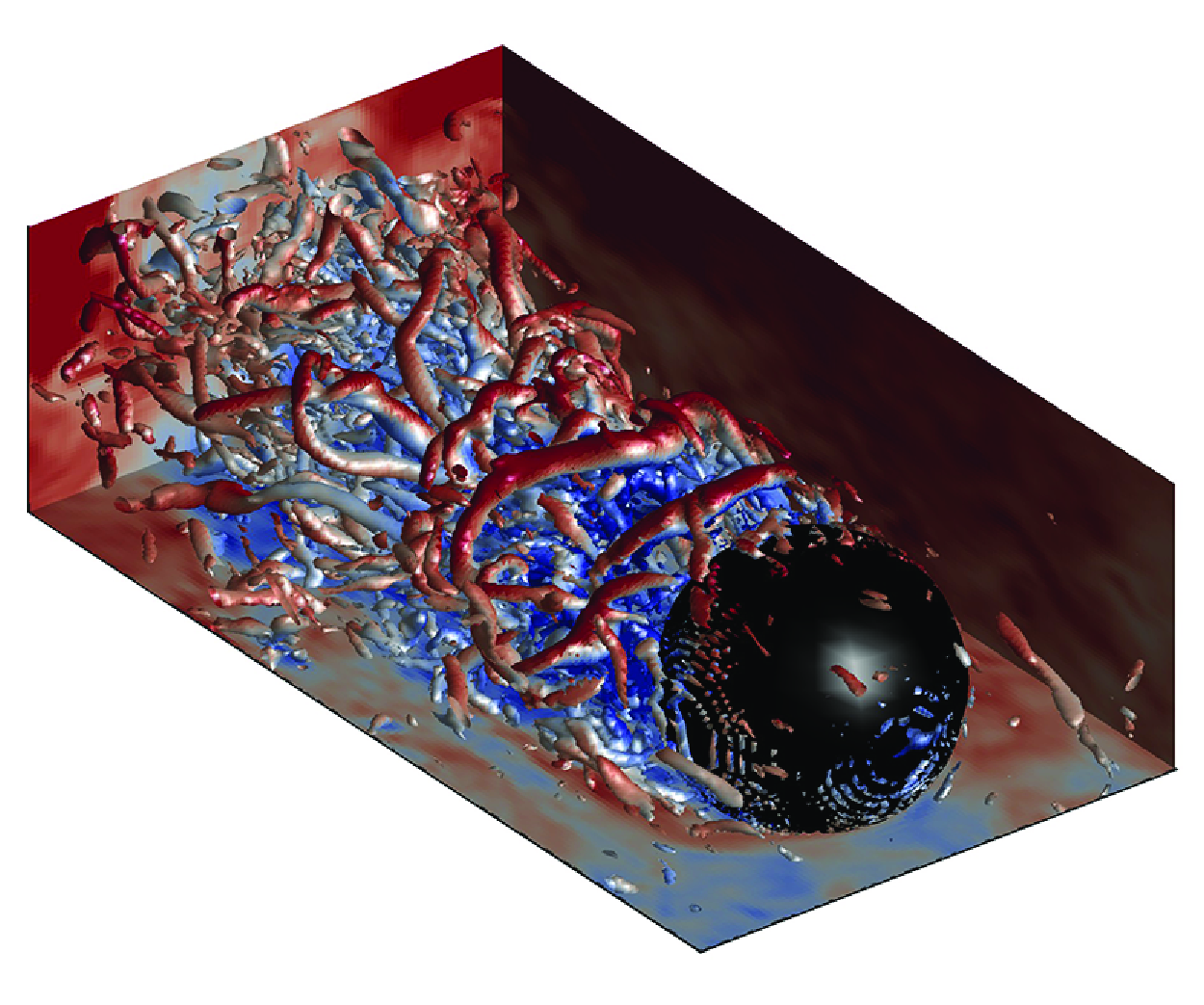
Turbulent flows over rough beds with macroroughness elements of low relative submergence are characteristic of natural river systems. These flows exhibit highly three-dimensional structures, including large-scale coherent patterns, complex nonlinear interactions and significant drag induced by immobile boulders. In this study, large-eddy simulations are conducted of the flow through an array of boulders on a rough bed, based on experiments by Papanicolaou et al. (2012) Acta Geophys.60 (6), 1502–1546. The analysis includes the instantaneous flow dynamics, the parameterisation of hydrodynamic roughness on the averaged velocity profile and the application of the double-averaged methodology. These upscaling approaches reveal the combined influence of wake turbulence and secondary currents (SCs), and provide insights into momentum and energy conservation mechanisms, which are critical for transport processes in fluvial environments. Results indicate that the boulder array reduces total fluid stress at the rough bed surface to $0.5 \rho u_*^2$, which can have important implications for sediment transport. Form-induced stresses, primarily originating in the boulder wakes, reach up to 37 % of total fluid stress, with peak values comparable to turbulent stresses at mid-boulder elevation. Form-induced kinetic energy (DKE) is shown to have the same magnitude as the turbulent kinetic energy (TKE), highlighting energy transfers from mean flow drag to DKE, then to TKE, before final dissipation. This study underscores the critical role of macroroughness in stress distribution, and the importance of the joint action of SCs and wake turbulence in driving form-induced stresses, which partially counterbalance drag dissipation.
This Element reports on the creation and analysis of a 1.5-million-word corpus consisting of a year's worth of UK national press news articles about Islam and Muslims, published between December 2022 and November 2023. The corpus also contains 8,546 image files which have been automatically tagged using Google's Vertex AI. Analysis was carried out on three levels a) written text only, b) images only, c) interactions between written text and images. Using examples from the analyses, the authors demonstrate the affordances of these three approaches, providing a critical evaluation of Vertex AI's capabilities and the abilities of popular corpus software to work with visually tagged corpora. The Element acts as a practical guide for researchers who want to carry out this form of analysis. This title is also available as Open Access on Cambridge Core.
Original accounts of feminist standpoint theory emphasize its fundamentally critical stance toward situated knowledge (Smith 1974; Hartsock 1983; Collins 1986). The function of a critical standpoint is not to carelessly accept the beliefs of marginalized people, but instead to interpret those beliefs in light of thoroughgoing and pervasive ideological distortions. Some formulations of standpoint theory capture this critical function in the achievement thesis. It claims that a standpoint is not obtained automatically but must be achieved through a struggle against a dominant ideology. Contrary to the standard acceptance of the achievement thesis, Bright has recently argued that the requirement of achievement can warrant the dogmatic exclusion of some perspectives from becoming standpoints. In turn, he advances an account of standpoint theory which abandons the achievement thesis. Against Bright’s non-achievement account of standpoint theory, I argue that doing away with the achievement thesis abandons standpoint theory’s original aim of being critical of the social structures which construct and legitimize situated knowledge. Further, I argue that Bright’s concern with the possible dogmatism of the achievement thesis is better addressed by a commitment to the classic account of standpoint theory rather than a revision of it.
International law has been predominantly shaped by the West. Despite decolonization, insufficient attention has been paid to non-Western civilizations’ practices, including Asian civilizations. This article examines this insufficiency in relation to treaty interpretation and customary international law identification. To do so, it uses the notion of conscientious objection to military service as a case study. Despite particularly adverse state practice, chiefly in Asia, the International Covenant on Civil and Political Rights (ICCPR) treaty body and UN organs began affirming in the 1990s that the Covenant includes a right to conscientious objection to military service. The first part analyzes whether such a right can be implied from the ICCPR, inter alia, by assessing the practice of Asian states. The second part endeavours to explain the gap between the international human rights machinery’s pronouncements and non-Western practice by discussing the Western-centrism and individual-centrism of interpretations adopted by human rights bodies and organs.
The Southern Ocean remains one of the most data-deficient ocean basins despite its crucial role in global climate regulation. This study uses racing sailboats from the Barcelona World Race (2010/2011 and 2014/2015) and the Vendée Globe Race (2020/2021) as vessels of opportunity to collect sea-surface temperature and salinity measurements, offering a unique dataset for assessing oceanographic variability in this remote region. We conducted an inter-annual analysis of surface temperature and salinity anomalies relative to ARMOR-3D reanalysis and World Ocean Atlas 2023 climatological datasets, identifying regional patterns of change and variability. The results reveal a warming trend and general freshening of the Southern Ocean surface over the last decade, with the highest anomalies observed in the Indian and Atlantic sectors, whereas the Pacific sector showed the lowest anomalies in absolute terms. Notably, El Niño-Southern Oscillation (La Niña) and Southern Annular Mode phases played a significant role in modulating these temperature and salinity anomalies. This study underscores the scientific value of non-research vessels in monitoring climate-driven changes in Antarctic and sub-Antarctic waters, highlighting their potential to complement traditional observation networks in data-sparse regions.
The increasing multimodality (e.g., images, videos, links) of social media data presents opportunities and challenges. But text-as-data methods continue to dominate as modes of classification, as multimodal social media data are costly to collect and label. Researchers who face a budget constraint may need to make informed decisions regarding whether to collect and label only the textual content of social media data or their full multimodal content. In this article, we develop five measures and an experimental framework to assist with these decisions. We propose five performance metrics to measure the costs and benefits of multimodal labeling: average time per post, average time per valid response, valid response rate, intercoder agreement, and classifier’s predictive power. To estimate these measures, we introduce an experimental framework to evaluate coders’ performance under text-only and multimodal labeling conditions. We illustrate the method with a tweet labeling experiment.
We compute the co-multiplication of the algebraic Morava K-theory for split orthogonal groups. This allows us to compute the decomposition of the Morava motives of generic maximal orthogonal Grassmannians and to compute a Morava K-theory analogue of the J-invariant in terms of the ordinary (Chow) J-invariant.
Traditional legal scholarship has long focused on the exercise of discretion in all its forms; however, by borrowing from the analytical toolkit of science and technology studies (STS), we begin to take an ‘ontological turn’ into the courtroom by documenting a new tool of judicial discretion invoked by criminal justice adjudicators: what we call ontological discretion. By examining three objects from our own research – sleep, death, and intoxication—we show how their lack of a universal, singular ontology may necessitate that adjudicators use their discretion to either choose a coherent ontology in a given case, or else avoid opining on ‘what things are’ altogether. We therefore start to move beyond those important but now rather mainstream sociolegal inquiries into legal knowledges, instead shifting our focus toward what legal actors say the objects of their various knowledges actually are, as well as the widespread legal effects of the court’s ontological games.
The Mental Health Act perpetuates the harmful and misguided detention of individuals with personality disorders. The outdated practice lacks ethical, legal or clinical justification. Coercion is mistaken for care, and detention often exacerbates distress, retraumatises patients and increases suicide risk. Despite its promises, the new Mental Health Bill fails to address these systemic failures, continuing the cycle of risk-driven, defensive psychiatry. It is time to abandon compulsory detention for this patient group, redirect resources toward evidence-based, relational interventions, and move toward a capacity-based, trauma-informed legal framework that aligns with contemporary psychiatric understanding of these conditions and fundamental human rights.
Latin American and South European countries share a common policy legacy of public Pay-As-You-Go (PAYG) pension systems, yet reform paths taken over the past decades between and within the two regions have varied. Latin American countries opted for the full or partial privatization of their public pension systems, yet subsequent reforms have challenged the public–private mix. Meanwhile, countries in Southern Europe opted for a less radical path, entailing different degrees of reform of their public pillars and the introduction of supplementary private ones. Our analysis focuses on Argentina, Chile, and Uruguay – in Latin America – and Spain, Italy, and Greece – in Southern Europe – and the reforms implemented since 1990. In understanding reform variation, we argue that by focusing on the role of political institutions and policy legacies, it is possible to identify reform mechanisms.
Utilizing data on household consumption expenditure patterns and sectorial greenhouse gas emissions, we study the extent of inequality over Turkish households’ differentiated carbon footprint incidences. We harmonize the household budget survey data of the Turkish Statistical Institute (TURKSTAT) with production-based gas emissions data from EXIOBASE3 and investigate both the direct and indirect emissions across household-level income strata. Our calculations reveal that the households in the highest income decile alone are responsible for 19.4 percent of the overall (direct and indirect) emissions, whereas the bottom 10 percent of households are responsible for 4.3 percent. We also find that for direct emissions, the per-household average of the highest income decile exceeds that of the lowest income decile by a factor of 11.2. Notably, 87 percent of the indirect emissions budget for the poorest decile is linked to food and housing expenses, underscoring their susceptibility to climate policies. We confer that in designing the net-zero emission pathways to combat climate change, it would not suffice to study the technological transition of decarbonization solely and that the successful implementation of an indigenous environmental policy will ultimately depend upon the socio-economic factors of income distribution strata, indicators of consumption demand, and responsiveness of the individual households to react to price signals.
Impairments in emotion recognition, a crucial component of social cognition, have been previously demonstrated in patients with behavioral variant frontotemporal dementia (bv-FTD) and Alzheimer’s disease (AD). However, to date, it is unclear whether patients with early-stage vascular dementia (VaD) display deficient emotion recognition. We investigated profiles of impairments in emotion recognition and non-social cognitive functions, comparing VaD patients to bv-FTD and AD patients, and healthy control participants (HC).
Method:
Eighty-one memory clinic patients with early-stage VaD (n = 30), bv-FTD (n = 21) and AD (n = 30), and 40 HCs were included and performed Ekman 60 Faces Test (EFT; emotion recognition), Auditory Verbal Learning Test (AVLT; memory - encoding and retrieval) and Trailmaking Test (TMT A, TMT B, TMT B/A; information processing speed, executive functions). Differences between groups were analyzed with analysis of variance (ANOVA), using age, education and sex adjusted norm Z scores.
Results:
All patient groups performed significantly worse than HCs on EFT (p < .001). Mean performance of VaD patients was in between bv-FTD and AD (only bv-FTD < AD, p < .01). All patient groups were also impaired on AVLT encoding, TMT-B and TMT B/A. Social and non-social neurocognitive functions differed between groups, with specific impairments in processing speed in VaD, emotion recognition in bv-FTD and memory retrieval in AD, and memory encoding and cognitive control impaired in all three groups.
Conclusions:
We found significantly different profiles in VaD, bv-FTD and AD. Assessing emotion recognition has additive value in the distinction between patient groups, allowing for more timely and accurate diagnosis in clinical practice.
Effects of variations in parents’ control styles, especially the amount of power assertion they deploy, have long been a central question in socialization research. Although severe, harsh control is unanimously considered harmful, research on effects of far more common low-to-moderate power assertion is inconsistent. Drawing from attachment and social cognition traditions, we examined whether children’s representations of parents (Internal Working Models, IWMs) moderated associations between parental power assertion and children’s socialization (violating or embracing rules and values, responsiveness to parents). In two studies of community families (Family Study, FS, N = 102, and Children and Parents Study, CAPS, N = 200), employing observations and reports, we assessed parental power assertion at age 4.5, children’s IWMs at ages 8 in FS and 4.5 in CAPS, and socialization outcomes at ages 10 and 12 in FS and 4.5 in CAPS. In FS, children’s IWMs of the parent moderated effects of parental power assertion on socialization outcomes in mother- and father-child dyads (βs = 0.47, 0.41, respectively): Power assertion had detrimental effects only for children with negative IWMs of their parents. In CAPS, findings were replicated for mother-child dyads (β = 0.24). We highlight origins of multifinality in socialization sequelae of parental control.
Our daily lives are shaped by the digital platforms we engage with, presenting both challenges and opportunities in the pursuit of health and social well-being. Despite extensive public efforts to increase physical activity, sedentary lifestyles and car-dependence persist; often exacerbated by digital apps functioning at odds with these initiatives. With growing urbanization, walking for transportation becomes a feasible way for many Americans to achieve daily activity goals. This work explores the potential of leveraging nudges within digital apps, specifically Google Maps, to encourage walking. I found that displaying walking directions as the default in Google Maps, instead of driving, and complemented by graphics depicting social norms, significantly increased the hypothetical choice to walk — particularly among less active individuals. This underscores the power of digital environments in shaping our choices and outcomes; and highlights the need for us to critically assess digital app design. I advocate for collaboration between ‘big tech’, policymakers, and the public to create digital tools that balance our immediate convenience with long-term health and environmental sustainability goals. Re-envisioning technology’s role in daily life, we can potentially harness its vast influence to foster choices that contribute to both personal well-being and the collective good.
We develop original flow-based methods to interrogate and manipulate out-of-equilibrium behaviour of ternary fluids systems at the small scale. In particular, we examine droplet and jet formation of ternary fluid systems in coaxial microchannels when an aqueous phase is injected into a solvent-rich oil phase using common fluids, such as ethanol for the aqueous phase, silicone oil for the oil phase and isopropanol for the solvent. Alcohols are often employed to impart oil and water properties with a myriad of practical uses as extractants, antiseptics, wetting agents, emulsifiers or biofuels. Here, we systematically examine the role of alcohol solvents on the hydrodynamic stability of aqueous–oil multiphase flows in square microchannels. Broad variations of flow rates and solvent concentration reveal a variety of intriguing droplet and jet flow regimes in the presence of spontaneous emulsification phenomena and significant mass transfer across the fluid interface. Typical flow patterns include dripping and jetting droplets, phase inversion and dynamic wetting and conjugate jets. Functional relationships are developed to model the evolution of multiphase flow characteristics with solvent concentration. This work provides insights into complex natural phenomena relevant to the application of microfluidic droplet systems to chemical assays as well as fluid measurement and characterisation technologies.
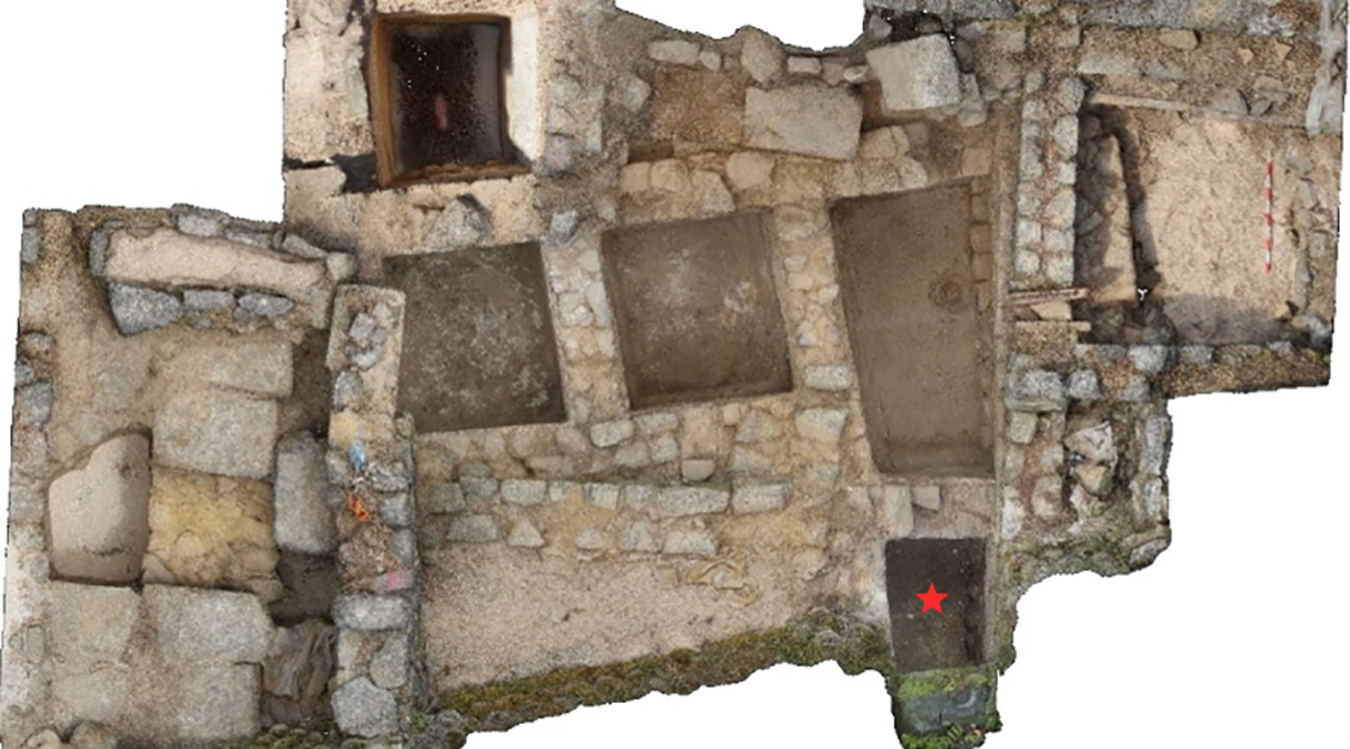
The Romans were among the first societies to extensively exploit fish resources, establishing large-scale salting and preservation plants where small pelagic fish were fermented to produce sauces such as garum. Here, the authors demonstrate that, despite being crushed and exposed to acidic conditions, usable DNA can be recovered from ichthyological residues at the bottom of fish-salting vats. At third-century AD Adro Vello (O Grove), Galicia, they confirm the use of European sardines (Sardina pilchardus) and move beyond morphology to explore population range and admixture and reveal the potential of this overlooked archaeological resource.