To save content items to your account,
please confirm that you agree to abide by our usage policies.
If this is the first time you use this feature, you will be asked to authorise Cambridge Core to connect with your account.
Find out more about saving content to .
To save content items to your Kindle, first ensure no-reply@cambridge.org
is added to your Approved Personal Document E-mail List under your Personal Document Settings
on the Manage Your Content and Devices page of your Amazon account. Then enter the ‘name’ part
of your Kindle email address below.
Find out more about saving to your Kindle.
Note you can select to save to either the @free.kindle.com or @kindle.com variations.
‘@free.kindle.com’ emails are free but can only be saved to your device when it is connected to wi-fi.
‘@kindle.com’ emails can be delivered even when you are not connected to wi-fi, but note that service fees apply.
In recent times, Malaysian courts have resorted to a ritual incantation of unconscionability and the notion of a remedial constructive trust to justify a declaration of a constructive trust. This methodology is unhelpful for approaching constructive trusts and has led the law to develop in an unprincipled and unpredictable fashion. Our central thesis is that the key Malaysian decisions could have been decided on the basis of pre-existing legal principles upon which English and Commonwealth courts have declared a constructive trust. We argue that future courts ought to realign their methodology with the orthodox tradition of incremental development of the law in this area instead of resorting to broad notions of unconscionability and the remedial constructive trust.
We define a new class of enumerative invariants called k-leaky double Hurwitz descendants, generalizing both descendant integrals of double ramification cycles and the k-leaky double Hurwitz numbers introduced in [CMR25]. These numbers are defined as intersection numbers of the logarithmic DR cycle against $\psi $-classes and logarithmic classes coming from piecewise polynomials encoding fixed branch point conditions. We give a tropical graph sum formula for these new invariants, allowing us to show their piecewise polynomiality in any genus. Investigating the piecewise polynomial structure further (and restricting to genus zero for this purpose), we also show a wall-crossing formula. We also prove that in genus zero the invariants are always nonnegative and give a complete classification of the cases where they vanish.
Several of the world’s languages exhibit double determination structures, including English dialects which have a construction with a demonstrative determiner and a locative adverb (e.g. this here book). Doubling in demonstratives has commonly been explained as a language’s response to a loss of deixis, leading to a linguistic cycle. However, this explanation cannot be sustained for English because demonstratives are fully functioning grammatical deictics (e.g. this book). In this article, we probe the role of doubling in the history and grammatical development of English double demonstratives with evidence from rural UK dialects. Using quantitative methods and the principle of accountability we calculate proportion of forms and patterning in simple and double demonstratives, enabling us to demonstrate that the doubled form has particular discourse-pragmatic functions, most notably, to flag topics in discourse. Our findings lead us to make two theoretical proposals. First, double demonstratives in English are used for discourse-pragmatic purposes; and second, doubling led to a new, complex determiner suitable to take over discourse-pragmatic functions from simple determiners (complexification of the determiner paradigm). Finally, we suggest that obsolescing features like the English double demonstrative offer key insights for understanding the development of linguistic systems.
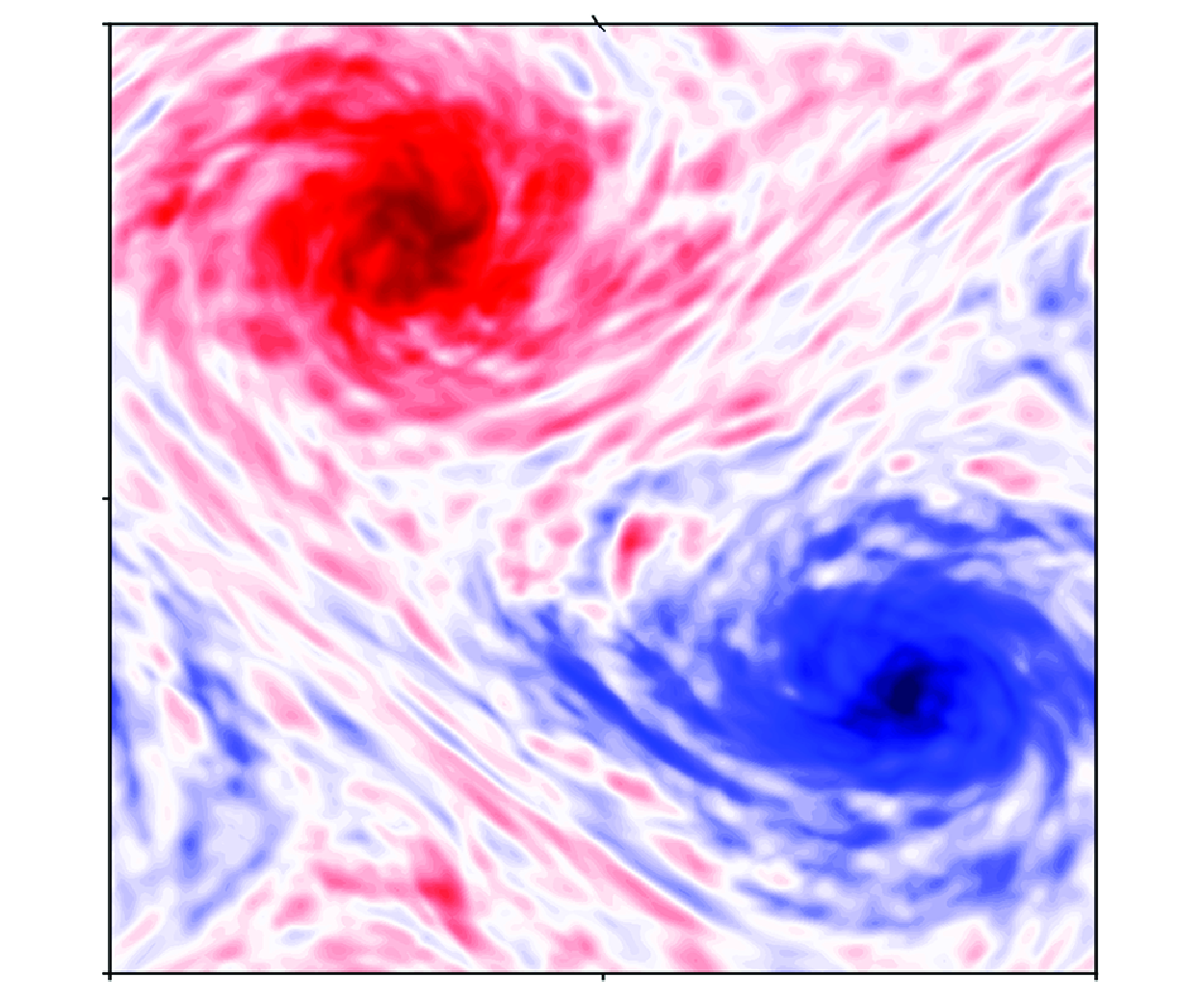
We report pattern formation in an otherwise non-uniform and unsteady flow arising in high-speed liquid entrainment conditions on the outer wall of a wide rotating drum. We show that the coating flow in this rotary dragout undergoes axial modulations to form an array of roughly vertical thin liquid sheets which slowly drift from the middle of the drum towards its sidewalls. Thus, the number of sheets fluctuates in time such that the most probable rib spacing varies ever so slightly with the speed, and a little less weakly with the viscosity. We propose that these axial patterns are generated due to a primary instability driven by an adverse pressure gradient in the meniscus region of the rotary drag-out flow, similar to the directional Saffman–Taylor instability, as is wellknown for ribbing in film-splitting flows. Rib spacing based on this mechanistic model turns out to be proportional to the capillary length, wherein the scaling factor can be determined based on existing models for film entrainment at both low and large capillary numbers. In addition, we performed direct numerical simulations, which reproduce the experimental phenomenology and the associated wavelength. We further include two numerical cases wherein either the liquid density or the liquid surface tension is quadrupled while keeping all other parameters identical with experiments. The rib spacings of these cases are in agreement with the predictions of our model.
This paper explores metalinguistic social media discussions on the variation of Finnish third-person singular pronouns in reference to nonhuman animals. Finnish uses two third-person singular pronouns: hän and se. In standardized Finnish, hän takes exclusively human and se nonhuman referents, but in colloquial speech, the difference between hän and se is not based on the human/nonhuman distinction. I examine the discursive construction of the human–animal relationship in social media discussions about the use of hän in reference to nonhuman animals, as well as the intersection between discourses on the human–animal relationship and language ideologies through a critical perspective. Two major discourses are identified: one centres on equality and the other emphasizes the differentiation and hierarchy of species. Both discourses are closely connected to language ideologies, which shape and are shaped by views on the status of nonhuman animals in human society.
The article describes the challenges of running for local political office and explains the significance or political parties, interest groups, and informal support structures created by women to help women and minority candidates win and successfully govern. Additionally, the article addresses a political context where women and minorities face increased concerns about running for political office in a highly polarized environment.
Homeostats are important to control homeostatic conditions. Here, we have analyzed the theoretical basis of their dynamic properties by bringing the K homeostat out of steady state (i) by an electrical stimulus, (ii) by an external imbalance in the K+ or H+ gradient or (iii) by a readjustment of transporter activities. The reactions to such changes can be divided into (i) a short-term response (tens of milliseconds), where the membrane voltage changed along with the concentrations of ions that are not very abundant in the cytosol (H+ and Ca2+), and (ii) a long-term response (minutes and longer) caused by the slow changes in K+ concentrations. The mechanistic insights into its dynamics are not limited to the K homeostat but can be generalized, providing a new perspective on electrical, chemical, hydraulic, pH and Ca2+ signaling in plants. The results presented here also provide a theoretical background for optogenetic experiments in plants.
Obesity during development has been reported to be a determinant factor in the future development of non-communicable diseases (NCDs). Parental obesity is suggested to be a predictor of children’s obesity, and it is important to consider parental factors to prevent NCDs in the progeny. Previously, we showed that paternal height had a stronger association with infant birth weight than paternal body mass index (BMI) in the Japanese population. However, only a few studies have examined the association between paternal physique and postnatal obesity. This study aimed to investigate the association between parental physique and obesity in children at the age of 3. This study used fixed data on 33,291 parent–child pairs from the Japan Environment and Children’s Study, an ongoing national birth cohort study. The association between paternal physique (BMI and height) and children’s obesity at the age of 3 was examined using multivariate logistic regression analysis. The higher the paternal BMI quartiles, the higher the odds ratio for obesity in male and female children at 3 years of age (P < 0.0001). However, paternal height quartiles were not associated with male or female obesity. These results differ from the association between paternal physique and infant birth weight, and it is possible that prenatal epigenetic and environmental factors of paternal origin were responsible for the differences between these two studies. The association between paternal BMI and obesity in children at the age of 3 suggests that paternal factors may be involved in the development of NCDs in future progeny.
Despite many reports of similar effectiveness between oral and intravenous antibiotics for bone and joint infections, prescribing practice has been slow to change in the United States. We sought to determine if implementing an intravenous-to-oral treatment guideline could increase prescribing of oral antibiotic regimens at our center.
Design:
Retrospective, quasi-experimental study.
Setting:
Single US academic medical center.
Patients:
Patients with bone or joint infections managed by Infectious Disease providers from September 2020 to December 2022.
Intervention:
An intravenous-to-oral treatment guideline for patients with bone and joint infections.
Methods:
The prescribing rates of fully oral antibiotic regimens before and after implementation of the guideline were compared. Additionally, variables independently associated with oral antibiotic prescribing were identified by logistic regression.
Results:
There were 450 patients included: 213 before and 237 after implementation of the guideline. Oral antibiotic prescribing significantly increased following implementation of the treatment guideline to 59% from 33% of patients (difference 25.8%, 95% CI [16.7%, 34.4%]. In multivariable analysis, the post-intervention phase was associated with a significantly greater likelihood of oral antibiotic prescribing (aOR 2.89 [1.90, 4.45]). Other variables independently associated with oral antibiotic prescribing included male sex (aOR 1.88 [1.20, 2.98]), prosthetic joint infection (aOR 0.29 [0.17, 0.47]), and infection with Enterobacterales (aOR 2.86 [1.45, 5.92]), methicillin-sensitive Staphylococcus aureus [aOR 0.41 [0.26, 0.65]), or coagulase-negative staphylococci (aOR 0.34 [0.18, 0.62]).
Conclusions:
Implementation of a treatment guideline resulted in a significant increase in oral antibiotic prescribing. Antimicrobial stewardship programs should implement similar interventions to improve outpatient antibiotic utilization.
We seek to unpack and complicate traditional findings of Black Americans’ ambivalent progressivism of immigrants and immigration by seriously considering gender as an analytic tool. Specifically, we aim to highlight how Black women’s political and social uniqueness contextualizes their perception of attitudes toward immigrants and immigration. We argue that Black women’s unique race and gendered experiences inform Black women’s attitudes and preferences regarding immigration and immigrants. Further, we take their heterogeneity seriously because Black women are not a monolith. Using the 2020 Collaborative Multiracial Post-election Survey (CMPS), we argue that perceptions of shared disadvantage, high levels of woman of color (WoC) linked fate and intersectional solidarity, and strong Democratic identification will positively influence African American women and Black immigrant women’s progressive attitudes toward immigrants and immigration compared to Black women who have lower levels of shared discrimination, WoC linked fate, intersectional solidarity, or have weak Democratic identification.
Increasing electricity access remains a challenge, particularly in rural areas of sub-Saharan Africa. This study examines the case of Tanzania, where connection rates remain low even among rural households residing ‘under the grid’, and this despite substantial government subsidies for household connections. Using data from 1,774 rural households living within reach of the electricity grid, we investigate correlates of the low grid electricity uptake. We find that proxies for wealth are positively associated with connection status, while social network variables are less so. Capacity to pay thus appears to remain a major barrier, and in-house wiring costs emerge as a significant expense unaddressed by the existing subsidy scheme, exceeding grid connection costs sevenfold. Similar mechanisms influence the choice between grid electricity and traditional or solar energy sources. These findings inform the ongoing policy debate on subsidy design and the role of alternative energy sources in expanding access.
In his book Seeing Like a State, James Scott writes, “We have repeatedly observed the natural and social failures of thin, formulaic simplifications imposed through the agency of state power” (1998, 309). State and top-down planning lacks mētis, or the common sense and practical experience that people on the ground possess of their everyday environments. Instead, Scott proposes a focus on practical knowledge, which “depends on an exceptionally close and astute observation of the environment” (1998, 324).
This article examines the relationship between foreign aid and foreign direct investment (FDI) and the degree of personalism in dictatorships. We contend that aid leads to higher personalism since it is a windfall that accrues to the government and does not require cooperation from elites to obtain it. Contrarily, we posit that FDI is linked to lower levels of personalism because it reshapes elites’ incentives and influence as they may acquire new preferences, connections, and exit options, thus constraining dictators. Using data on Official Development Assistance (ODA) and FDI, and a latent index of personalism in autocracies, we find no robust evidence that ODA or FDI are correlated with personalism, but have some effect on some of the index’s components.
The Cambrian edrioasteroid “Totiglobus” spencensis Wen et al., 2019 is redescribed on the basis of a new and exquisitely preserved specimen from the Cambrian Wuliuan of the Spence Shale Member, Langston Formation (Utah). This new occurrence is associated with soft-body preservation of several invertebrate groups and other shelly fossils. The description of “T.” spencensis was originally based on a single poorly preserved specimen. As a result, some of its features, such as curvature of the ambulacra and morphology of floor and cover plates, were misinterpreted or unavailable. The new material allows a new placement in Sprinkleoglobus spencensis n. comb. (Wen et al., 2019) on the basis of the general shape of the theca, attachment disc, and biserial flooring plates with podial pores and multiple cover plate series. The attachment disc of the new specimen lies in contact with a trilobite librigena, supporting evidence that this taxon is one of the earliest known examples of attachment to hard, mineralized substrata among Edrioasteroidea.
Parliaments are the intermediate link in the representative chain connecting citizens to the government. The parliamentary agenda is often seen as highly responsive because public priorities are usually mirrored in parliamentary debates. However, the level of responsiveness is affected by formal and informal rules of each activity, which considerably shape the attention–concentration capacity and thus the possibility for policy change. During moments of crisis, institutional frictions can be substantially placated, making the agenda concentrating on the crisis issue even in the presence of high institutional frictions. Building on the literature about parliamentary questioning and agenda-setting studies, this article compares the determinants of issue attention for crisis-related issues (economic, migration, and pandemic) in the Italian case over the past 20 years, assessing their impact on written questions and oral questions with immediate response. This article overcomes a limitation of the agenda-setting literature which treats different forms of parliamentary questions as having a single logic and dynamic. Instead, we demonstrate that frictions are extremely variable among different forms of parliamentary questioning and thus, that written and oral questions exhibit different forms of issue responsiveness. This article explores which type of signal parliamentary questions are most responsive to – public concerns, media attention, or real-world indicators – and finds that the answer is highly conditional both on the specific issue under examination and the type of parliamentary questions.
n-3 PUFA delivered by fish oil supplements alter the number and functions of circulating extracellular vesicles (EV), but consumption of oily fish does not reproduce this effect. In order to assess the effects of fish oil supplements and oily fish, at a level achievable in the diet, on EV numbers, composition and procoagulant activity in healthy human volunteers, forty-two healthy subjects were assigned to one of three treatment groups: (i) fish oil supplements plus white fish meals, (ii) control supplements plus oily fish meals or (iii) control supplements plus white fish meals for 12 weeks in a randomised, double-blind, placebo-controlled, parallel trial; circulating EV were enumerated and their procoagulant activity assessed using thrombin generation and fibrinolysis assays. Our results showed that fish oil supplements decreased circulating EV numbers and reduced EV-stimulated thrombin generation, but the consumption of oily fish at half the dose of EPA had no effect on either EV number or thrombogenic capacity. Consumption of both oily fish and fish oil supplements increased the EPA and DHA contents of EV, and the proportion of EPA in circulating EV was strongly associated with EV-stimulated thrombin generation. This study revealed that the additional 1 g/d EPA delivered in the fish oil supplements is required to decrease the numbers and thrombogenic capacity of EV, since oily fish at a level achievable in the diet had no effect. Increasing EPA intake beyond current guidelines for oily fish consumption may therefore be required for cardiovascular benefits relating to EV.
Researchers explore the biology of painful experiences not primarily felt in the body (‘non-physical pain’), sometimes referred to as mental, social or emotional pain. A critical challenge lies in how to operationalise this subjective experience for biological research, a crucial process for translating findings into clinical practice.
Aims
To map studies investigating biological features of non-physical pain, focusing on their conceptual features (i.e. terms and definitions of non-physical pain) and methodological characteristics (e.g. experimental paradigms and measures).
Method
This methodological systematic review searched reports of primary research on the biological features of non-physical pain across Embase, MEDLINE and Web of Science. Using a meta-research approach, we synthetised results on terms, definitions, populations, experimental paradigms, confounders, measures of non-physical pain and investigation methods (e.g. functional magnetic resonance imaging).
Results
We identified 92 human studies, involving 7778 participants. Overall, 59.1% of the studies did not report any definition of non-physical pain, and 82% of studies did not use a specific measure. Regarding the possibility of translating results to clinical settings, most of the human studies involved only healthy participants (71.7%) and the seven different experimental paradigms used to induce non-physical pain had unknown external validity. Confounders were not considered by 32.4% of the experimental studies. Animal studies were rare, with only four rodent studies.
Conclusions
Biomedical studies of non-physical pain use heterogeneous concepts with unclear overlaps and methods with unknown external validity. As has been done for physical pain, priority actions include establishing an agreed definition and measurement of non-physical pain and developing experimental paradigms with good external validity.
Scholars of gender have long realized that questions regarding gender, women, and politics require a multi-method, nuanced approach. When a plurality of white women voted for Donald Trump over Hillary Clinton in the 2016 presidential election, social scientists increasingly began to recognize the urgency of undertaking new approaches to understanding gender, race, and voting behavior in the United States.1 Since then, researchers have helped us understand why so many white women support right-wing candidates and policies that aim to suppress their autonomy, offering explanations such as the influence of belief in traditional gender roles (Christley 2022), “possessive investments in white heteropatriarchy” (Strolovitch, Wong, and Proctor 2017, 354), and “gendered nationalism” in American politics (Deckman and Cassese 2021, 278). In more recent years — as election results and polling suggest growing numbers of men of color have shifted rightward — there has been increased interest in employing an intersectional approach to analyze the gulf between men and women of color.