To save content items to your account,
please confirm that you agree to abide by our usage policies.
If this is the first time you use this feature, you will be asked to authorise Cambridge Core to connect with your account.
Find out more about saving content to .
To save content items to your Kindle, first ensure no-reply@cambridge.org
is added to your Approved Personal Document E-mail List under your Personal Document Settings
on the Manage Your Content and Devices page of your Amazon account. Then enter the ‘name’ part
of your Kindle email address below.
Find out more about saving to your Kindle.
Note you can select to save to either the @free.kindle.com or @kindle.com variations.
‘@free.kindle.com’ emails are free but can only be saved to your device when it is connected to wi-fi.
‘@kindle.com’ emails can be delivered even when you are not connected to wi-fi, but note that service fees apply.
In the African Studies literature “transformation” emerges as a capacious discursive field and project of state power. In this Keyword article, I move from postindependence questions of transformative social change to violence as a transformative project of the nation-state, examining its imbrication with questions of transition and state aftermaths. I analyze transformation as a promise of worldmaking around horizons of the “post”: postapartheid, postconflict, and postcolonial. I then consider textures of transformative urbanism in changing African cities, and analyze processes implicated in reclaiming forms of discard, positing transformation as recuperation. Transformation is ultimately a multidirectional conceptual field capable of remaking personal worlds and theoretical orientations.
To assess the availability and marketing of ultra-processed foods (UPF) in modern retail food outlets (supermarkets and minimarts) in Kenya and associated factors.
Design:
This cross-sectional study was conducted in Kenya from August 2021 to October 2021. Variables included the geographic location and the socio-economic status (SES) levels, the food items displayed for sale and advertised in the stores, and locations in the stores such as the entrance.
Setting:
Three counties in Kenya (Nairobi – urban, Mombasa – coastal tourist and Baringo – rural). Each county was stratified into high and low SES using national poverty indices.
Participants:
Food outlets that offered a self-service, had at least one checkout and had a minimum of two stocked aisles were assessed.
Results:
Of 115 outlets assessed, UPF occupied 33 % of the cumulative shelf space. UPF were the most advertised foods (60 %) and constituted 40 % of foods available for sale. The most commonly used promotional characters were cartoon characters (18 %). UPF were significantly more available for sale in Mombasa (urban) compared to Baringo (rural) (adjusted prevalence rate ratios (APRR): 1·13, 95 % CI 1·00, 1·26, P = 0·005). UPF advertisements were significantly higher in Mombasa ((APRR): 2·18: 1·26, 3·79, P = 0·005) compared to Baringo and Nairobi counties. There was a significantly higher rate of advertisement of UPF in larger outlets ((APRR): 1·68: 1·06, 2·67 P = 0·001) compared to smaller outlets.
Conclusions:
The high marketing and availability of UPF in modern retail outlets in Kenya calls for policies regulating unhealthy food advertisements in different settings in the country.
Surface meltwater can influence subglacial hydrology and ice dynamics if it reaches ice sheet's base. Firn aquifers store meltwater and drain into wide crevasses marking the aquifer's downstream boundary, indicating water from firn aquifers can drive hydrofracture to establish surface-to-bed hydraulic connections at inland locations. Yet, sparse observations limit our understanding of the physical processes controlling firn aquifer drainage. We assess the potential for future inland firn aquifer drainage migration with field observations and linear elastic fracture mechanics (LEFMs) modeling to determine the conditions needed to initiate and sustain hydrofracture on Helheim Glacier, Greenland. We find that local stress conditions alone can drive crevasse tips into the firn aquifer, allowing hydrofracture initiation year-round. We infer inland expansion of crevasses over the firn aquifer from crevasse-nucleated whaleback dune formation and Global Navigation Satellite System-station detected crevasse opening extending 14 and 4 km, respectively, inland from the current, farthest-upstream drainage point. Using our LEFM model, we identify three vulnerable regions with coincidence between dry crevasse depth and water table variability, indicating potential future inland firn aquifer drainage sites. These results suggest the downstream boundary of firn aquifers can migrate inland under future warming scenarios and may already be underway.
What is the effect of personal discrimination on the political engagement of ethnic and racial minorities? Existing research theorizes increased engagement, but evidence is mixed. The discrimination and political engagement link is tested across six countries: Canada, Denmark, France, Germany, the United Kingdom, and the United States. Interest in politics and political actions (e.g. protest and donations) show constant relationships: people who have experienced discrimination have more interest in politics and take more political actions. There is no clear evidence of different effects of political vs social discrimination. However, the link between turnout and discrimination varies systematically across countries: a positive correlation in three separate American datasets, but mixed and null in other countries. This may be the result of the distinctive American conflict over voting rights for racial minorities. The conclusion discusses priorities for future research, including a focus on establishing causal relationships and testing mechanisms.
Recent studies have suggested an increased incidence of myocarditis and pericarditis following mRNA vaccination or COVID-19. However, the potential interaction effect between vaccine type and COVID-19 on heart disease risk remains uncertain. Our study aimed to examine the impact of COVID-19 status and vaccine type following the first dose on acute heart disease in the Korean population, using data from the National Health Insurance Service COVID-19 database (October 2018–March 2022). We sought to provide insights for public health policies and clinical decisions pertaining to COVID-19 vaccination strategies. We analysed heart disease risk, including acute cardiac injury, acute myocarditis, acute pericarditis, cardiac arrest, and cardiac arrhythmia, in relation to vaccine type and COVID-19 within 21 days after the first vaccination date, employing Cox proportional hazards models with time-varying covariates. This study included 3,350,855 participants. The results revealed higher heart disease risk in individuals receiving mRNA vaccines than other types (adjusted HR, 1.48; 95% CI, 1.35–1.62). Individuals infected by SARS-CoV-2 also exhibited significantly higher heart disease risk than those uninfected (adjusted HR, 3.56; 95% CI, 1.15–11.04). We found no significant interaction effect between vaccine type and COVID-19 status on the risk of acute heart disease. Notably, however, younger individuals who received mRNA vaccines had a higher heart disease risk compared to older individuals. These results may suggest the need to consider alternative vaccine options for the younger population. Further research is needed to understand underlying mechanisms and guide vaccination strategies effectively.
Rice herbicide drift poses a significant challenge in California, where rice fields are near almond, pistachio, and walnut orchards. This research was conducted as part of a stewardship program for a newly registered rice herbicide and specifically aimed to compare the onset of foliar symptoms resulting from simulated florpyrauxifen-benzyl drift with residues in almond, pistachio, and walnut leaves at several time points after exposure. Treatments were applied to one side of the canopy of 1- and 2-yr-old trees at 1/100X and 1/33X of the florpyrauxifen-benzyl rice field use rate of 29.4 g ai ha–1 in 2020 and 2021. Symptoms were observed 3 d after treatment (DAT) for pistachio and 7 DAT for almond and walnut, with peak severity at approximately 14 DAT. While almond and walnut symptoms gradually dissipated throughout the growing season, pistachio still had symptoms at leaf out in the following spring. Leaf samples were randomly collected from each tree for residue analysis at 7, 14, and 28 DAT. At 7 DAT with the 1/33X rate, almond, pistachio, and walnut leaves had florpyrauxifen-benzyl at 6.06, 5.95, and 13.12 ng g–1 fresh weight (FW) leaf, respectively. By 28 DAT, all samples from all crops treated with the 1/33X drift rate had florpyrauxifen-benzyl at less than 0.25 ng g–1 FW leaf. At the 1/100X rate, pistachio, almond, and walnut residues were 1.78, 2.31, and 3.58 ng g–1 FW leaf at 7 DAT, respectively. At 28 DAT with the 1/100X rate, pistachio and almond samples had florpyrauxifen-benzyl at 0.1 and 0.04 ng g–1 FW leaf, respectively, but walnut leaves did not have detectable residues. Together, these data suggest that residue analysis from leaf samples collected after severe symptoms may substantially underestimate actual exposure due to the relatively rapid dissipation of florpyrauxifen-benzyl in nut tree foliage.
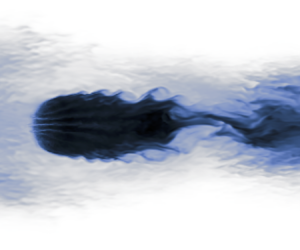
We perform simulations of an impulsively started, axisymmetric viscoelastic jet exiting a nozzle and entering a stagnant gas phase using the open-source code Basilisk. This code allows for efficient computations through an adaptively refined volume-of-fluid technique that can accurately capture the deformation of the liquid–gas interface. We use the FENE-P constitutive equation to describe the viscoelasticity of the liquid, and employ the log-conformation transformation, which provides stable solutions for the evolution of the conformation tensor as the jet thins down under the action of interfacial tension. For the first time, the entire jetting and breakup process of a viscoelastic fluid is simulated, including the pre-shearing flow through the nozzle, which results in an inhomogeneous initial radial stress distribution in the fluid thread that affects the subsequent breakup dynamics. The evolution of the velocity field and the elastic stresses in the nozzle are validated against analytical solutions where possible, and the early-stage dynamics of the jet evolution are compared favourably to the predictions of linear stability theory. We study the effect of the flow inside the nozzle on the thinning dynamics of the viscoelastic jet (which develops distinctive ‘beads-on-a-string’ structures) and on the spatio-temporal evolution of the polymeric stresses in order to systematically explore the dependence of the filament thinning and breakup characteristics on the initial axial momentum of the jet and the extensibility of the dissolved polymer chains.
Reducing inequalities in preconception health and care is critical to improving the health and life chances of current and future generations. A hybrid workshop was held at the 2023 UK Preconception Early and Mid-Career Researchers (EMCR) Network conference to co-develop recommendations on ways to address inequalities in preconception health and care. The workshop engaged multi-disciplinary professionals across diverse career stages and people with lived experience (total n = 69). Interactive discussions explored barriers to achieving optimal preconception health, driving influences of inequalities and recommendations. The Socio-Ecological Model framed the identified themes, with recommendations structured at interpersonal (e.g. community engagement), institutional (e.g. integration of preconception care within existing services) and environmental/societal levels (e.g. education in schools). The co-developed recommendations provide a framework for addressing inequalities in preconception health, emphasising the importance of a whole-systems approach. Further research and evidence-based interventions are now needed to advance the advocacy and implementation of our recommendations.
Little is known about the distribution and natural history of hoverflies (Diptera: Syrphidae) in western Canada. Filling in knowledge gaps and tracking this potentially changing fauna are important because hoverflies are likely important pollinators and are natural pest control agents for crops. Hoverflies were collected using Malaise traps placed near fields seeded to canola in central Alberta from May to August 2021. Platycheirus varipes Curran represents a new species record for Alberta. Two species of conservation concern and two species with extremely limited collection records were also collected. A species that was previously found only in mountainous regions and another three species whose Albertan records consisted only of iNaturalist records were found.
To evaluate the appropriateness of empiric initiation of meropenem in the intensive care unit (ICU) and to determine the agreement between internal medicine (IM) residents and infectious diseases (ID) physicians/pharmacists on appropriateness.
Design:
Retrospective observational study.
Setting:
ICU in a tertiary care community teaching hospital.
Participants:
Adult patients admitted to the ICU and started empirically on meropenem between April 1 and October 31, 2021.
Methods:
Meropenem usage was categorized as appropriate or inappropriate according to criteria developed from previously published indications and modified by ID physicians/pharmacists to reflect local practices. Two investigators (an IM resident and either an ID physician or pharmacist) assessed the appropriateness, with a second ID physician resolving any disagreements. Inter-rater reliability was measured using the kappa statistic.
Results:
Ninety-seven participants were enrolled, with a mean age of 68 (SD, 17.0) years. Pneumonia was the most common infection (30.9%). Among the participants, 92.8% received an ID consultation, with 55.6% of these occurring before meropenem initiation. IM residents deemed 56.7% of meropenem administrations appropriate, whereas an ID physician/pharmacist deemed only 48.5% appropriate, agreeing on 79.4% of cases (kappa statistic 0.59, P <.001). After a third reviewer’s assessment was included, agreement between the resident and at least one of the two reviewers reached 90.7% (kappa 0.81, P <.001).
Conclusions:
Approximately half of empiric meropenem started in the ICU was deemed inappropriate using institution-specific criteria. There was good agreement between IM residents and ID physicians/pharmacists on meropenem appropriateness. IM residents could contribute to antimicrobial stewardship efforts, like prospective audit and feedback, using standardized criteria for appropriateness.
Good Governing: The Police Power in the American States is a deep historical and legal analysis of state police power, examining its origins in the founding period of the American public through the 20th century. The book reveals how American police power was intended to be a broad, but not unlimited, charter of regulatory governance, designed to implement key constitutional objectives and advance the general welfare. It explores police power's promise as a mechanism for implementing successful regulatory governance and tackling societal ills, while considering key structural issues like separation of powers and individual rights. This insightful book will shape understanding of the neglected state police power, a key part of constitutional governance in the U.S. This title is also available as Open Access on Cambridge Core.
We report a case of a suspected intestinal myiasis of a child from Southeast Argentina. Diptera larvae were sampled by a physician from the nappy worn by the child and submitted for examination and identification to the Laboratorio de Artrópodos (Universidad Nacional de Mar del Plata). Based on diagnosis of the anterior and posterior spiracles and mouthparts, the larvae were identified as the false stable fly Muscina stabulans (Fallén, 1817) (Diptera: Muscidae). A comparison of diagnostic characters between Argentinean and European third instars of this species is presented. Muscina stabulans is a prevalent species in the district of General Pueyrredón, Buenos Aires province, where the case occurred. Its abundance in the area coincidentally peaked at the time of the infestation. This is the 1st report of M. stabulans as a suspect of intestinal myiasis for the whole of the southern cone of South America (Chile and Argentina).
Coping styles can be improved by dyadic palliative care interventions and may alleviate patients’ and family caregivers’ distress. Moreover, family caregivers’ preloss resilience protects against depression after bereavement. This study aimed to determine the types of coping styles can be encouraged to increase resilience.
Methods
A self-reported questionnaire survey was administered to family caregivers at the 4 palliative care units, and their resilience was assessed using the Connor–Davidson Resilience Scale (CD-RISC) and their coping styles were assessed using the Brief Coping Orientation to Problem Experienced, as well as their background characteristics.
Results
Among 291 caregivers with a mean CD-RISC score of 56.2 (standard deviation: 16.13), internal locus of control, educational level, and history of psychotropic drug use were associated with resilience. After adjusting for the aforementioned factors, more frequent use of positive coping styles such as active coping (Spearman’s ρ = 0.29), acceptance (ρ = 0.29), positive reframing (ρ = 0.29), planning (ρ = 0.24), and humor (ρ = 0.18), was found to be associated with higher resilience. On the contrary, more frequent use of negative coping styles such as behavioral disengagement (ρ = −0.38), self-blame (ρ = −0.27), and denial (ρ = −0.14) was found to be associated with less resilience.
Significance of results
By assessing internal locus of control, educational level, and history of psychotropic medication use of family caregivers, as factors associated with their respective resilience, may help identify less resilient family caregivers who are at risk for developing major depression after bereavement. In addition, coping skill-based educational interventions targeting patients and their family caregivers that focus on specific coping styles associated with resilience may increase family caregivers’ resilience, resulting in less emotional distress and a lower risk of major depression after bereavement.
Simulations suggest that slow rotating galaxies are the result of galaxy-galaxy mergers that have a tendency to randomise stellar orbits. The exact pathway for slow rotator formation, however, is still unclear. Our aim is to see whether there is a relationship between fossil groups - whose central galaxies are thought to have undergone more major merging than other central galaxies – and the stellar kinematic properties of those central galaxies. We classify all galaxy groups in the GAMA redshift survey whose central galaxies were observed with SAMI as: (i) fossil groups, (ii) mass gap groups (fossil-like groups), and (iii) groups that are not dynamically evolved (NDEGs, i.e. controls). We compare the following properties of centrals across the three different group types: spin ($\lambda_{Re}$), the fraction of slow rotators ($f_{SR}$), and age. We also repeat our analysis on data from the EAGLE and Magneticum hydrodynamical cosmological simulations. In SAMI, we find that the spin parameter, slow rotator fraction, and age are broadly consistent across our three group types, i.e. the fossil groups, mass gap groups and NDEGs. We do find a weak indication that $f_{SR}$ is slightly lower for fossil group centrals as compared to NDEG centrals. In contrast, in EAGLE and Magneticum, fossil and mass gap group centrals typically have a significantly lower $\lambda_{Re}$ than NDEG centrals. Our results for SAMI suggest that the types of mergers that form fossil groups are not the types of mergers that form slow rotators. Merger count may be less important for slow rotator formation than specific merger conditions, such as the gas content of progenitors. When and where the merging occurs are also suspected to play an important role in slow rotator formation, and these conditions may differ for fossil group formation.
The aim of this paper is threefold. Firstly, sections 1 and 2 introduce the novel concept logical akrasia by analogy to epistemic akrasia. If successful, the initial sections will draw attention to an interesting akratic phenomenon which has not received much attention in the literature on akrasia (although it has been discussed by logicians in different terms). Secondly, sections 3 and 4 present a dilemma related to logical akrasia. From a case involving the consistency of Peano Arithmetic and Gödel's Second Incompleteness Theorem, it's shown that either we must be agnostic about the consistency of Peano Arithmetic or akratic in our arithmetical theorizing. If successful, these sections will underscore the pertinence and persistence of akrasia in arithmetic (by appeal to Gödel's seminal work). Thirdly, section 5 concludes by suggesting a way of translating the Dilemma of Arithmetical Akrasia into a case of regular epistemic akrasia; and further how one might try to escape the dilemma when it's framed this way.
Large carnivore conservation in human-dominated landscapes is a complex issue, often marked by the stark contrast between those who hold deep-rooted animosity towards these animals and those who welcome their presence. The survival of the Eurasian lynx Lynx lynx in Europe relies on effective coexistence with humans in multi-use areas. We explored the experiences and perceptions of local hunters and pastoralists regarding the return of the lynx to the Giffre Valley, France, and mapped lynx distribution based on the probability of site use while accounting for detection probability. We conducted in-depth interviews with 29 respondents to gather data on lynx sightings, rationale for hunting and pastoralism, and perceptions of lynxes. We found that 45% of respondents had detected lynxes in the last 40 years, with an estimated site use of 0.66 ± SE 0.33 over the last decade, indicating there was a 66% probability of lynxes using the sites during that time period. Our results suggest that hunting and pastoralism in the region are rooted in a desire to carry on local traditions and connect with the natural world. Respondents generally tolerated the presence of lynxes, perceiving few threats to their livelihoods and activities, and expressing a willingness to coexist peacefully. However, some identified future challenges that could arise with the return of large carnivores to the valley and highlighted scenarios that could lead to a decline in tolerance. This study emphasizes the valuable knowledge of local hunters and pastoralists and their potential role in lynx population monitoring and conservation. Integrating stakeholder values in decision-making processes is crucial for inclusive and sustainable responses to promote biodiversity.
This study aimed to evaluate a novel rTMS protocol for treatment-resistant depression (TRD), using an EEG 10–20 system guided dual-target accelerated approach of right lateral orbitofrontal cortex (lOFC) inhibition followed by left dorsolateral prefrontal cortex (dlPFC) excitation, along with comparing 20 Hz dlPFC accelerated TMS v. sham.
Methods
Seventy five patients participated in this trial consisting of 20 sessions over 5 consecutive days comparing dual-site (cTBS of right lOFC followed sequentially by 20 Hz rTMS of left dlPFC), active control (sham right lOFC followed by 20 Hz rTMS of left dlPFC) and sham control (sham for both targets). Resting-state fMRI was acquired prior to and following treatment.
Results
Hamilton Rating Scale for Depression (HRSD-24) scores were similarly significantly improved at 4 weeks in both the Dual and Single group relative to Sham. Planned comparisons immediately after treatment highlighted greater HRSD-24 clinical responders (Dual: 47.8% v. Single:18.2% v. Sham:4.3%, χ2 = 13.0, p = 0.002) and in PHQ-9 scores by day 5 in the Dual relative to Sham group. We further showed that accelerated 20 Hz stimulation targeting the left dlPFC (active control) is significantly better than sham at 4 weeks. Dual stimulation decreased lOFC-subcallosal cingulate functional connectivity. Greater baseline lOFC-thalamic connectivity predicted better therapeutic response, while decreased lOFC-thalamic connectivity correlated with better response.
Conclusions
Our novel accelerated dual TMS protocol shows rapid clinically relevant antidepressant efficacy which may be related to state-modulation. This study has implications for community-based accessible TMS without neuronavigation and rapid onset targeting suicidal ideation and accelerated discharge from hospital.
Benthic macroalgae (including brown macroalgae or kelp) constitute one of the largest contributors to coastal primary production, but their ability to store and sequester carbon remains uncertain. Here, we use a numerical model of the flow/kelp interactions to study how tidal currents interact with an idealised numerical model of a giant kelp (Macrocystis pyrifera) forest, intending to better understand the potential for kelp growth in nutrient-limited conditions and the export of important tracers such as dissolved organic carbon. We calibrate and test our model using observations of currents within and surrounding a kelp forest in Southern California. By varying the density of kelp in our model, we find that there is a kelp density that maximises the export of tracer released from the kelp forest. Since the tracer advection/diffusion equation is linear with respect to the tracer concentration, the same kelp density corresponds to the maximum uptake for a tracer with a constant far-field concentration. The density at which this maximum occurs coincides with the density typical of natural kelp forests, where kelp growth may be limited by the uptake of dissolved nutrients from the surrounding water. Additionally, the drag induced on the tidal currents by the kelp forest results in a mean circulation through the kelp forest and a mean displacement of the kelp forest canopy.
Liquid bridges are formed when a flowing liquid interacts with multiple parallel fibres, as relevant to heat and mass transfer applications that utilize flow down fibre arrays. We perform a comprehensive experimental study of flowing liquid bridges between two vertical fibres whose spacing is controlled dynamically in our experimental apparatus. The bridge patterns exhibit a regular periodic spacing typical of absolute instability for low flow rates, but become spatially inhomogeneous above a critical flow rate where the base flow is convectively unstable. The shapes of individual bridges and their associated dynamics are measured, as they depend upon the liquid properties, and fibre geometry/spacing. The bridge length scales similarly to static bridges between parallel fibres. The bridge dynamics exhibits a dependence on viscosity and scale with the impedance. A simple energy balance is used to derive a scaling relationship for the bridge velocity that captures the general trend of our experimental data. Finally, we demonstrate that these scalings similarly apply when the fibres are dynamically separated or brought together.