To save content items to your account,
please confirm that you agree to abide by our usage policies.
If this is the first time you use this feature, you will be asked to authorise Cambridge Core to connect with your account.
Find out more about saving content to .
To save content items to your Kindle, first ensure no-reply@cambridge.org
is added to your Approved Personal Document E-mail List under your Personal Document Settings
on the Manage Your Content and Devices page of your Amazon account. Then enter the ‘name’ part
of your Kindle email address below.
Find out more about saving to your Kindle.
Note you can select to save to either the @free.kindle.com or @kindle.com variations.
‘@free.kindle.com’ emails are free but can only be saved to your device when it is connected to wi-fi.
‘@kindle.com’ emails can be delivered even when you are not connected to wi-fi, but note that service fees apply.
This study presents the design and analysis of a dual linear polarized sinuous antenna (DLPSA) optimized for ultra-wideband applications, such as remote sensing of longitudinal metallic targets and microwave imaging systems. The capability of the sinuous antenna to generate dual linearly polarized radiation patterns makes it a strong candidate for these applications. A key design challenge lies in developing a practical feeding network that requires modifications to the antenna feed region. The proposed DLPSA antenna achieves unidirectional radiation patterns in the 2–5 GHz frequency band. A prototype was fabricated, with measured results closely aligned with the simulations. The antenna demonstrates enhanced return loss, gain, and radiation pattern performance compared to existing designs. Additionally, the dual linear polarization capability was verified through co- and cross-polarization measurements conducted in an anechoic chamber.
For pedestrian archaeological surveys in agricultural regions, field plowing and crop cultivation are essential mechanisms for bringing artifacts to the surface and making them visible. Although agricultural land use can affect plowzone assemblages, few studies have tested the relationship between how frequently agricultural land is cultivated and the quantity of artifacts recovered. Such an evaluation would require a multiyear record of land use across extensive survey areas, thereby presenting numerous obstacles and challenges. Yet the ever-expanding availability of high temporal and spatial resolution satellite imagery datasets, combined with the accessibility of new tools for analyzing such datasets, makes studies of land-use intensity increasingly feasible. To demonstrate, we present our remote sensing–based evaluation of land-use intensity within the Province of Oristano (west-central Sardinia, Italy), where the Sinis Archaeological Project (SAP) has worked since 2018. Drawing on Sentinel-2 satellite imagery from the past six years, we investigate what factors may explain the modern-day distribution of land-use intensities, which areas SAP has targeted, and what effect land-use intensity has on artifact distribution. We find that modern-day land-use intensity is largely a legacy of recent land reclamation efforts and find no correlation between the intensity of surveyed fields and the quantity of materials recovered therein.
Following the identification of more than 600 suspected house platforms on aerial survey data from Brusselstown Ring hillfort, four test excavations revealed evidence of Late Bronze Age and Early Iron Age occupation, positioning the site as the largest nucleated settlement so far identified in prehistoric Ireland and Britain.
The Lunana region in Bhutan, which hosts four large glacial lakes with significant hazard potential, has undergone rapid changes over the past decade. Using PlanetScope satellite scenes, we mapped ice velocities at monthly intervals from 2017 to 2023. We reveal that the disintegration of Thorthormi Glacier’s terminus in 2022 coincided with year-on-year acceleration with mean surface velocities as high as 448 ± 10.0 m a−1 by 2021, and seasonal variability in surface velocity magnitude >144.6 ± 10.0 m a−1. This acceleration is attributed to a reduction in basal drag as the terminus reached flotation, evidenced by the calving of tabular icebergs. While Bechung, Raphstreng and Lugge exhibited a similar interannual velocity trend, the upper regions of Bechung and Raphstreng showed a higher seasonal range (31% and 19.9% from their mean) compared to Lugge (4.2%). In the upper regions, we also find a decelerating velocity trend (3.5–20.6% over the 6 years), which is attributed to surface thinning and reducing driving stresses. We show that accelerating trends in velocity can be a precursor to higher rates of retreat and rapid lake expansion, demonstrating the importance of continuous monitoring of lake-terminating glacier ice velocities in the Himalaya.
Glaciers provide critical ecosystem services, including water resources, biodiversity, cultural value and climate signals. But what makes a glacier a glacier? And when is a glacier no longer a glacier? Different glacier definitions can conflict. While a common definition emphasizes ‘past or present flow’, practical applications involve criteria like observable ice flow, crevassing, minimum thickness, minimum area, surficial features related to hydrology and/or debris cover and/or relative size. Increasingly, glacier inventories apply multiple criteria, acknowledging the nuanced, continuous nature of glacier retreat rather than a binary status. In the context of increasingly melting, shrinking and vanishing glaciers, as glaciologists consider when to declare a glacier lost, disappeared or dead, it is important to explore glacier definitions and their application. Ultimately, the glacier definition applied depends on the specific context, purpose and audience. This also highlights the need for careful language choice, clear communication and localized expertise in considering glacier loss.
Tropical cyclones (TC) can produce waves and water levels that markedly reshape sand cay shorelines. TC Jasper (December 2023) passed near Low Island (Low Isles, Northern Great Barrier Reef [GBF]) as a category 2 storm. Using a combination of remote sensing and ground surveys, we compare detailed, high-resolution digital terrain models created before and after TC Jasper to quantify sediment redistribution around the cay during and after the event. During TC Jasper, net transport of 8,870 m3 occurred to elongate the spits at the eastern and western ends of the cay, but the sediment volume of the cay did not significantly change. Following TC Jasper, the shoreline at Low Island returned to its modal seasonal state within six months. This accords with historical accounts of seasonal shifts in shoreline configuration driven by prevailing wind and wave regimes, as well as the relatively rapid readjustment to a modal form following episodic extreme events. Overall, the documented changes to Low Island following cyclonic events highlight the complex interplay between episodic disturbances and longer-term geomorphic stability, emphasising the importance of ongoing research into these interactions as higher-intensity cyclones increase in frequency due to climate change.
Between 2023 and 2024, the Endangered Archaeology in the Middle East and North Africa (EAMENA) project, in collaboration with the Libyan Department of Antiquities (DoA), organised and conducted a series of training workshops and fieldwork campaigns in Libya, funded by the British Council’s Cultural Protection Fund (CPF). The workshops provided training to over 20 members of the DoA in a newly-developed Machine Learning Automated Change Detection (MLACD) tool. This remote sensing method was developed by the Leicester EAMENA team to detect landscape change and aid heritage monitoring efforts. The MLACD method was applied to four case studies in Libya: Lefakat (Cyrenaica), Bani Walid (Tripolitania), the region south of Derna (Cyrenaica) and Jarma (Fazzan). Each of these case studies was followed by a survey campaign by Libyan archaeologists to validate the results of the method, survey the archaeological sites identified, record their condition and assess the disturbances and threats affecting them. This article will provide an overview of the aims and successful outcomes of the EAMENA-CPF training programme, as well as an introduction to the MLACD method and its application to Libyan heritage, providing background and context for the individual case studies, which will be published more fully in separate articles.
Groundwater is a critical support system for agriculture, domestic and industrial consumption in India, but escalating depletion and climatic stresses underscore the need for scientifically robust groundwater potential zone (GWPZ) mapping. In response to the aggravating water security issues in India, this study presents a critical and systematic-methodical review of research articles focused on GWPZ mapping. The primary goal of this research is to integrate input parameters, modeling techniques and validation methods to produce an evidence-based framework for selecting appropriate and effective GWPZ mapping strategies. Six prominent thematic categories – topography, geology, hydrology, climate, land cover and aquifer properties – seem to be inevitably predominant in different physiographic zones. Methodological tendencies suggest a shift from conventional Multi-Criteria Decision-Making models, that is, Analytical Hierarchy Process and Frequency Ratio, toward sophisticated machine learning techniques like Random Forests, Support Vector Machine and Extreme Gradient Boosting. Validation practices are dominated by a high incidence of receiver operating characteristic curve analysis and area under the curve metrics, with occasional addition of precision, recall, F1-score and root mean square error. Across the studies reviewed, field-derived data, well yield, groundwater depth, aquifer thickness and resistivity surveys remain critical for ground-truthing model results. Our view is that even though Indian GWPZ research has taken significant methodological strides, regional data heterogeneity, aquifer complexity and climatic variability issues continue to pose a key challenge in GWPZ mapping. We suggest future strategies involving high-resolution datasets, three-dimensional subsurface modeling, climate-resilient algorithms and more diversified validation frameworks. Through this critical synthesis, the article presents an integrated guide to support planners select cost-effective mapping techniques, inform policymakers on strategic investments and data collection priorities and direct researchers toward the most critical scientific gaps in India’s increasingly dynamic hydro-environmental context.
Coastal environments are highly dynamic, making monitoring of suspended sediment concentration (SSC) both challenging and essential. SSC serves as an indicator of coastal processes, storm impact, water quality and ecosystem service delivery. However, direct measurement of SSC is costly, logistically difficult and spatially limited. Although remote sensing offers a promising alternative by estimating SSC from surface reflectance, it requires calibration and is often constrained by site-specific applicability. This study presents a machine learning framework for national-scale SSC estimation using Landsat-8 and Sentinel-2 imagery, calibrated with 147 in situ SSC samples. Several models were evaluated, with XGBoost yielding the best performance (R2 = 0.72, RMSE = 17 mg/L). SHapley Additive exPlanations values were used for model interpretability. Visible and infrared bands, along with geographic features, were identified as key predictors, reflecting the importance of coastal typology in shaping the SSC-reflectance relationship. The model’s value was demonstrated through a 10-year spatio-temporal analysis of SSC in Wexford Harbour. Seasonal patterns showed higher estuarine mixing in winter, while high SSC events coincided with rainfall and strong winds, indicating responsiveness to meteorological drivers. These findings highlight the potential of integrating remote sensing and machine learning for scalable, interpretable and cost-effective SSC monitoring.
Climate change, urban expansion, and agricultural intensification are increasingly threatening the Netherlands’ in situ archaeological heritage, necessitating the use of advanced methodologies for effective detection, mapping, characterizing, and monitoring of archaeological sites. Over the past decade, significant advancements in sensor technologies for remote sensing and geophysics have emerged that offer more effective, noninvasive solutions in both terrestrial and maritime contexts. Despite their potential, the application and integration of these techniques in Dutch archaeological heritage management remain limited. The ARCfieldLAB project, launched in September 2022 as part of the European Research Infrastructure for Heritage Science, aims to bridge this gap. Its aims are to create a digital platform to disseminate knowledge on innovative sensor technologies, establish a network of archaeological practitioners and sensor specialists, and support multisensor case studies. It has generated strong enthusiasm for this initiative and for cross-disciplinary collaborations on national and international scales. Key challenges include the need for integration into the official Dutch archaeology quality standard protocols and the requirement of metadata standards and data archiving guidelines. Addressing these issues will require continuous investment and a long-term commitment but will have a significant positive impact on the effectiveness and quality of Dutch archaeological fieldwork.
Archaeological evidence suggests that the transition to food-producing economies in the Western Valleys of northern Chile led to a decline in foraging in highland areas around AD 650, yet colonial records from the sixteenth and eighteenth centuries attest to the continued existence of foraging groups. Taking the Camarones River Basin as a test case, this study identifies small-scale settlements and hunting installations in upland areas using remote-sensing data. In considering these new data alongside ethnohistorical accounts, the author proposes that foraging endured into the late colonial era, possibly coexisting with herder and agropastoral communities and precipitating tethered settlement patterns.
This textbook reflects the changing landscape of water management by combining the fields of satellite remote sensing and water management. Divided into three major sections, it begins by discussing the information that satellite remote sensing can provide about water, and then moves on to examine how it can address real-world management challenges, focusing on precipitation, surface water, irrigation management, reservoir monitoring, and water temperature tracking. The final part analyses governance and social issues that have recently been given more attention as the world reckons with social justice and equity aspects of engineering solutions. This book uses case studies from around the globe to demonstrate how satellite remote sensing can improve traditional water practices and includes end-of-chapter exercises to facilitate student learning. It is intended for advanced undergraduate and graduate students in water resource management, and as reference textbook for researchers and professionals.
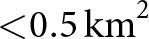
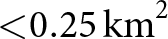
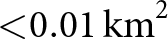
The mixture of icebergs and sea ice in tidewater glacier fjords, known as ice mélange, is postulated to impact iceberg calving directly through physical buttressing and indirectly through freshwater fluxes altering fjord circulation. In this contribution, we assess the textural characteristics of ice mélange in summer and winter at the terminus of Helheim Glacier, Greenland, using high resolution (1-3 m) X-band Synthetic Aperture Radar (SAR) imagery from the ICEYE small satellite constellation. The Grey Level Co-occurrence Matrix (GLCM) and statistical variations in pixel intensity downfjord reveal structural zoning within the mélange matrix in both summer and winter. The boundary between these zones represents the transition between ice concentrations, demonstrating structural weaknesses in the mélange that may persist throughout the year. Furthermore, we compare two iceberg segmentation methods, texture-based vs the Segment Anything Model (SAM). Both techniques detect large (> 0. 1 km2) icebergs in summer when pixel variations are larger, but SAM has high iceberg detection accuracy in both seasons. The detected icebergs stabilise near concentration boundaries in the mélange, suggesting they act as the nucleus of mélange zones and control matrix stability. Our study demonstrates the potential for using high-resolution ICEYE SAR imagery for studying dynamic processes in glaciology and beyond.
Using ICESat-2 and ArcticDEM strips we track height change in a glacial basin in northern Ellesmere Island Canada. The surface topography dips towards the middle of the basin and ArcticDEM differences show a 1–3 m increase in 2020 summer surface height over an area of 8–10 km2. ICESat-2 heights confirm that each melt season (2019–2024), the height change of melt water at the basin edge matches that over ice in the basin middle. The summer height increase happens at the same time as an upstream drop in surface elevation suggesting yearly episodic subglacial water movement from upstream to a downstream subglacial lake. Melt water drainage occurs in the fall to a particular elevation and apparently follows a path at the northern edge of the basin. These data illustrate subglacial melt water movement both spatially and temporally in rarely obtained detail and are consistent with data from two NASA IceBridge passes.
In the previous chapter, we introduced ourselves to the importance of satellite remote sensing for water management and why the technique is going to take greater importance in years to come as challenges mount from climate change, competing needs and lack of ground data. In this chapter, we will overview the basics of remote sensing, define key concepts and terms. Using these concepts and terms, we will develop an understanding of the fundamental principle required for the success of remote sensing.
David T. Sandwell, Scripps Institution of Oceanography, University of California, San Diego,Xiaohua Xu, University of Science and Technology of China,Jingyi Chen, University of Texas at Austin,Robert J. Mellors, Scripps Institution of Oceanography, University of California, San Diego,Meng Wei, University of Rhode Island,Xiaopeng Tong, Institute of Geophysics, China Earthquake Administration,John B. DeSanto, University of Washington,Qi Ou, University of Edinburgh
Chapter 1 discusses six types of remote sensing methods possible from Earth’s orbit and introduces radar interferometry as the optimal approach for measuring small surface deformation.
This is the first chapter of the book. The goal of this chapter is to introduce ourselves to the growing importance of using satellite remote sensing to manage our water. We will try to understand this in the context of the underlying challenges and new global forces shaping up this century that are expected to make traditional ways of managing water using in-situ data more challenging.
This study introduces a custom implementation of the Ensemble Kalman Filter (EnKF) for calibrating a three-dimensional glacier evolution model. The EnKF can assimilate observations as they become available and provides uncertainty measures for the initial state after calibration. We calibrate an elevation-dependent surface mass balance (SMB) model using elevation change observations and test the EnKF’s performance in a Twin Experiment by varying internal and external hyperparameters. The best-performing configuration is applied to the Rhône Glacier in a Real-World Experiment. Using satellite-based elevation change fields for calibration, the EnKF estimates an average equilibrium line altitude of $2920 \pm 37$ m for the period 2000–19. A comparison of the results with glaciological measurements demonstrates the capabilities of the EnKF to simultaneously calibrate multiple SMB parameters. With this proof of concept, we expect that our methodology is readily extendable to other map or point observations and their combination, as well as to other calibration parameters.
Continuous monitoring of the mass balance of the Greenland ice sheet is crucial to assess its contribution to the rise of sea levels. The GRACE and GRACE-FO missions have provided monthly estimates of the Earth’s gravity field since 2002, which have been widely used to estimate monthly mass changes of ice sheets. However, there is an 11 month gap between the two missions. Here, we propose a data-driven approach that combines atmospheric variables from the ERA5 reanalysis with GRACE-derived mass anomalies from previous months to predict mass changes. Using an auto-regressive structure, the model is naturally predictive for shorter times without GRACE/-FO observations. The results show a high r2-score (> 0.73) between model predictions and GRACE/-FO observations. Validating the model’s ability to reproduce mass anomalies when observations are available builds confidence in estimates used to bridge the GRACE and GRACE/-FO gap. Although GRACE and GRACE-FO are treated equally by the model, we see a decrease in model performance for the period covered by GRACE-FO, indicating that they may not be as well-calibrated as previously assumed. Gap predictions align well with mass change estimates derived from other geodetic methods and remain within the uncertainty envelope of the GRACE-FO observations.