Refine listing
Actions for selected content:
54 results in 51Mxx
A NOTE ON THE PLANAR SKOROKHOD EMBEDDING PROBLEM
- Part of
-
- Journal:
- Bulletin of the Australian Mathematical Society , First View
- Published online by Cambridge University Press:
- 12 February 2026, pp. 1-7
-
- Article
- Export citation
-
The planar Skorokhod embedding problem was first proposed and solved by Gross [‘A conformal Skorokhod embedding’, Electron. Commun. Probab. 24 (2019), 11 pages; doi:10.1214/19-ECP272]. Gross worked with probability distributions having finite second moment. Boudabra and Markowsky [‘Remarks on Gross’ technique for obtaining a conformal Skorokhod embedding of planar Brownian motion’, Electron. Commun. Probab. 25 (2020), 13 pages; doi:10.1214/20-ECP300] extended the solution to all distributions with a finite pth moment for $p>1$. The case $p=1$ has remained uncovered since then. In this note, we show that the planar Skorokhod embedding problem is solvable for $p=1$ when the Hilbert transform of its quantile function is integrable, effectively closing this line of investigation.


Graphical sequences and plane trees
- Part of
-
- Journal:
- Combinatorics, Probability and Computing , First View
- Published online by Cambridge University Press:
- 05 February 2026, pp. 1-13
-
- Article
-
- You have access
- Open access
- HTML
- Export citation
-
Balister, the second author, Groenland, Johnston, and Scott recently showed that there are asymptotically $C4^n/n^{3/4}$ many unordered sequences that occur as degree sequences of graphs with $n$ vertices. Combining limit theory for infinitely divisible distributions with a new connection between a class of random walk trajectories and a subset counting formula from additive number theory, we describe $C$ in terms of Walkup’s number of rooted plane trees. The bijection is related to an instance of the Lévy–Khintchine formula. Our main result complements a result of Stanley, that ordered graphical sequences are related to quasi-forests.


SIAMESE NETWORKS FOR POINCARÉ EMBEDDINGS AND THE RECONSTRUCTION OF EVOLUTIONARY TREES
- Part of
-
- Journal:
- The ANZIAM Journal / Volume 67 / 2025
- Published online by Cambridge University Press:
- 07 July 2025, e25
-
- Article
- Export citation
On the perimeter, diameter and circumradius of ordinary hyperbolic reduced polygons
- Part of
-
- Journal:
- Canadian Mathematical Bulletin / Volume 68 / Issue 3 / September 2025
- Published online by Cambridge University Press:
- 28 February 2025, pp. 950-965
- Print publication:
- September 2025
-
- Article
-
- You have access
- Open access
- HTML
- Export citation
-
A convex body R in the hyperbolic plane is called reduced if any convex body $K\subset R$ has a smaller minimal width than R. We answer a few of Lassak’s questions about ordinary reduced polygons regarding its perimeter, diameter, and circumradius, and we also obtain a hyperbolic extension of a result of Fabińska.

BOTT MANIFOLDS WITH VANISHING FUTAKI INVARIANTS FOR ALL KAHLER CLASSES
- Part of
-
- Journal:
- Nagoya Mathematical Journal / Volume 259 / September 2025
- Published online by Cambridge University Press:
- 24 February 2025, pp. 453-472
-
- Article
- Export citation
Tilings of the hyperbolic space and Lipschitz functions
- Part of
-
- Journal:
- Canadian Journal of Mathematics / Volume 77 / Issue 6 / December 2025
- Published online by Cambridge University Press:
- 18 November 2024, pp. 1985-2005
- Print publication:
- December 2025
-
- Article
-
- You have access
- Open access
- HTML
- Export citation
-
We use a special tiling for the hyperbolic d-space $\mathbb {H}^d$ for $d=2,3,4$ to construct an (almost) explicit isomorphism between the Lipschitz-free space $\mathcal {F}(\mathbb {H}^d)$ and $\mathcal {F}(P)\oplus \mathcal {F}(\mathcal {N})$, where P is a polytope in $\mathbb {R}^d$ and $\mathcal {N}$ a net in $\mathbb {H}^d$ coming from the tiling. This implies that the spaces $\mathcal {F}(\mathbb {H}^d)$ and $\mathcal {F}(\mathbb {R}^d)\oplus \mathcal {F}(\mathcal {M})$ are isomorphic for every net $\mathcal {M}$ in $\mathbb {H}^d$. In particular, we obtain that, for $d=2,3,4$, $\mathcal {F}(\mathbb {H}^d)$ has a Schauder basis. Moreover, using a similar method, we also give an explicit isomorphism between $\mathrm {Lip}(\mathbb {H}^d)$ and $\mathrm {Lip}(\mathbb {R}^d)$.


Examples of hyperbolic spaces without the properties of quasi-ball or bounded eccentricity
- Part of
-
- Journal:
- Glasgow Mathematical Journal / Volume 66 / Issue 2 / May 2024
- Published online by Cambridge University Press:
- 11 March 2024, pp. 440-448
-
- Article
- Export citation
-
In this note, we present examples of non-quasi-geodesic metric spaces which are hyperbolic (i.e., satisfying Gromov’s $4$-point condition) while the intersection of any two metric balls therein does not either ‘look like’ a ball or has uniformly bounded eccentricity. This answers an open question posed by Chatterji and Niblo.

Joint partial equidistribution of Farey rays in negatively curved manifolds and trees
- Part of
-
- Journal:
- Ergodic Theory and Dynamical Systems / Volume 44 / Issue 9 / September 2024
- Published online by Cambridge University Press:
- 08 January 2024, pp. 2700-2736
- Print publication:
- September 2024
-
- Article
- Export citation
Assembling RKHS with Pick kernels and assembling polyhedra in $\mathbb {CH} ^{n}$
- Part of
-
- Journal:
- Canadian Journal of Mathematics / Volume 76 / Issue 5 / October 2024
- Published online by Cambridge University Press:
- 03 August 2023, pp. 1455-1495
- Print publication:
- October 2024
-
- Article
-
- You have access
- Open access
- HTML
- Export citation
-
We study the geometry of Hilbert spaces with complete Pick kernels and the geometry of sets in complex hyperbolic space, taking advantage of the correspondence between the two topics. We focus on questions of assembling Hilbert spaces into larger spaces and of assembling sets into larger sets. Model questions include describing the possible three-dimensional subspaces of four-dimensional Hilbert spaces with Pick kernels and describing the possible triangular faces of a tetrahedron in $\mathbb {CH}^{n}$. A novel technical tool is a complex analog of the cosine of a vertex angle.


A presentation for the Eisenstein-Picard modular group in three complex dimensions
- Part of
-
- Journal:
- Glasgow Mathematical Journal / Volume 65 / Issue 3 / September 2023
- Published online by Cambridge University Press:
- 25 July 2023, pp. 625-654
-
- Article
- Export citation
ARITHMETICITY OF $\mathbb {C}$-FUCHSIAN SUBGROUPS OF SOME NONARITHMETIC LATTICES
- Part of
-
- Journal:
- Bulletin of the Australian Mathematical Society / Volume 109 / Issue 1 / February 2024
- Published online by Cambridge University Press:
- 28 April 2023, pp. 77-88
- Print publication:
- February 2024
-
- Article
- Export citation
-
We study the arithmeticity of $\mathbb {C}$-Fuchsian subgroups of some nonarithmetic lattices constructed by Deraux et al. [‘New non-arithmetic complex hyperbolic lattices’, Invent. Math. 203 (2016), 681–771]. Our results give an answer to a question raised by Wells [Hybrid Subgroups of Complex Hyperbolic Isometries, Doctoral thesis, Arizona State University, 2019].


Families of similar simplices inscribed in most smoothly embedded spheres
- Part of
-
- Journal:
- Forum of Mathematics, Sigma / Volume 10 / 2022
- Published online by Cambridge University Press:
- 18 November 2022, e101
-
- Article
-
- You have access
- Open access
- HTML
- Export citation
-
Let $\Delta $ denote a nondegenerate k-simplex in $\mathbb {R}^k$. The set $\operatorname {\mathrm {Sim}}(\Delta )$ of simplices in $\mathbb {R}^k$ similar to $\Delta $ is diffeomorphic to $\operatorname {O}(k)\times [0,\infty )\times \mathbb {R}^k$, where the factor in $\operatorname {O}(k)$ is a matrix called the pose. Among $(k-1)$-spheres smoothly embedded in $\mathbb {R}^k$ and isotopic to the identity, there is a dense family of spheres, for which the subset of $\operatorname {\mathrm {Sim}}(\Delta )$ of simplices inscribed in each embedded sphere contains a similar simplex of every pose $U\in \operatorname {O}(k)$. Further, the intersection of $\operatorname {\mathrm {Sim}}(\Delta )$ with the configuration space of $k+1$ distinct points on an embedded sphere is a manifold whose top homology class maps to the top class in $\operatorname {O}(k)$ via the pose map. This gives a high-dimensional generalisation of classical results on inscribing families of triangles in plane curves. We use techniques established in our previous paper on the square-peg problem where we viewed inscribed simplices in spheres as transverse intersections of submanifolds of compactified configuration spaces.


Geometric versions of Schwarz’s lemma for spherically convex functions
- Part of
-
- Journal:
- Canadian Journal of Mathematics / Volume 75 / Issue 6 / December 2023
- Published online by Cambridge University Press:
- 03 October 2022, pp. 1780-1799
- Print publication:
- December 2023
-
- Article
-
- You have access
- Open access
- HTML
- Export citation
Quaternionic hyperbolic lattices of minimal covolume
- Part of
-
- Journal:
- Forum of Mathematics, Sigma / Volume 10 / 2022
- Published online by Cambridge University Press:
- 25 August 2022, e68
-
- Article
-
- You have access
- Open access
- HTML
- Export citation
-
For any $n>1$ we determine the uniform and nonuniform lattices of the smallest covolume in the Lie group $\operatorname {\mathrm {Sp}}(n,1)$. We explicitly describe them in terms of the ring of Hurwitz integers in the nonuniform case with n even, respectively, of the icosian ring in the uniform case for all $n>1$.


Sub-tree counts on hyperbolic random geometric graphs
- Part of
-
- Journal:
- Advances in Applied Probability / Volume 54 / Issue 4 / December 2022
- Published online by Cambridge University Press:
- 13 June 2022, pp. 1032-1069
- Print publication:
- December 2022
-
- Article
-
- You have access
- HTML
- Export citation
-
The hyperbolic random geometric graph was introduced by Krioukov et al. (Phys. Rev. E 82, 2010). Among many equivalent models for the hyperbolic space, we study the d-dimensional Poincaré ball ( $d\ge 2$), with a general connectivity radius. While many phase transitions are known for the expectation asymptotics of certain subgraph counts, very little is known about the second-order results. Two of the distinguishing characteristics of geometric graphs on the hyperbolic space are the presence of tree-like hierarchical structures and the power-law behaviour of the degree distribution. We aim to reveal such characteristics in detail by investigating the behaviour of sub-tree counts. We show multiple phase transitions for expectation and variance in the resulting hyperbolic geometric graph. In particular, the expectation and variance of the sub-tree counts exhibit an intricate dependence on the degree sequence of the tree under consideration. Additionally, unlike the thermodynamic regime of the Euclidean random geometric graph, the expectation and variance may exhibit different growth rates, which is indicative of power-law behaviour. Finally, we also prove a normal approximation for sub-tree counts using the Malliavin–Stein method of Last et al. (Prob. Theory Relat. Fields 165, 2016), along with the Palm calculus for Poisson point processes.

Hyperbolic tessellations and generators of ${K}_{\textbf {3}}$ for imaginary quadratic fields
- Part of
-
- Journal:
- Forum of Mathematics, Sigma / Volume 9 / 2021
- Published online by Cambridge University Press:
- 24 May 2021, e40
-
- Article
-
- You have access
- Open access
- Export citation
-
We develop methods for constructing explicit generators, modulo torsion, of the $K_3$-groups of imaginary quadratic number fields. These methods are based on either tessellations of hyperbolic $3$-space or on direct calculations in suitable pre-Bloch groups and lead to the very first proven examples of explicit generators, modulo torsion, of any infinite $K_3$-group of a number field. As part of this approach, we make several improvements to the theory of Bloch groups for $ K_3 $ of any field, predict the precise power of $2$ that should occur in the Lichtenbaum conjecture at $ -1 $ and prove that this prediction is valid for all abelian number fields.


LOCAL COORDINATES FOR COMPLEX AND QUATERNIONIC HYPERBOLIC PAIRS
- Part of
-
- Journal:
- Journal of the Australian Mathematical Society / Volume 113 / Issue 1 / August 2022
- Published online by Cambridge University Press:
- 04 March 2021, pp. 57-78
-
- Article
- Export citation
-
Let $G(n)={\textrm {Sp}}(n,1)$ or ${\textrm {SU}}(n,1)$. We classify conjugation orbits of generic pairs of loxodromic elements in $G(n)$. Such pairs, called ‘nonsingular’, were introduced by Gongopadhyay and Parsad for ${\textrm {SU}}(3,1)$. We extend this notion and classify $G(n)$-conjugation orbits of such elements in arbitrary dimension. For $n=3$, they give a subspace that can be parametrized using a set of coordinates whose local dimension equals the dimension of the underlying group. We further construct twist-bend parameters to glue such representations and obtain local parametrization for generic representations of the fundamental group of a closed (genus $g \geq 2$) oriented surface into $G(3)$.


Shortest paths in arbitrary plane domains
- Part of
-
- Journal:
- Canadian Journal of Mathematics / Volume 74 / Issue 2 / April 2022
- Published online by Cambridge University Press:
- 09 November 2020, pp. 349-367
- Print publication:
- April 2022
-
- Article
- Export citation
-
Let $\Omega $ be a connected open set in the plane and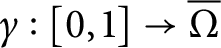 $\gamma : [0,1] \to \overline {\Omega }$ a path such that $\gamma ((0,1)) \subset \Omega $. We show that the path $\gamma $ can be “pulled tight” to a unique shortest path which is homotopic to $\gamma $, via a homotopy h with endpoints fixed whose intermediate paths $h_t$, for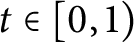 $t \in [0,1)$, satisfy $h_t((0,1)) \subset \Omega $. We prove this result even in the case when there is no path of finite Euclidean length homotopic to $\gamma $ under such a homotopy. For this purpose, we offer three other natural, equivalent notions of a “shortest” path. This work generalizes previous results for simply connected domains with simple closed curve boundaries.


Continuity of the SRB entropy of convex projective structures
- Part of
-
- Journal:
- Ergodic Theory and Dynamical Systems / Volume 41 / Issue 8 / August 2021
- Published online by Cambridge University Press:
- 04 June 2020, pp. 2369-2381
- Print publication:
- August 2021
-
- Article
- Export citation
FRIEZE PATTERNS WITH COEFFICIENTS
- Part of
-
- Journal:
- Forum of Mathematics, Sigma / Volume 8 / 2020
- Published online by Cambridge University Press:
- 26 March 2020, e17
-
- Article
-
- You have access
- Open access
- Export citation
