Refine listing
Actions for selected content:
300 results in 47Axx
On the speed of convergence in the ergodic theorem for shift operators
- Part of
-
- Journal:
- Canadian Journal of Mathematics / Volume 77 / Issue 6 / December 2025
- Published online by Cambridge University Press:
- 04 November 2024, pp. 1919-1937
- Print publication:
- December 2025
-
- Article
-
- You have access
- Open access
- HTML
- Export citation
-
Given a probability space $(X,\mu )$, a square integrable function f on such space and a (unilateral or bilateral) shift operator T, we prove under suitable assumptions that the ergodic means $N^{-1}\sum _{n=0}^{N-1} T^nf$ converge pointwise almost everywhere to zero with a speed of convergence which, up to a small logarithmic transgression, is essentially of the order of $N^{-1/2}$. We also provide a few applications of our results, especially in the case of shifts associated with toral endomorphisms.


Early warning signs for SPDEs with continuous spectrum
- Part of
-
- Journal:
- European Journal of Applied Mathematics / Volume 36 / Issue 4 / August 2025
- Published online by Cambridge University Press:
- 04 October 2024, pp. 665-704
-
- Article
-
- You have access
- Open access
- HTML
- Export citation
The Moment-SOS hierarchy: Applications and related topics
- Part of
-
- Journal:
- Acta Numerica / Volume 33 / July 2024
- Published online by Cambridge University Press:
- 04 September 2024, pp. 841-908
-
- Article
- Export citation
-
The Moment-SOS hierarchy, first introduced in optimization in 2000, is based on the theory of the S-moment problem and its dual counterpart: polynomials that are positive on S. It turns out that this methodology can also be used to solve problems with positivity constraints ‘f(x) ≥ 0 for all $\mathbf{x}\in S$
 ’ or linear constraints on Borel measures. Such problems can be viewed as specific instances of the generalized moment problem (GMP), whose list of important applications in various domains of science and engineering is almost endless. We describe this methodology in optimization and also in two other applications for illustration. Finally we also introduce the Christoffel function and reveal its links with the Moment-SOS hierarchy and positive polynomials.

On the convexity of the quaternionic essential numerical range
- Part of
-
- Journal:
- Proceedings of the Edinburgh Mathematical Society / Volume 67 / Issue 3 / August 2024
- Published online by Cambridge University Press:
- 15 May 2024, pp. 838-851
-
- Article
- Export citation
Growth of hypercyclic functions: a continuous path between $\mathcal{U}$-frequent hypercyclicity and hypercyclicity
- Part of
-
- Journal:
- Proceedings of the Edinburgh Mathematical Society / Volume 67 / Issue 3 / August 2024
- Published online by Cambridge University Press:
- 08 May 2024, pp. 794-829
-
- Article
- Export citation
-
We are interested in the optimal growth in terms of Lp-averages of hypercyclic and $\mathcal{U}$-frequently hypercyclic functions for some weighted Taylor shift operators acting on the space of analytic functions on the unit disc. We unify the results obtained by considering intermediate notions of upper frequent hypercyclicity between $\mathcal{U}$-frequent hypercyclicity and hypercyclicity.


Dirichlet-type spaces of the unit bidisc and toral 2-isometries
- Part of
-
- Journal:
- Canadian Journal of Mathematics / Volume 77 / Issue 4 / August 2025
- Published online by Cambridge University Press:
- 15 April 2024, pp. 1271-1293
- Print publication:
- August 2025
-
- Article
-
- You have access
- Open access
- HTML
- Export citation
-
We introduce and study Dirichlet-type spaces $\mathcal D(\mu _1, \mu _2)$ of the unit bidisc $\mathbb D^2,$ where $\mu _1, \mu _2$ are finite positive Borel measures on the unit circle. We show that the coordinate functions $z_1$ and $z_2$ are multipliers for $\mathcal D(\mu _1, \mu _2)$ and the complex polynomials are dense in $\mathcal D(\mu _1, \mu _2).$ Further, we obtain the division property and solve Gleason’s problem for $\mathcal D(\mu _1, \mu _2)$ over a bidisc centered at the origin. In particular, we show that the commuting pair $\mathscr M_z$ of the multiplication operators $\mathscr M_{z_1}, \mathscr M_{z_2}$ on $\mathcal D(\mu _1, \mu _2)$ defines a cyclic toral $2$-isometry and $\mathscr M^*_z$ belongs to the Cowen–Douglas class $\mathbf {B}_1(\mathbb D^2_r)$ for some $r>0.$ Moreover, we formulate a notion of wandering subspace for commuting tuples and use it to obtain a bidisc analog of Richter’s representation theorem for cyclic analytic $2$-isometries. In particular, we show that a cyclic analytic toral $2$-isometric pair T with cyclic vector $f_0$ is unitarily equivalent to $\mathscr M_z$ on $\mathcal D(\mu _1, \mu _2)$ for some $\mu _1,\mu _2$ if and only if $\ker T^*,$ spanned by $f_0,$ is a wandering subspace for $T.$
$T.$


Range inclusion and diagonalization of complex symmetric operators
- Part of
-
- Journal:
- Canadian Journal of Mathematics / Volume 77 / Issue 4 / August 2025
- Published online by Cambridge University Press:
- 04 April 2024, pp. 1222-1242
- Print publication:
- August 2025
-
- Article
- Export citation
-
We consider the range inclusion and the diagonalization in the Jordan algebra $\mathcal {S}_C$ of C-symmetric operators, that are, bounded linear operators T satisfying $CTC =T^{*}$, where C is a conjugation on a separable complex Hilbert space $\mathcal H$. For $T\in \mathcal {S}_C$, we aim to describe the set $C_{\mathcal {R}(T)}$ of those operators $A\in \mathcal {S}_C$ satisfying the range inclusion $\mathcal {R}(A)\subset \mathcal {R}(T)$. It is proved that (i) $C_{\mathcal {R}(T)}=T\mathcal {S}_C T$ if and only if $\mathcal {R}(T)$ is closed, (ii)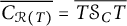 $\overline {C_{\mathcal {R}(T)}}=\overline {T\mathcal {S}_C T}$, and (iii) $C_{\overline {\mathcal {R}(T)}}$ is the closure of $C_{\mathcal {R}(T)}$ in the strong operator topology. Also, we extend the classical Weyl–von Neumann Theorem to $\mathcal {S}_C$, showing that every self-adjoint operator in $\mathcal {S}_C$ is the sum of a diagonal operator in $\mathcal {S}_C$ and a compact operator with arbitrarily small Schatten p-norm for $p\in (1,\infty )$.


Commutants and complex symmetry of finite Blaschke product multiplication operator in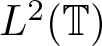 $L^2(\mathbb{T})$
- Part of
-
- Journal:
- Proceedings of the Edinburgh Mathematical Society / Volume 67 / Issue 1 / February 2024
- Published online by Cambridge University Press:
- 11 January 2024, pp. 261-286
-
- Article
- Export citation
-
Consider the multiplication operator MB in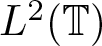 $L^2(\mathbb{T})$, where the symbol B is a finite Blaschke product. In this article, we characterize the commutant of MB in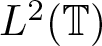 $L^2(\mathbb{T})$. As an application of this characterization result, we explicitly determine the class of conjugations commuting with $M_{z^2}$ or making $M_{z^2}$ complex symmetric by introducing a new class of conjugations in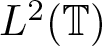 $L^2(\mathbb{T})$. Moreover, we analyse their properties while keeping the whole Hardy space, model space and Beurling-type subspaces invariant. Furthermore, we extended our study concerning conjugations in the case of finite Blaschke products.


Symmetric and antisymmetric tensor products for the function-theoretic operator theorist
- Part of
-
- Journal:
- Canadian Journal of Mathematics / Volume 77 / Issue 1 / February 2025
- Published online by Cambridge University Press:
- 22 December 2023, pp. 324-346
- Print publication:
- February 2025
-
- Article
-
- You have access
- Open access
- HTML
- Export citation
Norms on complex matrices induced by random vectors II: extension of weakly unitarily invariant norms
- Part of
-
- Journal:
- Canadian Mathematical Bulletin / Volume 67 / Issue 2 / June 2024
- Published online by Cambridge University Press:
- 06 November 2023, pp. 447-457
- Print publication:
- June 2024
-
- Article
- Export citation
-
We improve and expand in two directions the theory of norms on complex matrices induced by random vectors. We first provide a simple proof of the classification of weakly unitarily invariant norms on the Hermitian matrices. We use this to extend the main theorem in Chávez, Garcia, and Hurley (2023, Canadian Mathematical Bulletin 66, 808–826) from exponent $d\geq 2$ to $d \geq 1$. Our proofs are much simpler than the originals: they do not require Lewis’ framework for group invariance in convex matrix analysis. This clarification puts the entire theory on simpler foundations while extending its range of applicability.


A Lebesgue–Lusin property for linear operators of first and second order
- Part of
-
- Journal:
- Proceedings of the Royal Society of Edinburgh. Section A: Mathematics / Volume 155 / Issue 3 / June 2025
- Published online by Cambridge University Press:
- 06 November 2023, pp. 858-868
- Print publication:
- June 2025
-
- Article
- Export citation
-
We prove that for a homogeneous linear partial differential operator $\mathcal {A}$
 of order $k \le 2$
 and an integrable map $f$
 taking values in the essential range of that operator, there exists a function $u$
 of special bounded variation satisfying\[ \mathcal{A} u(x)= f(x) \qquad \text{almost everywhere}. \]This extends a result of G. Alberti for gradients on $\mathbf {R}^N$
 . In particular, for $0 \le m < N$
 , it is shown that every integrable $m$
 -vector field is the absolutely continuous part of the boundary of a normal $(m+1)$
 -current.


Bohr radius for Banach spaces on simply connected domains
- Part of
-
- Journal:
- Proceedings of the Edinburgh Mathematical Society / Volume 67 / Issue 1 / February 2024
- Published online by Cambridge University Press:
- 03 November 2023, pp. 113-141
-
- Article
- Export citation
-
Let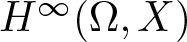 $H^{\infty}(\Omega,X)$ be the space of bounded analytic functions $f(z)=\sum_{n=0}^{\infty} x_{n}z^{n}$ from a proper simply connected domain Ω containing the unit disk $\mathbb{D}:=\{z\in \mathbb{C}:|z| \lt 1\}$ into a complex Banach space X with $\left\lVert f\right\rVert_{H^{\infty}(\Omega,X)} \leq 1$. Let $\phi=\{\phi_{n}(r)\}_{n=0}^{\infty}$ with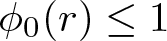 $\phi_{0}(r)\leq 1$ such that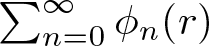 $\sum_{n=0}^{\infty} \phi_{n}(r)$ converges locally uniformly with respect to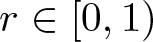 $r \in [0,1)$. For $1\leq p,q \lt \infty$, we denoteand define the Bohr radius associated with ϕ by
 \begin{equation*}R_{p,q,\phi}(f,\Omega,X)= \sup \left\{r \geq 0: \left\lVert x_{0}\right\rVert^p \phi_{0}(r) + \left(\sum_{n=1}^{\infty} \left\lVert x_{n}\right\rVert\phi_{n}(r)\right)^q \leq \phi_{0}(r)\right\}\end{equation*}In this article, we extensively study the Bohr radius
 \begin{equation*}R_{p,q,\phi}(\Omega,X)=\inf \left\{R_{p,q,\phi}(f,\Omega,X): \left\lVert f\right\rVert_{H^{\infty}(\Omega,X)} \leq 1\right\}.\end{equation*} $R_{p,q,\phi}(\Omega,X)$, when X is an arbitrary Banach space, and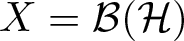 $X=\mathcal{B}(\mathcal{H})$ is the algebra of all bounded linear operators on a complex Hilbert space $\mathcal{H}$. Furthermore, we establish the Bohr inequality for the operator-valued Cesáro operator and Bernardi operator.

Spectral mapping theorems for essential spectra and regularized functional calculi
- Part of
-
- Journal:
- Proceedings of the Royal Society of Edinburgh. Section A: Mathematics / Volume 155 / Issue 2 / April 2025
- Published online by Cambridge University Press:
- 12 October 2023, pp. 634-656
- Print publication:
- April 2025
-
- Article
-
- You have access
- Open access
- HTML
- Export citation
-
Gramsch and Lay [8] gave spectral mapping theorems for the Dunford-Taylor calculus of a closed linear operator $T$
 ,\[ \widetilde{\sigma}_i(f(T)) = f(\widetilde{\sigma}_i(T)), \]for several extended essential spectra $\widetilde {\sigma }_i$
 . In this work, we extend such theorems for the regularized functional calculus introduced by Haase [10, 11] assuming suitable conditions on $f$
 . At the same time, we answer in the positive a question made by Haase [11, Remark 5.4] regarding the conditions on $f$
 which are sufficient to obtain the spectral mapping theorem for the usual extended spectrum $\widetilde \sigma$
 . We use the model case of bisectorial-like operators, although the proofs presented here are generic, and are valid for similar functional calculi.


Tensor algebras of subproduct systems and noncommutative function theory
- Part of
-
- Journal:
- Canadian Journal of Mathematics / Volume 76 / Issue 5 / October 2024
- Published online by Cambridge University Press:
- 02 October 2023, pp. 1587-1608
- Print publication:
- October 2024
-
- Article
-
- You have access
- Open access
- HTML
- Export citation
Periodic solutions of four-order degenerate differential equations with finite delay in vector-valued function spaces
- Part of
-
- Journal:
- Proceedings of the Royal Society of Edinburgh. Section A: Mathematics / Volume 155 / Issue 2 / April 2025
- Published online by Cambridge University Press:
- 14 September 2023, pp. 395-412
- Print publication:
- April 2025
-
- Article
- Export citation
-
In this paper, we mainly investigate the well-posedness of the four-order degenerate differential equation ($P_4$
 ): $(Mu)''''(t) + \alpha (Lu)'''(t) + (Lu)''(t)$ $=\beta Au(t) + \gamma Bu'(t) + Gu'_t + Fu_t + f(t),\,( t\in [0,\,2\pi ])$
 in periodic Lebesgue–Bochner spaces $L^p(\mathbb {T}; X)$
 and periodic Besov spaces $B_{p,q}^s\;(\mathbb {T}; X)$
 , where $A$
 , $B$
, $B$ , $L$
, $L$ and $M$
 are closed linear operators on a Banach space $X$
 such that $D(A)\cap D(B)\subset D(M)\cap D(L)$
 and $\alpha,\,\beta,\,\gamma \in \mathbb {C}$
 , $G$
, $G$ and $F$
 are bounded linear operators from $L^p([-2\pi,\,0];X)$
 (respectively $B_{p,q}^s([-2\pi,\,0];X)$
 ) into $X$
 , $u_t(\cdot ) = u(t+\cdot )$
 and $u'_t(\cdot ) = u'(t+\cdot )$
 are defined on $[-2\pi,\,0]$
 for $t\in [0,\, 2\pi ]$
 . We completely characterize the well-posedness of ($P_4$
 ) in the above two function spaces by using known operator-valued Fourier multiplier theorems.


Every symmetric Kubo–Ando connection has the order-determining property
- Part of
-
- Journal:
- Canadian Mathematical Bulletin / Volume 67 / Issue 2 / June 2024
- Published online by Cambridge University Press:
- 11 September 2023, pp. 279-288
- Print publication:
- June 2024
-
- Article
- Export citation
-
In this article, the question of whether the Löwner partial order on the positive cone of an operator algebra is determined by the norm of any arbitrary Kubo–Ando mean is studied. The question was affirmatively answered for certain classes of Kubo–Ando means, yet the general case was left as an open problem. We here give a complete answer to this question, by showing that the norm of every symmetric Kubo–Ando mean is order-determining, i.e., if $A,B\in \mathcal B(H)^{++}$ satisfy $\Vert A\sigma X\Vert \le \Vert B\sigma X\Vert $ for every $X\in \mathcal {A}^{{++}}$, where $\mathcal A$ is the C*-subalgebra generated by $B-A$ and I, then $A\le B$.


Remarks on countable subadditivity
- Part of
-
- Journal:
- Proceedings of the Royal Society of Edinburgh. Section A: Mathematics / Volume 154 / Issue 5 / October 2024
- Published online by Cambridge University Press:
- 23 August 2023, pp. 1504-1517
- Print publication:
- October 2024
-
- Article
- Export citation
Disjoint hypercyclicity, Sidon sets and weakly mixing operators
- Part of
-
- Journal:
- Ergodic Theory and Dynamical Systems / Volume 44 / Issue 5 / May 2024
- Published online by Cambridge University Press:
- 22 August 2023, pp. 1315-1329
- Print publication:
- May 2024
-
- Article
- Export citation
-
We prove that a finite set of natural numbers J satisfies that $J\cup \{0\}$ is not Sidon if and only if for any operator T, the disjoint hypercyclicity of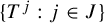 $\{T^j:j\in J\}$ implies that T is weakly mixing. As an application we show the existence of a non-weakly mixing operator T such that $T\oplus T^2\oplus\cdots \oplus T^n$ is hypercyclic for every n.

SPECTRAL MULTIPLIER THEOREMS FOR ABSTRACT DIFFERENTIAL OPERATORS
- Part of
-
- Journal:
- Bulletin of the Australian Mathematical Society / Volume 108 / Issue 2 / October 2023
- Published online by Cambridge University Press:
- 29 June 2023, pp. 343-344
- Print publication:
- October 2023
-
- Article
-
- You have access
- HTML
- Export citation
Bohr operator on operator-valued polyanalytic functions on simply connected domains
- Part of
-
- Journal:
- Canadian Mathematical Bulletin / Volume 66 / Issue 4 / December 2023
- Published online by Cambridge University Press:
- 26 June 2023, pp. 1411-1422
- Print publication:
- December 2023
-
- Article
- Export citation
-
In this article, we study the Bohr operator for the operator-valued subordination class $S(f)$ consisting of holomorphic functions subordinate to f in the unit disk $\mathbb {D}:=\{z \in \mathbb {C}: |z|<1\}$, where $f:\mathbb {D} \rightarrow \mathcal {B}(\mathcal {H})$ is holomorphic and $\mathcal {B}(\mathcal {H})$ is the algebra of bounded linear operators on a complex Hilbert space $\mathcal {H}$. We establish several subordination results, which can be viewed as the analogs of a couple of interesting subordination results from scalar-valued settings. We also obtain a von Neumann-type inequality for the class of analytic self-mappings of the unit disk $\mathbb {D}$ which fix the origin. Furthermore, we extensively study Bohr inequalities for operator-valued polyanalytic functions in certain proper simply connected domains in $\mathbb {C}$. We obtain Bohr radius for the operator-valued polyanalytic functions of the form $F(z)= \sum _{l=0}^{p-1} \overline {z}^l \, f_{l}(z) $, where $f_{0}$ is subordinate to an operator-valued convex biholomorphic function, and operator-valued starlike biholomorphic function in the unit disk $\mathbb {D}$.


