Refine listing
Actions for selected content:
419 results in 35Jxx
DEAD-CORE PROBLEM FOR A CLASS OF INFINITY LAPLACIAN
- Part of
-
- Journal:
- Journal of the Australian Mathematical Society , First View
- Published online by Cambridge University Press:
- 07 April 2026, pp. 1-21
-
- Article
- Export citation
-
For $h>1,$ we consider the reaction-diffusion equation: where
 $$ \begin{align*} \Delta_\infty^hu(x)=f(x,u(x),Du(x)),\quad x\in\Omega, \end{align*} $$ $\Delta _\infty ^h$ denotes the h-degree infinity Laplacian, $f\in C(\Omega \times \mathbb {R}\times \mathbb {R}^n)$ satisfies $ 0\leq f(x,\delta t,p)\leq \Lambda (x)\delta ^{\gamma }f(x,t,p),$ a positive function $\Lambda (x)\in C(\overline {\Omega }), \, \gamma \in [0,h), \,t>0$, and $\delta>0 $ is small enough. Such an equation may cause a dead-core region, that is, an unknown region where the nonnegative solution vanishes completely. We establish a flattening estimate for the viscosity solution and obtain sharp $C^{({h+1})/({h-\gamma })}$-regularity along the free boundary $\partial \{u>0\}\cap \Omega .$ Using the sharp regularity, we prove Liouville-type theorems for the global solution and give the porosity of the free boundary. In the end, for the limit case $\gamma =h,$ we show that if the viscosity solution vanishes at a point, then the dead-core region must vanish.


Trace and observability inequalities for Laplace eigenfunctions on the torus
- Part of
-
- Journal:
- Forum of Mathematics, Sigma / Volume 14 / 2026
- Published online by Cambridge University Press:
- 06 April 2026, e47
-
- Article
-
- You have access
- Open access
- HTML
- Export citation
-
We investigate trace and observability inequalities for Laplace eigenfunctions on the d-dimensional torus $\mathbb {T}^d$, with respect to arbitrary Borel measures $\mu $. Specifically, we characterize the measures $\mu $ for which the inequalities
  $$ \begin{align*} \int |u|^2 \mathop{}\!\mathrm{d}\mu \lesssim \int |u|^2 \mathop{}\!\mathrm{d} x \quad \text{(trace)}, \qquad \int |u|^2 \mathop{}\!\mathrm{d}\mu \gtrsim \int |u|^2 \mathop{}\!\mathrm{d} x \quad \text{(observability)} \end{align*} $$
hold uniformly for all eigenfunctions u of the Laplacian. Sufficient conditions are derived based on the integrability and regularity of $\mu $, while necessary conditions are formulated in terms of the dimension of the support of the measure. These results generalize classical theorems of Zygmund and Bourgain–Rudnick to higher dimensions. Applications include results in the spirit of Cantor–Lebesgue theorems, constraints on quantum limits, and control theory for the Schrödinger equation. Our approach combines several tools: the cluster structure of lattice points on spheres; decoupling estimates; and the construction of eigenfunctions exhibiting strong concentration or vanishing behavior, tailored respectively to the trace and observability inequalities.


Normalized solutions for a Hamiltonian elliptic system on $\mathbb{R}^N$
- Part of
-
- Journal:
- Proceedings of the Royal Society of Edinburgh. Section A: Mathematics , First View
- Published online by Cambridge University Press:
- 27 March 2026, pp. 1-22
-
- Article
- Export citation
-
This paper is concerned with the existence of normalized solutions for the following class of Hamiltonian elliptic systems:
where \begin{align*}\left\{\begin{array}{ll}- \Delta u = \lambda u + |v|^{q-2}v \quad \text{in } \mathbb{R}^{N}, \\ - \Delta v = \lambda v + |u|^{p-2}u \quad \text{in } \mathbb{R}^{N}, \\ \displaystyle\int_{\mathbb{R}^N}(|u|^2 + |v|^2) = m,\end{array}\right.\end{align*}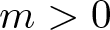 $m \gt 0$ and $2 \lt p,q \lt 2^{*}=2N/(N-2)$. We prove that a normalized solution exists for different ranges of $p,q$. A typical feature of this class of problems is that the associated energy functionals are strongly indefinite; that is, the domain has a saddle-point geometry in which both positive and negative subspaces of the quadratic form are infinite-dimensional. Another difficulty is the lack of the compact embedding $H^{1}(\mathbb{R}^N) \hookrightarrow L^{2}(\mathbb{R}^N)$, which persists also if we restrict ourselves to a radial setting. Our main result is novel for this class of systems.


An obstacle approach to rate-independent droplet evolution
- Part of
-
- Journal:
- Forum of Mathematics, Sigma / Volume 14 / 2026
- Published online by Cambridge University Press:
- 03 March 2026, e38
-
- Article
-
- You have access
- Open access
- HTML
- Export citation
-
We consider a toy model of rate-independent droplet motion on a surface with contact angle hysteresis based on the one-phase Bernoulli free boundary problem. We introduce a notion of solutions based on an obstacle problem. These solutions jump “as late and as little as possible”, a physically natural property that energy solutions do not satisfy. When the initial data is star-shaped, we show that obstacle solutions are uniquely characterized by satisfying the local stability and dynamic slope conditions. This is proved via a novel comparison principle, which is one of the main new technical results of the paper. In this setting we can also show the (almost) optimal $C^{1,1/2-}$-spatial regularity of the contact line. This regularity result explains the asymptotic profile of the contact line as it de-pins via tangential motion similar to de-lamination. Finally we apply our comparison principle to show the convergence of minimizing movements schemes to the same obstacle solution, again in the star-shaped setting.

MULTIPLE SOLUTIONS FOR QUASILINEAR SCHRÖDINGER EQUATIONS WITH NONLINEARITY SUBLINEAR AT ZERO
- Part of
-
- Journal:
- Bulletin of the Australian Mathematical Society , First View
- Published online by Cambridge University Press:
- 26 January 2026, pp. 1-13
-
- Article
- Export citation
-
We consider quasilinear Schrödinger equations in $\mathbb {R}^N$ of the form $-\Delta u+V(x)u-u\Delta (u^2)=g(u)$, where the potential V is allowed to be sign-changing and the nonlinearity g is sublinear at zero. Except for being subcritical, no additional condition is imposed on $g(u)$ for $|u|$ large. We obtain a sequence of solutions with negative energy and converging to zero via Clark’s theorem. We also obtain a similar result for fourth-order quasilinear Schrödinger equations in $\mathbb {R}^N$ of the form $\Delta ^2u-\Delta u+ V(x)u-u\Delta (u^2)=g(u)$.


Superlinear problems involving nonlinear superposition operators of mixed fractional order
- Part of
-
- Journal:
- Proceedings of the Royal Society of Edinburgh. Section A: Mathematics , First View
- Published online by Cambridge University Press:
- 22 January 2026, pp. 1-26
-
- Article
- Export citation
-
In this work, we study a class of elliptic problems involving nonlinear superpositions of fractional operators of the form
where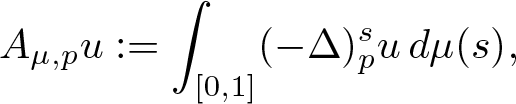 \begin{equation*}A_{\mu,p}u := \int_{[0,1]} (-\Delta)_{p}^{s} u \, d\mu(s),\end{equation*} $\mu$ is a signed measure on $[0,1]$, coupled with nonlinearities of superlinear type. This kind of operator was introduced by S. Dipierro, K. Perera, C. Sportelli, and E. Valdinoci in [11]. Our analysis covers a variety of superlinear growth assumptions, beginning with the classical Ambrosetti–Rabinowitz condition. Within this framework, we construct a suitable variational setting and apply the Fountain Theorem to establish the existence of infinitely many weak solutions. The results obtained are novel even in the special cases of superpositions of fractional $p$-Laplacians, or combinations of the fractional $p$-Laplacian with the $p$-Laplacian. More generally, our approach applies to finite sums of fractional $p$-Laplacians with different orders, as well as to operators in which fractional Laplacians appear with ‘wrong’ signs. A distinctive contribution of the paper lies in providing a unified variational framework that systematically accommodates this broad class of operators.


Multiplicative Jensen’s formula and quantitative global theory of one-frequency Schrödinger operators
- Part of
-
- Journal:
- Forum of Mathematics, Pi / Volume 14 / 2026
- Published online by Cambridge University Press:
- 09 January 2026, e1
-
- Article
-
- You have access
- Open access
- HTML
- Export citation
Existence and concentration of normalized solutions for logarithmic Schrödinger–Bopp–Podolsky type system
- Part of
-
- Journal:
- Proceedings of the Royal Society of Edinburgh. Section A: Mathematics , First View
- Published online by Cambridge University Press:
- 29 December 2025, pp. 1-39
-
- Article
- Export citation
-
In this paper, we are interested in the existence and concentration of normalized solutions for the following logarithmic Schrödinger–Bopp–Podolsky type system involving the $p$-Laplacian in $\mathbb{R}^3$:
 \begin{equation*}\left\{\begin{array}{ll}\displaystyle -\varepsilon^p\Delta_p u+Z(x)|u|^{p-2}u-\kappa\phi u=\lambda |u|^{p-2}u+|u|^{p-2}u\log|u|^p& \text{in} \ \mathbb{R}^3, \\\displaystyle -\varepsilon^2\Delta\phi+a^2\varepsilon^4\Delta^2\phi=4\pi u^2& \text{in} \ \mathbb{R}^3, \\\displaystyle \int_{\mathbb{R}^3}|u|^pdx=d^p\varepsilon^3,\end{array}\right.\end{equation*}
where $\Delta_p\cdot =\text{div} (|\nabla \cdot|^{p-2}\nabla \cdot)$ denotes the usual $p$-Laplacian operator, $Z$ is a given external potential, $\kappa \gt 0$ a constant, $a \gt 0$ is the Bopp–Podolsky constant and $\varepsilon \gt 0$ is a small parameter. The unknowns are $u,\phi:\mathbb{R}^{3}\to \mathbb{R}$ and the Lagrange multiplier $\lambda\in\mathbb{R}$. If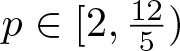 $p\in[2,\frac{12}{5})$, we obtain, via the variational method, that the number of positive solutions depends on the profile of $Z$ and the solutions concentrate around the global minimum points of $Z$ in the semiclassical limit as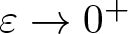 $\varepsilon\to 0^{+}$.


Liouville-type theorems for the quasilinear elliptic equation and inequality with logarithmic nonlinearity
- Part of
-
- Journal:
- Proceedings of the Royal Society of Edinburgh. Section A: Mathematics , First View
- Published online by Cambridge University Press:
- 26 November 2025, pp. 1-15
-
- Article
- Export citation
-
This paper is concerned with Liouville-type theorems of positive weak solutions to elliptic $m$-Laplace equation and inequality with the logarithmic nonlinearity $u^q(\log u)^p (q,p\geqslant0)$. Using a direct Bernstein method we obtain a first range of values of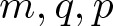 $m,q,p$ in which all positive weak solutions of equation are constants, this holds in the following cases: (i) $1 \lt m \lt 2$, $m-1 \lt q \lt 1$, $0 \lt p \lt q$; (ii)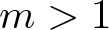 $m \gt 1$, $q\geqslant1$,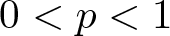 $0 \lt p \lt 1$. When $q=1$, the positive weak solutions are required to be bounded. Based on transformation of inequality and the utilization of suitable cut-off functions, we establish a Liouville-type theorem for positive weak solutions of inequality; this result also remains valid on complete noncompact Riemannian manifold.


Uniqueness of solution for logarithm Choquard equation
- Part of
-
- Journal:
- Proceedings of the Royal Society of Edinburgh. Section A: Mathematics , First View
- Published online by Cambridge University Press:
- 25 November 2025, pp. 1-29
-
- Article
- Export citation
-
In this paper, we prove the uniqueness of positive solutions for the following Choquard equation involving logarithm convolution
 \begin{equation*}-\Delta u(x)=e^{[\int_{\mathbb R^N} \ln{\frac {|y|}{|x-y|}}u(y)^{\frac{2N}{N-2}}\,dy]}u(x)^{\frac{N}{N-2}}\quad {\rm in}\ \mathbb{R}^N\end{equation*}
where $N\geq 3$. Under the assumptions that
 \begin{equation*}{\int_{\mathbb R^N}} e^{\frac{N+2}2[\int_{\mathbb R^N} \ln{\frac {|y|}{|x-y|}}u(y)^{\frac{2N}{N-2}}\,dy]}\,dx \lt \infty,\ {\int_{\mathbb R^N}} u^{\frac{N+2}{N-2}}\,dx \lt \infty \quad{\rm and }\quad {\int_{\mathbb R^N}} u^{\frac{2N}{N-2}}\,dx \lt \infty,\end{equation*}
we show that any positive solution of the above equation must have the following form
 \begin{equation*}u(x)=(\frac{C\varepsilon}{\varepsilon^2+|x-x_0|^2})^{\frac{N-2}2},\end{equation*}
where $C$ is a positive constant, $\varepsilon \gt 0$ and $x_0\in \mathbb R^N$ are two parameters.


On approximation of convex functionals with a convexity constraint and general Lagrangians
- Part of
-
- Journal:
- Proceedings of the Royal Society of Edinburgh. Section A: Mathematics , First View
- Published online by Cambridge University Press:
- 19 November 2025, pp. 1-17
-
- Article
-
- You have access
- Open access
- HTML
- Export citation
Normalized solutions for p-Laplacian equation with general nonlinearities on bounded domain
- Part of
-
- Journal:
- Proceedings of the Royal Society of Edinburgh. Section A: Mathematics , First View
- Published online by Cambridge University Press:
- 13 November 2025, pp. 1-31
-
- Article
- Export citation
-
We consider the existence, nonexistence and multiplicity of normalized solutions to the $p$-Laplacian equation on a bounded domain(0.1)
 \begin{equation}\left\{\begin{array}{ll}-\Delta_p u+\lambda |u|^{p-2}u=g(u),&\text{in }\Omega,\\\int_\Omega |u|^p=\rho, u=0&\text{on }\partial \Omega,\end{array}\right.\end{equation}
where $\Omega$ is a bounded domain, $p\geq 2$. Firstly, under suitable assumptions on $\rho$, if $g$ is at most mass-critical at infinity, we prove the existence of infinitely many solutions. Secondly, for $\rho$ large, if $g$ is mass-supercritical, we perform a blow-up analysis to show the nonexistence of finite Morse index solutions. At last, for $\rho$ suitably small, combining with the monotonicity argument, we obtain a multiplicity result. In particular, when $p=2$, we obtain the existence of infinitely many normalized solutions.


Existence and uniqueness of a positive solution to a rapidly growing problem via sub-supersolution method
- Part of
-
- Journal:
- Proceedings of the Edinburgh Mathematical Society / Volume 69 / Issue 2 / May 2026
- Published online by Cambridge University Press:
- 13 November 2025, pp. 659-673
-
- Article
-
- You have access
- Open access
- HTML
- Export citation
-
In this paper, we study the validity of the sub-supersolution method for the equation
where \begin{equation*}\begin{cases}-\mbox{div}(K(x)\nabla u)=K(x)|x|^{\alpha-2}f(x,u) \,\mbox{in } {\mathbb{R}}^{N},\\u \gt 0 \,\mbox{in } {\mathbb{R}}^{N},\end{cases}\end{equation*} $N \geq 3$, $K(x)=exp(|x|^{\alpha}/4)$, $\alpha\geq 2$ and $f$ is a continuous function, with hypotheses that will be given later. We apply the method to cases where $f$ is singular, where $f$ behaves like a logistic function, showing in both cases the existence and uniqueness of a positive solution.


Nonlocal carrier’s double phase problem
- Part of
-
- Journal:
- Proceedings of the Royal Society of Edinburgh. Section A: Mathematics , First View
- Published online by Cambridge University Press:
- 13 November 2025, pp. 1-24
-
- Article
- Export citation
Liouville theorems for the static Schrodinger equations with van der Waals type potentials
- Part of
-
- Journal:
- Canadian Journal of Mathematics , First View
- Published online by Cambridge University Press:
- 05 November 2025, pp. 1-27
-
- Article
- Export citation
Existence and symmetry breaking results for a Hénon-type equation with Grushin operator
- Part of
-
- Journal:
- Proceedings of the Royal Society of Edinburgh. Section A: Mathematics , First View
- Published online by Cambridge University Press:
- 05 November 2025, pp. 1-19
-
- Article
- Export citation
Non-degeneracy and local uniqueness of bubbling solutions for fractional almost critical problems
- Part of
-
- Journal:
- Proceedings of the Royal Society of Edinburgh. Section A: Mathematics , First View
- Published online by Cambridge University Press:
- 03 November 2025, pp. 1-45
-
- Article
- Export citation
-
This paper is concerned with the following problem involving almost critical growth
 \begin{equation*}\begin{cases}(-\Delta) ^su=|u|^{2_{s}^{*}-2-\varepsilon}u,& \text{in } \varOmega ,\\u=0,& \text{on } \Sigma ,\\\end{cases}\end{equation*}
where $2_{s}^{*}=\frac{2N}{N-2s}$, $s\in(\frac{1}{2},1)$, $N \gt 2s$, Ω is a bounded domain in $\mathbb{R}^N$, ɛ is a small parameter, and the boundary Σ is given in different ways according to the different definitions of the fractional Laplacian operator $(-\Delta)^{s}$. The operator $(-\Delta)^{s}$ is defined in two types: the spectral fractional Laplacian and the restricted fractional Laplacian. For the spectral case, Σ stands for $\partial \Omega$; for the restricted case, Σ is $\mathbb{R}^{N}\setminus \Omega$. Firstly, we provide a positive confirmation of the fractional Brezis–Peletier conjecture, that is, the above almost critical problem has a single bubbling solution concentrating around the non-degenerate critical point of the Robin function. Furthermore, the non-degeneracy andlocal uniqueness of this bubbling solution are established.


Concentration behavior of normalized ground states for mass critical Kirchhoff equations in bounded domains
- Part of
-
- Journal:
- Proceedings of the Royal Society of Edinburgh. Section A: Mathematics , First View
- Published online by Cambridge University Press:
- 03 November 2025, pp. 1-44
-
- Article
- Export citation
-
In present paper, we study the limit behavior of normalized ground states for the following mass critical Kirchhoff equation
where \begin{align*}\left\{\begin{array}{ll}-(a+b\int_{\Omega}|\nabla u|^2\mathrm{d}x)\Delta u+V(x)u=\mu u+\beta^*|u|^{\frac{8}{3}}u &\text{in}\ {\Omega}, \\[0.1cm]u=0&\text{on}\ {\partial\Omega}, \\[0.1cm]\int_{\Omega}|u|^2\mathrm{d}x=1, \\[0.1cm]\end{array}\right.\end{align*} $a\geq 0$, b > 0, the function V(x) is a trapping potential in a bounded domain $\Omega\subset\mathbb R^3$, $\beta^*:=\frac{b}{2}|Q|_2^{\frac{8}{3}}$ and Q is the unique positive radially symmetric solution of equation $-2\Delta u+\frac{1}{3}u-|u|^{\frac{8}{3}}u=0$ in $\mathbb R^3.$ We consider the existence of constraint minimizers for the associated energy functional involving the parameter a. The minimizer corresponds to the normalized ground state of above problem, and it exists if and only if a > 0. Moreover, when V(x) attains its flattest global minimum at an inner point or only at the boundary of Ω, we analyze the fine limit profiles of the minimizers as $a\searrow 0$, including mass concentration at an inner point or near the boundary of Ω. In particular, we further establish the local uniqueness of the minimizer if it is concentrated at a unique inner point.


Normalized multi-bump solutions of nonlinear Hartree equation with steep potential well
- Part of
-
- Journal:
- Proceedings of the Royal Society of Edinburgh. Section A: Mathematics , First View
- Published online by Cambridge University Press:
- 20 October 2025, pp. 1-37
-
- Article
- Export citation
-
In this paper, we study the existence of solutions to the following Hartree equation
 \begin{align*}\begin{cases}-\Delta u+\lambda V(x) u+\mu u=\left(\int_{\mathbb{R}^N}\frac{|u|^p}{|x-y|^{N-\alpha}}\right)|u|^{p-2}u,\ \text{in}\ \mathbb{R}^N,\\\int_{\mathbb{R}^N}|u|^2=\omega,\end{cases}\end{align*}
Where $N\geq 3$, $\omega,\lambda \gt 0$, $p\in \left(\frac{N+\alpha}{N}, \frac{N+\alpha}{N-2}\right)\setminus\left\{\frac{N+\alpha+2}{N}\right\}$ and µ will appear as a Lagrange multiplier. We assume that $0\leq V\in L^{\infty}_{loc}(\mathbb{R}^N)$ has a bottom $int V^{-1}(0)$ composed of $\ell_0$ $(\ell_{0}\geq1)$ connected components $\{\Omega_i\}_{i=1}^{\ell_0}$, where $int V^{-1}(0)$ is the interior of the zero set $V^{-1}(0)=\{x\in\mathbb{R}^N| V(x)=0\}$ of V. It is worth pointing out that the penalization technique is no longer applicable to the local sublinear case $p\in \left(\frac{N+\alpha}{N},2\right)$. Therefore, we develop a new variational method in which the two deformation flows are established that reflect the properties of the potential. Moreover, we find a critical point without introducing a penalization term and give the existence result for $p\in \left(\frac{N+\alpha}{N}, \frac{N+\alpha}{N-2}\right)\setminus\left\{\frac{N+\alpha+2}{N}\right\}$. When ω is fixed and satisfies $\omega^{\frac{-(p-1)}{-Np+N+\alpha+2}}$ sufficiently small, we construct a $\ell$-bump $(1\leq\ell\leq \ell_{0})$ positive normalization solution, which concentrates at $\ell$ prescribed components $\{\Omega_i\}^{\ell}_{i=1}$ for large λ. We also consider the asymptotic profile of the solutions as $\lambda\rightarrow\infty$ and $\omega^{\frac{-(p-1)}{-Np+N+\alpha+2}}\rightarrow 0$.


A k-Hessian equation with a power nonlinearity source and self-similarity
- Part of
-
- Journal:
- Proceedings of the Royal Society of Edinburgh. Section A: Mathematics , First View
- Published online by Cambridge University Press:
- 17 October 2025, pp. 1-25
-
- Article
- Export citation
-
We study existence and uniqueness of spherically symmetric solutions of
 \begin{equation*}S_k(D^2v)+\beta \xi\cdot\nabla v+\alpha v+\left\vert v\right\vert^{q-1}v=0\;\; \mbox{in}\;\; \mathbb{R}^n,\end{equation*}
where $\alpha,\beta$ are real parameters, $n \gt 2,\, q \gt k\geqslant 1$ and $S_k(D^2v)$ stands for the k-Hessian operator of v. Our results are based mainly on the analysis of an associated dynamical system and energy methods. We derive some properties of the solutions of the above equation for different ranges of the parameters α and β. In particular, we describe with precision its asymptotic behaviour at infinity. Further, according to the position of q with respect to the first critical exponent $\frac{(n+2)k}{n}$ and the Tso critical exponent $\frac{(n+2)k}{n-2k}$ we study the existence of three classes of solutions: crossing, slow decay or fast decay solutions. In particular, if k > 1 all the fast decay solutions have a compact support in $\mathbb{R}^n$. The results also apply to construct self-similar solutions of type I to a related nonlinear evolution equation. These are self-similar functions of the form $u(t,x)=t^{-\alpha}v(xt^{-\beta})$ with suitable α and β.


