To save content items to your account,
please confirm that you agree to abide by our usage policies.
If this is the first time you use this feature, you will be asked to authorise Cambridge Core to connect with your account.
Find out more about saving content to .
To save content items to your Kindle, first ensure no-reply@cambridge.org
is added to your Approved Personal Document E-mail List under your Personal Document Settings
on the Manage Your Content and Devices page of your Amazon account. Then enter the ‘name’ part
of your Kindle email address below.
Find out more about saving to your Kindle.
Note you can select to save to either the @free.kindle.com or @kindle.com variations.
‘@free.kindle.com’ emails are free but can only be saved to your device when it is connected to wi-fi.
‘@kindle.com’ emails can be delivered even when you are not connected to wi-fi, but note that service fees apply.
The negotiations on a treaty to regulate global supply chains and their impact on human rights will hold its tenth session in December 2024. The question the negotiations address is not completely new: previous efforts, starting in the 1970s at the United Nations,1 tried to establish international obligations for “transnational corporations” (TNC), but found the issue of defining the subject to be regulated challenging. Academia and civil society also took turns defining the concept, although much of the focus equally revolved around the issues surrounding or caused by transnational corporations (i.e., the resource curse, regulatory chill, etc.). However, the current debate in the intergovernmental working group established by the Human Rights Council has focused, among other important elements, on defining the object of regulation—transnational corporations or transnational business activities—as well as the specific forms of liability under domestic law that could be used in cases of human rights harms or environmental degradation caused by business enterprises. This contribution addresses these two issues, considering some of the debates during the ninth session, and exploring aspects that need to be considered as the process moves forward.
With the promise of greater efficiency and effectiveness, public authorities have increasingly turned to algorithmic systems to regulate and govern society. In Algorithmic Rule By Law, Nathalie Smuha examines this reliance on algorithmic regulation and shows how it can erode the rule of law. Drawing on extensive research and examples, Smuha argues that outsourcing important administrative decisions to algorithmic systems undermines core principles of democracy. Smuha further demonstrates that this risk is far from hypothetical or one that can be relegated to authoritarian regimes, as many of her examples are drawn from public authorities in liberal democracies that are already making use of algorithmic regulation. Focusing on the European Union, Smuha argues that the EU's digital agenda is misaligned with its aim to protect the rule of law. Novel and timely, this book should be read by anyone interested in the intersection of law, technology, and government. This title is also available as open access on Cambridge Core.
This study investigates Mandarin-speaking children’s (age 3–7) comprehension development of novel and conventional metonymy, combining online and offline methods. Both online and offline data show significantly better performances from the oldest group (6-to-7-year-old) and a delayed acquisition of conventional metonymy compared with novel metonymy. However, part of offline data shows no significant difference between adjacent age groups, while the eye-tracking data show a chronological development from age 3–7. Furthermore, in offline tasks, the three-year-old group features a high choice randomness and the four-to-five-year-olds show the longest reaction time. Therefore, we argue that, not only age but also metonymy type can influence metonymy acquisition, and that a lack of socio-cultural experience can be a source of acquisition difficulty for children under six. Methodologically speaking, we believe that online methods should not be considered superior to offline ones as they investigate different aspects of implicit and explicit language comprehension.
How native (L1) and non-native (L2) readers utilise syntactic constraints on linguistic dependency resolution during language comprehension is debated, with previous research yielding mixed findings. To address this discrepancy, we report two large-scale studies, using self-paced reading and grammaticality judgements, investigating subject-verb agreement and reflexives in L1 English speakers and Arabic learners of L2 English. We manipulated sentence grammaticality and the properties of ‘distractor’ constituents (The key(s) to the cabinet(s) were rusty) in two studies testing number in agreement and gender/number in reflexives. Study 1 showed that L2ers’ performance largely patterned with L1ers’. Although grammaticality effects were smaller for agreement in L2ers than in L1ers, proficiency modulated L2 performance. Study 2 revealed no significant between-group differences. Contrasting some L1 studies, significant distractor effects were only detected for reflexives in Study 1. Together, these results imply that L2ers compute syntactic dependencies similarly to L1ers, and potential differences might be driven by L2 proficiency.
Music therapy is a commonly used intervention added to usual care for psychiatric disorders.
Aims
We review the evidence for music therapy and assess its efficacy as an adjunct therapy across psychiatric disorders.
Method
A systematic literature search was conducted in four scientific databases to identify relevant meta-analyses. Articles were assessed with the AMSTAR-2 tool. The results of the high-quality articles were recalculated with the data from the primary studies. We decided to add the results of the lower-rated articles, using a narrative approach. We pooled the primary studies and calculated standardised mean differences (SMD) for the transdiagnostic outcomes of depression, anxiety and quality of life. We used the Grading of Recommendations, Assessment, Development and Evaluations (GRADE) tool to assess the level of evidence.
Results
Meta-analyses were available for autism, dementia, depression, insomnia, schizophrenia and substance use disorders. We identified 40 relevant articles. One article per domain was identified as high quality. Music therapy added to treatment as usual showed therapeutic value in each disorder. The transdiagnostic results showed a positive effect of music therapy on depression (SMD = 0.57, 95% CI 0.36–0.78), anxiety (SMD = 0.47, 95% CI 0.27–0.66) and quality of life (SMD = 0.47, 95% CI 0.24–0.71). However, these effects were not maintained at follow-up, and all results were based on low or very low evidence.
Conclusions
Music therapy shows promising potential as an adjunctive treatment for psychiatric disorders, but methodological weaknesses and variability limit the evidence. More high-quality, well-powered studies are needed to reliably confirm its effect size.
It has been suggested that the parents of heritage speakers (2nd generation immigrants), who are the main source of input to them, may exhibit first-language (L1) attrition in their language, thereby directly transmitting different structural properties or “errors” to the heritage speakers. Given the state of current knowledge of inconsistent input in L1 acquisition, age of acquisition effects in bilingualism, and how long it takes children to master different properties of their native language, it is highly unlikely that immigrant parents are directly transmitting patterns of language attrition to their heritage language children. The argument advanced in this article is that if the patterns evident in heritage speakers and first-generation immigrants are related, reverse transmission may be at play instead, when the heritage speakers might be influencing the language of the parents rather than the other way around. Theoretical and empirical evidence for this proposal may explain the emergence of the variety of Spanish spoken in the United States.
The Dutch parliamentary far right has been considered a relatively liberal outlier to the gender politics of the European far right, yet recent years have shown the increasing anti-gender mobilization of the party Forum voor Democratie(FvD). Based on a theoretical framework of anti-gender mobilization, the far right, and politics of knowledge, this article explores anti-gender politics as a form of alternative knowledge production through a qualitative content analysis of the FvD’s online presence. Through applying Verloo’s concept of the episteme, this article’s findings show that the FvD mobilizes against epistemic institutions by claiming they disseminate dangerous knowledge about gender, which they argue presents a fundamental threat to society, captured in conspiratorial terms like “transgender ideology” and “woke.” Simultaneously, the party promotes illiberal gender politics through the establishment of alternative epistemic institutions. This article shows how far-right actors may promote anti-gender politics by presenting themselves as “alternative intellectuals” who seek to carve out an epistemic niche alongside the mainstream.
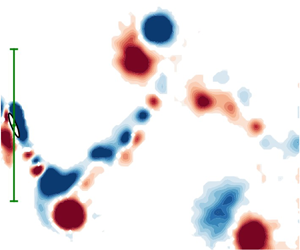
This experimental study employs Bayesian optimisation to maximise the cross-flow (transverse) flow-induced vibration (FIV) of an elastically mounted thin elliptical cylinder by implementing axial (or angular) flapping motions. The flapping amplitude was in proportion to the vibration amplitude, with a relative phase angle imposed between the angular and transverse displacements of the cylinder. The control parameter space spanned over the ranges of proportional gain and phase difference of $0 \leq K_p^* \leq 5$ and $0 \leq \phi _d \leq 360^\circ$, respectively, over a reduced velocity range of $3.0 \leqslant {U^*} = U/({{f_{nw}}} b) \leqslant 8.5$. The corresponding Reynolds number range was $1250 \leqslant {{Re}} =(U b)/\nu \leqslant 3580$. Here, $U$ is the free stream velocity, $b$ is the major cross-sectional diameter of the cylinder, ${{f_{nw}}}$ is the natural frequency of the system in quiescent fluid (water) and $\nu$ is the kinematic viscosity of the fluid. It was found that the controlled body rotation extended the wake-body synchronisation across the entire ${U^*}$ range tested, with a larger amplitude response than the non-rotating case for all flow speeds. Interestingly, two new wake-body synchronisation regimes were identified, which have not been reported in previous studies. As this geometry acts as a ‘hard-oscillator’ for ${U^*} \geqslant 6.3$, an adaptive gain (i.e. one that varies as a function of oscillation amplitude) was also implemented, allowing the body vibration, achieved for a non-rotating cylinder using increasing ${U^*}$ increments, to be excited from rest. The findings of the present study hold potential implications for the use of FIV as a means to efficiently extract energy from free-flowing water sources, a topic of increasing interest over the last decade.


The role of editorial staff in shaping early climate change narratives has been underexplored and deserves more attention. During the 1970s, the epistemological underpinnings of the production of knowledge on climate change were contested between scientists who favoured computer-based atmospheric simulations and those who were more interested in investigating the long-term history of climatic changes. Although the former group later became predominant in the Intergovernmental Panel on Climate Change during the 1980s, the latter had a sizable influence over climate discourse during the 1970s. Of these, one of the key popularizers of climate discourse during the 1970s was the British climatologist Hubert Lamb (1913–97). The correspondence between Lamb and journal editors who gatekept and curated different audiences helped craft resonant messages about climate change and its potential effects, and we explore Lamb's interactions with editors of Nature, the UNESCO Courier, The Ecologist and Development Forum in the 1973–4 period. Through understanding how climate change discussion was influenced by editors, we gain an insight into how such narratives had to be adjusted to fit into pre-existing discourses before their importance was more widely established, and how these adjustments helped shape conceptualizations of climate change as a global, human-caused phenomenon and a source of universal threat.
Continuum kinetic simulations are increasingly capable of resolving high-dimensional phase space with advances in computing. These capabilities can be more fully explored by using linear kinetic theory to initialize the self-consistent field and phase space perturbations of kinetic instabilities. The phase space perturbation of a kinetic eigenfunction in unmagnetized plasma has a simple analytic form, and in magnetized plasma may be well approximated by truncation of a cyclotron-harmonic expansion. We catalogue the most common use cases with a historical discussion of kinetic eigenfunctions and by conducting nonlinear Vlasov–Poisson and Vlasov–Maxwell simulations of singlemode and multimode two-stream, loss-cone and Weibel instabilities in unmagnetized and magnetized plasmas with one- and two-dimensional geometries. Applications to quasilinear kinetic theory are discussed and applied to the bump-on-tail instability. In order to compute eigenvalues we present novel representations of the dielectric function for ring distributions in magnetized plasmas with power series, hypergeometric and trigonometric integral forms. Eigenfunction phase space fluctuations are visualized for prototypical cases such as the Bernstein modes to build intuition. In addition, phase portraits are presented for the magnetic well associated with nonlinear saturation of the Weibel instability, distinguishing current-density-generating trapping structures from charge-density-generating ones.
In an enticing article for the Neue Zeitschrift für Musik, Hans von Bülow suggested that Joseph Joachim would be well suited to achieve a reform of violin playing in the 1850s, which would effectively close the door behind Virtuosentum. The Golden Age of virtuosity had been on its way out for several years, impacting also violin performance. And yet, violin programming in the musical metropolises London and Paris was slow to adapt. As recent work on Joachim's virtuoso years has shown, his repertoire during the 1840s encompassed far more than German classics. It accommodated plenty of virtuoso music by H.W. Ernst, de Bériot, Ferdinand David, and Vieuxtemps, as well as his own substantial, virtuoso compositions, composed for his London tours in the 1840s. As this article argues, Joachim's programming did not change overnight: the shift from performing and composing virtuoso pieces to identifying himself with lofty and serious works happened gradually. One vehicle through which Joachim transformed the state of ‘violin playing’ of the 1840s was the violin romance. Joachim, who spent three months in Paris in early 1850, used the aesthetic of the romance to transform not only the state of violin playing but also the violin romance itself. Two simple romances he composed in 1850 were followed by a third romance in 1857. The third was, in effect, a Bravourstück in disguise, exhibiting none of the older virtuoso tricks such as flying bow strokes that had fallen out of favour. Rather, in Joachim's third romance, the conspicuous, ‘1840s’ virtuosity merged into ‘shape-oriented virtuosity’, a term used in a 1854 review of Joachim's playing. Many later nineteenth-century composers of violin romances from Bruch to Sibelius adopted Joachim's romance model, negotiating between melodic simplicity and violinistic demand, resulting in lyrical pieces in which virtuosity was an undercurrent, hidden but present.
During the Syrian war, many archaeological sites were subjected to systematic looting and destruction, often on a massive scale. Among the casualties of this looting is a colossal basalt statue of a lion that was located at the archaeological site of Ain Dara in northwest Syria. The lion of Ain Dara is a prominent local symbol and of great importance for the collective memory of northwest Syria, especially for the people of Wadi Afrin. Its disappearance will also have serious repercussions for the local economy as it was, in the past, an important tourist attraction. In this article, we investigate how the statue was stolen, why it was stolen, and where it is now. By using the lion statue of Ain Dara as a case study, we aim to shed more general light on the networks responsible for looting and trafficking Syrian antiquities, the factors that have enabled their growth during the conflict, and the role of civil society organizations in reducing their harmful impact on the cultural community of the Syrian people.
The Committees for the Defense of the Revolution (CDR) were one of the most important mass organizations in revolutionary Cuba. During the 1960s, the CDR developed a slew of actions among the Cuban masses, organizing cultural, political, and economic activities that shaped the revolutionary process from below. Through their work, the CDR gave meaning to their own idea of Cuban socialism. In the context of revolutionary upheaval, they were born as mass organizations to organize political surveillance against counterrevolutionary enemies. But the CDR also deployed productive power that sought to improve the lives of fellow Cubans. Organizing workers to solve local problems helped to reimagine the purpose of labor as a resource for public utility. For moments, the CDR even became the state. This article highlights the crucial role of the CDR members in the revolutionary process and their impact on the everyday lives of Cuban people.
How should a democratic assembly be designed to attract large and diverse groups of citizens? We addressed this question by conducting a population survey in three communities with institutionalized participatory deliberative democracy in Switzerland. To examine participatory disposition in light of both individual characteristics and design features of the assembly that citizens contemplate joining, the survey comprised a conjoint experiment in which each respondent was asked to indicate his or her likelihood of participating in democratic assemblies with varying design features. The main result is that design features emphasizing the communitarian character of the assembly increase citizens’ willingness to participate, especially among disengaged citizens. Moreover, citizens were found to be less attracted by both very consensual and very adversarial meeting styles. Rather, we found meeting styles combining both controversy and consensus to be most favorable to assembly turnout. The implication is that practitioners of participatory or deliberative democracy must engage in community-building to foster turnout and inclusiveness in democratic assemblies.
Common cattail is a perennial weed that naturally occurs in wet or saturated soils, such as in marshes, lakes, ponds, irrigation and drainage canals, and streams, throughout North America. Recently, common cattail has become an important problem for the drill-seeded rice systems in the Sacramento–San Joaquin River Delta of northern California. This research was conducted in 2022 and 2023 at three sites near Stockton, CA, to evaluate the efficacy of florpyrauxifen-benzyl, a newly registered auxin-mimic herbicide, to control common cattail in drill-seeded rice. Florpyrauxifen-benzyl was applied alone at 40 g ai ha–1 and 80 g ha–1 on 0- to 1-m-tall and 1- to 2-m-tall common cattail and in a sequential application of florpyrauxifen-benzyl at 40 g ha–1 followed by 40 g ha–1 between 14-d intervals on 0- to 1-m-tall and 1- to 2-m-tall common cattail. Triclopyr, another auxin-mimic rice herbicide widely used in California, was applied alone at 420 g ae ha–1 on 0- to 1-m-tall common cattail for comparison. Triclopyr was also applied in combination with florpyrauxifen-benzyl at 40 g ha–1 at the 0- to 1-m growth stage. The injury symptoms on common cattail started within 3 d after treatment (DAT) for the florpyrauxifen-benzyl + triclopyr mixture treatment and within 7 DAT for all other florpyrauxifen-benzyl applied treatments. All florpyrauxifen-benzyl treatments controlled 100% of common cattail at 28 DAT regardless of application rate and timing. Common cattail height and dry biomass at 28 DAT were lower for all treatments compared to the nontreated control. While the common cattail control was excellent for all florpyrauxifen-benzyl applications, rice injury was minimal. This research indicates that common cattail up to 2 m tall can be effectively and rapidly controlled in rice fields with florpyrauxifen-benzyl at 40 g ha–1.
The performance and confidence in fault detection and diagnostic systems can be undermined by data pipelines that feature multiple compounding sources of uncertainty. These issues further inhibit the deployment of data-based analytics in industry, where variable data quality and lack of confidence in model outputs are already barriers to their adoption. The methodology proposed in this paper supports trustworthy data pipeline design and leverages knowledge gained from one fully-observed data pipeline to a similar, under-observed case. The transfer of uncertainties provides insight into uncertainty drivers without repeating the computational or cost overhead of fully redesigning the pipeline. A SHAP-based human-readable explainable AI (XAI) framework was used to rank and explain the impact of each choice in a data pipeline, allowing the decoupling of positive and negative performance drivers to facilitate the successful selection of highly-performing pipelines. This empirical approach is demonstrated in bearing fault classification case studies using well-understood open-source data.
Private speech is a tool through which children self-regulate. The regulatory content of children’s overt private speech is associated with response to task difficulty and task performance. Parenting is proposed to play a role in the development of private speech as co-regulatory interactions become represented by the child as private speech to regulate thinking and behaviour. This study investigated the relationship between maternal parenting style and the spontaneous regulatory content of private speech in 3- to 5-year-old children (N = 70) during a problem-solving Duplo construction task. Sixty-six children used intelligible private speech which was coded according to its functional self-regulatory content (i.e., forethought, performance, and self-reflective). Mothers completed the Australian version of the Parenting Styles and Dimensions Questionnaire. Results revealed a significant positive association between maternal authoritative parenting and the frequency and proportion of children’s forethought type (i.e., planning and self-motivational) utterances during the construction task. There were no significant associations between maternal parenting style and other private speech content subtypes.
Psychosocial rehabilitation and psychosocial disability research have been a longstanding topic in healthcare, demanding continuous exploration and analysis to enhance patient and clinical outcomes. As the prevalence of psychosocial disability research continues to attract scholarly attention, many scientific articles are being published in the literature. These publications offer profound insights into diagnostics, preventative measures, treatment strategies, and epidemiological factors. Computational text mining as a subfield of artificial intelligence (AI) can make a big difference in accurately analyzing the current extensive collection of scientific articles on time, assisting individual scientists in understanding psychosocial disabilities better, and improving how we care for people with these challenges. Leveraging the vast repository of scientific literature available on PubMed, this study employs advanced text mining strategies, including word embeddings and large language models (LLMs) to extract valuable insights, automatically catalyzing research in mental health. It aims to significantly enhance the scientific community’s knowledge by creating an extensive textual dataset and advanced computational text mining strategies to explore current trends in psychosocial rehabilitation and psychosocial disability research.
We experimentally investigate the effect of Reynolds number ($Re$) on the turbulence induced by the motion of bubbles in a quiescent Newtonian fluid at small $Re$. The energy spectra, $E(k)$, are determined from the decaying turbulence behind the bubble swarm obtained using particle image velocimetry. We show that when $Re \sim O(100)$, the slope of the normalized energy spectra is no longer independent of the gas volume fraction and the $k^{-3}$ subrange is significantly narrower, where $k$ is the wavenumber. This is further corroborated using second-order longitudinal velocity structure function and spatial correlation of the velocity behind the bubble swarm. On further decreasing the bubble Reynolds number ($O(1) < Re < O(10)$), the signature $k^{-3}$ of the energy spectra for the bubble-induced turbulence is replaced by $k^{-5/3}$ scaling. Thus, we provide experimental evidence to the claim by Mazzitelli et al. (Phys. Fluids, vol. 15, 2003, pp. L5–L8) that at low Reynolds numbers the normalized energy spectra of the bubble-induced turbulence will no longer show the $k^{-3}$ scaling because of the absence of bubble wake and that the energy spectra will depend on the number of bubbles, thus being non-universal.