To save content items to your account,
please confirm that you agree to abide by our usage policies.
If this is the first time you use this feature, you will be asked to authorise Cambridge Core to connect with your account.
Find out more about saving content to .
To save content items to your Kindle, first ensure no-reply@cambridge.org
is added to your Approved Personal Document E-mail List under your Personal Document Settings
on the Manage Your Content and Devices page of your Amazon account. Then enter the ‘name’ part
of your Kindle email address below.
Find out more about saving to your Kindle.
Note you can select to save to either the @free.kindle.com or @kindle.com variations.
‘@free.kindle.com’ emails are free but can only be saved to your device when it is connected to wi-fi.
‘@kindle.com’ emails can be delivered even when you are not connected to wi-fi, but note that service fees apply.
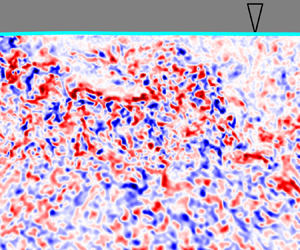
We investigate the turbulence below a quasi-flat free surface, focusing on the energy transport in space and across scales. We leverage a large zero-mean-flow tank where homogeneous turbulence is generated by randomly actuated jets. A wide range of Reynolds number is spanned, reaching sufficient scale separation for the emergence of an inertial sub-range. Unlike previous studies, the forcing extends through the source layer, although the surface deformation remains millimetric. Particle image velocimetry along a surface-normal plane resolves from the dissipative to the integral scales. The contributions to turbulent kinetic energy from both vertical and horizontal components of velocity approach the prediction based on rapid distortion theory as the Reynolds number is increased, indicating that discrepancies among previous studies are likely due to differences in the forcing. At odds with the theory, however, the integral scale of the horizontal fluctuations grows as the surface is approached. This is rooted in the profound influence exerted by the surface on the inter-scale energy transfer: along horizontal separations, the direct cascade of energy in horizontal fluctuations is hindered, while an inverse cascade of that in vertical fluctuations is established. This is connected to the structure of upwellings and downwellings. The former, characterized by somewhat larger spatial extent and stronger intensity, are associated with extensional surface-parallel motions. They thus transfer energy to the larger horizontal scales, prevailing over downwellings which favour the compression (and concurrent vertical stretching) of the eddies. Both types of structures extend to depths between the integral scale and the Taylor microscale.
Multi-site and multi-organizational teams are increasingly common in epidemiologic research; however, there is a lack of standards or best practices for achieving success in collaborative research networks in epidemiology. We summarize our experiences and lessons learned from the Diabetes Location, Environmental Attributes, and Disparities (LEAD) Network, a collaborative agreement between the Centers for Disease Control and Prevention and research teams at Drexel University, New York University, Johns Hopkins University and Geisinger, and the University of Alabama at Birmingham. We present a roadmap for success in collaborative epidemiologic research, with recommendations focused on the following areas to maximize efficiency and success in collaborative research agreements: 1) operational and administrative considerations; 2) data access and sharing of sensitive data; 3) aligning network research aims; 4) harmonization of methods and measures; and 5) dissemination of findings. Future collaborations can be informed by our experiences and ultimately dedicate more resources to achieving scientific aims and efficiently disseminating scientific work products.
The Cretaceous/Paleogene (K/Pg) mass extinction was a pivotal event in Earth history, the latest among five mass extinctions that devastated marine and terrestrial life. Whereas much research has focused on the global demise of dominant vertebrate groups, less is known about changes among plant communities during the K/Pg mass extinction. This study investigates a suite of 11 floral assemblages leading up to and across the K/Pg boundary in northeastern Montana constrained within a well-resolved chronostratigraphic framework. We evaluate the impact of the mass extinction on local plant communities as well as the timing of post-K/Pg recovery. Our results indicate that taxonomic composition changed significantly from the Late Cretaceous to Paleocene; we estimate that 63% of latest-Cretaceous plant taxa disappeared across the K/Pg boundary, on par with other records from North America. Overall, taxonomic richness dropped by ~23–33% from the Late Cretaceous to the Paleocene, a moderate decline compared with other plant records from this time. However, richness returned to Late Cretaceous levels within 900 kyr after the K/Pg boundary, significantly faster than observed elsewhere. We find no evidence that these results are due to preservational bias (i.e., differences in depositional environment) and instead interpret a dramatic effect of the K/Pg mass extinction on plant diversity and ecology. Overall, plant communities experienced major restructuring, that is, changes in relative abundance and unseating of dominant groups during the K/Pg mass extinction, even though no major (e.g., family-level) plant groups went extinct and communities in Montana quickly recovered in terms of taxonomic diversity. These results have direct bearing on our understanding of vegetation change during diversity crises, the differing responses of plant groups (e.g., angiosperms vs. gymnosperms), and spatial variation in extinction and recovery timing.
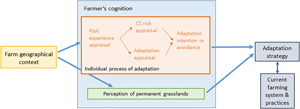
Climate change will increase average temperatures and the frequency and intensity of summertime droughts; those shifts will in turn affect forage production in grassland-based livestock farms. Farmers will accordingly likely have to implement adaptation strategies to cope with the effects of climate change. We hypothesized that farmers' resilience strategies would depend on (i) their intention to adapt to climate change, which partly results from previous climate risk exposure, (ii) how they perceive the values and disvalues of multi-species permanent grasslands (PGs), and (iii) that both of the aforementioned factors would vary according to the geographical context of each farm. We carried out 15 semi-structured interviews with dairy cattle farmers in the French Massif Central; the farms were distributed along a range of climatic and topographic conditions. We used (i) the Model of Proactive Private Adaptation to Climate Change to analyze farmers' individual process of adaptation, (ii) the Integrated Nature Futures Framework to analyze farmers' perception of multi-species PGs, and (iii) text analysis to identify the farmers' adaptation strategies. Nine of the farmers felt that they were already adapted to climate change or that they had a plan in place to implement new adaptations in the future. We observed straightforward relationships between these farmers' perception of PGs and their choice of adaptation strategy; those relationships varied, however, with the geographical context of each farm. Farmers in the northern Massif Central and southern uplands highlighted the values of PGs and considered PGs to be central to their adaption strategies. Conversely, farmers in the southern lowlands mostly referred to the disvalues of PGs; they based their adaptation strategies on temporary grasslands and forage crops. Three of the farmers believed that climate change posed a significant risk, but they foresaw little room to maneuver. Despite acknowledging the values of PGs, those individuals did not intend to use PGs to adapt to climate change. The final three farmers did not intend to adapt to climate change; their reasoning stemmed from either a mindset of fatalism or their acknowledged desire to retire soon. Extreme events such as the summertime drought of 2003 and human factors such as intergenerational transmission of farm can accordingly facilitate or inhibit climate change-related adaptation. It is accordingly important to take into account both socio-psychological and environmental factors when analyzing how grassland-based farmers transition to more climate change-resilient systems.
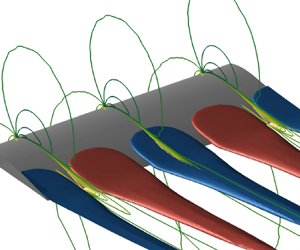
Stall cells are transverse cellular patterns that often appear on the suction side of airfoils near stalling conditions. Wind-tunnel experiments on a NACA4412 airfoil at Reynolds number ${Re}=3.5 \times 10^5$ show that they appear for angles of attack larger than $\alpha = 11.5^{\circ }\ (\pm 0.5^{\circ })$. Their onset is further investigated based on global stability analyses of turbulent mean flows computed with the Reynolds-averaged Navier–Stokes (RANS) equations. Using the classical Spalart–Allmaras turbulence model and following Plante et al. (J. Fluid Mech., vol. 908, 2021, A16), we first show that a three-dimensional stationary mode becomes unstable for a critical angle of attack $\alpha = 15.5^{\circ }$ which is much larger than in the experiments. A data-consistent RANS model is then proposed to reinvestigate the onset of these stall cells. Through an adjoint-based data-assimilation approach, several corrections in the turbulence model equation are identified to minimize the differences between assimilated and reference mean-velocity fields, the latter reference field being extracted from direct numerical simulations. Linear stability analysis around the assimilated mean flow obtained with the best correction is performed first using a perturbed eddy-viscosity approach which requires the linearization of both RANS and turbulence model equations. The three-dimensional stationary mode becomes unstable for angle $\alpha = 11^{\circ }$ which is in significantly better agreement with the experimental results. The interest of this perturbed eddy-viscosity approach is demonstrated by comparing with results of two frozen eddy-viscosity approaches that neglect the perturbation of the eddy viscosity. Both approaches predict the primary destabilization of a higher-wavenumber mode which is not experimentally observed. Uncertainties in the stability results are quantified through a sensitivity analysis of the stall cell mode's eigenvalue with respect to residual mean-flow velocity errors. The impact of the correction field on the results of stability analysis is finally assessed.


In recent years, an old contentious tactic in which protesters besiege and harass public officials in their private homes has resurged. Discontented sectors of all stripes have employed what is most commonly called charivari or “rough music.” To elucidate this surprising reappearance, this reflection highlights the rise of conflict over cultural and moral values, affective polarization, and the personalization of politics. Moreover, the proliferation of social media has eroded the boundary between the public and private sphere and thus propelled the resurgence of privacy-breaching direct action. This interpretive essay compares the special features of revived charivari with its earlier incarnations in premodern times and in the revolutions of the long nineteenth century, and with the internet harassment of the twenty-first century. By analyzing the reappearance of a contentious tactic with premodern roots, this essay seeks to shed light on broader trends of sociopolitical development in the postmodern age.
Empathy has been proposed as a solution to alleviate interparty antipathy. Recent findings from the US suggest that one aspect of empathy – empathic concern – increases rather than decreases affective polarization. Perspective-taking, another aspect of empathy, has no effect on affective polarization. In this article, we describe a preregistered replication and extension of these findings in the contrasting political context of the Netherlands, to see whether this relationship generalizes beyond the US. First, using a cross-sectional nationally representative sample of 1,258 Dutch voters, we show that empathic concern indeed fuels affective polarization while at the same time we find that perspective-taking reduces it. Second, using a two-arm survey experiment (n = 438), we show that perspective-taking reduces ingroup bias, whereas empathic concern does not. Reflecting on the American and Dutch findings, we conclude that while empathic concern likely contributes to affective polarization, perspective-taking may reduce it.
Both childhood adversity (CA) and first-episode psychosis (FEP) have been linked to alterations in cortical thickness (CT). The interactive effects between different types of CAs and FEP on CT remain understudied.
Methods
One-hundred sixteen individuals with FEP (mean age = 23.8 ± 6.9 years, 34% females, 80.2% non-affective FEP) and 98 healthy controls (HCs) (mean age = 24.4 ± 6.2 years, 43% females) reported the presence/absence of CA <17 years using an adapted version of the Childhood Experience of Care and Abuse (CECA.Q) and the Retrospective Bullying Questionnaire (RBQ) and underwent magnetic resonance imaging (MRI) scans. Correlation analyses were used to assess associations between brain maps of CA and FEP effects. General linear models (GLMs) were performed to assess the interaction effects of CA and FEP on CT.
Results
Eighty-three individuals with FEP and 83 HCs reported exposure to at least one CA. CT alterations in FEP were similar to those found in participants exposed to separation from parents, bullying, parental discord, household poverty, and sexual abuse (r = 0.50 to 0.25). Exposure to neglect (β = −0.24, 95% CI [−0.37 to −0.12], p = 0.016) and overall maltreatment (β = −0.13, 95% CI [−0.20 to −0.06], p = 0.043) were associated with cortical thinning in the right medial orbitofrontal region.
Conclusions
Cortical alterations in individuals with FEP are similar to those observed in the context of socio-environmental adversity. Neglect and maltreatment may contribute to CT reductions in FEP. Our findings provide new insights into the specific neurobiological effects of CA in early psychosis.
Fiber Bragg grating-based Raman oscillators are capable of achieving targeted frequency conversion and brightness enhancement through the provision of gain via stimulated Raman scattering across a broad gain spectrum. This capability renders them an exemplary solution for the acquisition of high-brightness, specialized-wavelength lasers. Nonetheless, the output power of all-fiber Raman oscillators is typically limited to several hundred watts, primarily due to limitations in injectable pump power and the influence of higher-order Raman effects, which is inadequate for certain application demands. In this study, we introduce an innovative approach by employing a graded-index fiber with a core diameter of up to 150 μm as the Raman gain medium. This strategy not only enhances the injectable pump power but also mitigates higher-order Raman effects. Consequently, we have successfully attained an output power of 1780 W for the all-fiber Raman laser at 1130 nm, representing the highest output power in Raman fiber oscillators with any configuration reported to date.
Much has changed since 2007–2010 when I co-edited the journal Politics & Gender (P&G) with Kathleen Dolan. In this essay, I reflect on the changes in the journal and the subfield of a comparative politics of gender. Dolan and I were the second team to edit the journal, following in the footsteps of the inaugural editors Karen Beckwith and Lisa Baldez. The journal was finding its footing at the time, and increasing submissions was a key concern. This year, on its 20th anniversary, we can celebrate that the journal, like the subfield of gender and politics, has flourished and matured. The number of articles published by the journal has multiplied exponentially and the quality of articles has improved significantly. Moreover, the journal has demonstrably helped shape the subfield of a comparative politics of gender in ways that I outline below.
Studies in cognitively normal individuals on associations between psychiatric symptomatology and incident dementia have not reliably differentiated psychiatric syndromes from neuropsychiatric symptoms (NPS) that represent neurodegeneration. Conventional modelling often overlooks symptom natural history. Mild behavioural impairment (MBI) is a syndrome that leverages later-life emergent and persistent NPS to identify a high-risk group for incident dementia.
Aim
We aimed to explore associations of MBI, and conventionally-measured NPS (NPS-not-MBI), with incident dementia in cognitively normal individuals and the cognitively normal subset with subjective cognitive decline (SCD).
Method
Using National Alzheimer's Coordinating Center data, MBI was operationalised by the absence of past psychiatric disorders (symptom emergence) and the presence of symptoms at >2/3 of pre-dementia visits (symptom persistence). Kaplan–Meier survival curves and Cox proportional hazards regressions modelled dementia incidence across NPS groups and MBI domains, adjusted for age, gender, education, race, APOE-ε4, and cognitive status.
Results
The sample comprised 1408 MBI (age 75.2 ± 9.5; 54.3% female), 5625 NPS-not-MBI (age 71.6 ± 8.8; 65.5% female) and 5078 No-NPS (age 71.2 ± 8.9; 67.6% female) participants. Compared with No-NPS, MBI participants had lower dementia-free survival (P < 0.0001) and 2.76-fold greater adjusted dementia incidence rate (95% CI: 2.27–3.35, P < 0.001); incidence rate in NPS-not-MBI did not differ from No-NPS (hazard ratio 0.97, 95% CI: 0.82–1.14, P = 0.687). Of those with MBI who progressed to dementia, 76.0% developed Alzheimer's disease. Similarly, in the SCD subsample (n = 3485), persons with MBI had 1.99-fold greater dementia incidence versus No-NPS (95% CI: 1.46–2.71, P < 0.001) while NPS-not-MBI did not differ from No-NPS (hazard ratio 0.92, 95% CI: 0.70–1.19, P = 0.511).
Conclusions
Incorporating natural history into assessment of psychiatric symptoms in accordance with MBI criteria enhances dementia prognostication and modelling.
This special issue explores foundational questions in behavioral economics and behavioral public policy, drawing on the work of Mario Rizzo, a critical voice in the debate on behavioral paternalism. Behavioral economics has offered significant insights into decision-making, often challenging traditional economic models. However, it has also introduced normative frameworks into policy analysis, such as preference purification, that critics argue oversimplify human decision-making and risk imposing external values. Contributions to this issue examine themes including the tension between standard rationality and inclusive rationality, the epistemological limitations of paternalistic interventions, and the role of tacit knowledge and dynamic learning in policymaking. By engaging perspectives from economics, psychology, philosophy, and law, the issue discusses process-based approaches to policy analysis that respect individual agency and accommodate uncertainty. It also highlights the political economy dimensions of behavioral public policy, emphasizing the need for institutional reforms that enable learning and systematic change rather than narrowly focusing on individual cognitive biases. This issue serves as both a tribute to Mario Rizzo’s intellectual contributions and a call for a deeper reflection on the methodological and normative foundations of behavioral public policy.
Renal sinus fat (RSF) crucially influences metabolic regulation, inflammation, and vascular function. We investigated the association between RSF accumulation, metabolic disorders, and nutritional status in obese individuals with hypertension. A cross-sectional study involved 51 obese hypertensive patients from Salamat Specialized Community Clinic (February–September 2022). Basic and clinical information were collected through interviews. Data included anthropometrics, blood pressure, number of antihypertensive medications, body composition (bioelectrical impedance analysis), dietary intake (semi-quantitative 147-item food frequency questionnaire), and blood samples. Renal sinus fat was measured via ultrasonography. Statistical analyses included Pearson correlation, binary logistic regression, and linear regression. RSF positively correlated with abdominal visceral adipose tissue (VAT) area (P = 0.016), systolic blood pressure (SBP) (P = 0.004), and diastolic blood pressure (DBP) (P = 0.005). A strong trend toward a positive association was observed between antihypertensive medications and RSF (P = 0.062). In linear regression, RSF was independently associated with abdominal VAT area, SBP, and DBP after adjusting for confounders. After considering other risk factors, RSF volume relates to prescribed antihypertensive medications, hypertension, and central fat accumulation in obese hypertensive subjects. These findings suggest the need for further investigations into whether RSF promotes metabolic disorders.
One pedagogical finding that has gained recent attention is the utility of active, effortful retrieval practice in effective learning. Essentially, humans learn best when they are asked to actively generate/recall knowledge for themselves, rather than receiving knowledge passively. In this paper, we (a) provide a framework for both practice and assessment within which students can organically develop active study habits, (b) share resources we have built to help implement such a framework in the linguistics classroom, and (c) provide some examples and evaluation of their success in the context of an introductory phonetics/phonology course.
The performance of plants in any one generation can be influenced not just by the prevailing biotic and abiotic factors, but also by those factors experienced by the parental generation. These maternal effects have been recorded in an array of plant species, but most studies tend to focus on abiotic factors over two generations. Here we show that maternal effects in the annual forb Senecio vulgaris may be influenced by beneficial arbuscular mycorrhizal fungi and insect herbivory over four successive generations. These effects were very much determined by seed provisioning, wherein C:N:P ratios were altered by both fungi and aphids. There was little evidence of epigenetic changes induced by the fungi or insects, instead the driving forces seemed to be allocation of N and P to the seeds. However, changes in seed chemistry were not cumulative over generations, often decreases in seed nutrient content were followed by recovery in subsequent generations. The changes in seed stoichiometry can have important consequences for viability, germination and subsequent seedling growth rates. We conclude that studies of maternal effects need to be conducted over multiple generations, and also need to be multifactorial, involving variation in abiotic factors such as water and nutrients, combined with biotic factors.
While there is ample evidence for the efficacy of IPT, confirmed through the results of the efficacy review, on the ground implementation factors are less well understood. We compiled a book on the global reach of IPT by requesting contributions from local authors through word-of-mouth methods. This approach resulted in reports from 31 countries across six continents and 15 diverse populations within the US that spanned the age range and types of usage. In this paper, our aim was to collate and summarize book contributors' descriptions of barriers and facilitators as related to their experiences of implementing IPT across the 31 countries. We conducted a conceptual content analysis and then applied the updated Consolidated Framework of Implementation Research (CFIR) to deductively organize the barriers and facilitators into its five domains. Most found IPT to be relevant and acceptable and described minor variations needed for tailoring to context. National level policies and mental health stigma were highlighted in the outer setting. Availability of specialists and general and mental health infrastructure were considerations relevant to the inner setting. Many sites had successfully implemented IPT through delivery by nonspecialized providers, although provider workload and burnout were common. Clients faced numerous practical challenges in accessing weekly care. Primary strategies to mitigate these challenges were use of telehealth delivery and shortening of the intervention duration. Most programs ensured competency through a combination of didactic training and case supervision. The latter was identified as time-intensive and costly.
The necessity for high-resolution two-dimensional (2D) simulations in flood modelling often requires excessively long simulation times. This study evaluates the impact of various hardware configurations on Hydrologic Engineering Center-River Analysis System (HEC-RAS) 2D with particular emphasis on Central Processing Unit (CPU) speed, number of cores, Random Access Memory (RAM) capacity, addressing a critical gap in the optimisation of hardware setups for time-efficient simulations. These findings are invaluable for flood modellers and the HEC-RAS community, ultimately supporting more effective flood risk management and decision-making. Additionally, the study examines how different meshes, numerical solution methods, and solving equations perform within these hardware setups, aiming to examine the effects of computational techniques on overall simulation efficiency. Our investigations were carried out using both virtual machines on the Google Cloud Platform and a desktop PC. The findings indicate that optimal performance in HEC-RAS 2D simulations does not necessarily correlate with a higher number of cores or increased RAM. Instead, a well-adjusted configuration with 8 cores and 64 GB of RAM demonstrates superior efficiency. This result questions the usual assumptions about the need for greater computational power and emphasises the value of carefully optimising hardware for fast hydraulic modelling.
Symmetry is a salient visual feature in the natural world, yet the perception of symmetry may be influenced by how natural lighting conditions (e.g., shading) fall on the object relative to its symmetry axis. Here, we investigate how symmetry detection may interact with luminance polarity grouping, and whether this modulates neural responses to symmetry, as evidenced by the Sustained Posterior Negativity (SPN) component of Event-Related Potentials (ERPs). Stimuli were dot patterns arranged either symmetrically (reflection, rotation, translation) or quasi-randomly, and by luminance polarity about a grouping axis (i.e., black dots on one side and white dots on the other). We varied the relative angular separation between the symmetry and polarity-grouping axes: 0, 30, 60, 90 deg. Participants performed a two interval-forced-choice (2IFC) task indicating which interval contained the symmetrical pattern. We found that accuracy for the 0 deg polarity-grouped condition was higher compared to the single-polarity condition for rotation and translation (but not reflection symmetry), and higher than all other angular difference (30, 60, 90) conditions for all symmetry types. The SPN was found to be separated topographically into an early and late component, with the early SPN being sensitive to luminance polarity grouping at parietal-occipital electrodes, and the late SPN sensitive to symmetry over central electrodes. The increase in relative angular differences between luminance polarity and symmetry axes highlighted changes between cardinal (0, 90 deg) and other (30, 60 deg) angles. Critically, we found a polarity-grouping effect in the SPN time window for noise only patterns, which was related to symmetry type, suggesting a task/ symmetry pattern influence on SPN processes. We conclude that luminance polarity grouping can facilitate symmetry perception when symmetry is not readily salient, as evidenced by polarity sensitivity of early SPN, yet it can also inhibit neural and behavioral responses when luminance polarity and symmetry axes are not aligned.