To save content items to your account,
please confirm that you agree to abide by our usage policies.
If this is the first time you use this feature, you will be asked to authorise Cambridge Core to connect with your account.
Find out more about saving content to .
To save content items to your Kindle, first ensure no-reply@cambridge.org
is added to your Approved Personal Document E-mail List under your Personal Document Settings
on the Manage Your Content and Devices page of your Amazon account. Then enter the ‘name’ part
of your Kindle email address below.
Find out more about saving to your Kindle.
Note you can select to save to either the @free.kindle.com or @kindle.com variations.
‘@free.kindle.com’ emails are free but can only be saved to your device when it is connected to wi-fi.
‘@kindle.com’ emails can be delivered even when you are not connected to wi-fi, but note that service fees apply.
What does it mean to write the history of science and the ‘big picture’? In this introduction, I argue that ‘scale’ is a crucial but relatively underutilized concept for addressing this question. Rather than taking ‘big’ as a transparent category, I develop a detailed theoretical account of scale in the history and historiography of science. Following work in political geography, I argue that there is a ‘politics of scale’, one that the sciences have played a key role in shaping. Following work in the philosophy of history, I argue that scale should be thought of in its temporal dimension as well as its more traditional spatial dimension. And following work in cultural anthropology, I argue that scale should be understood as an actor's category just as much as an analytic category. The sciences, it turns out, have been one of the principal means through which scale is made and contested. More broadly, this volume of BJHS Themes encourages a creative and open-ended approach to scale in the history of science.
Although pretrained large language models (PLMs) have achieved state of the art on many natural language processing tasks, they lack an understanding of subtle expressions of implicit hate speech. Various attempts have been made to enhance the detection of implicit hate by augmenting external context or enforcing label separation via distance-based metrics. Combining these two approaches, we introduce FiADD, a novel focused inferential adaptive density discrimination framework. FiADD enhances the PLM finetuning pipeline by bringing the surface form/meaning of an implicit hate speech closer to its implied form while increasing the intercluster distance among various labels. We test FiADD on three implicit hate datasets and observe significant improvement in the two-way and three-way hate classification tasks. We further experiment on the generalizability of FiADD on three other tasks, detecting sarcasm, irony, and stance, in which surface and implied forms differ, and observe similar performance improvements. Consequently, we analyze the generated latent space to understand its evolution under FiADD, which corroborates the advantage of employing FiADD for implicit hate speech detection.
We present the Okinawa Institute of Science and Technology – Taylor–Couette set-up (OIST-TC), a new experimental set-up for investigating turbulent Taylor–Couette (TC) flow. The set-up has independently rotating inner and outer cylinders, and can achieve Reynolds numbers up to $10^6$. Noteworthy aspects of its design include innovative strategies for temperature control and vibration isolation. As part of its flow-measurement instrumentation, we have implemented the first ‘flying hot-wire’ configuration to measure the flow velocity whilst either or both cylinders are rotating. A significant challenge for obtaining reliable measurements from sensors within the inner cylinder is the data distortion resulting from electrical and electromagnetic interference along the signal pathway. Our solution involves internal digitization of sensor data, which provides notable robustness against noise sources. Additionally, we discuss our strategies for efficient operation, outlining custom automation tools that streamline both data processing and operational control. We hope this documentation of the salient features of OIST-TC is useful to researchers engaged in similar experimental studies that delve into the enchanting world of turbulent TC flow.
The amphipod Incisocalliope aestuarius was recently collected since 2015 in the mesohaline part of the Gironde Estuary (SW France) with a van Veen grab and in the lower intertidal part in oyster bed by hand-picking. A look back at past studies showed that this species was present in this estuary since 1976, whereas the original description of this amphipod comes from Watling and Maurer in 1973, from the East coast of America. The validity of the Incisocalliope genus is herein questioned, and it is proposed to transfer species of the genus Inciscalliope to Parapleustes genus.
Clinical characteristics of psychosis in HIV infection have been described, but there have been limited comparative studies in HIV-endemic low-resource regions.
Aim
To compare clinical characteristics of psychosis in HIV-positive and HIV-negative patients at the main psychiatric referral units in Uganda.
Method
Patients with psychosis were consecutively recruited and completed a standardised demographic questionnaire and psychiatric and laboratory assessments including an HIV test. The Mini International Neuropsychiatric Interview was used to diagnose psychiatric illness. Psychosis symptoms were compared between HIV-positive and HIV-negative individuals using bivariate methods. A logistic regression model was used to assess the effects of age, gender and HIV status on different types of psychosis.
Results
There were 478 patients enrolled, of which 156 were HIV positive and 322 were HIV negative. The mean age was 33.2 years (95% CI 31.8–34.5) for the HIV-positive group and 29.6 years (95% CI 28.7–30.5) for the HIV-negative group (P < 0.001). Female patients had a higher proportion of seropositivity 40.6% (95% CI 34.8–46.4) compared with males 21.8% (95% CI 16.1–27.5) (P < 0.001). Psychotic disorder not otherwise specified occurred more in the HIV-positive individuals (88% (95% CI 82.9–93.1) v. 12% (95% CI 8.4–15.5), P < 0.001). Motor activity, irritability, emotional withdrawal, feelings of guilt, mannerisms and posturing, grandiosity, suspiciousness, unusual thoughts, blunted affect, excitement and disorientation were associated with HIV seropositivity.
Conclusion
The presentation of psychosis in patients with HIV is unique to this HIV endemic setting. Characterisation of the symptomatology of patients presenting with psychosis is important for proper diagnosis and care.
Ambulatory antimicrobial stewardship can be challenging due to disparities in resource allocation across the care continuum, competing priorities for ambulatory prescribers, ineffective communication strategies, and lack of incentive to prioritize antimicrobial stewardship program (ASP) initiatives. Efforts to monitor and compare outpatient antibiotic usage metrics have been implemented through quality measures (QM). Healthcare Effectiveness Data and Information Set (HEDIS®) represent standardized measures that examine the quality of antibiotic prescribing by region and across insurance health plans. Health systems with affiliated emergency departments and ambulatory clinics contribute patient data for HEDIS measure assessment and are directly related to value-based reimbursement, pay-for-performance, patient satisfaction measures, and payor incentives and rewards. There are four HEDIS® measures related to optimal antibiotic prescribing in upper respiratory tract diseases that ambulatory ASPs can leverage to develop and measure effective interventions while maintaining buy-in from providers: avoidance of antibiotic treatment for acute bronchitis/bronchiolitis, appropriate treatment for upper respiratory infection, appropriate testing for pharyngitis, and antibiotic utilization for respiratory conditions. Additionally, there are other QM assessed by the Centers for Medicare and Medicaid Services (CMS), including overuse of antibiotics for adult sinusitis. Ambulatory ASPs with limited resources should leverage HEDIS® to implement and measure successful interventions due to their pay-for-performance nature. The purpose of this review is to outline the HEDIS® measures related to infectious diseases in ambulatory care settings. This review also examines the barriers and enablers in ambulatory ASPs which play a crucial role in promoting responsible antibiotic use and the efforts to optimize patient outcomes.
This article focuses on the branding of Patriotic Alternative (PA), a British fascist organization and business, in three analytic steps: (i) branding as circulating ideologies as commodities; (ii) branding as creating—and selling—community, and (iii) branding as regimenting meaning. Building on work on the communicability of evil and language, nationalism, and political economy, we explore how PA uses the affordances of platform capitalism in a project that goes beyond ideological normalization: not just rebranding a message as acceptable but selling a product which builds a community aligned with this ideology. Looking at both brand and political websites, YouTube, as well as Telegram channels, we show how PA's branding functions to invest a wide range of mundane practices with racist meaning; they are imagined to forestall the great replacement. Rebranding racism as white community, every cup of tea sold brings back the world of your grandma, each bar of soap protects white skin. (Far-right semiosis, branding, platform capitalism)*
Los sistemas de pensiones en la encrucijada: Desafíos para la sostenibilidad en América Latina. By Alberto Arenas de Mesa. Santiago: CEPAL, 2019. Pp. 315. Open access.
Power, Alliances, and Redistribution: The Politics of Social Protection for Low-income Earners in Argentina, 1943–2015. By Carl Freidrich Bossert. Berlin: Budrich Academic Press, Opladen, 2021. Pp. 373. Open access.
El porvenir de la vejez: Demografía, empleo y ahorro. By María Amparo Cruz Saco, Bruno Seminario, Favio Leiva, Carla Moreno, and María Alejandra Zegarra. Lima: Universidad del Pacífico, 2021. Pp. 430. S/.52.00 paperback, S/.28.00 ebook.
La desestructuración del sistema peruano de pensiones. By María Amparo Cruz-Saco, Bruno Seminario, Favio Leiva, Carla Moreno, María Alejandra Zegarra. Lima: Universidad del Pacífico, 2020. Pp. 96.
Welfare and Social Protection in Contemporary Latin America. Edited By Gibrán Cruz-Martínez. New York: Routledge, 2019. Pp. 254. $47.65 e-book.
Pensiones de capitalización individual en América Latina: Efectos, reformas, impacto del COVID-19 y propuestas de política. By Carmelo Mesa-Lago. Santiago: CEPAL, 2022. Pp. 104. Open access.
The preponderance and influence of the public sector in the financial system have long been a defining characteristic of Brazilian capitalism. While exerting control over the national credit system through targeted lending policies and other regulatory tools, the federal government also wields significant weight through its state-owned institutions. This article delves into the role of Banco do Brasil (BB), a prominent financial institution and policymaking instrument of the Brazilian government, during the zenith of the developmental state between 1964 and 1982. In contrast to the prevailing focus on financing public spending, this study investigates the international engagements of BB and unveils its participation in managing the country’s external imbalances. BB’s financing proved crucial in bypassing the IMF and reinforcing the government’s commitment to industrialization and developmentalism. The article offers new insights into the forces of Brazil’s state-led finance and the political economy shaping its current banking and regulatory landscape.
From where does management acquire its authority to act in the name of the corporation? The orthodoxy that shareholders alone authorise management is frequently criticised for treating the corporation as the property of shareholders, rather than as a distinct legal person in its own right (Ciepley, 2013; Deakin, 2012; Robé, 2011; Stout, 2012). However, Hobbes’s theory of incorporation in Leviathan shows this influential critique of shareholder primacy to rest on a non sequitur. It does not follow from the (correct) observation that the corporation is a legal person to the conclusion that its interests are distinct from those of shareholders. Just as individuals become citizens of a state when they authorise a sovereign, shareholders are incorporated when they authorise a representative assembly to act in their interests. Shareholders thereby form a single corporate person and are ultimately responsible for whatever is done in their corporate name.
Research shows that children’s home environment (e.g., the composition of their household and the resources available in it) has an impact on children’s language development. However, this research has mostly been conducted among English speakers from the minority world and has often only considered vocabulary size. This exploratory study investigated whether home environment factors are predictive of grammar development in Afrikaans-speaking (n = 117) and English-speaking (n = 102) toddlers in South Africa. Moreover, potential differences between these two language groups were explored. Results showed that home environment factors pertaining to family stability predicted two of the three grammar scores, namely total grammar and complex phrases. Cluster analysis showed distinct patterns of home environment factors between Afrikaans and English-speaking households, illustrating the importance of measuring these factors even across samples from the same country. This study shows that children’s home environment is an interconnected system and cautions against oversimplified single-factor approaches.
To communicate successfully, listeners must decode both the literal and intended meanings of a speaker’s message. This ability is especially crucial when processing indirect replies as intended meanings can differ significantly from what was said. How native and non-native speakers differ in this ability is an open question. The present study investigated differences in the time course of indirect reply processing in native and non-native Mandarin speakers. EEG signals were recorded while participants were presented with conversations that differed in their directness. For indirect replies, native speakers exhibited a larger left anterior N400 and posterior late positive component (LPC). Conversely, non-native speakers exhibited a larger left-distributed LPC and delayed LPC. Findings support that non-native speakers exhibit delayed processing of indirect replies, potentially because of cognitive resource limitations. Findings from the present study have implications for a broad range of investigations on human communication and second language processing.
Our study aim was to identify high-risk areas of neonatal mortality associated with bacterial sepsis in the state of São Paulo, Southeast Brazil. We used a population-based study applying retrospective spatial scan statistics with data extracted from birth certificates linked to death certificates. All live births from mothers residing in São Paulo State from 2004 to 2020 were included. Spatial analysis using the Poisson model was adopted to scan high-rate clusters of neonatal mortality associated with bacterial sepsis (WHO-ICD10 A32.7, A40, A41, P36, P37.2 in any line of the death certificate). We found a prevalence of neonatal death associated with bacterial sepsis of 2.3/1000 live births. Clusters of high neonatal mortality associated with bacterial sepsis were identified mainly in the southeast region of the state, with four of them appearing as cluster areas for all birth weight categories (<1500 g, 1500 to <2500 g and ≥ 2500 g). The spatial analysis according to the birth weight showed some overlapping in the detected clusters, suggesting shared risk factors that need to be explored. Our study highlights the ongoing challenge of neonatal sepsis in the most developed state of a middle-income country and the importance of employing statistical techniques, including spatial methods, for enhancing surveillance and intervention strategies.
Personality pathology is hypothesized to be an important factor in shaping identity, yet longitudinal evidence linking dimensional measures of identity and personality pathology remains scarce. To address this knowledge gap and shed light on the reciprocal dynamics proposed by the alternative model of personality disorder, we conducted a comprehensive seven-year study involving 372 emerging adults from a community sample (MageT1 = 21.98 years, SDT1 = 1.13; 57% females). Pathological personality traits were assessed using the short form of the Personality Inventory for DSM-5 (PID-5 SF) while identity was assessed with the Dimensions of Identity Development Scale (DIDS). Cross-lagged analyses in Mplus revealed that personality pathology consistently predicts subsequent different levels of identity seven years later, whereas only one significant pathway from identity to personality pathology was found. Notably, negative affectivity and detachment emerge as the most influential pathological personality trait, whereas no significant effects were found for disinhibition and psychoticism. In summary, our study uncovered compelling longitudinal associations that underscore the pivotal role of pathological personality traits in the development of identity. Implications and suggestions for future research are discussed.
The “othering” of international humanitarian law has a demonstrated past resulting from the exclusion of so-called “Enemies of the Faith” from the laws of chivalry. It is no surprise, then, that the idea of “sharp war” should seem so natural to some commentators given its historical application “by the discretion of the commander and such rules of justice and humanity as recommend themselves in the particular circumstances of the case”. The application of humanitarian principles, in other words, was the measure of the commander's charity rather than the result of legal compulsion.
The viability of sharp war appears to have increased in attractiveness as conventional State-on-State warfare has seemingly decreased in frequency; however, the question of sharp war has never been approached through a legal historical lens. Utilizing the research found in The Laws of Yesterday's Wars, a multi-author series edited by the present author, this paper seeks to fill this gap by scoping over a range of geographically and temporally disconnected case studies and the customary law developed to mitigate warfare. Ultimately, the paper highlights that “soft war” has naturally evolved in all cultures and that arguments for sharp war are a historical anomaly.
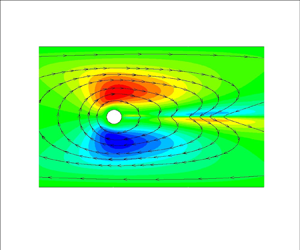
We study the two-dimensional creeping flow of a viscoelastic fluid around a cylinder confined between two plates parallel to its axis. First, we solve the governing equations under steady state with our novel stabilized finite-element formulation to obtain converged solutions even at very high Weissenberg numbers. Then, we examine the stability of this solution by perturbing all flow variables and solving the corresponding eigenvalue problem. At critical conditions, a stable asymmetric flow arises, in which more fluid passes from either the upper or the lower gap between the cylinder and the channel wall. Both shear-thinning and elasticity play a crucial role on the onset and subsequent evolution of the instability. Energy analysis shows that the terms of the constitutive equation corresponding to apparent strain-rate thinning and material extensibility are responsible for the flow destabilization. The instability is present at a wider range of flow conditions when the material is more elastic and when the solvent contribution is smaller. The instability is also promoted by increasing the confinement. Beyond the critical conditions, asymmetric flow profiles vanish when the flow is so intense that thinning effects are not important anymore. The critical Weissenberg number for instability inception and cessation depends on material properties and geometry exponentially and linearly, respectively. Furthermore, the instability arises even in a seemingly non-shear-thinning fluid, i.e. one with constant shear viscosity in simple shear, when the solvent contribution is minimal, because of the apparent thinning effect that is created by the convection of the viscoelastic stresses. Finally, models with extension-rate thinning trigger the instability at limited flow conditions, when the shear viscosity decreases with the shear rate, and the normal stresses at the wake of the cylinder are still important. These results agree with previous experiments and simulations, and give new insights on the physical mechanism that triggers this flow instability.
Intake of high quantities of dietary proteins sourced from dairy, meat or plants can affect body weight and metabolic health in humans. To improve our understanding of how this may be achieved, we reviewed the data related to the availability of nutrients and metabolites in the faeces, circulation and urine. All protein sources (≥20% by energy) increased faecal levels of branched-chain fatty acids and ammonia and decreased the levels of butyrate. Some metabolites responded to dairy and meat proteins (branched-chain amino acids) as well as dairy and plant proteins (p-cresol), which were increased in faecal matter. Specific to dairy protein intake, the faecal levels of acetate, indole and phenol were increased, whereas plant protein intake specifically increased the levels of kynurenine and tyramine. Meat protein intake increased the faecal levels of methionine, cysteine and alanine and decreased the levels of propionate and acetate. The metabolite profile in the faecal matter following dairy protein intake mirrored availability in circulation or urine. These findings provide an understanding of the contrasting gut versus systemic effects of different dietary proteins, which we know to show different physiological effects. In this regard, we provide directions to determining the mechanisms for the effects of different dietary proteins.
The Durness Group of NW Scotland records deposition on the Laurentian margin from the basal Miaolingian (Cambrian, 509 Ma) to the Dapingian–Darriwilian boundary interval (Middle Ordovician, 470.3–468.9 Ma). The 930 m thick succession of peritidal and subtidal carbonates was deposited on the Scottish promontory, a nearly 120° deflection in the Palaeozoic continental margin between the Appalachian and Greenland sectors. These sediments were deposited as part of the Great American Carbonate Bank, a non-uniformitarian, continent-scale carbonate platform developed on the peneplaned craton. Measurement and description of a bed-by-bed composite section through the Durness Group provide a high-resolution reference framework that integrates conodont biostratigraphy, chemostratigraphy and sequence stratigraphy, including correlation with the Sauk megasequence and its subdivisions. The Sauk II–Sauk III sequence boundary marks the base of the group. The top of the group is faulted against rocks of the Moine thrust zone, generated by the Scandian orogeny, but sedimentation was probably terminated by the earlier Grampian arc–continent collision at 470–469 Ma. The highly mature quartz arenites of the underlying Ardvreck Group (Cambrian Series 2) indicate that there was no source-to-sink depositional continuity from the Hebridean foreland to the Dalradian Supergroup, which has coeval clastic sedimentary rocks of contrasting composition.
It has been shown that the Mere Addition Paradox occurs in a choice-functional approach with Path Independence (Stewart R.T., 2021, Path independence and a persistent paradox of population ethics, Journal of Philosophy, forthcoming). The present study is a three-part response to this finding. First, I show that Path Independence is not an essential property leading to this paradox and that logically weaker properties can get the same result. Second, I present a rationalizable choice function that does not yield the paradox. And third, I argue that menu-dependent relations are nicely examined if Path Independence is relaxed to Property $\alpha $ (or equivalently, Contraction Consistency).
This article studies how ‘cybercrime’ is framed under the pre-existing regional prohibition regimes and how it would be reshaped under the auspices of the UN. This article adopts a sociolegal approach by integrating transnational criminal law (TCL) and the conceptual framework of recursivity. Observations and analyses show that (i) only the Budapest Convention has institutional capacity to shape ‘cybercrime’, while state behaviour of framing ‘cybercrime’ is actually subject to human rights instruments; (ii) states reach an exceptional compromise in transforming ‘cybercrime’ at the global level during the negotiations under the UN; and (iii) protection from cybercrime is emerging as a common interest. This author proposes that the normative changes of framing ‘cybercrime’ reflect the competition of states for normative power on the international plane; therefore, a pursuit of a universalist formula for countering cybercrime would not succeed owing to a lack of a global commitment to what basic norms and rules govern state behaviour in cyberspace. Lastly, this author proposes that transnational criminalization of cybercrime should seek a minimum public order at the first place because it is premature to provide any real global regulation at this moment.