To save content items to your account,
please confirm that you agree to abide by our usage policies.
If this is the first time you use this feature, you will be asked to authorise Cambridge Core to connect with your account.
Find out more about saving content to .
To save content items to your Kindle, first ensure no-reply@cambridge.org
is added to your Approved Personal Document E-mail List under your Personal Document Settings
on the Manage Your Content and Devices page of your Amazon account. Then enter the ‘name’ part
of your Kindle email address below.
Find out more about saving to your Kindle.
Note you can select to save to either the @free.kindle.com or @kindle.com variations.
‘@free.kindle.com’ emails are free but can only be saved to your device when it is connected to wi-fi.
‘@kindle.com’ emails can be delivered even when you are not connected to wi-fi, but note that service fees apply.
The recent enactment of supply chain due diligence regulation in various jurisdictions prompts reflection on how the law might best incentivize corporations to mitigate the impact they have on the environment.1 Beyond these specific pieces of legislation, judicial actors are similarly playing a role in expanding the responsibility of corporations for the harm their operations, products, and services cause to people and the environment, including throughout their supply chains. In this context, the present contribution takes aim at corporate accountability for climate change and appraises a number of recent developments in domestic jurisdictions that evidence a trend toward supply chain emission responsibility. While the focus of this piece is the contribution of domestic courts, an emphasis is placed on the role that informal international law and global norms have played in the reasoning of those decisions or the claims of litigants. In particular, it highlights the persuasive authority that such international law instruments and initiatives have had in this context.
Large-aperture gratings have significant applications in inertial confinement fusion, immersion lithography manufacturing and astronomical observation. Currently, it is challenging and expensive to manufacture sizable monolithic gratings. Therefore, tiled multiple small-aperture gratings are preferred. In this study, the impact of seam phase discontinuity on the modulation of the laser beam field was explored based on the measurement results of the Shenguang-II laser large-aperture multi-exposure-tiled grating. An innovative method for accurately calculating the phase jump of multi-exposure-tiled grating seams was proposed. An intensive electromagnetic field analysis was performed by applying rigorous coupled-wave analysis to a reasonably constructed micrometer-level periodic grating seam structure, and the phase jump appearing in millimeter-scale seams of large-aperture tiled gratings was obtained accurately.
The fragmentation of the Ilkhanate (1258–1335) midway through the fourteenth century coincided with the publication of several verse histories that were based upon the Blessed History (Tārīkh-i Mubārak) of Rashīd al-Dīn Hamadānī (d. 1318). Seen by many as lacking originality, these texts have often been treated as a new form of literary expression rather than a source of information about key episodes in Ilkhanid history. While it may be true that the verse histories are largely reliant on other sources for information about events that occurred before their time, the choice of what to copy and how it was presented reveals a great deal about changing attitudes to power, religion, and class as the Hülegüid Dynasty weakened and new power brokers appeared. This article will analyse how four verse histories—the Shāhnāmah-yi Chingīzī of Shams al-Dīn Kāshānī (1312–1316), the Ẓafarnāmah of Ḥamdallāh Mustawfī Qazvīnī (1335), the Shāhanshāhnāmah of Aḥmad Tabrīzī (1337), and the Ghāzānnāmah of Nūrī Azhdarī (1361)—reproduced the biography of the prominent Ilkhanid commander, Amīr Nawrūz (d. 1297), to gauge how changing circumstances influenced their view of the past. It will be shown that, although these stories may not offer much in the way of new information about Nawrūz, they do show how writers attempted to reshape their narratives to reinforce values of piety, justice, and loyalty during the Chinggisid crisis of the fourteenth century.
Much existing social commentary and scholarship around the regulation of the European digital economy is focused on how societies could better regulate that economy and its associated harms. Such analyses often portray a problematically viewed order as ungoverned, or not effectively governed, by law. Instead, I argue for more (re)descriptive analyses on how our pre-existing legal structures powerfully create order in the European digital economy. I explain why we should explore the productive connections between pre-existing European legal arrangements and socio-technical order, and discuss what such exploration could entail. The article covers three complementary ways in which legal arrangements are productively connected to sociotechnical order: as tools of ordering to address problems and promote values; as tools that can also enable projects unintended and unforeseen by policymakers; and as constitutive of technologies and other forms of order. It provides concrete examples of these productive connections from various contemporary struggles within the governance of the European digital economy. I argue that focusing on the analysis of productive connections may shed light on how pre-existing legal arrangements are baked into and shaped by the European socio-technical order. As the current order of the European digital economy is characterised by massive inequalities, these analyses can also direct our attention to how our pre-existing legal arrangements can produce and reproduce inequalities and oppression. Analyses of pre-existing legal arrangements might produce different attributions of responsibility and possibilities of contestation than analyses of legal deficiency.
Optical coherence tomography (OCT) and confocal microscopy are pivotal in retinal imaging, offering distinct advantages and limitations. In vivo OCT offers rapid, noninvasive imaging but can suffer from clarity issues and motion artifacts, while ex vivo confocal microscopy, providing high-resolution, cellular-detailed color images, is invasive and raises ethical concerns. To bridge the benefits of both modalities, we propose a novel framework based on unsupervised 3D CycleGAN for translating unpaired in vivo OCT to ex vivo confocal microscopy images. This marks the first attempt to exploit the inherent 3D information of OCT and translate it into the rich, detailed color domain of confocal microscopy. We also introduce a unique dataset, OCT2Confocal, comprising mouse OCT and confocal retinal images, facilitating the development of and establishing a benchmark for cross-modal image translation research. Our model has been evaluated both quantitatively and qualitatively, achieving Fréchet inception distance (FID) scores of 0.766 and Kernel Inception Distance (KID) scores as low as 0.153, and leading subjective mean opinion scores (MOS). Our model demonstrated superior image fidelity and quality with limited data over existing methods. Our approach effectively synthesizes color information from 3D confocal images, closely approximating target outcomes and suggesting enhanced potential for diagnostic and monitoring applications in ophthalmology.
This article addresses the teaching and learning of language attitudes within the context of a combined graduate/undergraduate Applied Linguistics course. Throughout the course, students critically discussed academic and research articles related to language attitudes towards some of the languages spoken by the students in the course (French, Spanish and Mandarin) and participated in a guided digital storytelling workshop. This article addresses the following research questions: (1) how do students embody their language attitudes through reflective storytelling? and (2) what do students gain in terms of learning outcomes from digital storytelling projects related to language attitudes? Common themes that emerged include (1) learning from others’ stories, (2) thinking creatively, (3) providing a platform for their voice, and (4) learning the connections between identity, language, and heritage. Digital storytelling can be used in other linguistics or problem-based courses as an alternative to final papers, with guidance that facilitates new understanding through collection of knowledge.
A key objective for upcoming surveys, and when re-analysing archival data, is the identification of variable stellar sources. However, the selection of these sources is often complicated by the unavailability of light curve data. Utilising a self-organising map (SOM), we demonstrate the selection of diverse variable source types from a catalogue of variable and non-variable SDSS Stripe 82 sources whilst employing only the median $u-g$, $g-r$, $r-i$, and $i-z$ photometric colours for each source as input, without using source magnitudes. This includes the separation of main sequence variable stars that are otherwise degenerate with non-variable sources ($u-g$,$g-r$) and ($r-i$,$i-z$) colour-spaces. We separate variable sources on the main sequence from all other variable and non-variable sources with a purity of $80.0\%$ and completeness of $25.1\%$, figures which can be modified depending on the application. We also explore the varying ability of the same method to simultaneously select other types of variable sources from the heterogeneous sample, including variable quasars and RR-Lyrae stars. The demonstrated ability of this method to select variable main sequence stars in colour-space holds promise for application in future survey reduction pipelines and for the analysis of archival data, where light curves may not be available or may be prohibitively expensive to obtain.
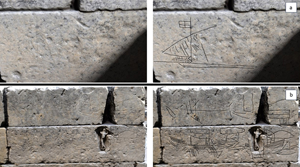
The Central Mediterranean Penal Heritage Project (CMPHP) employs remote-sensing techniques to study and preserve archaeological remains of human confinement. Within this larger project, digital photogrammetry was used to document part of the castle prison in Noto Antica to identify and digitally preserve graffiti depicting galleys and gameboards.
This essay argues that the possibility of governing the development and deployment of solar radiation modification (SRM) technology is predicated on the assumption of a liberal international order informed by an understanding of state responsibility. However, this order is experiencing a period of disruption that has placed stress on extant and emerging global governance regimes and brought the assumption of their efficacy and viability into doubt. In addition, international order and existing global governance of technologies with planetary implications, such as nuclear weapons, have become the increasing focus of criticism because of the inequities embedded within these institutions, calling into question how much of a roadmap the existing governance architecture can or should provide. Leading developers and proponents of SRM have advocated for cooperative, transparent, science-led governance, which parallels the language of early nuclear governance advocates, but there is a long history of displacement and disruption of indigenous and otherwise marginalized populations without meaningful consultation to accommodate technological developments driven by powerful, industrialized countries. Developing an ethical framework for the governance of SRM will be challenging under the current conditions of increasing tensions and confrontations between major powers that may have non–climate-related interests in developing and controlling SRM technology. This essay will reflect on whether the current international order, stable or unstable, is capable of producing ethical governance of SRM.
Prediction is a crucial mechanism of language comprehension. Our research question asked whether learners of Spanish were capable of using word order cues to predict the semantic class of the upcoming verb, and how this ability develops with proficiency. To answer this question, we conducted a self-paced reading study with three L2 Spanish groups at different proficiency levels and one native control group. Among the advanced L2 learners and native speakers, we found that reading times increased after the verb appeared in a word order not strongly associated with its semantic class. Because the only cue to the sentences’ word order was the presence or absence of the object marker a before the first noun, we suggest that these groups use this morphosyntactic cue to anticipate the semantic class of the upcoming verb. However, this pattern of processing behavior was not detected in our less experienced L2 groups.
Este artículo analiza la importancia de los movimientos sociales rurales en los procesos de transición de la agricultura convencional hacia prácticas agro-sostenibles. A la luz del concepto de decrecimiento, a través de un análisis comparativo entre cuatro unidades rurales (campamento/asentamientos) con y sin presencia del Movimiento de los Trabajadores Rurales Sin Tierra (MST) en el Gran São Paulo, la investigación reflexiona sobre la presencia de elementos esenciales para los procesos de transición agroecológica en estas comunidades, explorando los datos históricos y constitutivos de las prácticas sociales agrícolas que allí se implementan. Identificando la importancia de los procesos de formación política y técnica, como base para las acciones emprendidas por el MST en el campo de la sostenibilidad, este trabajo analiza la experiencia de los campamentos del Movimiento como loci que forman los sujetos sin tierra, capaces de emprender acciones agro-sostenibles. El presente artículo concluye con reflexiones sobre la relevancia de las teorías del decrecimiento para analizar los procesos de transición agroecológica, así como sobre las medidas educativas ambientales como elementos fundamentales de las políticas públicas destinadas a la construcción de sociedades más igualitarias, autónomas, inclusivas y sostenibles.
Interactions of global change science, business and policymakers play a crucial role in shaping today’s regulatory frameworks for corporate sustainability. Our research question is why sustainability might actually be undermined by the ways that some prominent interfaces are informing corporate sustainability. Concentrating on ‘science-based’ initiatives that prescribe quantitative target-setting, business-driven task forces that define frameworks for businesses to assess and disclose information on strategies and targets, and the European Union (EU) as a supranational policymaking power, we scrutinise concepts, debates and developments involving these three globally influential non-state actors.
Although the conceptualisation of sustainability as a safe and just space is well established in academic and policy contexts, key premises are being lost in translation at science–business–policy interfaces, delaying or actually deflecting regulation of business. We call for science–business–policy interfaces to conceptualise corporate sustainability as business contributing to mitigating planetary biophysical pressures and securing social foundations worldwide. In this context, we argue that the research basis for ‘safe and just’ cannot be reduced to simplistic and separate quantifications. Treating global sustainability goals as an itemised checklist for business action, and using scientifically narrow and overly reductive approaches to quantification and target-setting, fall short of this systemic understanding of corporate sustainability.
The recognition of risks of unsustainability and the desire for sustainable value creation can act as drivers for change. Paradoxically, today’s business concept of ‘sustainable value’ actually undermines the potential for transformations to sustainability, and the dominant finance-driven treatment of ‘sustainability risks’ fall far short of capturing the hazards of continued unsustainabilities. In examining what the EU is actually doing, we find that the EU’s unprecedented attempts at regulating business for sustainability are being thwarted through powerful lobby interests, the outcomes of the science–business–policy interface, and the EU’s own fixation on economic growth and finance.
Sustainability involves dealing justly with today’s unsafe conditions, and dealing safely with unjust conditions. This requires radically more innovative responses from business, truly sustainability-oriented adaptive leadership from policymakers, and critically reflexive transdisciplinary engagement by a much wider range of sustainability scholars.
Arnold J. Toynbee is considered one of the most crucial figures in the historiography of twentieth-century world history. Although Toynbee’s reputation has significantly waned since the 1950s among many professional historians in the English-speaking world, especially in Britain, some renowned world historians, such as William H. McNeill and Jürgen Osterhammel, have reassessed Toynbee as a pioneering European historian who envisaged world history beyond Eurocentrism since the emergence of the field of global and world history in the 1980s. This article reconsiders the global meaning of Toynbee’s world history beyond this historiographical narrative on Toynbee in the anglophone context by revealing that influential Japanese historians had already found significant potential in his world history in the mid-twentieth century, almost three decades before his reassessment in English-speaking academia. In particular, the article demonstrates how Japanese historians, such as Suzuki Shigetaka, Eguchi Bokurō, and Uehara Senroku, received Toynbee’s idea of world history with various motivations and historical contexts. The research also argues that, despite the differences in their receptive intentions and backgrounds, they interpreted Toynbee as a significant European intellectual who made a self-critique of conventional historical studies in Europe and demonstrated the possibility of rewriting world history beyond Eurocentric assumptions.
Women own or co-own almost half of the land in the US Midwest and women landowners are playing an increasingly important role in production and financial decision-making. Despite their growing influence, women landowners are less engaged in conservation programs and networks, primarily due to inadequate access to conservation services and resources, leading to a scenario where men continue to dominate participation in both governmental and private conservation initiatives. The existing body of literature further echoes this disparity, with women's perspectives and voices markedly underrepresented in the United States' conservation discourse. Aiming to bridge this gap, this article delves into the attitudes of women landowners toward conservation using a 2021 survey conducted with 135 Iowa women landowners. The survey sought to shed light on their interests in various conservation topics, their concerns regarding conservation decision-making, and their preferences concerning the sources of information and the methods through which educational content is delivered. We find that women landowners are most interested in government conservation programs, followed by soil erosion control, soil fertilizer improvement, and cover crops. We provide statistical evidence that more women operating landowners are interested in conservation topics and concerned about conservation issues than women non-operating landowners in general. We further explore the variations in conservation interests among women landowners, considering their demographic and farm-specific characteristics, to highlight the diverse perspectives within this group. Additionally, we examine the preferred channels through which women landowners wish to receive educational information, offering valuable insights for policymaking and extension services. The results underscore a preference for a mix of delivery methods among women landowners, with a particular inclination toward virtual platforms, such as periodic (e-)newsletters and webinars, and printed materials such as fact sheets or infographics, over traditional in-person formats. This nuanced understanding of women landowners' educational preferences and conservation interests serves as a foundational step toward fostering more inclusive conservation programs and networks that effectively engage and represent women in the agricultural sector.
We provide explicit small-time formulae for the at-the-money implied volatility, skew, and curvature in a large class of models, including rough volatility models and their multi-factor versions. Our general setup encompasses both European options on a stock and VIX options, thereby providing new insights on their joint calibration. The tools used are essentially based on Malliavin calculus for Gaussian processes. We develop a detailed theoretical and numerical analysis of the two-factor rough Bergomi model and provide insights on the interplay between the different parameters for joint SPX–VIX smile calibration.
Aortic arch obstruction and/or coarctation of aorta is uncommon (5–20%) in balanced atrioventricular septal defects. Although technically challenging, prenatal diagnosis of aortic arch obstruction in atrioventricular septal defect is critical for delivery planning and improves prenatal counselling regarding the timing of cardiac surgery. We sought to identify prenatal predictors of coarctation of aorta in atrioventricular septal defect.
Methods:
Retrospective review of patients prenatally diagnosed with atrioventricular septal defect at two institutions.
Results:
Ninety-five fetuses with atrioventricular septal defect were identified and sufficient outcome data and diagnostic acoustic windows were available in 62. Six patients (10%) had coarctation of aorta after birth. Among the 38 patients with Trisomy 21, four (11%) had coarctation of aorta. On multivariable analysis, the proximal transverse aortic arch z score and ratio of left:right atrioventricular valve were independent predictors of coarctation of aorta with good interobserver reproducibility. Either proximal transverse aortic arch z score < −2, or ratio of left:right atrioventricular valve <0.7, predicted aortic arch obstruction with 100% sensitivity and 89% specificity.
Conclusion:
Proximal transverse aortic arch z score and lower ratio of left:right atrioventricular valve diameter are independent predictors of postnatal coarctation of aorta in fetal patients with atrioventricular septal defect. The next step is the prospective application of these parameters to create an algorithm directing fetal counselling in terms of delivery location, and expected timing of surgical interventions.
At first glance, in Valla’s thinking, his ‘poor’ conception of metaphysics seems to contrast with his appreciation of the ‘richness’ of rhetoric, as opposed to the indigence of dialectic. However, poverty can be understood in two senses: on the one hand, it designates a lack, even an insufficiency; on the other, it expresses the search for something simple, even essential. So, poverty, like nakedness (Séris 2021)1, is a concept with an opposite polarity. What is elementary can therefore be fundamental. Consequently, how can we understand, in Valla’s thought, the link between the ontological reduction of all transcendentals to the res and the opulence of rhetoric? To try to answer this question, this paper seeks to analyze the ambivalent nature of the opposition between poverty and wealth in order to reinterpret it in the opposition between simplicity and complexity. It is not certain that gain will be found on the side that we would expect to find it.