To save content items to your account,
please confirm that you agree to abide by our usage policies.
If this is the first time you use this feature, you will be asked to authorise Cambridge Core to connect with your account.
Find out more about saving content to .
To save content items to your Kindle, first ensure no-reply@cambridge.org
is added to your Approved Personal Document E-mail List under your Personal Document Settings
on the Manage Your Content and Devices page of your Amazon account. Then enter the ‘name’ part
of your Kindle email address below.
Find out more about saving to your Kindle.
Note you can select to save to either the @free.kindle.com or @kindle.com variations.
‘@free.kindle.com’ emails are free but can only be saved to your device when it is connected to wi-fi.
‘@kindle.com’ emails can be delivered even when you are not connected to wi-fi, but note that service fees apply.
In an enticing article for the Neue Zeitschrift für Musik, Hans von Bülow suggested that Joseph Joachim would be well suited to achieve a reform of violin playing in the 1850s, which would effectively close the door behind Virtuosentum. The Golden Age of virtuosity had been on its way out for several years, impacting also violin performance. And yet, violin programming in the musical metropolises London and Paris was slow to adapt. As recent work on Joachim's virtuoso years has shown, his repertoire during the 1840s encompassed far more than German classics. It accommodated plenty of virtuoso music by H.W. Ernst, de Bériot, Ferdinand David, and Vieuxtemps, as well as his own substantial, virtuoso compositions, composed for his London tours in the 1840s. As this article argues, Joachim's programming did not change overnight: the shift from performing and composing virtuoso pieces to identifying himself with lofty and serious works happened gradually. One vehicle through which Joachim transformed the state of ‘violin playing’ of the 1840s was the violin romance. Joachim, who spent three months in Paris in early 1850, used the aesthetic of the romance to transform not only the state of violin playing but also the violin romance itself. Two simple romances he composed in 1850 were followed by a third romance in 1857. The third was, in effect, a Bravourstück in disguise, exhibiting none of the older virtuoso tricks such as flying bow strokes that had fallen out of favour. Rather, in Joachim's third romance, the conspicuous, ‘1840s’ virtuosity merged into ‘shape-oriented virtuosity’, a term used in a 1854 review of Joachim's playing. Many later nineteenth-century composers of violin romances from Bruch to Sibelius adopted Joachim's romance model, negotiating between melodic simplicity and violinistic demand, resulting in lyrical pieces in which virtuosity was an undercurrent, hidden but present.
During the Syrian war, many archaeological sites were subjected to systematic looting and destruction, often on a massive scale. Among the casualties of this looting is a colossal basalt statue of a lion that was located at the archaeological site of Ain Dara in northwest Syria. The lion of Ain Dara is a prominent local symbol and of great importance for the collective memory of northwest Syria, especially for the people of Wadi Afrin. Its disappearance will also have serious repercussions for the local economy as it was, in the past, an important tourist attraction. In this article, we investigate how the statue was stolen, why it was stolen, and where it is now. By using the lion statue of Ain Dara as a case study, we aim to shed more general light on the networks responsible for looting and trafficking Syrian antiquities, the factors that have enabled their growth during the conflict, and the role of civil society organizations in reducing their harmful impact on the cultural community of the Syrian people.
The Committees for the Defense of the Revolution (CDR) were one of the most important mass organizations in revolutionary Cuba. During the 1960s, the CDR developed a slew of actions among the Cuban masses, organizing cultural, political, and economic activities that shaped the revolutionary process from below. Through their work, the CDR gave meaning to their own idea of Cuban socialism. In the context of revolutionary upheaval, they were born as mass organizations to organize political surveillance against counterrevolutionary enemies. But the CDR also deployed productive power that sought to improve the lives of fellow Cubans. Organizing workers to solve local problems helped to reimagine the purpose of labor as a resource for public utility. For moments, the CDR even became the state. This article highlights the crucial role of the CDR members in the revolutionary process and their impact on the everyday lives of Cuban people.
How should a democratic assembly be designed to attract large and diverse groups of citizens? We addressed this question by conducting a population survey in three communities with institutionalized participatory deliberative democracy in Switzerland. To examine participatory disposition in light of both individual characteristics and design features of the assembly that citizens contemplate joining, the survey comprised a conjoint experiment in which each respondent was asked to indicate his or her likelihood of participating in democratic assemblies with varying design features. The main result is that design features emphasizing the communitarian character of the assembly increase citizens’ willingness to participate, especially among disengaged citizens. Moreover, citizens were found to be less attracted by both very consensual and very adversarial meeting styles. Rather, we found meeting styles combining both controversy and consensus to be most favorable to assembly turnout. The implication is that practitioners of participatory or deliberative democracy must engage in community-building to foster turnout and inclusiveness in democratic assemblies.
Common cattail is a perennial weed that naturally occurs in wet or saturated soils, such as in marshes, lakes, ponds, irrigation and drainage canals, and streams, throughout North America. Recently, common cattail has become an important problem for the drill-seeded rice systems in the Sacramento–San Joaquin River Delta of northern California. This research was conducted in 2022 and 2023 at three sites near Stockton, CA, to evaluate the efficacy of florpyrauxifen-benzyl, a newly registered auxin-mimic herbicide, to control common cattail in drill-seeded rice. Florpyrauxifen-benzyl was applied alone at 40 g ai ha–1 and 80 g ha–1 on 0- to 1-m-tall and 1- to 2-m-tall common cattail and in a sequential application of florpyrauxifen-benzyl at 40 g ha–1 followed by 40 g ha–1 between 14-d intervals on 0- to 1-m-tall and 1- to 2-m-tall common cattail. Triclopyr, another auxin-mimic rice herbicide widely used in California, was applied alone at 420 g ae ha–1 on 0- to 1-m-tall common cattail for comparison. Triclopyr was also applied in combination with florpyrauxifen-benzyl at 40 g ha–1 at the 0- to 1-m growth stage. The injury symptoms on common cattail started within 3 d after treatment (DAT) for the florpyrauxifen-benzyl + triclopyr mixture treatment and within 7 DAT for all other florpyrauxifen-benzyl applied treatments. All florpyrauxifen-benzyl treatments controlled 100% of common cattail at 28 DAT regardless of application rate and timing. Common cattail height and dry biomass at 28 DAT were lower for all treatments compared to the nontreated control. While the common cattail control was excellent for all florpyrauxifen-benzyl applications, rice injury was minimal. This research indicates that common cattail up to 2 m tall can be effectively and rapidly controlled in rice fields with florpyrauxifen-benzyl at 40 g ha–1.
The performance and confidence in fault detection and diagnostic systems can be undermined by data pipelines that feature multiple compounding sources of uncertainty. These issues further inhibit the deployment of data-based analytics in industry, where variable data quality and lack of confidence in model outputs are already barriers to their adoption. The methodology proposed in this paper supports trustworthy data pipeline design and leverages knowledge gained from one fully-observed data pipeline to a similar, under-observed case. The transfer of uncertainties provides insight into uncertainty drivers without repeating the computational or cost overhead of fully redesigning the pipeline. A SHAP-based human-readable explainable AI (XAI) framework was used to rank and explain the impact of each choice in a data pipeline, allowing the decoupling of positive and negative performance drivers to facilitate the successful selection of highly-performing pipelines. This empirical approach is demonstrated in bearing fault classification case studies using well-understood open-source data.
Private speech is a tool through which children self-regulate. The regulatory content of children’s overt private speech is associated with response to task difficulty and task performance. Parenting is proposed to play a role in the development of private speech as co-regulatory interactions become represented by the child as private speech to regulate thinking and behaviour. This study investigated the relationship between maternal parenting style and the spontaneous regulatory content of private speech in 3- to 5-year-old children (N = 70) during a problem-solving Duplo construction task. Sixty-six children used intelligible private speech which was coded according to its functional self-regulatory content (i.e., forethought, performance, and self-reflective). Mothers completed the Australian version of the Parenting Styles and Dimensions Questionnaire. Results revealed a significant positive association between maternal authoritative parenting and the frequency and proportion of children’s forethought type (i.e., planning and self-motivational) utterances during the construction task. There were no significant associations between maternal parenting style and other private speech content subtypes.
Psychosocial rehabilitation and psychosocial disability research have been a longstanding topic in healthcare, demanding continuous exploration and analysis to enhance patient and clinical outcomes. As the prevalence of psychosocial disability research continues to attract scholarly attention, many scientific articles are being published in the literature. These publications offer profound insights into diagnostics, preventative measures, treatment strategies, and epidemiological factors. Computational text mining as a subfield of artificial intelligence (AI) can make a big difference in accurately analyzing the current extensive collection of scientific articles on time, assisting individual scientists in understanding psychosocial disabilities better, and improving how we care for people with these challenges. Leveraging the vast repository of scientific literature available on PubMed, this study employs advanced text mining strategies, including word embeddings and large language models (LLMs) to extract valuable insights, automatically catalyzing research in mental health. It aims to significantly enhance the scientific community’s knowledge by creating an extensive textual dataset and advanced computational text mining strategies to explore current trends in psychosocial rehabilitation and psychosocial disability research.
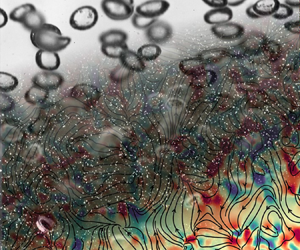
We experimentally investigate the effect of Reynolds number ($Re$) on the turbulence induced by the motion of bubbles in a quiescent Newtonian fluid at small $Re$. The energy spectra, $E(k)$, are determined from the decaying turbulence behind the bubble swarm obtained using particle image velocimetry. We show that when $Re \sim O(100)$, the slope of the normalized energy spectra is no longer independent of the gas volume fraction and the $k^{-3}$ subrange is significantly narrower, where $k$ is the wavenumber. This is further corroborated using second-order longitudinal velocity structure function and spatial correlation of the velocity behind the bubble swarm. On further decreasing the bubble Reynolds number ($O(1) < Re < O(10)$), the signature $k^{-3}$ of the energy spectra for the bubble-induced turbulence is replaced by $k^{-5/3}$ scaling. Thus, we provide experimental evidence to the claim by Mazzitelli et al. (Phys. Fluids, vol. 15, 2003, pp. L5–L8) that at low Reynolds numbers the normalized energy spectra of the bubble-induced turbulence will no longer show the $k^{-3}$ scaling because of the absence of bubble wake and that the energy spectra will depend on the number of bubbles, thus being non-universal.

What does it mean to write the history of science and the ‘big picture’? In this introduction, I argue that ‘scale’ is a crucial but relatively underutilized concept for addressing this question. Rather than taking ‘big’ as a transparent category, I develop a detailed theoretical account of scale in the history and historiography of science. Following work in political geography, I argue that there is a ‘politics of scale’, one that the sciences have played a key role in shaping. Following work in the philosophy of history, I argue that scale should be thought of in its temporal dimension as well as its more traditional spatial dimension. And following work in cultural anthropology, I argue that scale should be understood as an actor's category just as much as an analytic category. The sciences, it turns out, have been one of the principal means through which scale is made and contested. More broadly, this volume of BJHS Themes encourages a creative and open-ended approach to scale in the history of science.
Although pretrained large language models (PLMs) have achieved state of the art on many natural language processing tasks, they lack an understanding of subtle expressions of implicit hate speech. Various attempts have been made to enhance the detection of implicit hate by augmenting external context or enforcing label separation via distance-based metrics. Combining these two approaches, we introduce FiADD, a novel focused inferential adaptive density discrimination framework. FiADD enhances the PLM finetuning pipeline by bringing the surface form/meaning of an implicit hate speech closer to its implied form while increasing the intercluster distance among various labels. We test FiADD on three implicit hate datasets and observe significant improvement in the two-way and three-way hate classification tasks. We further experiment on the generalizability of FiADD on three other tasks, detecting sarcasm, irony, and stance, in which surface and implied forms differ, and observe similar performance improvements. Consequently, we analyze the generated latent space to understand its evolution under FiADD, which corroborates the advantage of employing FiADD for implicit hate speech detection.
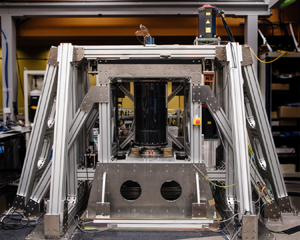
We present the Okinawa Institute of Science and Technology – Taylor–Couette set-up (OIST-TC), a new experimental set-up for investigating turbulent Taylor–Couette (TC) flow. The set-up has independently rotating inner and outer cylinders, and can achieve Reynolds numbers up to $10^6$. Noteworthy aspects of its design include innovative strategies for temperature control and vibration isolation. As part of its flow-measurement instrumentation, we have implemented the first ‘flying hot-wire’ configuration to measure the flow velocity whilst either or both cylinders are rotating. A significant challenge for obtaining reliable measurements from sensors within the inner cylinder is the data distortion resulting from electrical and electromagnetic interference along the signal pathway. Our solution involves internal digitization of sensor data, which provides notable robustness against noise sources. Additionally, we discuss our strategies for efficient operation, outlining custom automation tools that streamline both data processing and operational control. We hope this documentation of the salient features of OIST-TC is useful to researchers engaged in similar experimental studies that delve into the enchanting world of turbulent TC flow.
The amphipod Incisocalliope aestuarius was recently collected since 2015 in the mesohaline part of the Gironde Estuary (SW France) with a van Veen grab and in the lower intertidal part in oyster bed by hand-picking. A look back at past studies showed that this species was present in this estuary since 1976, whereas the original description of this amphipod comes from Watling and Maurer in 1973, from the East coast of America. The validity of the Incisocalliope genus is herein questioned, and it is proposed to transfer species of the genus Inciscalliope to Parapleustes genus.
Clinical characteristics of psychosis in HIV infection have been described, but there have been limited comparative studies in HIV-endemic low-resource regions.
Aim
To compare clinical characteristics of psychosis in HIV-positive and HIV-negative patients at the main psychiatric referral units in Uganda.
Method
Patients with psychosis were consecutively recruited and completed a standardised demographic questionnaire and psychiatric and laboratory assessments including an HIV test. The Mini International Neuropsychiatric Interview was used to diagnose psychiatric illness. Psychosis symptoms were compared between HIV-positive and HIV-negative individuals using bivariate methods. A logistic regression model was used to assess the effects of age, gender and HIV status on different types of psychosis.
Results
There were 478 patients enrolled, of which 156 were HIV positive and 322 were HIV negative. The mean age was 33.2 years (95% CI 31.8–34.5) for the HIV-positive group and 29.6 years (95% CI 28.7–30.5) for the HIV-negative group (P < 0.001). Female patients had a higher proportion of seropositivity 40.6% (95% CI 34.8–46.4) compared with males 21.8% (95% CI 16.1–27.5) (P < 0.001). Psychotic disorder not otherwise specified occurred more in the HIV-positive individuals (88% (95% CI 82.9–93.1) v. 12% (95% CI 8.4–15.5), P < 0.001). Motor activity, irritability, emotional withdrawal, feelings of guilt, mannerisms and posturing, grandiosity, suspiciousness, unusual thoughts, blunted affect, excitement and disorientation were associated with HIV seropositivity.
Conclusion
The presentation of psychosis in patients with HIV is unique to this HIV endemic setting. Characterisation of the symptomatology of patients presenting with psychosis is important for proper diagnosis and care.
Ambulatory antimicrobial stewardship can be challenging due to disparities in resource allocation across the care continuum, competing priorities for ambulatory prescribers, ineffective communication strategies, and lack of incentive to prioritize antimicrobial stewardship program (ASP) initiatives. Efforts to monitor and compare outpatient antibiotic usage metrics have been implemented through quality measures (QM). Healthcare Effectiveness Data and Information Set (HEDIS®) represent standardized measures that examine the quality of antibiotic prescribing by region and across insurance health plans. Health systems with affiliated emergency departments and ambulatory clinics contribute patient data for HEDIS measure assessment and are directly related to value-based reimbursement, pay-for-performance, patient satisfaction measures, and payor incentives and rewards. There are four HEDIS® measures related to optimal antibiotic prescribing in upper respiratory tract diseases that ambulatory ASPs can leverage to develop and measure effective interventions while maintaining buy-in from providers: avoidance of antibiotic treatment for acute bronchitis/bronchiolitis, appropriate treatment for upper respiratory infection, appropriate testing for pharyngitis, and antibiotic utilization for respiratory conditions. Additionally, there are other QM assessed by the Centers for Medicare and Medicaid Services (CMS), including overuse of antibiotics for adult sinusitis. Ambulatory ASPs with limited resources should leverage HEDIS® to implement and measure successful interventions due to their pay-for-performance nature. The purpose of this review is to outline the HEDIS® measures related to infectious diseases in ambulatory care settings. This review also examines the barriers and enablers in ambulatory ASPs which play a crucial role in promoting responsible antibiotic use and the efforts to optimize patient outcomes.
This article focuses on the branding of Patriotic Alternative (PA), a British fascist organization and business, in three analytic steps: (i) branding as circulating ideologies as commodities; (ii) branding as creating—and selling—community, and (iii) branding as regimenting meaning. Building on work on the communicability of evil and language, nationalism, and political economy, we explore how PA uses the affordances of platform capitalism in a project that goes beyond ideological normalization: not just rebranding a message as acceptable but selling a product which builds a community aligned with this ideology. Looking at both brand and political websites, YouTube, as well as Telegram channels, we show how PA's branding functions to invest a wide range of mundane practices with racist meaning; they are imagined to forestall the great replacement. Rebranding racism as white community, every cup of tea sold brings back the world of your grandma, each bar of soap protects white skin. (Far-right semiosis, branding, platform capitalism)*
Los sistemas de pensiones en la encrucijada: Desafíos para la sostenibilidad en América Latina. By Alberto Arenas de Mesa. Santiago: CEPAL, 2019. Pp. 315. Open access.
Power, Alliances, and Redistribution: The Politics of Social Protection for Low-income Earners in Argentina, 1943–2015. By Carl Freidrich Bossert. Berlin: Budrich Academic Press, Opladen, 2021. Pp. 373. Open access.
El porvenir de la vejez: Demografía, empleo y ahorro. By María Amparo Cruz Saco, Bruno Seminario, Favio Leiva, Carla Moreno, and María Alejandra Zegarra. Lima: Universidad del Pacífico, 2021. Pp. 430. S/.52.00 paperback, S/.28.00 ebook.
La desestructuración del sistema peruano de pensiones. By María Amparo Cruz-Saco, Bruno Seminario, Favio Leiva, Carla Moreno, María Alejandra Zegarra. Lima: Universidad del Pacífico, 2020. Pp. 96.
Welfare and Social Protection in Contemporary Latin America. Edited By Gibrán Cruz-Martínez. New York: Routledge, 2019. Pp. 254. $47.65 e-book.
Pensiones de capitalización individual en América Latina: Efectos, reformas, impacto del COVID-19 y propuestas de política. By Carmelo Mesa-Lago. Santiago: CEPAL, 2022. Pp. 104. Open access.
The preponderance and influence of the public sector in the financial system have long been a defining characteristic of Brazilian capitalism. While exerting control over the national credit system through targeted lending policies and other regulatory tools, the federal government also wields significant weight through its state-owned institutions. This article delves into the role of Banco do Brasil (BB), a prominent financial institution and policymaking instrument of the Brazilian government, during the zenith of the developmental state between 1964 and 1982. In contrast to the prevailing focus on financing public spending, this study investigates the international engagements of BB and unveils its participation in managing the country’s external imbalances. BB’s financing proved crucial in bypassing the IMF and reinforcing the government’s commitment to industrialization and developmentalism. The article offers new insights into the forces of Brazil’s state-led finance and the political economy shaping its current banking and regulatory landscape.
From where does management acquire its authority to act in the name of the corporation? The orthodoxy that shareholders alone authorise management is frequently criticised for treating the corporation as the property of shareholders, rather than as a distinct legal person in its own right (Ciepley, 2013; Deakin, 2012; Robé, 2011; Stout, 2012). However, Hobbes’s theory of incorporation in Leviathan shows this influential critique of shareholder primacy to rest on a non sequitur. It does not follow from the (correct) observation that the corporation is a legal person to the conclusion that its interests are distinct from those of shareholders. Just as individuals become citizens of a state when they authorise a sovereign, shareholders are incorporated when they authorise a representative assembly to act in their interests. Shareholders thereby form a single corporate person and are ultimately responsible for whatever is done in their corporate name.