To save content items to your account,
please confirm that you agree to abide by our usage policies.
If this is the first time you use this feature, you will be asked to authorise Cambridge Core to connect with your account.
Find out more about saving content to .
To save content items to your Kindle, first ensure no-reply@cambridge.org
is added to your Approved Personal Document E-mail List under your Personal Document Settings
on the Manage Your Content and Devices page of your Amazon account. Then enter the ‘name’ part
of your Kindle email address below.
Find out more about saving to your Kindle.
Note you can select to save to either the @free.kindle.com or @kindle.com variations.
‘@free.kindle.com’ emails are free but can only be saved to your device when it is connected to wi-fi.
‘@kindle.com’ emails can be delivered even when you are not connected to wi-fi, but note that service fees apply.
This study aims to examine the role of early signing input on the robust reliance on ASL basic word order by deaf adult ASL signers who are exposed to different types of signing (ASL versus signing systems, SS) by early childhood. We used a sentence-picture matching task involving transitive ASL sentences in subject–verb–object order with consistent or conflicting animacy cues. All signers with early ASL input (12 native signers, 12 non-native signers with early ASL) showed robust reliance on ASL word order and good bilingual skills, while 37.5% (6/16) non-native signers with early exposure to SS showed a weak representation of ASL basic word order along with lower bilingual proficiency. These results suggest that the critical period effects for syntactic development are not limited to severe deprivation but can also manifest when early language is insufficient. Early, rich, and consistent language input during early childhood is required for syntactic development.
This study examined how repeated exposure to trauma narratives influences professional quality of life, including burnout, secondary traumatic stress (STS), and compassion satisfaction (CS), among end-of-life healthcare providers. The moderating roles of resilience and both organizational and personal support were also tested.
Methods
A cross-sectional online survey was completed by 507 healthcare providers working in hospice, oncology, or other end-of-life settings. Participants completed validated self-report measures assessing exposure to trauma narratives (Vicarious Trauma Scale [VTS]), professional quality of life (ProQOL-5), resilience (STARS-6), organizational support (SPOS), and social support (MSPSS). Hierarchical regression and moderation analyses were conducted to evaluate main and interaction effects.
Results
Greater exposure to trauma narratives was significantly associated with higher burnout (β = .37, p < .001) and STS (β = .42, p < .001), and with lower CS (β = −.13, p = .004). Higher resilience and organizational support predicted greater CS and lower burnout and STS. A significant VTS × resilience interaction indicated that resilience buffered the association between exposure to trauma narratives and STS (β = −.10, p = .009).
Conclusions
Repeated exposure to trauma narratives is a meaningful occupational stressor for end-of-life clinicians. Resilience and organizational support appear to protect against the negative impact of trauma exposure and promote CS, highlighting key multilevel targets for trauma-informed workforce interventions.
Significance of results
This study addresses a critical gap by clarifying how repeated trauma narratives specifically influence burnout, Secondary Traumatic Stress (STS), and Compassion Satisfaction (CS) within the unique context of end-of-life care. The results provide a nuanced framework for understanding how clinicians maintain empathic presence despite chronic emotional demands. Furthermore, by identifying specific resilience factors and support systems that buffer against psychological distress, these findings offer actionable insights for developing targeted interventions to mitigate long-term professional harm.
Progressive parties often advocate pro-immigration policies but do not attract equal support from all immigrant groups. Why is this the case? This study examines immigrants’ support for green parties, a key progressive party family in Western Europe. Our findings reveal that immigrants from established democracies are more likely to support green parties compared to those from (post-)authoritarian regimes. We attribute this disparity to socialization: Individuals from established democracies, where post-materialist values and environmental politics are more prominent, are more attuned to green issues. This heightened salience influences their political preferences after migration. Using entropy balancing on cross-national European surveys, we document this green support gap and provide evidence for our proposed mechanism. These results inform debates on how political preferences travel across contexts and the socialization effects of political institutions.
The relationship between time and international law is intricate and multifaceted, long evading methodical analysis. However, recent years have seen a surge in scholarly efforts to address this relationship. Taking a broad view of this burgeoning literature, this article recounts the temporal assumptions, narratives, and dynamics at play in the international legal sphere, while highlighting their logics and limitations. In doing so, it develops a critical typology of international law’s temporalities, distinguishing between three overarching paradigms: modern, postmodern, and hypermodern. The modern temporal paradigm, commonly seen as dominating the discipline, views international law as progressing uniformly and linearly from a dark past toward a brighter present and future. In contrast, the postmodern paradigm challenges the modern narrative of universal progress over time, shifting the focus to the past and the ways in which international law allows past wrongs to reverberate into the present. While each of these paradigms serves important functions, the article argues that neither provides a sufficient framework for navigating international law in the current era of accelerated technological, social, and environmental change, where the future increasingly diverges from the known past and present. The article thus calls for greater incorporation into the discipline of a third, hypermodern temporal paradigm, which takes a sober look at the future and recalibrates international law’s temporal modalities in response to rapidly evolving and increasingly complex global challenges.
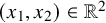
For Lebesgue generic $({x}_1,x_2)\in \mathbb {R}^2$, we investigate the distribution of small values of products $q\cdot \|qx_1\| \cdot \|qx_2\|$ with $q\in \mathbb {N}$, where $\|\cdot \|$ denotes the distance to the closest integer. The main result gives an asymptotic formula for the number of $1\le q< T$ such that

Although preterm infants are prone to healthcare-associated infections (HAI), HAI surveillance in neonates is still not widely practiced. In this paper, we present the HAI rates subsequent to nationwide implementation of NEO-KISS, the German national surveillance system for HAI in high-risk neonates. We also report on risk factors for the development of HAI in this population.
Design:
Observational study.
Setting:
German National Reference Centre for Surveillance of Nosocomial Infections, responsible for the maintenance of NEO-KISS.
Patients:
Infants with a birth weight of less than 1500 g.
Methods:
NEO-KISS data from the years 2008–2022 was analyzed retrospectively and incidence densities were calculated (in five-year reference periods) for different types of healthcare-associated sepsis (HAS), healthcare-associated pneumonia (HAP), and necrotizing enterocolitis (NEC). Rates were analyzed with Cox-proportional hazard regression models.
Results:
A total of 118,214 infants with a birth weight of less than 1500 g from 251 neonatology departments were included. They comprised 15,254 HAS, 1,657 HAP, and 2,786 NEC. The incidence densities of HAS and HAP were 33.3% and 46.7% lower in the admission period 2018-2022 compared to 2008–2012 (2.98 vs. 4.47 HAS, 0.3 vs. 0.56 HAP, per 1,000 patient days). In the multivariable regression analysis, the period of admission remained significant after adjustment for independent risk factors for HAS, HAP, and NEC.
Conclusions:
In Germany, the surveillance data for neonates in NEO-KISS between 2008 and 2022 showed a nationwide decrease in incidence densities of HAS, HAP, and NEC. The continuous engagement with NEO-KISS surveillance data may have contributed to this reduction.
Britain’s constitutional evolution falls within the mainstream of European constitutional traditions, but the gulf between its governing practices and those adopted in the European mainstream has grown progressively wider. While most European nation-states have adopted written constitutions at critical moments of modern history, Britain continues to adhere to the traditional conception of a constitution as a set of laws, customs and practices that continuously evolve in response to social, economic and political change. This is one reason why Britain’s involvement in the venture of creating a European Union has always been rather awkward. In this chapter, I sketch the main constitutional tropes that have emerged in British thought and show how they express a constitutional identity antithetical to the assumptions driving the project of continuing European integration. I first introduce a series of constitutional stories through which the English have sought to explain themselves as a nation and a state and then consider how these accounts have evolved with the expansion of the English state into a British imperial state. Finally, I will indicate how these legacies ensured that Britain could never become an active participant in the European federal project.
This article explores the changing trajectories of tawa’ifs—highly trained female performers of music and dance—in colonial North India, with a focus on their mobility and evolving patronage relationships. As British colonial policies and reformist moral discourses shattered long-standing networks of courtly support, tawa’ifs increasingly travelled between regional centres in search of livelihood and artistic relevance. Focusing on the princely state of Rampur, this study explores the complex interactions, power dynamics, and social hierarchies between Muslim female performers, middlemen, and elite patrons, particularly in the context of public festivals and fairs. Based on handwritten petitions, letters, and poems in Urdu and Persian, as well as vernacular print sources, the article argues that princely patronage was not static but adapted to the pressures of colonial modernity and wider pan-regional transformations. It also shows that post-1857 Lucknow remained a vital hub for recruitment, training, and trade. By tracing female performers across princely and colonial contexts, the article illuminates how their mobility and professional flexibility expanded alongside rising social stigmatisation and the intensifying conflation of courtesans with sex workers.
Recovery Colleges are adult education initiatives supporting personal recovery for individuals with mental health difficulties. We characterised a national (England) inception cohort of mental health service users, students from the Recovery Colleges Characterisation and Testing 2 programme, and compared those attending different Recovery College types on sociodemographic, clinical, service use and student-reported outcomes over the 4 months prior to enrolment. Mixed-effects regression models were used to assess differences.
Results
The cohort comprised 498 students from 36 Recovery Colleges across England; 77.7% attended strengths-oriented Recovery Colleges. Mean age was 39 years (s.d. 12); most were female (72.1%) and White (81.5%). Common diagnoses were mood (31.3%) and anxiety disorders (29.7%). No significant differences were found between students attending strengths- versus community-oriented Recovery Colleges.
Clinical implications
Strengths- and community-oriented Recovery Colleges have similar service user student populations. Certain groups that may be underrepresented in Recovery Colleges and Recovery College research include older adults, men, those with developmental disorders and ethnic minority populations.
Nineteenth-century history paintings were as formative as the historical novel for fixing our cultural image of the national past. Their style was conformist and even kitschy; but their visual evocation of bygone ages provided Romantic narratives of the national past with a visual, spectacular and, what is more, enduring iconography. Painting operated in tandem with the historical novel and with history writing. It helped translate historians’ knowledge production into cultural production, into a cultural repertoire and a visual iconography. And as the study of history evolved from Romantic nationalism towards a more factualist, archive-driven academic specialism, that Romantic iconography continued to dominate the popular imagination of what the national past had been like. History painting shaped, lastingly, how the nation’s past was envisaged, even as its status declined to that of a largely decorative art.
Weed-induced nutrient competition represents a major limitation on yield and quality in organic wheat (Triticum aestivum L.) cultivation. This study evaluated the effects of wide-range sowing on root-driven nutrient competition dynamics between wheat (‘Yongliang 4’) and weeds. A 2-yr experiment (2019 to 2020) in Bayannur, Inner Mongolia, compared three treatments: wide-range uniform sowing (W0), 7-cm wide-range sowing (W7), and conventional drilling sowing (CK). The study measured grain yield and protein content, root traits, and the dynamic changes in nutrient accumulation of organic wheat and field weeds, analyzing the nutrient competition levels and their responses to the different sowing methods. The 2-yr data demonstrated that both W0 and W7 treatments significantly enhanced grain yield in organic wheat compared with CK, with yield increments of 28.2% and 15.1%, respectively. Compared with CK, the W0 treatment significantly improved root system development and nutrient uptake. Throughout various growth stages (at 60, 85, and 100 d after sowing), the average root length, surface area, volume, and weight density within the 0- to 80-cm soil profile increased more than 13.8%, 24.5%, 14.1%, and 19.2%, respectively, under W0 treatment. Concurrently, nitrogen (N), phosphorus (P), and potassium (K) uptake in wheat plants under W0 treatment showed enhancements greater than 34.6%, 39.5%, and 39.6% compared with CK. In contrast to the enhanced nutrient uptake in wheat, both experimental treatments significantly suppressed weed nutrient uptake. The W0 treatment reduced N, P, and K uptake in weeds by 55.9%, 57.9%, and 51.9%, respectively, while the W7 treatment decreased these parameters by 40.1%, 39.8%, and 40.2%, respectively. The wide-range sowing pattern particularly enhanced the nutrient competitiveness of organic wheat, with this competitive advantage becoming more pronounced during later growth stages. Statistical analyses revealed significant positive correlations between grain yield/protein content and root morphological parameters, as well as plant nutrient uptake. Conversely, significant negative correlations were observed between wheat productivity parameters and weed nutrient uptake, suggesting effective resource competition by the wheat plants under modified cultivation practices. In conclusion, wide-range sowing cultivation improves the nutrient competition ability of organic wheat through enhancing root traits, thereby suppressing weed access to nutrient resources and ultimately increasing both yield and grain quality of organic wheat.
Direct collocation (DC) methods are utilized for addressing trajectory optimization challenges in robotics due to their ability to generate dynamically consistent solutions. However, in the cable-driven robotic systems, where tension constraints impose kinodynamic restrictions, maintaining accuracy becomes significantly complex. This article addresses robot tensionability and proposes a method to overcome the limitations. A DC method is proposed to minimize the actuator force rate in a trajectory planning problem for a designed cable-driven parallel robot. The system comprises a 3-cable parallel mechanism with a central spine to counteract the end-effector’s weight and enhance tensionability. Integrating a pneumatic cylinder into the system that supports trajectory planning implementation is essential to minimize jerky motions. The DC method is applied through the proposed quadratic programming approach and benchmarked against existing packages to achieve and compare the resulting smoother trajectory. The numerical results demonstrate that the proposed method significantly reduces computation cost and enhances accuracy. Experimental data corroborate the simulation results, validating the method’s efficacy.
Repetitive negative thinking (RNT) and neuroticism are risk factors for internalizing psychopathology. However, their interaction has only been investigated at the self-report level, and studies elucidating their interrelationship at the neural level are lacking. We therefore investigated the interaction of trait RNT and neuroticism with respect to the dynamics of neural networks during negative self-referential processing.
Methods
A sample of 110 healthy subjects reported trait RNT and neuroticism, followed by an RNT induction paradigm during fMRI. Dynamic coactivation pattern (CAP) analysis was used to identify a set of recurring coactivation patterns and to quantify their persistence and count rates. Next, the effects of trait RNT, neuroticism, and their interaction on brain dynamics were tested using regression models.
Results
Negative interactions between RNT and neuroticism were found for persistence and counts of the canonical default mode network (DMN) as well as salience network (SAL) CAP. Simple slope analysis revealed that subjects scoring high on neuroticism exhibited a negative association between trait RNT and DMN as well as canonical SAL dynamics. Furthermore, trait RNT was positively associated with persistence and count rates of a hybrid FPN+DMN coactivation state.
Conclusions
Our results suggest that individuals with high neuroticism who spend more time in SAL and DMN CAPs may be less vulnerable to RNT, potentially reflecting more adaptive network configurations. Furthermore, less segregated CAPs, evident by the concurrent activation of functionally antagonistic networks (FPN+DMN), emerge more often in individuals prone to RNT, likely reflecting disrupted network interactions.
The development of democratic constitutionalism in Portugal in the last (almost) fifty years has been marked by some important debates, which still influence different views and interpretations of the Constitution. I would like to highlight two of them: first, a discussion of the nature and limits of the ‘constitutional project’ enshrined in the CP, the normative strength of the constitution and the margin of appreciation given to the democratic legislator. Second, the debate about constitutional openness, European integration and the constitutional consequences of the overwhelmingly desired ‘European path’ of the country, which evolved more recently to be a reflexion on the contradictions between such a path and national constitutional characteristics, especially during and after the euro crisis. The objective of this work will be to reflect on the constitutional imaginary of democratic Portugal, in particular on the discrepancies between national constitutional aspirations and European integration, which are particularly acute in what regards the so-called social question (i.e., the social project, including social rights as limits to the legislator, and views of the political economy that are strikingly different at the national and EU levels).
Periodic water waves of permanent form travelling at constant speed, the so-called Stokes waves, are studied in water of fixed finite depth using methods previously used in water of infinite depth. We apply our methods to waves of varying steepness over a range of fixed depths in order to determine how a number of physical quantities related to the waves change as the steepness of the waves increases. Finally, we examine the complex singularities outside of their domain of definition when the waves are considered as a function of a conformal variable.
We study the continuum limit of the motion of agents in the plane driven by competing short-range repulsion and long-range attractive forces. At a critical parameter value, we find destabilization of a trivial branch of uniformly distributed solutions and analyse bifurcating solutions. Curiously, the bifurcating branch is vertical, leading to a reversible, non-hysteretic phase transition. Near the bifurcation point, we demonstrate scaling laws for the size of vacuum regions, which can form fissures or bubbles. We also study the effect of small noise and the eventual topological transition from vacuum bubbles to isolated particle clusters.
Laser-driven plasma wakefield acceleration (LWFA) offers exceptionally high acceleration gradients and can produce high-brightness electron beams. However, the laser-to-electron energy conversion efficiency typically remains limited to a few percent. Theoretically, the self-mode transition from LWFA to beam-driven plasma wakefield acceleration (PWFA) provides a pathway for fully utilizing the laser energy. Here, we demonstrate the single-stage LPWFA (hybrid LWFA–PWFA) scheme, validated through comparative experiments using a 300 TW tightly focused laser interacting with sub-critical density nitrogen gas targets. The experiments produce an electron beam with charge of approximately 31 nC above 6 MeV and approximately 116 nC above 2 MeV. The laser-to-electron energy conversion efficiency is approximately 6.1% (>6 MeV) and 16.4% (>2 MeV), respectively. Particle-in-cell simulations confirm that the single-stage LPWFA mechanism depletes the laser energy and enables continual electron injection. This high-charge, multi-MeV electron beam has great value in the generation of high-brightness $\unicode{x3b3}$-rays and high-flux neutron sources.