Refine listing
Actions for selected content:
225 results in 05Dxx
Off-diagonal book Ramsey numbers
- Part of
-
- Journal:
- Combinatorics, Probability and Computing / Volume 32 / Issue 3 / May 2023
- Published online by Cambridge University Press:
- 09 January 2023, pp. 516-545
-
- Article
-
- You have access
- Open access
- HTML
- Export citation
-
The book graph $B_n ^{(k)}$ consists of $n$ copies of $K_{k+1}$ joined along a common $K_k$. In the prequel to this paper, we studied the diagonal Ramsey number $r(B_n ^{(k)}, B_n ^{(k)})$. Here we consider the natural off-diagonal variant $r(B_{cn} ^{(k)}, B_n^{(k)})$ for fixed $c \in (0,1]$. In this more general setting, we show that an interesting dichotomy emerges: for very small $c$, a simple $k$-partite construction dictates the Ramsey function and all nearly-extremal colourings are close to being $k$-partite, while, for $c$ bounded away from $0$, random colourings of an appropriate density are asymptotically optimal and all nearly-extremal colourings are quasirandom. Our investigations also open up a range of questions about what happens for intermediate values of $c$.
$c$.


(EXTRA)ORDINARY EQUIVALENCES WITH THE ASCENDING/DESCENDING SEQUENCE PRINCIPLE
- Part of
-
- Journal:
- The Journal of Symbolic Logic / Volume 89 / Issue 1 / March 2024
- Published online by Cambridge University Press:
- 29 December 2022, pp. 262-307
- Print publication:
- March 2024
-
- Article
-
- You have access
- Open access
- HTML
- Export citation
-
We analyze the axiomatic strength of the following theorem due to Rival and Sands [28] in the style of reverse mathematics. Every infinite partial order P of finite width contains an infinite chain C such that every element of P is either comparable with no element of C or with infinitely many elements of C. Our main results are the following. The Rival–Sands theorem for infinite partial orders of arbitrary finite width is equivalent to $\mathsf {I}\Sigma ^0_{2} + \mathsf {ADS}$ over $\mathsf {RCA}_0$. For each fixed $k \geq 3$, the Rival–Sands theorem for infinite partial orders of width $\leq \!k$ is equivalent to $\mathsf {ADS}$ over $\mathsf {RCA}_0$. The Rival–Sands theorem for infinite partial orders that are decomposable into the union of two chains is equivalent to $\mathsf {SADS}$ over $\mathsf {RCA}_0$. Here $\mathsf {RCA}_0$ denotes the recursive comprehension axiomatic system, $\mathsf {I}\Sigma ^0_{2}$ denotes the $\Sigma ^0_2$ induction scheme, $\mathsf {ADS}$ denotes the ascending/descending sequence principle, and $\mathsf {SADS}$ denotes the stable ascending/descending sequence principle. To the best of our knowledge, these versions of the Rival–Sands theorem for partial orders are the first examples of theorems from the general mathematics literature whose strength is exactly characterized by $\mathsf {I}\Sigma ^0_{2} + \mathsf {ADS}$, by $\mathsf {ADS}$, and by $\mathsf {SADS}$. Furthermore, we give a new purely combinatorial result by extending the Rival–Sands theorem to infinite partial orders that do not have infinite antichains, and we show that this extension is equivalent to arithmetical comprehension over $\mathsf {RCA}_0$.


A bipartite version of the Erdős–McKay conjecture
- Part of
-
- Journal:
- Combinatorics, Probability and Computing / Volume 32 / Issue 3 / May 2023
- Published online by Cambridge University Press:
- 09 December 2022, pp. 465-477
-
- Article
-
- You have access
- Open access
- HTML
- Export citation
-
An old conjecture of Erdős and McKay states that if all homogeneous sets in an $n$-vertex graph are of order $O(\!\log n)$ then the graph contains induced subgraphs of each size from $\{0,1,\ldots, \Omega \big(n^2\big)\}$. We prove a bipartite analogue of the conjecture: if all balanced homogeneous sets in an $n \times n$ bipartite graph are of order $O(\!\log n)$, then the graph contains induced subgraphs of each size from $\{0,1,\ldots, \Omega \big(n^2\big)\}$.


Khintchine-type recurrence for 3-point configurations
- Part of
-
- Journal:
- Forum of Mathematics, Sigma / Volume 10 / 2022
- Published online by Cambridge University Press:
- 05 December 2022, e107
-
- Article
-
- You have access
- Open access
- HTML
- Export citation
-
The goal of this paper is to generalise, refine and improve results on large intersections from [2, 8]. We show that if G is a countable discrete abelian group and $\varphi , \psi : G \to G$ are homomorphisms, such that at least two of the three subgroups $\varphi (G)$, $\psi (G)$ and $(\psi -\varphi )(G)$ have finite index in G, then $\{\varphi , \psi \}$ has the large intersections property. That is, for any ergodic measure preserving system $\textbf {X}=(X,\mathcal {X},\mu ,(T_g)_{g\in G})$, any $A\in \mathcal {X}$ and any $\varepsilon>0$, the set
  $$ \begin{align*} \{g\in G : \mu(A\cap T_{\varphi(g)}^{-1} A \cap T_{\psi(g)}^{-1} A)>\mu(A)^3-\varepsilon\} \end{align*} $$
is syndetic (Theorem 1.11). Moreover, in the special case where $\varphi (g)=ag$ and $\psi (g)=bg$ for $a,b\in \mathbb {Z}$, we show that we only need one of the groups $aG$,
$aG$,  $bG$ or $(b-a)G$ to be of finite index in G (Theorem 1.13), and we show that the property fails, in general, if all three groups are of infinite index (Theorem 1.14).
One particularly interesting case is where $G=(\mathbb {Q}_{>0},\cdot )$ and $\varphi (g)=g$, $\psi (g)=g^2$, which leads to a multiplicative version of the Khintchine-type recurrence result in [8]. We also completely characterise the pairs of homomorphisms $\varphi ,\psi $ that have the large intersections property when $G = {{\mathbb Z}}^2$.
The proofs of our main results rely on analysis of the structure of the universal characteristic factor for the multiple ergodic averages
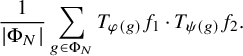 $$ \begin{align*} \frac{1}{|\Phi_N|} \sum_{g\in \Phi_N}T_{\varphi(g)}f_1\cdot T_{\psi(g)} f_2. \end{align*} $$
In the case where G is finitely generated, the characteristic factor for such averages is the Kronecker factor. In this paper, we study actions of groups that are not necessarily finitely generated, showing, in particular, that, by passing to an extension of $\textbf {X}$, one can describe the characteristic factor in terms of the Conze–Lesigne factor and the $\sigma $-algebras of $\varphi (G)$ and $\psi (G)$ invariant functions (Theorem 4.10).


LARGE $\mathcal {F}$-FREE SUBGRAPHS IN $r$-CHROMATIC GRAPHS
- Part of
-
- Journal:
- Bulletin of the Australian Mathematical Society / Volume 108 / Issue 2 / October 2023
- Published online by Cambridge University Press:
- 02 December 2022, pp. 200-204
- Print publication:
- October 2023
-
- Article
- Export citation
-
For a graph G and a family of graphs $\mathcal {F}$, the Turán number ${\mathrm {ex}}(G,\mathcal {F})$ is the maximum number of edges an $\mathcal {F}$-free subgraph of G can have. We prove that ${\mathrm {ex}}(G,\mathcal {F})\ge {\mathrm {ex}}(K_r, \mathcal {F})$ if the chromatic number of G is r and $\mathcal {F}$ is a family of connected graphs. This result answers a question raised by Briggs and Cox [‘Inverting the Turán problem’, Discrete Math. 342(7) (2019), 1865–1884] about the inverse Turán number for all connected graphs.


New upper bounds for the Erdős-Gyárfás problem on generalized Ramsey numbers
- Part of
-
- Journal:
- Combinatorics, Probability and Computing / Volume 32 / Issue 2 / March 2023
- Published online by Cambridge University Press:
- 24 November 2022, pp. 349-362
-
- Article
-
- You have access
- Open access
- HTML
- Export citation
-
A $(p,q)$-colouring of a graph $G$ is an edge-colouring of $G$ which assigns at least $q$ colours to each $p$-clique. The problem of determining the minimum number of colours, $f(n,p,q)$, needed to give a $(p,q)$-colouring of the complete graph $K_n$ is a natural generalization of the well-known problem of identifying the diagonal Ramsey numbers $r_k(p)$. The best-known general upper bound on $f(n,p,q)$ was given by Erdős and Gyárfás in 1997 using a probabilistic argument. Since then, improved bounds in the cases where $p=q$ have been obtained only for $p\in \{4,5\}$, each of which was proved by giving a deterministic construction which combined a $(p,p-1)$-colouring using few colours with an algebraic colouring.
In this paper, we provide a framework for proving new upper bounds on $f(n,p,p)$ in the style of these earlier constructions. We characterize all colourings of $p$-cliques with $p-1$ colours which can appear in our modified version of the $(p,p-1)$-colouring of Conlon, Fox, Lee, and Sudakov. This allows us to greatly reduce the amount of case-checking required in identifying $(p,p)$-colourings, which would otherwise make this problem intractable for large values of $p$. In addition, we generalize our algebraic colouring from the $p=5$ setting and use this to give improved upper bounds on $f(n,6,6)$ and $f(n,8,8)$.


Curves on the torus intersecting at most k times
- Part of
-
- Journal:
- Mathematical Proceedings of the Cambridge Philosophical Society / Volume 174 / Issue 3 / May 2023
- Published online by Cambridge University Press:
- 15 November 2022, pp. 569-584
- Print publication:
- May 2023
-
- Article
-
- You have access
- Open access
- HTML
- Export citation
-
We show that any set of distinct homotopy classes of simple closed curves on the torus that pairwise intersect at most k times has size $k+O(\sqrt k \log k)$. Prior to this work, a lemma of Agol, together with the state of the art bounds for the size of prime gaps, implied the error term $O(k^{21/40})$, and in fact the assumption of the Riemann hypothesis improved this error term to the one we obtain $O(\sqrt k\log k)$. By contrast, our methods are elementary, combinatorial, and geometric.


Discrepancy in modular arithmetic progressions
- Part of
-
- Journal:
- Compositio Mathematica / Volume 158 / Issue 11 / November 2022
- Published online by Cambridge University Press:
- 01 December 2022, pp. 2082-2108
- Print publication:
- November 2022
-
- Article
- Export citation
-
Celebrated theorems of Roth and of Matoušek and Spencer together show that the discrepancy of arithmetic progressions in the first $n$ positive integers is $\Theta (n^{1/4})$. We study the analogous problem in the $\mathbb {Z}_n$ setting. We asymptotically determine the logarithm of the discrepancy of arithmetic progressions in $\mathbb {Z}_n$ for all positive integer $n$. We further determine up to a constant factor the discrepancy of arithmetic progressions in $\mathbb {Z}_n$ for many $n$. For example, if $n=p^k$ is a prime power, then the discrepancy of arithmetic progressions in $\mathbb {Z}_n$ is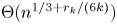 $\Theta (n^{1/3+r_k/(6k)})$, where $r_k \in \{0,1,2\}$ is the remainder when $k$ is divided by $3$. This solves a problem of Hebbinghaus and Srivastav.


Ramsey properties of algebraic graphs and hypergraphs
- Part of
-
- Journal:
- Forum of Mathematics, Sigma / Volume 10 / 2022
- Published online by Cambridge University Press:
- 24 October 2022, e95
-
- Article
-
- You have access
- Open access
- HTML
- Export citation
-
One of the central questions in Ramsey theory asks how small the largest clique and independent set in a graph on N vertices can be. By the celebrated result of Erdős from 1947, a random graph on N vertices with edge probability $1/2$ contains no clique or independent set larger than $2\log _2 N$, with high probability. Finding explicit constructions of graphs with similar Ramsey-type properties is a famous open problem. A natural approach is to construct such graphs using algebraic tools.
Say that an r-uniform hypergraph $\mathcal {H}$ is algebraic of complexity $(n,d,m)$ if the vertices of $\mathcal {H}$ are elements of $\mathbb {F}^{n}$ for some field $\mathbb {F}$, and there exist m polynomials $f_1,\dots ,f_m:(\mathbb {F}^{n})^{r}\rightarrow \mathbb {F}$ of degree at most d such that the edges of $\mathcal {H}$ are determined by the zero-patterns of $f_1,\dots ,f_m$. The aim of this paper is to show that if an algebraic graph (or hypergraph) of complexity $(n,d,m)$ has good Ramsey properties, then at least one of the parameters $n,d,m$ must be large.
In 2001, Rónyai, Babai and Ganapathy considered the bipartite variant of the Ramsey problem and proved that if G is an algebraic graph of complexity $(n,d,m)$ on N vertices, then either G or its complement contains a complete balanced bipartite graph of size $\Omega _{n,d,m}(N^{1/(n+1)})$. We extend this result by showing that such G contains either a clique or an independent set of size $N^{\Omega (1/ndm)}$ and prove similar results for algebraic hypergraphs of constant complexity. We also obtain a polynomial regularity lemma for r-uniform algebraic hypergraphs that are defined by a single polynomial that might be of independent interest. Our proofs combine algebraic, geometric and combinatorial tools.


Cycles of many lengths in Hamiltonian graphs
- Part of
-
- Journal:
- Forum of Mathematics, Sigma / Volume 10 / 2022
- Published online by Cambridge University Press:
- 31 August 2022, e70
-
- Article
-
- You have access
- Open access
- HTML
- Export citation
-
In 1999, Jacobson and Lehel conjectured that, for $k \geq 3$, every k-regular Hamiltonian graph has cycles of $\Theta (n)$ many different lengths. This was further strengthened by Verstraëte, who asked whether the regularity can be replaced with the weaker condition that the minimum degree is at least $3$. Despite attention from various researchers, until now, the best partial result towards both of these conjectures was a $\sqrt {n}$ lower bound on the number of cycle lengths. We resolve these conjectures asymptotically by showing that the number of cycle lengths is at least $n^{1-o(1)}$.


MAKER–BREAKER GAMES ON $ K_{\omega _1}$ AND $K_{\omega ,\omega _1}$
- Part of
-
- Journal:
- The Journal of Symbolic Logic / Volume 88 / Issue 2 / June 2023
- Published online by Cambridge University Press:
- 30 June 2022, pp. 697-703
- Print publication:
- June 2023
-
- Article
-
- You have access
- Open access
- HTML
- Export citation
-
We investigate Maker–Breaker games on graphs of size $\aleph _1$ in which Maker’s goal is to build a copy of the host graph. We establish a firm dependence of the outcome of the game on the axiomatic framework. Relating to this, we prove that there is a winning strategy for Maker in the $K_{\omega ,\omega _1}$-game under ZFC+MA+ $\neg $CH and a winning strategy for Breaker under ZFC+CH. We prove a similar result for the $K_{\omega _1}$-game. Here, Maker has a winning strategy under ZF+DC+AD, while Breaker has one under ZFC+CH again.


HOW STRONG IS RAMSEY’S THEOREM IF INFINITY CAN BE WEAK?
- Part of
-
- Journal:
- The Journal of Symbolic Logic / Volume 88 / Issue 2 / June 2023
- Published online by Cambridge University Press:
- 14 June 2022, pp. 620-639
- Print publication:
- June 2023
-
- Article
-
- You have access
- Open access
- HTML
- Export citation
-
We study the first-order consequences of Ramsey’s Theorem for k-colourings of n-tuples, for fixed $n, k \ge 2$, over the relatively weak second-order arithmetic theory $\mathrm {RCA}^*_0$. Using the Chong–Mourad coding lemma, we show that in a model of $\mathrm {RCA}^*_0$ that does not satisfy $\Sigma ^0_1$ induction, $\mathrm {RT}^n_k$ is equivalent to its relativization to any proper $\Sigma ^0_1$-definable cut, so its truth value remains unchanged in all extensions of the model with the same first-order universe.
We give a complete axiomatization of the first-order consequences of $\mathrm {RCA}^*_0 + \mathrm {RT}^n_k$ for $n \ge 3$. We show that they form a non-finitely axiomatizable subtheory of $\mathrm {PA}$ whose $\Pi _3$ fragment coincides with $\mathrm {B} \Sigma _1 + \exp $ and whose $\Pi _{\ell +3}$ fragment for $\ell \ge 1$ lies between $\mathrm {I} \Sigma _\ell \Rightarrow \mathrm {B} \Sigma _{\ell +1}$ and $\mathrm {B} \Sigma _{\ell +1}$. We also give a complete axiomatization of the first-order consequences of $\mathrm {RCA}^*_0 + \mathrm {RT}^2_k + \neg \mathrm {I} \Sigma _1$. In general, we show that the first-order consequences of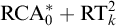 $\mathrm {RCA}^*_0 + \mathrm {RT}^2_k$ form a subtheory of $\mathrm {I} \Sigma _2$ whose $\Pi _3$ fragment coincides with $\mathrm {B} \Sigma _1 + \exp $ and whose $\Pi _4$ fragment is strictly weaker than $\mathrm {B} \Sigma _2$ but not contained in $\mathrm {I} \Sigma _1$.
Additionally, we consider a principle $\Delta ^0_2$- $\mathrm {RT}^2_2$ which is defined like $\mathrm {RT}^2_2$ but with both the $2$-colourings and the solutions allowed to be $\Delta ^0_2$-sets rather than just sets. We show that the behaviour of $\Delta ^0_2$- $\mathrm {RT}^2_2$ over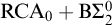 $\mathrm {RCA}_0 + \mathrm {B}\Sigma ^0_2$ is in many ways analogous to that of $\mathrm {RT}^2_2$ over $\mathrm {RCA}^*_0$, and that $\mathrm {RCA}_0 + \mathrm {B} \Sigma ^0_2 + \Delta ^0_2$- $\mathrm {RT}^2_2$ is $\Pi _4$- but not $\Pi _5$-conservative over $\mathrm {B} \Sigma _2$. However, the statement we use to witness failure of $\Pi _5$-conservativity is not provable in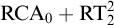 $\mathrm {RCA}_0 +\mathrm {RT}^2_2$.


Complete subgraphs in a multipartite graph
- Part of
-
- Journal:
- Combinatorics, Probability and Computing / Volume 31 / Issue 6 / November 2022
- Published online by Cambridge University Press:
- 13 June 2022, pp. 1092-1101
-
- Article
-
- You have access
- Open access
- HTML
- Export citation
-
In 1975 Bollobás, Erdős, and Szemerédi asked the following question: given positive integers $n, t, r$ with $2\le t\le r-1$, what is the largest minimum degree $\delta (G)$ among all $r$-partite graphs $G$ with parts of size $n$ and which do not contain a copy of $K_{t+1}$? The $r=t+1$ case has attracted a lot of attention and was fully resolved by Haxell and Szabó, and Szabó and Tardos in 2006. In this article, we investigate the $r\gt t+1$ case of the problem, which has remained dormant for over 40 years. We resolve the problem exactly in the case when $r \equiv -1 \pmod{t}$, and up to an additive constant for many other cases, including when $r \geq (3t-1)(t-1)$. Our approach utilizes a connection to the related problem of determining the maximum of the minimum degrees among the family of balanced $r$-partite $rn$-vertex graphs of chromatic number at most $t$.
$t$.


Hypergraphs without non-trivial intersecting subgraphs
- Part of
-
- Journal:
- Combinatorics, Probability and Computing / Volume 31 / Issue 6 / November 2022
- Published online by Cambridge University Press:
- 09 June 2022, pp. 1076-1091
-
- Article
- Export citation
-
A hypergraph $\mathcal{F}$ is non-trivial intersecting if every pair of edges in it have a nonempty intersection, but no vertex is contained in all edges of $\mathcal{F}$. Mubayi and Verstraëte showed that for every $k \ge d+1 \ge 3$ and $n \ge (d+1)k/d$ every $k$-graph $\mathcal{H}$ on $n$ vertices without a non-trivial intersecting subgraph of size $d+1$ contains at most $\binom{n-1}{k-1}$ edges. They conjectured that the same conclusion holds for all $d \ge k \ge 4$ and sufficiently large $n$. We confirm their conjecture by proving a stronger statement.
They also conjectured that for $m \ge 4$ and sufficiently large $n$ the maximum size of a $3$-graph on $n$ vertices without a non-trivial intersecting subgraph of size $3m+1$ is achieved by certain Steiner triple systems. We give a construction with more edges showing that their conjecture is not true in general.


Joint ergodicity of fractional powers of primes
- Part of
-
- Journal:
- Forum of Mathematics, Sigma / Volume 10 / 2022
- Published online by Cambridge University Press:
- 09 June 2022, e30
-
- Article
-
- You have access
- Open access
- HTML
- Export citation
-
We establish the mean convergence for multiple ergodic averages with iterates given by distinct fractional powers of primes and related multiple recurrence results. A consequence of our main result is that every set of integers with positive upper density contains patterns of the form $\{m,m+[p_n^a], m+[p_n^b]\}$, where $a,b$ are positive nonintegers and $p_n$ denotes the nth prime, a property that fails if a or b is a natural number. Our approach is based on a recent criterion for joint ergodicity of collections of sequences, and the bulk of the proof is devoted to obtaining good seminorm estimates for the related multiple ergodic averages. The input needed from number theory are upper bounds for the number of prime k-tuples that follow from elementary sieve theory estimates and equidistribution results of fractional powers of primes in the circle.


Short proofs for long induced paths
- Part of
-
- Journal:
- Combinatorics, Probability and Computing / Volume 31 / Issue 5 / September 2022
- Published online by Cambridge University Press:
- 11 February 2022, pp. 870-878
-
- Article
-
- You have access
- Open access
- HTML
- Export citation
-
We present a modification of the Depth first search algorithm, suited for finding long induced paths. We use it to give simple proofs of the following results. We show that the induced size-Ramsey number of paths satisfies $\hat{R}_{\mathrm{ind}}(P_n)\leq 5 \cdot 10^7n$, thus giving an explicit constant in the linear bound, improving the previous bound with a large constant from a regularity lemma argument by Haxell, Kohayakawa and Łuczak. We also provide a bound for the k-colour version, showing that $\hat{R}_{\mathrm{ind}}^k(P_n)=O(k^3\log^4k)n$. Finally, we present a new short proof of the fact that the binomial random graph in the supercritical regime, $G(n,\frac{1+\varepsilon}{n})$, contains typically an induced path of length $\Theta(\varepsilon^2) n$.


Removal lemmas and approximate homomorphisms
- Part of
-
- Journal:
- Combinatorics, Probability and Computing / Volume 31 / Issue 4 / July 2022
- Published online by Cambridge University Press:
- 24 January 2022, pp. 721-736
-
- Article
-
- You have access
- Open access
- HTML
- Export citation
-
We study quantitative relationships between the triangle removal lemma and several of its variants. One such variant, which we call the triangle-free lemma, states that for each $\epsilon>0$ there exists M such that every triangle-free graph G has an $\epsilon$-approximate homomorphism to a triangle-free graph F on at most M vertices (here an $\epsilon$-approximate homomorphism is a map $V(G) \to V(F)$ where all but at most $\epsilon \left\lvert{V(G)}\right\rvert^2$ edges of G are mapped to edges of F). One consequence of our results is that the least possible M in the triangle-free lemma grows faster than exponential in any polynomial in $\epsilon^{-1}$. We also prove more general results for arbitrary graphs, as well as arithmetic analogues over finite fields, where the bounds are close to optimal.


Independent transversals in bipartite correspondence-covers
- Part of
-
- Journal:
- Canadian Mathematical Bulletin / Volume 65 / Issue 4 / December 2022
- Published online by Cambridge University Press:
- 13 December 2021, pp. 882-894
- Print publication:
- December 2022
-
- Article
-
- You have access
- Open access
- HTML
- Export citation
-
Suppose G and H are bipartite graphs and $L: V(G)\to 2^{V(H)}$ induces a partition of $V(H)$ such that the subgraph of H induced between $L(v)$ and $L(v')$ is a matching, whenever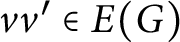 $vv'\in E(G)$. We show for each $\varepsilon>0$ that if H has maximum degree D and $|L(v)| \ge (1+\varepsilon )D/\log D$ for all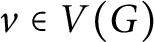 $v\in V(G)$, then H admits an independent transversal with respect to L, provided D is sufficiently large. This bound on the part sizes is asymptotically sharp up to a factor $2$. We also show some asymmetric variants of this result.


A blurred view of Van der Waerden type theorems
- Part of
-
- Journal:
- Combinatorics, Probability and Computing / Volume 31 / Issue 4 / July 2022
- Published online by Cambridge University Press:
- 26 November 2021, pp. 684-701
-
- Article
- Export citation
-
Let $\mathrm{AP}_k=\{a,a+d,\ldots,a+(k-1)d\}$ be an arithmetic progression. For $\varepsilon>0$ we call a set $\mathrm{AP}_k(\varepsilon)=\{x_0,\ldots,x_{k-1}\}$ an $\varepsilon$-approximate arithmetic progression if for some a and d, $|x_i-(a+id)|<\varepsilon d$ holds for all $i\in\{0,1\ldots,k-1\}$. Complementing earlier results of Dumitrescu (2011, J. Comput. Geom. 2(1) 16–29), in this paper we study numerical aspects of Van der Waerden, Szemerédi and Furstenberg–Katznelson like results in which arithmetic progressions and their higher dimensional extensions are replaced by their $\varepsilon$-approximation.


STRUCTURAL CONSIDERATIONS OF RAMSEY ALGEBRAS
- Part of
-
- Journal:
- The Journal of Symbolic Logic / Volume 87 / Issue 4 / December 2022
- Published online by Cambridge University Press:
- 29 October 2021, pp. 1677-1692
- Print publication:
- December 2022
-
- Article
- Export citation
