Contents
JFM Rapids

Linear odd electrophoresis of a sphere in a charged chiral active fluid
-
- Published online by Cambridge University Press:
- 13 July 2026, R1
-
- Article
-
- You have access
- Open access
- HTML
- Export citation
JFM Papers

Pressure fluctuations in high gas volume fraction turbulent bubbly channel flows at $\textit{Re}_{\boldsymbol{\tau}} \boldsymbol{\approx 550}$
-
- Published online by Cambridge University Press:
- 13 July 2026, A4
-
- Article
-
- You have access
- HTML
- Export citation
-
The pressure fluctuations in turbulent bubbly channel flows are investigated using incompressible large-eddy simulations under zero-gravity conditions. The volume-of-fluid method is adopted to capture the bubble–liquid interfaces. The gas volume fraction varies from 1.68 % to 11.31 % by adjusting the number and size of bubbles. A constant bulk mean velocity is imposed, yielding friction Reynolds numbers around 550, the highest achieved so far. To accurately reflect the contributions of the pressure fluctuations, the densities and viscosities are set to those of water and air under standard conditions. After careful validation of the numerical approach, the different source terms in the Poisson equation for pressure fluctuations are thoroughly examined based on the simulation results. It is found that (i) pressure fluctuations are primarily governed by spatio-temporal density variations induced by bubble motion, particularly in the channel core region; (ii) the surface-tension contribution is prominent throughout the bubble region, owing to the resulting Laplace pressure jump across the bubble interface; (iii) for the incompressible source terms, the linear component exceeds the nonlinear one beyond the buffer layer, in contrast to the behaviour in the single-phase channel flows. The inversion arises from the important contribution of spatial gradients of mean density and mean velocity due to bubble motions. Next, the wall-pressure fluctuations are analysed in terms of the wavenumber–frequency spectra. For a high gas volume fraction $\alpha _g \gtrsim 5.65\,\%$, a unique bubble-induced convection ridge, distinct from the turbulence-induced ridge, emerges and may even dominate. Owing to bubble-induced disturbances in the near-wall boundary layer, the convection velocity of energy-containing wall-pressure fluctuations exceeds that of single-phase case and increases with gas volume fraction. The bubbly flows, even with a bubble-deficient layer near the channel wall, modify the vortex structures in the boundary layer and modulate the wall-pressure fluctuations.


Theory of Taylor bubble pinch-off in planar coflow
-
- Published online by Cambridge University Press:
- 14 July 2026, A1
-
- Article
-
- You have access
- Open access
- HTML
- Export citation
-
Two-fluid capillary flows in channels and pipes form a fundamental problem in fluid mechanics with widespread applications in physical, biological and microfluidic systems. A key phenomenon in such flows is the generation of long capsular bubbles, known as Taylor bubbles. A simple configuration that forms Taylor bubbles is coflow, where two fluids (one viscous, the other inviscid) are injected concurrently into a pipe or channel, producing a periodic pinch-off of inviscid bubbles at a regular frequency. By considering a lubrication theory for the necking region between the bubble injection nozzle and the developing Taylor bubble, we conduct a mathematical study of the formation of two-dimensional Taylor bubbles, yielding analytical insight into injection-driven pinch-off dynamics and the parametric control of its frequency. A key result is to demonstrate a quasi-static limiting theory of the necking dynamics for small capillary numbers. The theory is based on coupling an outer near-static regime of the pinching film with an apparent dynamic contact line that matches the necking zone to the film surrounding the Taylor bubble. This asymptotic structure, which becomes more refined in the limit of small capillary number, reveals a fundamental link between capillary pinch-off dynamics and the quasi-static regimes underlying spreading droplets. The theory yields a prediction for the dimensionless pinch-off time,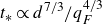 $t_* \propto d^{7/3} / q_F^{4/3}$, where $q_F$ represents the flux of viscous fluid and $d$ the size of the capillary. The study thereby yields new mathematical understanding of flow regimes that underlie bubble generation in capillary systems from first principles, and the first step towards application of quasi-static analysis to more complex axisymmetric and three-dimensional examples of capillary pinch-off.


Response of supersonic flow over blunted plates to free stream disturbances
-
- Published online by Cambridge University Press:
- 13 July 2026, A5
-
- Article
-
- You have access
- Open access
- HTML
- Export citation

Experimental investigation of the second oscillatory bifurcation past a stationary sphere
-
- Published online by Cambridge University Press:
- 14 July 2026, A3
-
- Article
-
- You have access
- Open access
- HTML
- Export citation
-
We report experimental results on the low-frequency dynamics in the wake of a stationary sphere and the corresponding bifurcation. This low frequency is the second frequency appearing past a sphere when the Reynolds number is increased. We measure the velocity field using particle image velocimetry in transverse planes past a sphere placed in a water channel, and obtain the streamwise vorticity. We compute the position of the barycentre of the absolute value of the vorticity and projected the vorticity on azimuthal mode 1. We deduce from periodograms of these signals the Strouhal numbers $\mathit{St}_1$ and ${{\textit{St}}_2}$ associated with the first ( $f_1$) and second ( $f_2$) frequencies. The frequency ratio $f_2/f_1$ decreases with the Reynolds number, and is close to $2/7$ near the threshold. The two frequencies are generally incommensurate. In the periodograms, many combinations of $f_1$ and $f_2$ are present, in particular $f_1+f_2$ and $f_1-f_2$, consistent with a $T^2$ torus dynamics. We also obtain the squared magnitude associated with $f_1$ and $f_2$. The linear variation of this squared magnitude above the threshold ${\textit{Re}}_{1}$ and the variation of the frequency $f_1$ confirm that this first oscillatory bifurcation is a supercritical Hopf bifurcation. Similar variations for $f_2$ above the corresponding threshold ${\textit{Re}}_{2}$ show that the second oscillatory bifurcation is a supercritical secondary Hopf bifurcation (supercritical Neimark–Sacker bifurcation). The component at $f_2$ of the vorticity field remains significant even $9$ diameters downstream of the sphere.


Aeroacoustics of a forward-flight propeller ingesting small- and large-scale turbulent wakes
-
- Published online by Cambridge University Press:
- 13 July 2026, A6
-
- Article
-
- You have access
- Open access
- HTML
- Export citation
-
This work presents high-fidelity simulations of the aerodynamic noise characteristics of a forward-flight propeller ingesting turbulent wakes of cylinders. Two cylinders with different diameters are employed to generate turbulent wakes with distinct turbulence intensity and length scales, namely small-scale turbulence (SST) and large-scale turbulence (LST). The lattice Boltzmann–very large-eddy simulation solver, PowerFLOW, coupled to an impermeable surface Ffowcs Williams–Hawkings formulation, is used for the forward-flight propeller configuration, matching that of an earlier experimental study. The aerodynamic results show that SST ingestion preserves a coherent tip–vortex path and confines elevated fluctuations to a limited portion of the blades. In contrast, LST ingestion disrupts the tip–vortex trajectory over a wide azimuth and spreads axial-velocity root-mean-square across the disk. Correspondingly, ingesting SST produces a series of discrete tonal sidebands at $m\mathrm{BPF}\pm nf_0$ (where $m, n \in \mathbb{N} = \{1,\, 2,\,3,\, \ldots \}$, $\textrm{BPF}$ is blade passing frequency and $f_0$ is the cylinder shedding frequency), while the LST case primarily yields notable noise increases in broadband components with clear haystacking around the blade passing frequency harmonics. Blade-level correlation and modulation intensity analyses confirm that the SST case gives rise to compact amplitude modulation, whereas the larger turbulence length scales in LST lead to redistribution of the turbulent energy via haystacking and broadband humps, linking inflow scale and coherence to the observed noise characteristics and generation mechanism. Hemispherical change in overall sound pressure level maps confirm axis-aligned rises in noise levels with turbulence ingestion. These results establish how the scale and coherence of ingested turbulence are crucial to both the near-wake dynamics and the radiated sound of propellers.


Flow morphology and patterns in porous media convection: A persistent homology analysis
-
- Published online by Cambridge University Press:
- 14 July 2026, A7
-
- Article
-
- You have access
- Open access
- HTML
- Export citation

Stability of trapped fluid clusters in two-phase porous media flow
-
- Published online by Cambridge University Press:
- 15 July 2026, A8
-
- Article
-
- You have access
- Open access
- HTML
- Export citation
-
A key challenge in multiphase flow through porous media is to understand and predict the conditions under which trapped fluid clusters become mobilised. Here, we investigate the stability of such clusters in two-phase flow and present a simple, quasistatic model that accurately determines the critical Bond number (that is, the critical ratio between the average pressure gradient of the flow and the surface tension) for the onset of cluster mobilisation. The model is derived by combining elementary geometrical considerations with mass conservation and a mechanical equilibrium condition, resulting in a system of coupled differential equations. Our derivation sheds new light on the mechanisms that govern cluster stability. In addition, since the number of equations equals the number of cluster openings, our model is significantly faster than direct numerical simulations of the same problem and enables efficient exploration of the system’s parameter space. Using this approach, we highlight a discrepancy with the prediction of current mean-field theories, which predict that the largest stable cluster size scales in proportion to $r/{\textit{Bo}}^\alpha$, where $r$ is a typical pore size, ${\textit{Bo}}$ is the Bond number and $\alpha$ is a fixed exponent. We discuss the mechanisms that explain the breakdown of the mean field theories and we show that a scaling law of this form can only exist if $\alpha$ is allowed to depend on a broad set of flow and geometric parameters.


A radiation two-phase flow model for simulating plasma–liquid interactions
-
- Published online by Cambridge University Press:
- 14 July 2026, A9
-
- Article
-
- You have access
- HTML
- Export citation
-
In laser-produced plasma (LPP) extreme ultraviolet (EUV) sources, deformation of a tin droplet into an optimal target shape is determined by its interaction with a pre-pulse laser-generated plasma. This interaction is mediated by a transient ablation pressure, whose complex spatio-temporal evolution remains experimentally inaccessible. Existing modelling approaches are limited: empirical pressure–impulse models neglect dynamic plasma feedback, while advanced radiation hydrodynamics codes often fail to resolve late-time droplet hydrodynamics. To bridge this gap, we propose a radiation two-phase flow model based on a diffuse interface approach. The model integrates radiation hydrodynamics for the plasma with the Euler equations for a weakly compressible liquid, extending a five-equation diffuse interface formulation to incorporate radiation transport, thermal conduction, ionisation and surface tension. This formulation enforces pressure and velocity equilibrium across the diffuse interface region, with closure models constructed to ensure correct jump conditions at interfaces and asymptotically recover the pure-phase equations in bulk regions. Then we apply the model to simulate a benchmark pre-pulse scenario, where a $50\ \unicode{x03BC} \mathrm{m}$ tin droplet is irradiated by a $10\ \mathrm{ns}$ laser pulse. Our axisymmetric simulations capture the rapid plasma expansion and subsequent inertial flattening of the droplet into a thin, curved sheet over microsecond time scales. Notably, the model reproduces experimentally observed features such as an axial jet – rarely replicated in prior simulations. Quantitative agreement with experimental data for sheet dimensions and velocity validates the approach. The proposed model self-consistently couples laser–plasma physics with compressible droplet dynamics, providing a powerful tool for studying plasma–liquid interactions in LPP-EUV source optimisation.


A variational formulation of the anisotropic Darcy–Brinkman–Forchheimer model: theory and neural computation
-
- Published online by Cambridge University Press:
- 14 July 2026, A10
-
- Article
-
- You have access
- HTML
- Export citation

Enhancement and reduction of settling velocity of heavy particles in homogeneous turbulence
-
- Published online by Cambridge University Press:
- 15 July 2026, A14
-
- Article
-
- You have access
- Open access
- HTML
- Export citation

Three-dimensional gravity-capillary standing waves: computation, resonance and instability
-
- Published online by Cambridge University Press:
- 15 July 2026, A20
-
- Article
-
- You have access
- Open access
- HTML
- Export citation

Time-domain pressure and surface wave propagation over generic topography due to sea floor motion
-
- Published online by Cambridge University Press:
- 15 July 2026, A21
-
- Article
- Export citation

Low-dimensional description of turbulent superstructures in three-dimensional Kolmogorov flow
-
- Published online by Cambridge University Press:
- 15 July 2026, A11
-
- Article
-
- You have access
- Open access
- HTML
- Export citation

A strongly coupled fluid–structure interaction network for predictive modelling of vortex-induced vibrations
-
- Published online by Cambridge University Press:
- 15 July 2026, A12
-
- Article
- Export citation
-
Fluid–structure interaction (FSI) poses a significant computational challenge due to the complex, multiscale nonlinearities of both fluid and structural dynamics. In this study, a novel strongly coupled FSI network is developed for accurate and efficient predictive modelling of FSI problems. Specifically, the framework architecture integrates a physics-constrained convolutional neural network autoencoder (CAE) with a strong coupling (SC) prediction module containing both fluid and structural dynamic prediction modules (DP) that perform recursive prediction simultaneously and interactively. First, the physics-constrained CAE learns low-dimensional nonlinear normal modes (NNMs) representations of the high-dimensional fluid field’s spatiotemporal dynamics. Subsequently, the fluid DP module in the SC module leverages these NNMs combined with structural states determined by embedding the motion equation into the structural DP, to predict the future-state flow fields efficiently. Such a strongly coupled FSI framework is achieved by integrating fluid NNMs and structural states within each time step to recursively correct the learned mapping of the trained CAE and fluid DP modules, thereby efficiently and accurately predicting future-state FSI dynamics simultaneously. The developed SC-CAE-NNM FSI framework is applied to the classic problem of vortex-induced vibrations of a circular cylinder, analysing both laminar and high- $ \textit{Re}$ flows. It is observed that the identified NNMs of fluid flows in association with the structural state achieve superior accuracy in the prediction of the flow fields and structural responses, indicating that the SC scheme effectively captures the dynamic flow characteristics and strong nonlinear interactions. Furthermore, the framework is found to be able to reconstruct small-scale flow structures in high- $ \textit{Re}$ flows accurately and predict structural responses efficiently. Additionally, the analysis of NNMs energy distributions reveals that the majority of the total energy of the flow field is captured by the first four NNMs, demonstrating significant advantages of nonlinear feature representation for efficient reduced-order modelling of complex flows. Overall, this novel framework shows strong capability for accurate and efficient predictive modelling of complex nonlinear dynamics of FSIs.


A pair of oblate bubbles rising in line: a linear stability analysis
-
- Published online by Cambridge University Press:
- 16 July 2026, A13
-
- Article
- Export citation

The impact of injection rate, number and location of injection wells on structural ${\textrm {CO}}_{2}$ trapping in deep saline aquifers
-
- Published online by Cambridge University Press:
- 15 July 2026, A15
-
- Article
-
- You have access
- Open access
- HTML
- Export citation
-
In this paper, we use a two-dimensional depth-averaged model to explore the spreading of a ${\textrm {CO}}_{2}$ plume from a series of injection wells arranged around the crest of an axisymmetric anticline structure of finite vertical extent and which is connected to a laterally extensive aquifer. For a constant ${\textrm {CO}}_{2}$ injection rate, we calculate both the fraction of available pore space in the anticline filled by structurally trapped ${\textrm {CO}}_{2}$ at the point at which the plume spills from the lower boundary of the anticline into the aquifer and the maximum pressure within the anticline throughout the injection process. We find that the fraction of the anticline filled with ${\textrm {CO}}_{2}$ varies considerably between slow, buoyancy-controlled filling and fast, pressure-controlled filling, with the latter case leading to much smaller fractions of the anticline accessed by the ${\textrm {CO}}_{2}$ plume. We also find that there is a correspondence between the maximum pressure within the anticline produced by a single injection well at the centre and the maximum pressure produced by a series of equally spaced injection wells. The results of this modelling provide key insights into the tensions between the injection rate, total injected volume, and pressure in a ${\textrm {CO}}_{2}$ storage system, and we discuss some of the challenges this presents.


Linear stability analysis of particle-laden Couette–Poiseuille flows: effect of porous walls
-
- Published online by Cambridge University Press:
- 15 July 2026, A16
-
- Article
-
- You have access
- Open access
- HTML
- Export citation

Learning to traverse convective flows at moderate to high Rayleigh numbers
-
- Published online by Cambridge University Press:
- 15 July 2026, A18
-
- Article
- Export citation
-
We study the navigation of a self-propelled inertial particle in two-dimensional Rayleigh–Bénard convection at Prandtl number $\textit{Pr}=0.71$ and cell aspect ratio $\varGamma =4$ for Rayleigh numbers $Ra$ ranging from $10^7$ to $10^{11}$. A reinforcement-learning (RL) controller selects the propulsive acceleration, subject to an upper bound $\mathcal{A}_{\textit{max}}$, to achieve a prescribed horizontal displacement. We find that the success rate increases abruptly with $\mathcal{A}_{\textit{max}}$ at moderate $Ra$, whereas at higher $Ra$ the transition becomes more gradual and shifts to larger $\mathcal{A}_{\textit{max}}$. Moreover, although the completion time increases with $Ra$, the propulsion energy required for successful traversal decreases. Proper orthogonal decomposition indicates that these performance differences are associated with reorganisation of the carrier flow. At moderate $Ra$, the dominant large-scale circulation partitions the domain through persistent transport barriers, requiring a finite thrust surplus to cross them; at higher $Ra$, energy is distributed across many modes, the barriers fragment and transient plume-assisted pathways emerge. Compared with a constant-heading baseline, the learned policy aligns with local currents and consumes significantly less energy. Lagrangian coherent structure analysis further suggests that the RL agent tends to cross repelling barriers and surf along attracting pathways. Finally, by mapping these behaviours onto the local Eulerian flow topology using Voronoi tessellation and the $Q$-criterion, we distil an interpretable, physics-based heuristic strategy that retains robust navigability. These results connect turbulent-flow organisation with autonomous navigation under bounded actuation.


An experimental study on the heat transport in porous media convection
-
- Published online by Cambridge University Press:
- 16 July 2026, A19
-
- Article
- Export citation
-
We investigate the heat transport in porous media convection (PMC) over a wide Rayleigh–Darcy number range of $26.8\leqslant Ra\leqslant 2.62\times 10^5$, and a Darcy number range of $6.18\times 10^{-7}\leqslant Da\leqslant 1.21\times 10^{-5}$. In the experiments, we employ 3D-printed lattice structures as the solid porous matrix and water as the working fluid. Quantitative analyses of the porous medium Nusselt number $ \textit{Nu}_m$ and local temperature statistics reveal that the present system undergoes a transition through five distinct regimes: (I) conduction, (II) convection, (III) oscillation, (IV) transition, (V) classical Rayleigh–Bénard convection. This transitional process bridges the gap between Rayleigh–Darcy-like behaviour and Rayleigh–Bénard-like behaviour in PMC. By varying the permeability of the matrix, we further examine the role of the Darcy number $ \textit{Da}$, which turns out to have a profound impact on the transitional processes across different regimes. Flow field measurements reveal that the flow structures within regime IV and regime V evolve from several horizontally stacked convection rolls to a single-roll structure, and the pore-scale Reynolds numbers both exceed unity in these two regimes. Finally, we report the corresponding phase diagram in the $ \textit{Ra}$– $ \textit{Da}$ space.


