To save content items to your account,
please confirm that you agree to abide by our usage policies.
If this is the first time you use this feature, you will be asked to authorise Cambridge Core to connect with your account.
Find out more about saving content to .
To save content items to your Kindle, first ensure no-reply@cambridge.org
is added to your Approved Personal Document E-mail List under your Personal Document Settings
on the Manage Your Content and Devices page of your Amazon account. Then enter the ‘name’ part
of your Kindle email address below.
Find out more about saving to your Kindle.
Note you can select to save to either the @free.kindle.com or @kindle.com variations.
‘@free.kindle.com’ emails are free but can only be saved to your device when it is connected to wi-fi.
‘@kindle.com’ emails can be delivered even when you are not connected to wi-fi, but note that service fees apply.
Narrative-based approaches have been utilized in medicine to better understand the illness experiences of individuals living with chronic conditions. In particular, people with amyotrophic lateral sclerosis (pALS) may benefit from use of narrative-based approaches, given the potential impact of progressive decline on identity of self. This review explores the use of narrative-based approaches in studies involving pALS to provide further insight to the experiences and psychosocial needs of this population.
Methods
A search was conducted utilizing EMBASE, CINAHL, PsycInfo, and Google Scholar with several terms related to amyotrophic lateral sclerosis (ALS) and narrative-based approaches. Studies were included if they were written in English, incorporated methods that promoted the production of narratives, and reported data that could be clearly isolated to pALS.
Results
The search revealed a total of 154 articles for title and abstract screening. Fifty-two articles were selected for full-text review. Thirty-two articles met the criteria for data extraction. Four descriptive categories emerged upon examination of the narrative-based approaches implemented across the studies: psychosocial intervention, illness experience, intervention targeting specific needs, and secondary analysis of data. Some of the common themes identified across studies included: loss of physical and communicative function, adaptation to life changes, shifts in identity, and tension with the healthcare system.
Significance of results
Despite the communication challenges that often coincide with disease progression, narrative-based approaches can be utilized in pALS. These approaches should be implemented to gain insight on the disease experiences of pALS, providing opportunity for patient-centered interventions to address the psychosocial needs of this population.
Rate-dependent viscosity in power-law fluids significantly affects contact line stress singularities and moving contact line behaviour. Contact line forces show more severe divergence for shear-thickening fluids ($n\gt 1$) or remain finite for shear-thinning fluids ($n\lt 1$). Complementing earlier self-similar derivations of spreading laws by Starov et al. (J. Colloid Interface Sci. vol. 257, 2003, pp. 284–290) for shear-thinning drops, we extend the classical Cox-Voinov theory to power-law fluids and obtain explicit dynamic contact angle relationships – results that are more fundamental than previously reported spreading laws. This development provides a unified yet fundamentally distinct description of advancing contact line behaviour across the full range of shear-thinning and shear-thickening rheologies. We show that the apparent dynamic contact angle $\theta _{d}$ depends critically on the characteristic dissipation length $h^{*}\propto U^{n/(n-1)}$, fundamentally altering its dependence on contact line speed $U$. For shear-thinning fluids (n < 1) with less diverging contact line stresses, this length scale yields $\theta _{d}\sim C{a_{\textit{local}}}^{1/3}$ in the familiar Cox–Voinov form in terms of the local capillary number $ \textit{Ca}_{\textit{local}} = (h/h^{*})^{1-n}$, with the contact line motion dissipated within $h^{*}$ extending beyond local wedge height $h$, thereby eliminating the need for a microscopic cutoff. This feature also renders $\theta _{d}$ size dependent and varying with the spreading radius $R$, recovering $R\propto t^{n/(3n+7)}$and $\theta _{d}\propto U^{3n/(2n+7)}$ as previously derived by Starov et al. (2003). For shear-thickening fluids (n > 1) that exhibit more strongly diverging contact line stresses, by contrast, the contact line motion is dissipated within a much narrow region $h^{*}$ that is much smaller than the required microscopic cutoff hm. A complete precursor theory is also developed, showing $ h_{m} \propto U^{-n/(4-n)}$. This leads to $\theta_{d} \propto U^{n/(4-n)}$, making the global spreading behaviour highly sensitive to the contact line microstructure. Importantly, regardless of the microscopic mechanisms, the apparent dynamic contact angle relationship can always be expressed in the analogous Cox–Voinov form $\theta _{d}\sim {\textit{Ca}_{\textit{eff}}}^{1/3}$ in terms of the effective capillary number $\textit{Ca}_{\textit{eff}}=\eta_{\kern-1.5pt f}U/\gamma=(h^*/h_m)^{n-1}$ (with the surface tension γ) based on the microscopic viscosity $\eta_{\kern-1.5pt f}\propto (U/h_{m})^{n-1}$ associated with the local shear rate $ U/h_{m}$ across the cutoff $ h_{m}$. The present Cox-Voinov generalisation can be applied to more realistic rheological laws such as the Carreau model, where self-similar solutions may no longer exist, thereby enabling a direct mapping of non-Newtonian spreading dynamics onto equivalent Newtonian behaviour and offering a more robust framework for the design and control of droplet dynamics in practical applications.






A previous study by our research group identified psychomotor and neurofunctional impairments following SARS-CoV-2 infection. This study continues that investigation, aiming to evaluate whether these impairments persisted over time, as part of the broader characterisation of long COVID. Moreover, it was explored potential correlations with variables such as age, blood type, symptoms, and medical care.
Methods:
From an initial pool of 214 subjects, 30 post-COVID-19 participants and 30 healthy controls were selected after strict exclusion criteria. The assessments protocol included eight psychomotor tests – Fine Motor Development (Diadochokinesia, Puppets, Fan, and Paper) and Balance (Immobility, Static Balance on One Foot, Feet in Line, and Persistence) – as well as three cognitive screening tasks from the Mini-Mental State Examination: Episodic Memory After Distracters, Verbal Fluency, and Clock tests. Evaluations were performed at three time points: baseline (post-COVID-19), 12 weeks, and 24 weeks. Participants were stratified by age (18–30, 31–45, and 46–64 years), symptoms profile, medical care, and blood type.
Results:
COVID-19 induced psychomotor and neurofunctional sequelae lasting at least 24 weeks post-infection. These impairments were more pronounced and persistent in the 31–45-years age group, while memory-related impairments were more evident in the 18–30 age group. Body pain, coryza, and sore throat were key symptoms linked to long-term sequelae. Rh-negative blood type was suggested as a potential risk factor.
Conclusion:
The findings support that long COVID included sustained psychomotor and neurofunctional sequelae, premature senescence, and associations with specific clinical and biological variables.
Substance use disorder (SUD) is frequently associated with cognitive impairment that negatively affects treatment adherence and clinical outcomes. Neuropsychological assessments provide detailed information but are often impractical in clinical settings, underscoring the value of brief but sensitive tools such as the Montreal Cognitive Assessment (MoCA).
Aims
This study aimed to evaluate the utility of MoCA in detecting cognitive impairment in SUD, examining cognitive recovery following sustained abstinence, exploring gender differences in cognitive progression and determining whether baseline cognitive performance predicts treatment dropout.
Method
Ninety-five SUD patients and 57 healthy controls completed MoCA at baseline and were reassessed after 6 months.
Results
At baseline, 72.60% of individuals demonstrated cognitive impairment compared with controls, with deficits evident in both global cognition and visuospatial/executive, attention, memory and language domains. Following 6 months of abstinence, deterioration rates decreased to 50%, indicating substantial but not complete recovery, because the improvement in overall cognition was moderate. Male patients showed significantly greater cognitive gains than female patients, particularly in visuospatial/executive and digit span performance. Patients impaired at baseline reported more severe alcohol use and earlier onset of cannabis use disorder. Patients with cocaine use disorder showed the poorest recovery and the highest rate of treatment dropout. Lower baseline language and fluency scores were strongly associated with treatment discontinuation. Language deficits, together with cocaine use disorder, predicted 69% of dropout cases.
Conclusions
Findings indicate MoCA as a practical screening tool for early detection of cognitive impairment, longitudinal monitoring and personalised treatment planning in SUD.
Although patients with lung cancer are at high risk of poor outcomes from COVID-19, little is known about the economic and psychosocial impact of the pandemic on this population. This study had 2 objectives: (1) to identify the prevalence of financial and social disruptions and other adverse COVID-19 experiences in socioeconomically diverse patients with lung cancer; and (2) to examine whether these experiences were associated with physical and psychological symptoms.
Methods
Patients with lung cancer (N = 191) were recruited from a cancer center in the midwestern U.S. from August 2021 to April 2022 to participate in a cross-sectional survey of COVID-19 experiences and symptoms. Path analyses tested associations between COVID-19 experiences and symptoms, adjusting for sociodemographic and medical covariates.
Results
Prevalent COVID-19 experiences included disrupted interactions with family and friends (66.0%), inability to perform daily routines (38.5%), and financial difficulties (18.5%). Greater financial hardship and disruptions to daily activities and social interactions were associated with higher levels of all physical and psychological symptoms. Endorsing more COVID-19 experiences (e.g., job loss, death of loved ones) was only associated with greater anxiety. Despite prevalent hardships, mean levels of physical and psychological symptoms were within normal ranges, except for elevated fatigue.
Significance of the results
Although adverse COVID-19 experiences were common and related to symptom burden, patients with lung cancer showed notable psychological resilience during the pandemic. Oncology clinicians should consider the impact of COVID-19 experiences when providing financial and support services.
Sexual violence in psychiatric in-patient care has received increasing attention following persistent evidence of sexual violence and harassment on wards. However, patients’ subjective experiences remain under-examined, limiting the evidence base to inform safeguarding, gender-sensitive design and trauma-informed practice.
Aims
To synthesise qualitative evidence on patients’ experiences of sexual violence and perceived risk within psychiatric in-patient settings.
Method
We conducted a systematic review and qualitative synthesis following Preferred Reporting Items for Systematic reviews and Meta-Analyses guidelines (PROSPERO registration no. CRD42024595945). MEDLINE, Embase and PsycINFO were searched from inception to October 2024, supplemented by reference list screening and citation tracking. Inclusion criteria were peer-reviewed qualitative studies reporting patients’ first-hand accounts of sexual violence or perceived sexual safety in psychiatric in-patient care. The quality of the included studies was assessed using the Critical Appraisal Skills Programme checklist, and data were analysed by thematic synthesis.
Results
Six studies published between 1998 and 2025 met the inclusion criteria, with most focusing on female patients in mixed-gender wards. Three overarching themes were developed: (a) ‘a culture of permissiveness and dismissal’ – patients downplayed harassment and abuse and staff routinely dismissed concerns; (b) ‘everyday fear, hypervigilance and resistance’ – the constant threat of harm generated chronic distress, with safeguarding responsibility shifted onto the patients; and (c) ‘gendered power dynamics in open or mixed-gender spaces’ – open ward layouts, inadequate boundaries and legal detention compounded vulnerability to harm.
Conclusions
Sexual violence in psychiatric in-patient care is enabled by ward cultures that normalise harm, weak safeguarding and gendered power imbalances. Urgent action is needed to implement trauma-informed, gender-sensitive practices and secure spatial boundaries and consistent incident responses, alongside policies that enable safe disclosure and accountability.
Somalia today stands as one of the most persistent contexts of child soldier recruitment and use globally. The emergence of the Islamic militant group Al Shabaab has intensified fears about the insecurity of – and threat posed by – children as agents of war in Somalia. This article contextualises Al-Shabaab’s recruitment and use of children within its specific historical, political and cultural dimensions, challenging the emphasis in terrorism studies on the ‘unique’ phenomenon of children in extremist groups and relating the pathways of youth in Al-Shabaab with wider trends in criminality and violence, including piracy. This research responds to the need for deeper analysis of Somalia’s history of youth mobilisation that considers the specific constructions of age and masculinity that have influenced the participation of young people in diverse armed groups.
Social decision-making is a multifaceted process where decisions impact not only the individual but also the larger group. Acute stress may influence individual decision-making, potentially increasing reward-driven choices and affecting learning and adaptive adjustment. However, studies examining stress’s impact on social decision-making have presented inconsistencies, potentially arising from assessing decision-making as a singular dimension. This article aims to test, using computational modeling, the stress effect on social decision making and cognitive subprocesses involved during the Ultimatum Game (UG). Seventy-three healthy participants underwent the UG, with only half exposed before to the virtual Trier Social Stress Test (TSST-VR). In our data, prosocial behavior—as indexed by the number of accepted offers and sensitivity to unfair distributions—did not show immediate alterations 15 min following stressor onset. However, stressed participants exhibited a diminished capacity to learn and adapt during the task, alongside a more perseverative decision-making pattern. These results support the negative impact of stress on social decisions and underscore the importance of considering its effects in mitigating challenges related to social integration and cohesion.
Wave–sea-ice interactions shape the transition zone between open ocean and pack ice in the polar regions. Most theoretical paradigms, implemented in coupled wave–sea-ice models, predict exponential decay of the wave energy but some recent observations deviate from this behaviour. Expanding on a framework based on wave energy dissipation due to ice–water drag, we account for drifting sea ice to derive an improved model for wave energy attenuation. Analytical solutions replicate the observed non-exponential wave energy decay and the spatial evolution of the effective attenuation rate in Antarctic sea ice.
This article critically appraises the UK Labour government’s early approach to parental leave reform following the 2024 election, comparing pre-election promises with post-election policy directions. Drawing on Daly’s conceptualisation of care as a policy good (Daly, 2002), we analyse Labour’s reforms across three overlapping dimensions central to their pre-election pledges: access and pay levels, leave design and entitlements, and inclusion of diverse families. We argue that Labour’s current approach adheres to liberal welfare principles, with market-oriented reforms prioritising economic productivity over care provision, perpetuating implicit maternalism while systematically excluding working-class, minority ethnic, and self and precariously employed families. In contrast, care-centred approaches pioneered elsewhere in Europe demonstrate that gender equality, social inclusion, and economic productivity are mutually reinforcing rather than competing objectives. Echoing calls from the Women and Equalities Committee for transformative change, we argue that Labour’s incremental approach cannot achieve reforms that work for parents or the economy without embracing care-centred policies.
This work presents an efficient statistical model to simulate expected scalar transport in fractured porous media below the representative elementary volume scale. We focus on embedded, highly conductive, isolated fractures. The statistical integro-differential fracture model (Sid-FM) solves for ensemble-averaged solutions directly, avoiding computationally expensive Monte Carlo simulation. The expected fluid exchange between isolated fractures and the porous matrix is modelled via a non-local kernel function, leading to a set of integro-differential equations. The model is validated against reference data from Monte Carlo simulations for statistically one-dimensional test cases and shows good agreement.
The collisions between elongated particles in turbulence play an important role in various natural and industrial processes. In this study, we establish a theoretical model to estimate the collision kernels of monodisperse elongated passive particles in homogeneous isotropic turbulence. The model is composed of two terms: the collision kernel with fixed relative angles and the angular-volumetric number density of neighbouring pairs, where we first derive under the Gaussian hypothesis of the fluid velocity gradients and then incorporate a non-Gaussianity factor into the formulations. The collision kernels obtained by the present model are in a good agreement with that of direct numerical simulations. Moreover, our model provides insights into the mechanism of the relative alignment between nearby particle pairs and the chain formation in turbulence, from the perspective of particle collisions.
Estimating the meteoroid flux density at centimetre to metre sizes is notoriously difficult. Yet it is an important endeavour, as these sizes represent the transition between small meteoroids that pose a risk to spacecraft, and the Near-Earth Objects that are relevant for planetary defense.
We present a novel automated methodology for debiasing meteor observations from multi-camera networks, applied to data from the Desert Fireball Network (DFN). Our approach utilizes the Hierarchical Equal Area isoLatitude Pixelisation (HEALPix) framework to partition the sky into equal-area pixels at 70 km altitude, enabling precise and convenient measurement of effective survey coverage and fireball counting across the network. We developed a comprehensive data processing pipeline that analyses millions of all-sky camera images to determine clear-sky conditions through automated star source detection and flux distribution analysis.
As a case study, we apply this methodology to observations of the 2015 Southern Taurid meteor shower, during which there was significant fireball activity. Processing data from 33 cameras over a three-month period (October-December 2015), we calculate an effective observation coverage of 1.58 × 10¹² km2.h and identified 54 Southern Taurid fireballs from 141 validated detections. Our results are consistent with the extrapolation of previous work done on the same meteor shower at smaller sizes, when we set a ∼ 300 kg.m−3 mean meteoroid density, consistent with the cometary origin of the Taurid stream.
The HEALPix-based approach successfully automates what was previously a labor-intensive manual process, providing a scalable solution for accurate flux measurements from distributed camera networks; it is directly applicable to other meteor surveys.
The study investigates the influence of temperature-dependent viscosity on the stability of buoyancy-driven flow in a vertical porous slab bounded by impermeable walls and subject to Robin thermal boundary conditions. Three viscosity–temperature relationships are considered – linear, quadratic and exponential. A normal-mode linear stability analysis is carried out for two porous flow models: Model I, representing Darcy flow with the transient velocity term neglected, and Model II, its counterpart that retains it. The resulting stability eigenvalue problem is solved numerically to obtain neutral stability curves and the critical parameters, with emphasis on the roles of the Prandtl–Darcy number, Biot number and viscosity parameters. The similarities and differences between the two models, as well as those among the viscosity–temperature laws, are examined in detail. For linear and quadratic viscosity variations, Model I predicts unconditional stability irrespective of boundary heat exchange, whereas Model II admits instability when the boundaries are thermally imperfect. In contrast, exponential viscosity variation promotes instability in both models. In Model I, instability is confined to a restricted range of Biot numbers, which depends sensitively on the exponential viscosity parameter, while the flow remains stable for all thermal boundary conditions when this parameter is less than 8.2070. Model II, however, displays qualitatively distinct behaviour characterised by mode transitions and the emergence of two instability regimes of Biot number separated by a stability window.
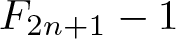
We provide four equivalent combinatorial conditions for a simple assembly graph (rigid vertex graph where all vertices are of degree 1 or 4) to have the largest number of Hamiltonian sets of polygonal paths relative to its size. These conditions serve to prove the conjecture that such a maximum, which is equal to $F_{2n+1}-1$, where $F_k$ denotes the $k$th Fibonacci number, is achieved only for special assembly graphs, called tangled cords.
Marfan syndrome (MFS, OMIM #154700) is an autosomal dominant disorder that presents a challenging diagnosis due to its wide clinical variability. The prenatal diagnosis of the syndrome is rare and often associated with unfavourable prognoses, such as early mortality. This case report, written by scientist parents, aims to document the clinical journey, management, and development of a paediatric patient diagnosed with Marfan syndrome at 24 weeks of gestation. In the immediate postpartum period, the patient did not show any severe warning signs, such as tachypnoea or prostration. The initial findings included mild dilation of the aortic and pulmonary roots, funnel chest, downward-slanting palpebral fissures, and elongated fingers. Subsequent multidisciplinary follow-up revealed motor delays, hypotonia, and orofacial alterations. Despite the repercussions of Marfan syndrome, the patient’s overall health is positive, and their development is consistent with what is expected for childhood. This case report offers a humanised and multidisciplinary perspective on the patient’s journey, highlighting the importance of early diagnosis, access to healthcare services, and information to redefine the course of clinical histories, offering hope to other families.
Situated at the intersection of the history of science and medicine and the history of bodies, this article investigates the lives of the dead in late-nineteenth and early-twentieth-century India. By the late nineteenth century, the dead moved into the socio-material landscape of the ‘sanitary city’ of Calcutta via crematoriums, burning ghats, dissecting theatres, and anatomy labs. Subsequently, one notices two new developments. On the one hand, Calcutta witnessed the rise of pathological anatomy, whereby the dead drifted into biology. On the other hand, massive mortalities triggered by disease and the paranoia of death in rural Bengal spurred the proliferation of ghost stories. In understanding attitudes toward death, occult, spiritualism, mesmerism, and the unexplained, can ‘unreason’ be a useful framework to comprehend the past? Drawing on the colonial archive of municipal reports and vernacular archive of fiction to the activities of the Society for Psychical Research (SPR) and the Theosophical Society in Adyar, I examine how the two stories—the urban, anatomical, reasoned science and the spectral ‘irrational’ fantasies—often coexisted as the dead moved from hospital beds to dissecting tables to spiritualist awakenings and horror tales. I argue that in this web of entanglement between the living and the dead, between ‘scientific’ culture and the phantasmagorical ethos, and in the liminal boundaries between positivism/passion, and surgery/mesmerism, we witness the birth of a new affect-laden sensibility in British Bengal.

