To save content items to your account,
please confirm that you agree to abide by our usage policies.
If this is the first time you use this feature, you will be asked to authorise Cambridge Core to connect with your account.
Find out more about saving content to .
To save content items to your Kindle, first ensure no-reply@cambridge.org
is added to your Approved Personal Document E-mail List under your Personal Document Settings
on the Manage Your Content and Devices page of your Amazon account. Then enter the ‘name’ part
of your Kindle email address below.
Find out more about saving to your Kindle.
Note you can select to save to either the @free.kindle.com or @kindle.com variations.
‘@free.kindle.com’ emails are free but can only be saved to your device when it is connected to wi-fi.
‘@kindle.com’ emails can be delivered even when you are not connected to wi-fi, but note that service fees apply.
This paper is concerned with the study of random (Bernoulli and Markovian) products of matrices on a compact space of symbols. We establish the analyticity of the maximal Lyapunov exponent as a function of the transition probabilities, thus extending the results and methods of Y. Peres from a finite to an infinite (but compact) space of symbols. Our approach combines the spectral properties of the associated Markov operator with the theory of holomorphic functions in Banach spaces.
Promoting bystander interventions is a core strategy to prevent suicides in public places, but little is known about how people with lived experience perceive this intervention.
Aims
To explore people’s experiences of receiving an intervention during a suicide attempt on the railways.
Method
Interviews were conducted with 28 people with experience of receiving a bystander intervention during a suicide attempt on the railways. Interview data were triangulated with an online ethnography exploring posts made on forums and similar platforms openly discussing suicide.
Results
Using reflexive thematic analysis, five themes were generated: (a) ‘I’m a good actor… we all carry a mask’: concealing feelings and intentions; (b) ‘It kind of draws your attention away but it doesn’t almost shine a spotlight’: interventions should be gentle and not draw more attention; (c) ‘People that were getting in my way were just making me want to try harder’: interventions can trigger difficult feelings in the moment; (d) ‘I did feel different, I felt better’: the power of small talk; and (e) ‘You feel like a human being and you feel like they actually care’: wanting to feel cared for.
Conclusions
Findings suggested that some people actively avoid receiving an intervention by concealing how they are feeling in that moment. Interventions that are gentle and do not draw attention may be preferable, such as making small talk and simple gestures such as smiling or being near the individual. Conversely, more intrusive or aggressive interventions may be triggering and exacerbate suicidality.
It has been 10 years since the initial discovery of “Ultra-Diffuse Galaxies” (UDGs) in the Coma cluster and the revelation that large, low surface brightness galaxies may constitute a greater fraction of galaxies than first thought. This left an open question: Are UDGs something special, or just an extension of the previously known dwarf galaxy population? Seeking to answer this question, in the decade following, dedicated simulations have studied and proposed a myriad of formation pathways to create UDGs. Observations have then pushed the limits of world-class observatories to perform detailed studies of these galaxies in large numbers across the full range of environments in the local Universe. These observations stress test simulations and challenge previous galaxy formation wisdom, with UDGs posing many open puzzles beyond just their unknown formation mechanism. To provide a few pertinent examples: there is observational evidence that not all UDGs follow the standard stellar mass – halo mass relationship; there is evidence for UDGs with extraordinarily high levels of alpha enhancement; and there is evidence that some UDGs are much more globular cluster rich than other dwarfs of similar stellar mass. In this Dawes review, we undertake the task of summarising the decade of science since the discovery of UDGs. We focus on the quiescent population of UDGs and review their general properties, their proposed formation scenarios, their internal properties and their globular cluster systems. We also provide a brief conjecture on some future directions for the next decade of UDG research.
Weaning is a significant event in the life of Sahiwal calves, often leading to notable behavioural and emotional changes. This study aimed to investigate the effects of dam–calf contact on behavioural responses and adaptability in Sahiwal calves, focusing on fear responses, social interactions and reactivity to humans. A total of 16 newborn calves were assigned to 2 rearing systems: fenceline mother-calf contact (FMC) and separated mother-calf (SM), with 8 calves in each group. The FMC group received natural suckling and fenceline contact with their dams, while the SM group was separated at birth and fed via nipple bottles. Behavioural assessments were conducted through a series of tests, including social reactivity tests, social preference tests, umbrella-based fear elicitation and interaction with a familiar human. Key behavioural parameters such as time spent idle, exploratory behaviour, escape attempts, vocalizations, latency to resume feeding and preference for conspecifics or humans were recorded. Data were statistically analysed using independent t-tests to compare behavioural responses between groups. The results revealed distinct behavioural differences between the FMC and SM calves, indicating that dam contact influences social behaviour, reduces fearfulness and improves calves’ adaptability to novel or stressful situations.
The near-surface weathering crust is a thin (<0.5 m), low density ice layer that develops on glacier surfaces during the ablation season and is formed by internal melting driven by the penetration of shortwave radiation (SWR) into polycrystalline glacier ice. This ‘photic zone’ hosts microbial communities, mediates biogeochemical processes and routes meltwater to the channelised supraglacial drainage network. Despite these critical roles, direct field measurements of weathering crust formation and evolution are scarce—rather, current understanding is largely derived from modelling approaches. Here, we present in situ measurements of weathering crust evolution at five sites on the western Greenland ice sheet, each over a 19–25 hour period. Shallow ice cores revealed weathering crust ice densities of 420–910 kg m−3, demonstrating dynamic evolution of the weathering crust linked to diurnal SWR receipt. We compare our empirical data with two existing weathering crust models, neither of which fully reproduce the observed ice density or its temporal variability. Additionally, we reveal that the density of the uppermost 0.1 m of the weathering crust is a key control upon bare-ice albedo. Our findings highlight the need for improved process-level-understanding and parameterisations of weathering crust dynamics in surface energy balance models.
Seema Elizabeth Isoy wrote in a condominium owner Whatsapp group that developer David Chiu had been arrested for fraud several years earlier. She knew but left out that he had later been acquitted. In holding her liable for defamation, the Malaysian Federal Court in Seema Elizabeth Isoy v Tan Sri David Chiu Tat-Cheong relied on the concept of a half-truth – a statement that is literally true but omits key information that would change the statement’s meaning – raised by Lord Shaw in Sutherland v Stopes. This note suggests that, while the Federal Court’s conclusion ultimately may have been justified, it should have more carefully considered whether a report of a preliminary act such as an arrest or charge necessarily implies guilt and whether an acquittal actually lessens the sting of an arrest and charge. Judgments cited by the Federal Court – from India, the US, Malaysia, Canada and South Africa – did not adequately address these issues, making this note of potential interest to readers across the common law world.
Children and adolescents with attention–deficit hyperactivity disorder (ADHD) have a higher likelihood of contact with child welfare services (CWS). Evidence on whether pharmacological treatment of ADHD reduces such contact is limited.
Aims
To estimate the causal effect of pharmacological treatment of ADHD on CWS contact.
Method
In this quasi-experimental study, we used nationwide registry data covering all individuals aged 5–14 years and diagnosed with ADHD during 2009–2011 in Norway. We used linear probability models and instrument variable analyses to estimate the associations and causal effects of pharmacological treatment on CWS contact up to 4 years after diagnosis. As instrument variable analysis uses natural variation in treatment decisions between clinics as pseudo-randomisation, estimates inform effects for children and adolescents at the margin of treatment, i.e. patients whose treatment is more influenced by variation in treatment practice, e.g. due to less severe or atypical symptom presentation.
Results
A total of 5930 children and adolescents aged 5–14 years were diagnosed with ADHD between 2009 and 2011 (mean (s.d.) age 10.1 (2.4) years; 4380 males (73.9%)). Instrument variable analyses showed a reducing effect of pharmacological treatment on the use of supportive interventions by 11.9 percentage points (95% CI: −20.12, −3.80) and out-of-home-placement by 3.30 percentage points (95% CI: −6.44, −0.15) at 2-year follow-up. This corresponds to the numbers needed to treat estimates of 8 and 30, respectively.
Conclusions
Pharmacological treatment of ADHD reduces CWS contact among children and adolescents at the margin of treatment, lowering the probability of receiving supportive interventions and out-of-home placements. Findings suggest that medication reduces behavioural symptoms, which may improve the family coping mechanism and reduces the need for CWS involvement.
Este trabajo reconstruye por primera vez la historia completa de la Sociedad Libre de Economía Política, una organización clave en la difusión del pensamiento económico liberal en la España del siglo XIX. Fundada en 1856, fue promovida y controlada por los miembros de la Escuela economista, que monopolizaron sus Juntas directivas, y, a través de ella, organizaron e incluso financiaron el movimiento librecambista. El análisis de sus 96 reuniones ilustra también las diferencias entre los propios economistas liberales al tratar cuestiones de política económica concretas. Discrepancias que son fundamentales para explicar la desaparición de la Sociedad en 1873, durante el Sexenio, cuando su objetivo no era ya difundir los principios económicos liberales, sino guiar la política económica del Gobierno provisional.
Italian ryegrass [Lolium perenne (L.) ssp. multiflorum (Lam.) Husnot], a cool-season forage crop in temperate countries, is also a major weed problem in winter crops, especially wheat (Triticum aestivum L.). Understanding the molecular mechanisms underlying its adaptive traits is crucial for managing L. perenne ssp. multiflorum as both a crop and a weed species. Genome-wide association studies (GWAS) were performed using single nucleotide polymorphism (SNP) data from double-digest restriction site associated DNA (ddRAD) sequencing to assess the genetic diversity and identify the genetic region(s) associated with key adaptive traits, namely tillering ability, regrowth rate, and seed shattering in this species. A collection of 56 wild/weedy populations, 25 half-sib breeding lines, four commercial cultivars, and one reference sample each of L. perenne ssp. multiflorum, perennial ryegrass (Lolium perenne (L.), rigid ryegrass (Lolium rigidum Gaudin), and poison ryegrass (Lolium temulentum L.) obtained from the USDA-GRIN were used for the study. About 3,079 SNPs were used for principal component and marker-trait association analyses. In the principal component analysis, the half-sibs, cultivars, and wild populations clustered separately; however, a few wild populations were mixed with the half-sibs. Sequence annotation of the flanking sequences of significant SNPs identified in GWAS with the NCBI database revealed potential candidate genes underlying the traits, including Ethylene receptor2 promoting regrowth in common barley (Hordeum vulgare L.) and other species; an auxin-responsive protein SAUR36-like controlling tiller production in Tausch’s goatgrass (Aegilops tauschii Coss.) and river wheat (Triticum turgidum L.; syn. Triticum dicoccoides Koern. Ex. Schwinf.); and 4-coumarate-coenzyme A ligase for reduced seed shattering in L. perenne and L. rigidum. This information on marker-trait associations for these traits in L. perenne ssp. multiflorum will aid in manipulating the traits in crop breeding and weed management programs.
While Jamaican émigré, New Negro author Claude McKay’s desired reading public by the mid-1920s became and remained the general American readership, at various moments during the (Long) Harlem Renaissance he enjoyed a diverse if limited reception. After early attention in Jamaica as the British Crown Colony’s first Black poet to publish a collection of verse, McKay eventually gained a measure of notice among North American politically progressive poetry enthusiasts, and then at various stages of his career gathered interest among British, French, Pan-African, and even Russian readerships. In the late 1920s, when McKay’s novel Home to Harlem became a bestseller, the New Negro author believed his star was finally rising with the broad spectrum of US readers, but the novel’s popularity was momentary, and the author’s glory transpired to be fleeting. In his lifetime, McKay never again realized the level of popular American readership he sought. During the early 1920s, the concept of an emergent, transnational American identity forged McKay’s aesthetic and accordingly his ambition to reach a US public. By the late 1930s, however, McKay rejected the idea that organized leftist politics was invested in aiding the struggling Black masses. Around the same period, he abandoned his former unique vision of a transnational America.
The idea that God must relate perfectly to our subjectivity is central to Linda Zagzebski’s work on omnisubjectivity. There is a hitherto undiagnosed tension, however, between different criteria one might use to judge what perfectly relating to our subjectivity consists in. God’s relationship to what Zagzebski calls ‘counteractuals’, individuals that do not exist but that could have, brings this tension into focus. On the one hand, if God does not know what the subjective experiences of counteractuals would be like, then God’s omnisubjectivity would appear to be unacceptably limited in scope. On the other hand, if God knows the subjectivity of actual creatures in the same way that God knows the subjectivity of counteractual creatures, then the motivation for omnisubjectivity ends up being undercut to a significant extent. This essay resolves this tension with a model that draws on interpersonal perception and divine introspection.
Unpredictability in the child’s environment has recently emerged as a significant and unique form of early life adversity (ELA). Cross-sectional studies have linked childhood unpredictability with increased post-traumatic stress disorder (PTSD) symptoms in adults; however, no prospective studies have tested the link between childhood unpredictability and PTSD risk in later life, nor what processes, such as increased anhedonia symptoms, might mediate such risk. Here, we leveraged three distinct prospective, longitudinal cohorts to test the hypothesis that unpredictability during childhood contributes to adult PTSD via worsening anhedonia symptoms.
Methods
Participants were male service members (n=314), adult females (n=170), and adolescents (n=137) recruited for separate longitudinal investigations. All completed dimensional assessments of anhedonia symptoms and PTSD; childhood trauma and childhood unpredictability were measured by the Questionnaire for Unpredictability in Childhood (QUIC). Pearson correlations tested relations between QUIC, anhedonia symptoms, and PTSD symptoms. Mediational models tested whether the link between childhood unpredictability and PTSD is mediated by increased anhedonia symptoms by estimating indirect effects via bootstrapped path analysis.
Results
Childhood unpredictability was associated with increased adult PTSD symptoms in all three cohorts (rs>.19, ps<.016). Further, in all three cohorts, the relationship was partially mediated by higher anhedonia symptoms (bs>0.046, 95% confidence intervals = 0.01–0.12). All effects remained significant when controlling for levels of childhood trauma and removing anhedonia-related PTSD items.
Conclusions
Unpredictability during childhood may confer risk for adult PTSD, and this increased risk may occur via alterations in anhedonia symptoms. Efforts to increase predictability during childhood could enhance resilience to later traumatic events.
Land-to-lake glacier terminus transition can alter glacier dynamics and enhance mass loss. However, the magnitude and timing of dynamic changes during this transition remain poorly constrained, especially in hyperhumid regions such as western Patagonia. We analyze this process at four glaciers by acquired bathymetry data combined with multi-temporal remote-sensing observations to track lake development and glacier retreat. Although each glacier shows distinct patterns, three glaciers underwent marked periods of rapid retreat associated with the onset of buoyant conditions at the termini, while the fourth glacier appears to be entering this stage. Results indicate that during rapid retreat, subaqueous ice loss contributed to 8–40% of total mass loss, underscoring its relevance for glacier mass balance. Based on land-lake contact and dynamics behavior, we propose reclassifying Exploradores Glacier from land- to lake-terminating. The analysis is constrained by the limited spatial coverage of bathymetric surveys, particularly at Grosse and Exploradores Glaciers. Nevertheless, the findings underline the importance of improving bed models and buoyant condition analysis to anticipate glacier changes. Many Patagonian glaciers are expected to evolve into lake-terminating systems, making updated inventories and inclusion of subaqueous mass loss critical for hazard assessment and projections of future ice loss.
In what was his last decision as a Justice of the Supreme Court, Lord Walker delivered the judgment of Pitt v Holt.1 Amongst other issues, the judgment re-examined the ‘rule in Hastings-Bass’.2 Twelve years on, the Privy Council in Ashley Dawson-Damer v Grampian Company Trust Ltd3 was called upon to further clarify Lord Walker’s analysis of the reformed rule. While the Privy Council offered welcome guidance, it left certain aspects of the rule uncertain. This comment critically analyses the decision, and offers further points of reflection.
Given a sequence of graphs $G_n$ and a fixed graph H, denote by $T(H, G_n)$ the number of monochromatic copies of the graph H in a uniformly random c-coloring of the vertices of $G_n$. In this paper we study the joint distribution of a finite collection of monochromatic graph counts in networks with multiple layers (multiplex networks). Specifically, given a finite collection of graphs $H_1, H_2, \ldots, H_d$ we derive the joint distribution of $(T(H_1, G_n^{(1)}), T(H_2, G_n^{(2)}), \ldots, T(H_d, G_n^{(d)}))$, where $\mathbf{G}_n = (G_n^{(1)}, G_n^{(2)}, \ldots, G_n^{(d)})$ is a collection of dense graphs on the same vertex set converging in the multiplex cut-metric. The limiting distribution is the sum of two independent components: a multivariate Gaussian and a sum of independent bivariate stochastic integrals. This extends previous results on the marginal convergence of monochromatic subgraphs in a sequence of graphs to the joint convergence of a finite collection of monochromatic subgraphs in a sequence of multiplex networks. Several applications and examples are discussed.



DNA methylation influences gene–environment interactions and brain development in bipolar disorder (BD). We aimed to identify BD-associated epigenetic loci and examine their associations with brain structural variation.
Methods
We conducted an epigenome-wide association study (BD group, n = 90; healthy controls group, n = 161) to identify BD-associated DNA methylation loci, and we additionally performed copy number alteration and functional enrichment analyses. The correlations between epigenetic loci and cortical thickness (CT) were assessed using Pearson’s partial correlation analysis, and the co-methylation effect of the epigenetic loci identified in the neuroimaging–epigenetic analysis was investigated.
Findings
A total of 156 differentially methylated positions (DMPs) and 7 differentially methylated regions were identified, and the genes associated with them were observed to be enriched in biological processes related to muscle hypertrophy and neuronal activity. Significant correlations between the methylation levels of 13 DMPs associated with three genes (miR886, PLEC1, and ICAM5) and the CT of the right postcentral gyrus and inferior frontal gyrus were identified. Specifically, 10 DMPs associated with the CpG island in the upstream region of the miR886 gene showed negative correlations with the right postcentral gyrus CT, implicating miR886-associated CpG-island methylation in regional cortical thinning.
Conclusion
Epigenetic changes might play an important role in brain structural changes in BD. These multimodal findings nominate miR886-related methylation as a candidate molecular correlate of cortical thinning and warrant replication and mechanistic follow-up in larger, state-diverse cohorts.
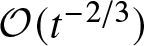
While real-valued solutions of the Korteweg–de Vries (KdV) equation have been studied extensively over the past 50 years, much less attention has been devoted to solution behaviour in the complex plane. Here we consider the analytic continuation of real solutions of KdV and investigate the role that complex-plane singularities play in early time solutions on the real line. We apply techniques of exponential asymptotics to derive the small-time behaviour for dispersive waves that propagate in one direction, and demonstrate how the amplitude, wavelength and speed of these waves depend on the strength and location of double-pole singularities of the initial condition in the complex plane. Using matched asymptotic expansions in the limit $t\rightarrow 0^+$, we show how complex singularities of the time-dependent solution of the KdV equation emerge from these double-pole singularities. Generically, their speed as they move from their initial position is of $\mathcal{O}(t^{-2/3})$, while the direction in which these singularities propagate initially is dictated by a Painlevé II (P$_{\mathrm{II}}$) problem with decreasing tritronquée solutions. The well-known $N$-soliton solutions of KdV correspond to rational solutions of P$_{\mathrm{II}}$ with a finite number of singularities; otherwise, we postulate that infinitely many complex-plane singularities of KdV solutions are born at each double-pole singularity of the initial condition. We also provide asymptotic results for some non-generic cases in which singularities propagate more slowly than in the generic case. Our study makes progress towards the goal of providing a complete description of KdV solutions in the complex plane and, in turn, of relating this behaviour to the solution on the real line.