Refine listing
Actions for selected content:
2102615 results in Journals
Armed and Ruined Prophets of the Reformation
-
- Journal:
- The Review of Politics , First View
- Published online by Cambridge University Press:
- 06 February 2026, pp. 1-9
-
- Article
-
- You have access
- Open access
- HTML
- Export citation
Iran’s Bottleneck Diplomacy with Saudi Arabia and Israel
-
- Journal:
- Iranian Studies ,
- Published online by Cambridge University Press:
- 06 February 2026, pp. 1-7
-
- Article
-
- You have access
- Open access
- HTML
- Export citation
Beyond the Front Page: US Supreme Court Media Coverage in the Digital Age
-
- Journal:
- PS: Political Science & Politics , First View
- Published online by Cambridge University Press:
- 06 February 2026, pp. 1-9
-
- Article
-
- You have access
- Open access
- HTML
- Export citation
355 Validation of an artificial intelligence Algorithm for predicting diagnosis-related groups in a community health system – CORRIGENDUM
-
- Journal:
- Journal of Clinical and Translational Science / Volume 10 / Issue 1 / 2026
- Published online by Cambridge University Press:
- 06 February 2026, e23
-
- Article
-
- You have access
- Open access
- HTML
- Export citation
Palmer Amaranth (Amaranthus palmeri) in the Pacific Northwest: Glyphosate-Resistance Confirmation and Efficacy of Selected Herbicides
-
- Journal:
- Weed Technology / Accepted manuscript
- Published online by Cambridge University Press:
- 06 February 2026, pp. 1-23
-
- Article
-
- You have access
- Open access
- Export citation
Missing Another Democratic Moment: America’s Self-defeating Policy in Sudan
-
- Journal:
- African Studies Review , First View
- Published online by Cambridge University Press:
- 06 February 2026, pp. 1-21
-
- Article
- Export citation
Toward Generalizable Estimation of Behavioral Models with Parameter Dependencies
-
- Journal:
- Psychometrika ,
- Published online by Cambridge University Press:
- 06 February 2026, pp. 1-21
-
- Article
-
- You have access
- Open access
- HTML
- Export citation

Receptivity and evolution of free-stream acoustic disturbances in hypersonic flow over cone–cylinder–flare
-
- Journal:
- Journal of Fluid Mechanics / Volume 1028 / 10 February 2026
- Published online by Cambridge University Press:
- 06 February 2026, A36
-
- Article
- Export citation
-
Direct numerical simulations are performed to investigate the receptivity and subsequent evolution of free-stream acoustic disturbances, including the associated instability mechanisms in a Mach 6 flow over a cone–cylinder–flare configuration. The geometry and flow parameters replicate an experimental study at the Purdue BAMQ6T facility (Benitez et al., AIAA Aviation 2020 Forum, 2020, p. 3072). The results are analysed to reveal new physical insights into boundary-layer separation, instability growth and nonlinear processes. The effects of changing wall thermal conditions from the experimental cold isothermal ( $T_w = 30\,\text{K}$) to adiabatic (hot) are also examined. The basic state exhibits an attached boundary layer over the cone, followed by the formation of a separation bubble over the cylinder and flare, and reattachment over the aft section of the flare. In the case of a hot wall, the separation bubble size increases significantly compared with the isothermal case, leading to altered shear-layer dynamics and delayed reattachment with steeper gradients. Stability investigation reveals first- and second-mode disturbances as distinct spectral bands. Direct numerical simulation spectra and linear analysis indicate enhanced amplification of low-frequency first-mode disturbances for the adiabatic wall compared with the isothermal case. Bispectral analysis over the cone, centred at a second-mode wave, reveals weak subharmonic–fundamental coupling, but strong fundamental–fundamental coupling near the nosetip. The rapidly distorted mean flow within the separation bubble supports amplification of low-frequency disturbances, exhibiting an irregular spatial distribution, making it difficult to distinctly separate mutually exclusive modes (e.g. shear-layer or boundary-layer modes) due to their coexistence and influence on each other. Further downstream, the reattachment zone over the flare exhibits the combined effect of boundary layer and shear-generated waves, where distinct boundary-layer modes are evident at higher frequencies. Bispectral mode decomposition indicates strong phase-locked interaction along the leading-edge shock and within the separated and reattachment zones. These interactions are further amplified with increasing inflow forcing amplitude, leading to the formation of localised hotspots indicative of strong nonlinear amplification.

The functional mind and the trinitarian God
-
- Journal:
- Religious Studies , First View
- Published online by Cambridge University Press:
- 06 February 2026, pp. 1-16
-
- Article
-
- You have access
- Open access
- HTML
- Export citation
Calving laws and where to find them
-
- Journal:
- Journal of Glaciology / Volume 72 / 2026
- Published online by Cambridge University Press:
- 06 February 2026, e22
-
- Article
-
- You have access
- Open access
- HTML
- Export citation
English on the Internet: An attempt to redefine the ‘borderless’ and mapping a new geography on the world atlas of Englishes - Patricia Friedrich, Digital World Englishes (1st ed.) London and New York: Routledge, 2025. Pp. xiv+134, 5 b/w illustrations. Paperback £39.99, ISBN: 9781032163185
-
- Journal:
- English Today , First View
- Published online by Cambridge University Press:
- 06 February 2026, pp. 1-3
-
- Article
- Export citation
A note on internality of certain differential systems
- Part of
-
- Journal:
- Canadian Mathematical Bulletin , First View
- Published online by Cambridge University Press:
- 06 February 2026, pp. 1-7
-
- Article
- Export citation
-
We prove two results, generalizing certain theorems by Jin and Moosa (2020, Trans. Amer. Math. Soc., 373, 4863–4887), on the internality of the system of differential equations
where f and g are rational functions in one variable.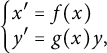 $$ \begin{align*} \begin{cases} \begin{aligned} x' &= f(x)\\ y' &= g(x)y,\\ \end{aligned} \end{cases} \end{align*} $$
On the energy dissipation phenomena for Navier–Stokes equations of compressible fluid flow
- Part of
-
- Journal:
- Proceedings of the Royal Society of Edinburgh. Section A: Mathematics , First View
- Published online by Cambridge University Press:
- 06 February 2026, pp. 1-26
-
- Article
- Export citation
-
This paper is concerned with the Cauchy problem of compressible Navier–Stokes equations. Both the anomalous energy dissipation and the vanishing global dissipation are surveyed. First, we construct a family of smooth solutions which exhibit anomalous dissipation when the viscous coefficient $\epsilon$ tends to zero. Second, assume that the weak solutions have additional (uniformly in $\epsilon$) regularity, then the convergence rate of vanishing global dissipation is proportional to a power function of $\epsilon$. The results indicate that the inviscid singularity is caused by the lack of smoothness of solutions, not the viscosity.


Human-Stone Interactions in the Precolonial Maya Lowlands: Working and Learning with Limestone – ERRATUM
-
- Journal:
- Ancient Mesoamerica , First View
- Published online by Cambridge University Press:
- 06 February 2026, p. 1
-
- Article
-
- You have access
- HTML
- Export citation

The sound-source-oriented coarse-grained Bayesian optimisation for active control of trailing-edge noise
-
- Journal:
- Journal of Fluid Mechanics / Volume 1028 / 10 February 2026
- Published online by Cambridge University Press:
- 06 February 2026, A43
-
- Article
- Export citation
The imagining of ‘others’ in colonial Korea in the works of Yi In-sŏng
-
- Journal:
- Modern Asian Studies , First View
- Published online by Cambridge University Press:
- 06 February 2026, pp. 1-28
-
- Article
-
- You have access
- Open access
- HTML
- Export citation

A self-consistent numerical model of internal wave-induced mean flow oscillations in polar geometry
-
- Journal:
- Journal of Fluid Mechanics / Volume 1028 / 10 February 2026
- Published online by Cambridge University Press:
- 06 February 2026, A38
-
- Article
-
- You have access
- HTML
- Export citation
An Ideal Critical Thinker and His Fallacies
-
- Article
-
- You have access
- Open access
- HTML
- Export citation
Antidepressant effect of transcranial pulse stimulation (TPS) targeting neuropsychiatric disorders: a retrospective analysis
-
- Journal:
- Psychological Medicine / Volume 56 / 2026
- Published online by Cambridge University Press:
- 06 February 2026, e40
-
- Article
-
- You have access
- Open access
- HTML
- Export citation
COMPUTABLE $\Pi _2$ SCOTT SENTENCES
- Part of
-
- Journal:
- The Journal of Symbolic Logic , First View
- Published online by Cambridge University Press:
- 06 February 2026, pp. 1-24
-
- Article
-
- You have access
- Open access
- HTML
- Export citation
-
By a result of Scott [16], each countable structure for a countable language L is described up to isomorphism by an $L_{\omega _1\omega }$-sentence, called a Scott sentence. We consider structures that are countably infinite. By a result of A. Miller [11], no such structure has a $\Sigma _2$ Scott sentence, so having a $\Pi _2$ Scott sentence is as simple as possible. A result of Montalbán [12] yields a nice characterization of the structures that (for a fixed countable language) have a $\Pi _2$ Scott sentence. Computable infinitary formulas involve c.e. disjunctions and conjunctions, so they are in a sense comprehensible. Therefore, we set out to characterize the structures that (for a fixed computable language) have a computable $\Pi _2$ Scott sentence. We found some examples and some partial results. However, it turns out that (for most languages) there is no nice characterization of the class. The index set is $\Pi ^1_1$-complete.


