Refine listing
Actions for selected content:
387 results in 37Axx
Non-leading eigenvalues of the Perron–Frobenius operators for beta-maps
- Part of
-
- Journal:
- Ergodic Theory and Dynamical Systems / Volume 46 / Issue 1 / January 2026
- Published online by Cambridge University Press:
- 29 August 2025, pp. 291-319
- Print publication:
- January 2026
-
- Article
- Export citation
-
We consider the Perron–Frobenius operator defined on the space of functions of bounded variation for the beta-map $\tau _\beta (x)=\beta x$ (mod $1$) for $\beta \in (1,\infty )$, and investigate its isolated eigenvalues except $1$, called non-leading eigenvalues in this paper. We show that the set of $\beta $ such that the corresponding Perron–Frobenius operator has at least one non-leading eigenvalue is open and dense in $(1,\infty )$. Furthermore, we establish the Hölder continuity of each non-leading eigenvalue as a function of $\beta $ and show in particular that it is continuous but non-differentiable, whose analogue was conjectured by Flatto, Lagarias and Poonen in [The zeta function of the beta transformation. Ergod. Th. & Dynam. Sys. 14 (1994), 237–266]. In addition, for an eigenfunctional of the Perron–Frobenius operator corresponding to an isolated eigenvalue, we give an explicit formula for the value of the functional applied to the indicator function of every interval. As its application, we provide three results related to non-leading eigenvalues, one of which states that an eigenfunctional corresponding to a non-leading eigenvalue cannot be expressed by any complex measure on the interval, which is in contrast to the case of the leading eigenvalue $1$.
$1$.


Limit theorems for a class of unbounded observables with an application to ‘Sampling the Lindelöf hypothesis’
- Part of
-
- Journal:
- Ergodic Theory and Dynamical Systems / Volume 46 / Issue 1 / January 2026
- Published online by Cambridge University Press:
- 12 August 2025, pp. 34-92
- Print publication:
- January 2026
-
- Article
-
- You have access
- Open access
- HTML
- Export citation
-
We prove the central limit theorem (CLT), the first-order Edgeworth expansion and a mixing local central limit theorem (MLCLT) for Birkhoff sums of a class of unbounded heavily oscillating observables over a family of full-branch piecewise $C^2$ expanding maps of the interval. As a corollary, we obtain the corresponding results for Boolean-type transformations on $\mathbb {R}$. The class of observables in the CLT and the MLCLT on $\mathbb {R}$ include the real part, the imaginary part and the absolute value of the Riemann zeta function. Thus obtained CLT and MLCLT for the Riemann zeta function are in the spirit of the results of Lifschitz & Weber [Sampling the Lindelöf hypothesis with the Cauchy random walk. Proc. Lond. Math. Soc. (3) 98 (2009), 241–270] and Steuding [Sampling the Lindelöf hypothesis with an ergodic transformation. RIMS Kôkyûroku Bessatsu B34 (2012), 361–381] who have proven the strong law of large numbers for sampling the Lindelöf hypothesis.


On closure operations in the space of subgroups and applications
- Part of
-
- Journal:
- Ergodic Theory and Dynamical Systems / Volume 45 / Issue 12 / December 2025
- Published online by Cambridge University Press:
- 05 August 2025, pp. 3728-3748
- Print publication:
- December 2025
-
- Article
-
- You have access
- Open access
- HTML
- Export citation
-
We establish some interactions between uniformly recurrent subgroups (URSs) of a group G and cosets topologies $\tau _{\mathcal {N}}$ on G associated to a family $\mathcal {N}$ of normal subgroups of G. We show that when $\mathcal {N}$ consists of finite index subgroups of G, there is a natural closure operation $\mathcal {H} \mapsto \mathrm {cl}_{\mathcal {N}}(\mathcal {H})$ that associates to a URS $\mathcal {H}$ another URS $\mathrm {cl}_{\mathcal {N}}(\mathcal {H})$, called the $\tau _{\mathcal {N}}$-closure of $\mathcal {H}$. We give a characterization of the URSs $\mathcal {H}$ that are $\tau _{\mathcal {N}}$-closed in terms of stabilizer URSs. This has consequences on arbitrary URSs when G belongs to the class of groups for which every faithful minimal profinite action is topologically free. We also consider the largest amenable URS $\mathcal {A}_G$ and prove that for certain coset topologies on G, almost all subgroups $H \in \mathcal {A}_G$ have the same closure. For groups in which amenability is detected by a set of laws (a property that is variant of the Tits alternative), we deduce a criterion for $\mathcal {A}_G$ to be a singleton based on residual properties of G.


A Kakutani–Rokhlin decomposition for conditionally ergodic process in the measure-free setting of vector lattices
- Part of
-
- Journal:
- Ergodic Theory and Dynamical Systems / Volume 45 / Issue 12 / December 2025
- Published online by Cambridge University Press:
- 05 August 2025, pp. 3600-3618
- Print publication:
- December 2025
-
- Article
-
- You have access
- Open access
- HTML
- Export citation
Boundaries and equivariant maps for ergodic groupoids
- Part of
-
- Journal:
- Glasgow Mathematical Journal , First View
- Published online by Cambridge University Press:
- 14 July 2025, pp. 1-32
-
- Article
- Export citation
-
We give a notion of boundary pair $(\mathcal{B}_-,\mathcal{B}_+)$ for measured groupoids which generalizes the one introduced by Bader and Furman [BF14] for locally compact groups. In the case of a semidirect groupoid $\mathcal{G}=\Gamma \ltimes X$ obtained by a probability measure preserving action $\Gamma \curvearrowright X$ of a locally compact group, we show that a boundary pair is exactly $(B_- \times X, B_+ \times X)$, where $(B_-,B_+)$ is a boundary pair for $\Gamma$. For any measured groupoid $(\mathcal{G},\nu )$, we prove that the Poisson boundaries associated to the Markov operators generated by a probability measure equivalent to $\nu$ provide other examples of our definition. Following Bader and Furman [BF], we define algebraic representability for an ergodic groupoid $(\mathcal{G},\nu )$. In this way, given any measurable representation $\rho \,:\,\mathcal{G} \rightarrow H$ into the $\kappa$-points of an algebraic $\kappa$-group $\mathbf{H}$, we obtain $\rho$-equivariant maps $\mathcal{B}_\pm \rightarrow H/L_\pm$, where $L_\pm =\mathbf{L}_\pm (\kappa )$ for some $\kappa$-subgroups $\mathbf{L}_\pm \lt \mathbf{H}$. In the particular case when $\kappa =\mathbb{R}$ and $\rho$ is Zariski dense, we show that $L_\pm$ must be minimal parabolic subgroups.


Sub-additivity of measure theoretic entropies of commuting transformations on Banach spaces
- Part of
-
- Journal:
- Ergodic Theory and Dynamical Systems / Volume 45 / Issue 11 / November 2025
- Published online by Cambridge University Press:
- 10 July 2025, pp. 3430-3464
- Print publication:
- November 2025
-
- Article
- Export citation
Mean topological dimension of a random dynamical system for amenable groups
- Part of
-
- Journal:
- Proceedings of the Edinburgh Mathematical Society / Volume 68 / Issue 4 / November 2025
- Published online by Cambridge University Press:
- 07 July 2025, pp. 1297-1328
-
- Article
- Export citation
ALGEBRAIC DYNAMICAL SYSTEMS FROM LDPC CODES SATISFY A STRONG NEGATION OF THE WEAK PINSKER PROPERTY
- Part of
-
- Journal:
- Journal of the Institute of Mathematics of Jussieu / Volume 24 / Issue 6 / November 2025
- Published online by Cambridge University Press:
- 09 June 2025, pp. 2317-2385
- Print publication:
- November 2025
-
- Article
-
- You have access
- Open access
- HTML
- Export citation
-
We construct an explicit algebraic example of a subshift of finite type over a group $\Gamma $ with an invariant Markov measure which has completely positive sofic entropy (with respect to ‘most’ sofic approximations) and yet does not have a direct Bernoulli factor because its model spaces shatter into exponentially many clusters of sub-exponential size. The example and its analysis are related to random low-density parity-check (LDPC) codes.

Non-uniformly hyperbolic endomorphisms
- Part of
-
- Journal:
- Compositio Mathematica / Volume 161 / Issue 6 / June 2025
- Published online by Cambridge University Press:
- 01 September 2025, pp. 1313-1356
- Print publication:
- June 2025
-
- Article
- Export citation
-
We show the existence of large $\mathcal C^1$ open sets of area-preserving endomorphisms of the two-torus which have no dominated splitting and are non-uniformly hyperbolic, meaning that Lebesgue almost every point has a positive and a negative Lyapunov exponent. The integrated Lyapunov exponents vary continuously with the dynamics in the $\mathcal C^1$ topology and can be taken as far away from zero as desired. Explicit real analytic examples are obtained by deforming linear endomorphisms, including expanding ones. The technique works in nearly every homotopy class, and the examples are stably ergodic (in fact Bernoulli), provided that the linear map has no eigenvalue of modulus one.


Stable functional CLT for deterministic systems
- Part of
-
- Journal:
- Ergodic Theory and Dynamical Systems / Volume 45 / Issue 10 / October 2025
- Published online by Cambridge University Press:
- 26 May 2025, pp. 3192-3222
- Print publication:
- October 2025
-
- Article
-
- You have access
- Open access
- HTML
- Export citation
-
We show that $\alpha $-stable Lévy motions can be simulated by any ergodic and aperiodic probability-preserving transformation. Namely we show that: for $0<\alpha <1$ and every $\alpha $-stable Lévy motion ${\mathbb {W}}$, there exists a function f whose partial sum process converges in distribution to ${\mathbb {W}}$; for $1\leq \alpha <2$ and every symmetric $\alpha $-stable Lévy motion, there exists a function f whose partial sum process converges in distribution to ${\mathbb {W}}$; for $1< \alpha <2$ and every $-1\leq \beta \leq 1$ there exists a function f whose associated time series is in the classical domain of attraction of an $S_\alpha (\ln (2), \beta ,0)$ random variable.


Correspondence between Pestov and Weitzenböck identities
- Part of
-
- Journal:
- Mathematical Proceedings of the Cambridge Philosophical Society / Volume 178 / Issue 3 / May 2025
- Published online by Cambridge University Press:
- 02 May 2025, pp. 443-463
- Print publication:
- May 2025
-
- Article
-
- You have access
- Open access
- HTML
- Export citation
Hereditarily frequently hypercyclic operators and disjoint frequent hypercyclicity
- Part of
-
- Journal:
- Ergodic Theory and Dynamical Systems / Volume 45 / Issue 10 / October 2025
- Published online by Cambridge University Press:
- 16 April 2025, pp. 3021-3072
- Print publication:
- October 2025
-
- Article
- Export citation
-
We introduce and study the notion of hereditary frequent hypercyclicity, which is a reinforcement of the well-known concept of frequent hypercyclicity. This notion is useful for the study of the dynamical properties of direct sums of operators; in particular, a basic observation is that the direct sum of a hereditarily frequently hypercyclic operator with any frequently hypercyclic operator is frequently hypercyclic. Among other results, we show that operators satisfying the frequent hypercyclicity criterion are hereditarily frequently hypercyclic, as well as a large class of operators whose unimodular eigenvectors are spanning with respect to the Lebesgue measure. However, we exhibit two frequently hypercyclic weighted shifts $B_w,B_{w'}$ on $c_0(\mathbb {Z}_+)$ whose direct sum ${B_w\oplus B_{w'}}$ is not $\mathcal {U}$-frequently hypercyclic (so that neither of them is hereditarily frequently hypercyclic), and we construct a C-type operator on $\ell _p(\mathbb {Z}_+)$, $1\le p<\infty $, which is frequently hypercyclic but not hereditarily frequently hypercyclic. We also solve several problems concerning disjoint frequent hypercyclicity: we show that for every $N\in \mathbb {N}$, any disjoint frequently hypercyclic N-tuple of operators $(T_1,\ldots ,T_N)$ can be extended to a disjoint frequently hypercyclic $(N+1)$-tuple $(T_1,\ldots ,T_N, T_{N+1})$ as soon as the underlying space supports a hereditarily frequently hypercyclic operator; we construct a disjoint frequently hypercyclic pair which is not densely disjoint hypercyclic; and we show that the pair $(D,\tau _a)$ is disjoint frequently hypercyclic, where D is the derivation operator acting on the space of entire functions and $\tau _a$ is the operator of translation by $a\in \mathbb {C}\setminus \{ 0\}$. Part of our results are in fact obtained in the general setting of Furstenberg families.


Modulus of continuity of invariant densities and entropies for piecewise expanding maps
- Part of
-
- Journal:
- Ergodic Theory and Dynamical Systems / Volume 45 / Issue 10 / October 2025
- Published online by Cambridge University Press:
- 07 April 2025, pp. 2976-2991
- Print publication:
- October 2025
-
- Article
- Export citation
Every locally compact group is the outer automorphism group of a II1 factor
- Part of
-
- Journal:
- Proceedings of the Royal Society of Edinburgh. Section A: Mathematics , First View
- Published online by Cambridge University Press:
- 28 March 2025, pp. 1-12
-
- Article
- Export citation
-
We prove that every locally compact second countable group G arises as the outer automorphism group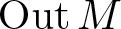 $\operatorname{Out} M$ of a II1 factor, which was so far only known for totally disconnected groups, compact groups, and a few isolated examples. We obtain this result by proving that every locally compact second countable group is a centralizer group, a class of Polish groups that arise naturally in ergodic theory and that may all be realized as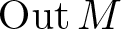 $\operatorname{Out} M$.
Tree-like graphings, wallings, and median graphings of equivalence relations
- Part of
-
- Journal:
- Forum of Mathematics, Sigma / Volume 13 / 2025
- Published online by Cambridge University Press:
- 26 March 2025, e64
-
- Article
-
- You have access
- Open access
- HTML
- Export citation
Non-commutative skew-product extension dynamical systems
- Part of
-
- Journal:
- Ergodic Theory and Dynamical Systems / Volume 45 / Issue 9 / September 2025
- Published online by Cambridge University Press:
- 10 March 2025, pp. 2672-2694
- Print publication:
- September 2025
-
- Article
- Export citation
-
Starting from a uniquely ergodic action of a locally compact group G on a compact space $X_0$, we consider non-commutative skew-product extensions of the dynamics, on the crossed product $C(X_0)\rtimes _\alpha {\mathbb Z}$, through a $1$-cocycle of G in ${\mathbb T}$, with $\alpha $ commuting with the given dynamics. We first prove that any two such skew-product extensions are conjugate if and only if the corresponding cocycles are cohomologous. We then study unique ergodicity and unique ergodicity with respect to the fixed-point subalgebra by characterizing both in terms of the cocycle assigning the dynamics. The set of all invariant states is also determined: it is affinely homeomorphic with ${\mathcal P}({\mathbb T})$, the Borel probability measures on the one-dimensional torus ${\mathbb T}$, as long as the system is not uniquely ergodic. Finally, we show that unique ergodicity with respect to the fixed-point subalgebra of a skew-product extension amounts to the uniqueness of an invariant conditional expectation onto the fixed-point subalgebra.


RELATIVE POSITION BETWEEN A PAIR OF SPIN MODEL SUBFACTORS
- Part of
-
- Journal:
- Journal of the Australian Mathematical Society / Volume 119 / Issue 1 / August 2025
- Published online by Cambridge University Press:
- 10 March 2025, pp. 1-38
- Print publication:
- August 2025
-
- Article
- Export citation
-
Jones [‘Two subfactors and the algebraic decomposition of bimodules over $II_1$ factors’, Acta Math. Vietnam 33(3) (2008), 209–218] proposed the study of ‘two subfactors’ of a $II_1$ factor as a quantization of two closed subspaces in a Hilbert space. Motivated by this, we initiate a systematic study of a special class of two subfactors, namely a pair of spin model subfactors. We characterize which pairs of distinct complex Hadamard matrices in $M_n(\mathbb {C})$ give rise to distinct spin model subfactors. Then, a detailed investigation is carried out for $n=2$, where the spin model subfactors correspond to $\mathbb {Z}_2$-actions on the hyperfinite type $II_1$ factor R. We observe that the intersection of the pair of spin model subfactors in this case is a nonirreducible vertex model subfactor and we characterize it as a diagonal subfactor. A few key invariants for the pair of spin model subfactors are computed to understand their relative positions.


Semisimple random walks on the torus
- Part of
-
- Journal:
- Ergodic Theory and Dynamical Systems / Volume 45 / Issue 10 / October 2025
- Published online by Cambridge University Press:
- 03 March 2025, pp. 3090-3147
- Print publication:
- October 2025
-
- Article
- Export citation
On partial rigidity of $\mathcal {S}$-adic subshifts
- Part of
-
- Journal:
- Ergodic Theory and Dynamical Systems / Volume 45 / Issue 9 / September 2025
- Published online by Cambridge University Press:
- 24 February 2025, pp. 2724-2764
- Print publication:
- September 2025
-
- Article
-
- You have access
- Open access
- HTML
- Export citation
-
We develop combinatorial tools to study partial rigidity within the class of minimal $\mathcal {S}$-adic subshifts. By leveraging the combinatorial data of well-chosen Kakutani–Rokhlin partitions, we establish a necessary and sufficient condition for partial rigidity. Additionally, we provide an explicit expression to compute the partial rigidity rate and an associated partial rigidity sequence. As applications, we compute the partial rigidity rate for a variety of constant length substitution subshifts, such as the Thue–Morse subshift, where we determine a partial rigidity rate of 2/3. We also exhibit non-rigid substitution subshifts with partial rigidity rates arbitrarily close to 1 and, as a consequence, using products of the aforementioned substitutions, we obtain that any number in $[0, 1]$ is the partial rigidity rate of a system.


Two dynamical approaches to the notion of exponential separation for random systems of delay differential equations
- Part of
-
- Journal:
- Proceedings of the Royal Society of Edinburgh. Section A: Mathematics , First View
- Published online by Cambridge University Press:
- 24 February 2025, pp. 1-39
-
- Article
-
- You have access
- Open access
- HTML
- Export citation
-
This paper deals with the exponential separation of type II, an important concept for random systems of differential equations with delay, introduced in Mierczyński et al. [18]. Two different approaches to its existence are presented. The state space X will be a separable ordered Banach space with $\dim X\geq 2$, dual space $X^{*}$, and positive cone $X^+$ normal and reproducing. In both cases, appropriate cooperativity and irreducibility conditions are assumed to provide a family of generalized Floquet subspaces. If in addition $X^*$ is also separable, one obtains an exponential separation of type II. When this is not the case, but there is an Oseledets decomposition for the continuous semiflow, the same result holds. Detailed examples are given for all the situations, including also a case where the cone is not normal.


