Refine listing
Actions for selected content:
387 results in 37Axx
On the ergodicity of unitary frame flows on Kähler manifolds
- Part of
-
- Journal:
- Ergodic Theory and Dynamical Systems / Volume 44 / Issue 8 / August 2024
- Published online by Cambridge University Press:
- 16 October 2023, pp. 2143-2172
- Print publication:
- August 2024
-
- Article
- Export citation
-
Let $(M,g,J)$ be a closed Kähler manifold with negative sectional curvature and complex dimension $m := \dim _{\mathbb {C}} M \geq 2$. In this article, we study the unitary frame flow, that is, the restriction of the frame flow to the principal $\mathrm {U}(m)$-bundle $F_{\mathbb {C}}M$ of unitary frames. We show that if $m \geq 6$ is even and $m \neq 28$, there exists $\unicode{x3bb} (m) \in (0, 1)$ such that if $(M, g)$ has negative $\unicode{x3bb} (m)$-pinched holomorphic sectional curvature, then the unitary frame flow is ergodic and mixing. The constants $\unicode{x3bb} (m)$ satisfy $\unicode{x3bb} (6) = 0.9330...$, $\lim _{m \to +\infty } \unicode{x3bb} (m) = {11}/{12} = 0.9166...$, and $m \mapsto \unicode{x3bb} (m)$ is decreasing. This extends to the even-dimensional case the results of Brin and Gromov [On the ergodicity of frame flows. Invent. Math. 60(1) (1980), 1–7] who proved ergodicity of the unitary frame flow on negatively curved compact Kähler manifolds of odd complex dimension.


Low complexity subshifts have discrete spectrum
- Part of
-
- Journal:
- Forum of Mathematics, Sigma / Volume 11 / 2023
- Published online by Cambridge University Press:
- 12 October 2023, e96
-
- Article
-
- You have access
- Open access
- HTML
- Export citation
-
We prove results about subshifts with linear (word) complexity, meaning that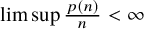 $\limsup \frac {p(n)}{n} < \infty $, where for every n, $p(n)$ is the number of n-letter words appearing in sequences in the subshift. Denoting this limsup by C, we show that when $C < \frac {4}{3}$, the subshift has discrete spectrum, that is, is measurably isomorphic to a rotation of a compact abelian group with Haar measure. We also give an example with $C = \frac {3}{2}$ which has a weak mixing measure. This partially answers an open question of Ferenczi, who asked whether $C = \frac {5}{3}$ was the minimum possible among such subshifts; our results show that the infimum in fact lies in $[\frac {4}{3}, \frac {3}{2}]$. All results are consequences of a general S-adic/substitutive structure proved when $C < \frac {4}{3}$.


Exponential multiple mixing for commuting automorphisms of a nilmanifold
- Part of
-
- Journal:
- Ergodic Theory and Dynamical Systems / Volume 44 / Issue 7 / July 2024
- Published online by Cambridge University Press:
- 11 October 2023, pp. 1729-1740
- Print publication:
- July 2024
-
- Article
- Export citation
-
Let $l\in \mathbb {N}_{\ge 1}$ and $\alpha : \mathbb {Z}^l\rightarrow \text {Aut}(\mathscr {N})$ be an action of $\mathbb {Z}^l$ by automorphisms on a compact nilmanifold $\mathscr{N}$. We assume the action of every $\alpha (z)$ is ergodic for $z\in \mathbb {Z}^l\smallsetminus \{0\}$ and show that $\alpha $ satisfies exponential n-mixing for any integer $n\geq 2$. This extends the results of Gorodnik and Spatzier [Mixing properties of commuting nilmanifold automorphisms. Acta Math. 215 (2015), 127–159].


Multiple recurrence and popular differences for polynomial patterns in rings of integers
- Part of
-
- Journal:
- Mathematical Proceedings of the Cambridge Philosophical Society / Volume 176 / Issue 2 / March 2024
- Published online by Cambridge University Press:
- 02 October 2023, pp. 239-278
- Print publication:
- March 2024
-
- Article
-
- You have access
- Open access
- HTML
- Export citation
-
We demonstrate that the phenomenon of popular differences (aka the phenomenon of large intersections) holds for natural families of polynomial patterns in rings of integers of number fields. If K is a number field with ring of integers $\mathcal{O}_K$ and $E \subseteq \mathcal{O}_K$ has positive upper Banach density $d^*(E) = \delta > 0$, we show, inter alia:
(1) if $p(x) \in K[x]$ is an intersective polynomial (i.e., p has a root modulo m for every $m \in \mathcal{O}_K$) with $p(\mathcal{O}_K) \subseteq \mathcal{O}_K$ and $r, s \in \mathcal{O}_K$ are distinct and nonzero, then for any $\varepsilon > 0$, there is a syndetic set $S \subseteq \mathcal{O}_K$ such that for any $n \in S$, Moreover, if
 \begin{align*}d^* \left( \left\{ x \in \mathcal{O}_K \;:\; \{x, x + rp(n), x + sp(n)\} \subseteq E \right\} \right) > \delta^3 - \varepsilon. \end{align*} ${s}/{r} \in \mathbb{Q}$, then there are syndetically many $n \in \mathcal{O}_K$ such that
  \begin{align*}d^* \left( \left\{ x \in \mathcal{O}_K \;:\; \{x, x + rp(n), x + sp(n), x + (r+s)p(n)\} \subseteq E \right\} \right)> \delta^4 - \varepsilon; \end{align*}
(2) if $\{p_1, \dots, p_k\} \subseteq K[x]$ is a jointly intersective family (i.e., $p_1, \dots, p_k$ have a common root modulo m for every $m \in \mathcal{O}_K$) of linearly independent polynomials with $p_i(\mathcal{O}_K) \subseteq \mathcal{O}_K$, then there are syndetically many $n \in \mathcal{O}_K$ such that
  \begin{align*}d^* \left( \left\{ x \in \mathcal{O}_K \;:\; \{x, x + p_1(n), \dots, x + p_k(n)\} \subseteq E \right\} \right)> \delta^{k+1} - \varepsilon. \end{align*}
These two results generalise and extend previous work of Frantzikinakis and Kra [21] and Franztikinakis [19] on polynomial configurations in $\mathbb{Z}$ and build upon recent work of the authors and Best [2] on linear patterns in general abelian groups. The above combinatorial results follow from multiple recurrence results in ergodic theory via a version of Furstenberg’s correspondence principle. The ergodic-theoretic recurrence theorems require a sharpening of existing tools for handling polynomial multiple ergodic averages. A key advancement made in this paper is a new result on the equidistribution of polynomial orbits in nilmanifolds, which can be seen as a far-reaching generalisation of Weyl’s equidistribution theorem for polynomials of several variables:
(3) let $d, k, l \in \mathbb{N}$. Let $(X, \mathcal{B}, \mu, T_1, \dots, T_l)$ be an ergodic, connected $\mathbb{Z}^l$-nilsystem. Let $\{p_{i,j} \;:\; 1 \le i \le k, 1 \le j \le l\} \subseteq \mathbb{Q}[x_1, \dots, x_d]$ be a family of polynomials such that $p_{i,j}\left( \mathbb{Z}^d \right) \subseteq \mathbb{Z}$ and $\{1\} \cup \{p_{i,j}\}$ is linearly independent over $\mathbb{Q}$. Then the $\mathbb{Z}^d$-sequence $\left( \prod_{j=1}^l{T_j^{p_{1,j}(n)}}x, \dots, \prod_{j=1}^l{T_j^{p_{k,j}(n)}}x \right)_{n \in \mathbb{Z}^d}$ is well-distributed in $X^k$ for every x in a co-meager set of full measure.


Pointwise convergence in nilmanifolds along smooth functions of polynomial growth
- Part of
-
- Journal:
- Ergodic Theory and Dynamical Systems / Volume 44 / Issue 7 / July 2024
- Published online by Cambridge University Press:
- 25 September 2023, pp. 1963-2008
- Print publication:
- July 2024
-
- Article
- Export citation
-
We study the equidistribution of orbits of the form $b_1^{a_1(n)}\cdots b_k^{a_k(n)}\Gamma $ in a nilmanifold X, where the sequences $a_i(n)$ arise from smooth functions of polynomial growth belonging to a Hardy field. We show that under certain assumptions on the growth rates of the functions $a_1,\ldots ,a_k$, these orbits are equidistributed on some subnilmanifold of the space X. As an application of these results and in combination with the Host–Kra structure theorem for measure-preserving systems, as well as some recent seminorm estimates of the author for ergodic averages concerning Hardy field functions, we deduce a norm convergence result for multiple ergodic averages. Our method mainly relies on an equidistribution result of Green and Tao on finite segments of polynomial orbits on a nilmanifold [The quantitative behaviour of polynomial orbits on nilmanifolds. Ann. of Math. (2) 175 (2012), 465–540].


On a multi-parameter variant of the Bellow–Furstenberg problem
- Part of
-
- Journal:
- Forum of Mathematics, Pi / Volume 11 / 2023
- Published online by Cambridge University Press:
- 19 September 2023, e23
-
- Article
-
- You have access
- Open access
- HTML
- Export citation
-
We prove convergence in norm and pointwise almost everywhere on $L^p$, $p\in (1,\infty )$, for certain multi-parameter polynomial ergodic averages by establishing the corresponding multi-parameter maximal and oscillation inequalities. Our result, in particular, gives an affirmative answer to a multi-parameter variant of the Bellow–Furstenberg problem. This paper is also the first systematic treatment of multi-parameter oscillation semi-norms which allows an efficient handling of multi-parameter pointwise convergence problems with arithmetic features. The methods of proof of our main result develop estimates for multi-parameter exponential sums, as well as introduce new ideas from the so-called multi-parameter circle method in the context of the geometry of backwards Newton diagrams that are dictated by the shape of the polynomials defining our ergodic averages.


Measure-theoretic sequence entropy pairs and mean sensitivity
- Part of
-
- Journal:
- Ergodic Theory and Dynamical Systems / Volume 44 / Issue 6 / June 2024
- Published online by Cambridge University Press:
- 19 September 2023, pp. 1531-1540
- Print publication:
- June 2024
-
- Article
- Export citation
-
We characterize measure-theoretic sequence entropy pairs of continuous actions of abelian groups using mean sensitivity. This addresses an open question of Li and Yu [On mean sensitive tuples. J. Differential Equations 297 (2021), 175–200]. As a consequence of our results, we provide a simpler characterization of Kerr and Li’s independence sequence entropy pairs ( $\mu $-IN-pairs) when the measure is ergodic and the group is abelian.

Spectral cocycle for substitution tilings
- Part of
-
- Journal:
- Ergodic Theory and Dynamical Systems / Volume 44 / Issue 6 / June 2024
- Published online by Cambridge University Press:
- 18 September 2023, pp. 1629-1672
- Print publication:
- June 2024
-
- Article
-
- You have access
- Open access
- HTML
- Export citation
-
The construction of a spectral cocycle from the case of one-dimensional substitution flows [A. I. Bufetov and B. Solomyak. A spectral cocycle for substitution systems and translation flows. J. Anal. Math. 141(1) (2020), 165–205] is extended to the setting of pseudo-self-similar tilings in ${\mathbb R}^d$, allowing expanding similarities with rotations. The pointwise upper Lyapunov exponent of this cocycle is used to bound the local dimension of spectral measures of deformed tilings. The deformations are considered, following the work of Treviño [Quantitative weak mixing for random substitution tilings. Israel J. Math., to appear], in the simpler, non-random setting. We review some of the results of Treviño in this special case and illustrate them on concrete examples.

Strongly mixing systems are almost strongly mixing of all orders
- Part of
-
- Journal:
- Ergodic Theory and Dynamical Systems / Volume 44 / Issue 6 / June 2024
- Published online by Cambridge University Press:
- 13 September 2023, pp. 1489-1530
- Print publication:
- June 2024
-
- Article
-
- You have access
- Open access
- HTML
- Export citation
-
We prove that any strongly mixing action of a countable abelian group on a probability space has higher-order mixing properties. This is achieved via the utilization of $\mathcal R$-limits, a notion of convergence which is based on the classical Ramsey theorem. $\mathcal R$-limits are intrinsically connected with a new combinatorial notion of largeness which is similar to but has stronger properties than the classical notions of uniform density one and IP $^*$. While the main goal of this paper is to establish a universal property of strongly mixing actions of countable abelian groups, our results, when applied to ${\mathbb {Z}}$-actions, offer a new way of dealing with strongly mixing transformations. In particular, we obtain several new characterizations of strong mixing for ${\mathbb {Z}}$-actions, including a result which can be viewed as the analogue of the weak mixing of all orders property established by Furstenberg in the course of his proof of Szemerédi’s theorem. We also demonstrate the versatility of $\mathcal R$-limits by obtaining new characterizations of higher-order weak and mild mixing for actions of countable abelian groups.


On some multiplicative properties of large difference sets
- Part of
-
- Journal:
- Canadian Journal of Mathematics / Volume 76 / Issue 5 / October 2024
- Published online by Cambridge University Press:
- 08 September 2023, pp. 1538-1555
- Print publication:
- October 2024
-
- Article
- Export citation
-
In our paper, we study multiplicative properties of difference sets $A-A$ for large sets $A \subseteq {\mathbb {Z}}/q{\mathbb {Z}}$ in the case of composite q. We obtain a quantitative version of a result of A. Fish about the structure of the product sets $(A-A)(A-A)$. Also, we show that the multiplicative covering number of any difference set is always small.


A tracial characterization of Furstenberg’s $\times p,\times q$ conjecture
- Part of
-
- Journal:
- Canadian Mathematical Bulletin / Volume 67 / Issue 1 / March 2024
- Published online by Cambridge University Press:
- 06 September 2023, pp. 244-256
- Print publication:
- March 2024
-
- Article
- Export citation
-
We investigate almost minimal actions of abelian groups and their crossed products. As an application, given multiplicatively independent integers p and q, we show that Furstenberg’s $\times p,\times q$ conjecture holds if and only if the canonical trace is the only faithful extreme tracial state on the $C^*$-algebra of the group $\mathbb {Z}[\frac {1}{pq}]\rtimes \mathbb {Z}^2$. We also compute the primitive ideal space and K-theory of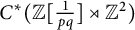 $C^*(\mathbb {Z}[\frac {1}{pq}]\rtimes \mathbb {Z}^2)$.


A nonconservative kinetic framework under the action of an external force field: Theoretical results with application inspired to ecology
- Part of
-
- Journal:
- European Journal of Applied Mathematics / Volume 34 / Issue 6 / December 2023
- Published online by Cambridge University Press:
- 31 August 2023, pp. 1170-1186
-
- Article
- Export citation
Adaptation of a population to a changing environment in the light of quasi-stationarity
- Part of
-
- Journal:
- Advances in Applied Probability / Volume 56 / Issue 1 / March 2024
- Published online by Cambridge University Press:
- 30 August 2023, pp. 235-286
- Print publication:
- March 2024
-
- Article
- Export citation $\times a$ and $\times b$ empirical measures, the irregular set and entropy
- Part of
-
- Journal:
- Ergodic Theory and Dynamical Systems / Volume 44 / Issue 6 / June 2024
- Published online by Cambridge University Press:
- 15 August 2023, pp. 1673-1692
- Print publication:
- June 2024
-
- Article
- Export citation
-
For integers a and $b\geq 2$, let $T_a$ and $T_b$ be multiplication by a and b on $\mathbb {T}=\mathbb {R}/\mathbb {Z}$. The action on $\mathbb {T}$ by $T_a$ and $T_b$ is called $\times a,\times b$ action and it is known that, if a and b are multiplicatively independent, then the only $\times a,\times b$ invariant and ergodic measure with positive entropy of $T_a$ or $T_b$ is the Lebesgue measure. However, it is not known whether there exists a non-trivial $\times a,\times b$ invariant and ergodic measure. In this paper, we study the empirical measures of $x\in \mathbb {T}$ with respect to the $\times a,\times b$ action and show that the set of x such that the empirical measures of x do not converge to any measure has Hausdorff dimension one and the set of x such that the empirical measures can approach a non-trivial $\times a,\times b$ invariant measure has Hausdorff dimension zero. Furthermore, we obtain some equidistribution result about the $\times a,\times b$ orbit of x in the complement of a set of Hausdorff dimension zero.


Measure equivalence rigidity via s-malleable deformations
- Part of
-
- Journal:
- Compositio Mathematica / Volume 159 / Issue 10 / October 2023
- Published online by Cambridge University Press:
- 14 August 2023, pp. 2023-2050
- Print publication:
- October 2023
-
- Article
- Export citation
-
We single out a large class of groups ${\rm {\boldsymbol {\mathscr {M}}}}$ for which the following unique prime factorization result holds: if $\Gamma _1,\ldots,\Gamma _n\in {\rm {\boldsymbol {\mathscr {M}}}}$ and $\Gamma _1\times \cdots \times \Gamma _n$ is measure equivalent to a product $\Lambda _1\times \cdots \times \Lambda _m$ of infinite icc groups, then $n \ge m$, and if $n = m$, then, after permutation of the indices, $\Gamma _i$ is measure equivalent to $\Lambda _i$, for all $1\leq i\leq n$. This provides an analogue of Monod and Shalom's theorem [Orbit equivalence rigidity and bounded cohomology, Ann. of Math. 164 (2006), 825–878] for groups that belong to ${\rm {\boldsymbol {\mathscr {M}}}}$. Class ${\rm {\boldsymbol {\mathscr {M}}}}$ is constructed using groups whose von Neumann algebras admit an s-malleable deformation in the sense of Sorin Popa and it contains all icc non-amenable groups $\Gamma$ for which either (i) $\Gamma$ is an arbitrary wreath product group with amenable base or (ii) $\Gamma$ admits an unbounded 1-cocycle into its left regular representation. Consequently, we derive several orbit equivalence rigidity results for actions of product groups that belong to ${\rm {\boldsymbol {\mathscr {M}}}}$. Finally, for groups $\Gamma$ satisfying condition (ii), we show that all embeddings of group von Neumann algebras of non-amenable inner amenable groups into $L(\Gamma )$ are ‘rigid’. In particular, we provide an alternative solution to a question of Popa that was recently answered by Ding, Kunnawalkam Elayavalli, and Peterson [Properly Proximal von Neumann Algebras, Preprint (2022), arXiv:2204.00517].


Sharp constants in inequalities admitting the Calderón transference principle
- Part of
-
- Journal:
- Ergodic Theory and Dynamical Systems / Volume 44 / Issue 6 / June 2024
- Published online by Cambridge University Press:
- 04 August 2023, pp. 1597-1608
- Print publication:
- June 2024
-
- Article
- Export citation
-
The aim of this note is twofold. First, we prove an abstract version of the Calderón transference principle for inequalities of admissible type in the general commutative multilinear and multiparameter setting. Such an operation does not increase the constants in the transferred inequalities. Second, we use the last information to study a certain dichotomy arising in problems of finding the best constants in the weak type $(1,1)$ and strong type $(p,p)$ inequalities for one-parameter ergodic maximal operators.


Orbits closeness for slowly mixing dynamical systems
- Part of
-
- Journal:
- Ergodic Theory and Dynamical Systems / Volume 44 / Issue 4 / April 2024
- Published online by Cambridge University Press:
- 24 July 2023, pp. 1192-1208
- Print publication:
- April 2024
-
- Article
-
- You have access
- Open access
- HTML
- Export citation
Continuum of allosteric actions for non-amenable surface groups
- Part of
-
- Journal:
- Ergodic Theory and Dynamical Systems / Volume 44 / Issue 6 / June 2024
- Published online by Cambridge University Press:
- 19 July 2023, pp. 1581-1596
- Print publication:
- June 2024
-
- Article
- Export citation
-
Let $\Sigma $ be a closed surface other than the sphere, the torus, the projective plane or the Klein bottle. We construct a continuum of probability measure preserving ergodic minimal profinite actions for the fundamental group of $\Sigma $ that are topologically free but not essentially free, a property that we call allostery. Moreover, the invariant random subgroups we obtain are pairwise distincts.


Statistical aspects of mean field coupled intermittent maps
- Part of
-
- Journal:
- Ergodic Theory and Dynamical Systems / Volume 44 / Issue 4 / April 2024
- Published online by Cambridge University Press:
- 19 July 2023, pp. 945-957
- Print publication:
- April 2024
-
- Article
-
- You have access
- Open access
- HTML
- Export citation
CURVATURE-TORSION ENTROPY FOR TWISTED CURVES UNDER CURVE SHORTENING FLOW
- Part of
-
- Journal:
- Bulletin of the Australian Mathematical Society / Volume 109 / Issue 3 / June 2024
- Published online by Cambridge University Press:
- 11 July 2023, pp. 571-580
- Print publication:
- June 2024
-
- Article
-
- You have access
- Open access
- HTML
- Export citation
-
We study curve-shortening flow for twisted curves in $\mathbb {R}^3$ (that is, curves with nowhere vanishing curvature $\kappa $ and torsion $\tau $) and define a notion of torsion-curvature entropy. Using this functional, we show that either the curve develops an inflection point or the eventual singularity is highly irregular (and likely impossible). In particular, it must be a Type-II singularity which admits sequences along which ${\tau }/{\kappa ^2} \to \infty $. This contrasts strongly with Altschuler’s planarity theorem, which shows that ${\tau }/{\kappa } \to 0$ along any essential blow-up sequence.


