Refine listing
Actions for selected content:
387 results in 37Axx
Word complexity of (measure-theoretically) weakly mixing rank-one subshifts
- Part of
-
- Journal:
- Ergodic Theory and Dynamical Systems / Volume 44 / Issue 5 / May 2024
- Published online by Cambridge University Press:
- 05 July 2023, pp. 1330-1366
- Print publication:
- May 2024
-
- Article
- Export citation
-
We exhibit, for arbitrary $\epsilon> 0$, subshifts admitting weakly mixing (probability) measures with word complexity p satisfying $\limsup p(q) / q < 1.5 + \epsilon $. For arbitrary $f(q) \to \infty $, said subshifts can be made to satisfy $p(q) < q + f(q)$ infinitely often. We establish that every subshift associated to a rank-one transformation (on a probability space) which is not an odometer satisfies $\limsup p(q) - 1.5q = \infty $ and that this is optimal for rank-ones.


Bohr sets in sumsets II: countable abelian groups
- Part of
-
- Journal:
- Forum of Mathematics, Sigma / Volume 11 / 2023
- Published online by Cambridge University Press:
- 03 July 2023, e57
-
- Article
-
- You have access
- Open access
- HTML
- Export citation
-
We prove three results concerning the existence of Bohr sets in threefold sumsets. More precisely, letting G be a countable discrete abelian group and $\phi _1, \phi _2, \phi _3: G \to G$ be commuting endomorphisms whose images have finite indices, we show that
 (1) If $A \subset G$ has positive upper Banach density and $\phi _1 + \phi _2 + \phi _3 = 0$, then $\phi _1(A) + \phi _2(A) + \phi _3(A)$ contains a Bohr set. This generalizes a theorem of Bergelson and Ruzsa in $\mathbb {Z}$ and a recent result of the first author.
(2) For any partition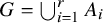 $G = \bigcup _{i=1}^r A_i$, there exists an $i \in \{1, \ldots , r\}$ such that $\phi _1(A_i) + \phi _2(A_i) - \phi _2(A_i)$ contains a Bohr set. This generalizes a result of the second and third authors from $\mathbb {Z}$ to countable abelian groups.
(3) If $B, C \subset G$ have positive upper Banach density and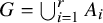 $G = \bigcup _{i=1}^r A_i$ is a partition, $B + C + A_i$ contains a Bohr set for some $i \in \{1, \ldots , r\}$. This is a strengthening of a theorem of Bergelson, Furstenberg and Weiss.
All results are quantitative in the sense that the radius and rank of the Bohr set obtained depends only on the indices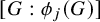 $[G:\phi _j(G)]$, the upper Banach density of A (in (1)), or the number of sets in the given partition (in (2) and (3)).


A note on preimage entropy
- Part of
-
- Journal:
- Ergodic Theory and Dynamical Systems / Volume 44 / Issue 5 / May 2024
- Published online by Cambridge University Press:
- 19 June 2023, pp. 1468-1472
- Print publication:
- May 2024
-
- Article
- Export citation
-
Cheng and Newhouse (Ergod. Th. & Dynam. Sys. 25 (2005), 1091–1113) proved a variational principle for topological preimage entropy $h_{\mathrm {pre}}(f)$:
  $$ \begin{align*} h_{\mathrm{pre}}(f)=\sup_{\mu\in\mathcal{M}(X,f)}h_{\mathrm{pre},\mu}(f). \end{align*} $$
Unfortunately, we show in this note that this variational principle is not true.

Wasserstein convergence rates in the invariance principle for deterministic dynamical systems
- Part of
-
- Journal:
- Ergodic Theory and Dynamical Systems / Volume 44 / Issue 4 / April 2024
- Published online by Cambridge University Press:
- 13 June 2023, pp. 1172-1191
- Print publication:
- April 2024
-
- Article
- Export citation
On the spectral theory of groups of automorphisms of S-adic nilmanifolds
- Part of
-
- Journal:
- Ergodic Theory and Dynamical Systems / Volume 44 / Issue 3 / March 2024
- Published online by Cambridge University Press:
- 29 May 2023, pp. 705-726
- Print publication:
- March 2024
-
- Article
-
- You have access
- Open access
- HTML
- Export citation
-
Let $S=\{p_1, \ldots , p_r,\infty \}$ for prime integers $p_1, \ldots , p_r.$ Let X be an S-adic compact nilmanifold, equipped with the unique translation-invariant probability measure $\mu .$ We characterize the countable groups $\Gamma $ of automorphisms of X for which the Koopman representation $\kappa $ on $L^2(X,\mu )$ has a spectral gap. More specifically, let Y be the maximal quotient solenoid of X (thus, Y is a finite-dimensional, connected, compact abelian group). We show that $\kappa $ does not have a spectral gap if and only if there exists a $\Gamma $-invariant proper subsolenoid of Y on which $\Gamma $ acts as a virtually abelian group,


A word of low complexity without uniform frequencies
- Part of
-
- Journal:
- Ergodic Theory and Dynamical Systems / Volume 44 / Issue 4 / April 2024
- Published online by Cambridge University Press:
- 29 May 2023, pp. 1013-1025
- Print publication:
- April 2024
-
- Article
- Export citation
Isometric actions on Lp-spaces: dependence on the value of p
- Part of
-
- Journal:
- Compositio Mathematica / Volume 159 / Issue 6 / June 2023
- Published online by Cambridge University Press:
- 26 May 2023, pp. 1300-1313
- Print publication:
- June 2023
-
- Article
- Export citation
-
Answering a question by Chatterji–Druţu–Haglund, we prove that, for every locally compact group $G$, there exists a critical constant $p_G \in [0,\infty ]$ such that $G$ admits a continuous affine isometric action on an $L_p$ space ( $0< p<\infty$) with unbounded orbits if and only if $p \geq p_G$. A similar result holds for the existence of proper continuous affine isometric actions on $L_p$ spaces. Using a representation of cohomology by harmonic cocycles, we also show that such unbounded orbits cannot occur when the linear part comes from a measure-preserving action, or more generally a state-preserving action on a von Neumann algebra and $p>2$. We also prove the stability of this critical constant $p_G$ under $L_p$ measure equivalence, answering a question of Fisher.


Counting independent sets in amenable groups
- Part of
-
- Journal:
- Ergodic Theory and Dynamical Systems / Volume 44 / Issue 4 / April 2024
- Published online by Cambridge University Press:
- 24 May 2023, pp. 958-1012
- Print publication:
- April 2024
-
- Article
-
- You have access
- Open access
- HTML
- Export citation
-
Given a locally finite graph $\Gamma $, an amenable subgroup G of graph automorphisms acting freely and almost transitively on its vertices, and a G-invariant activity function $\unicode{x3bb} $, consider the free energy $f_G(\Gamma ,\unicode{x3bb} )$ of the hardcore model defined on the set of independent sets in $\Gamma $ weighted by $\unicode{x3bb} $. Under the assumption that G is finitely generated and its word problem can be solved in exponential time, we define suitable ensembles of hardcore models and prove the following: if $\|\unicode{x3bb} \|_\infty < \unicode{x3bb} _c(\Delta )$, there exists a randomized $\epsilon $-additive approximation scheme for $f_G(\Gamma ,\unicode{x3bb} )$ that runs in time $\mathrm {poly}((1+\epsilon ^{-1})\lvert \Gamma /G \rvert )$, where $\unicode{x3bb} _c(\Delta )$ denotes the critical activity on the $\Delta $-regular tree. In addition, if G has a finite index linearly ordered subgroup such that its algebraic past can be decided in exponential time, we show that the algorithm can be chosen to be deterministic. However, we observe that if $\|\unicode{x3bb} \|_\infty> \unicode{x3bb} _c(\Delta )$, there is no efficient approximation scheme, unless $\mathrm {NP} = \mathrm {RP}$. This recovers the computational phase transition for the partition function of the hardcore model on finite graphs and provides an extension to the infinite setting. As an application in symbolic dynamics, we use these results to develop efficient approximation algorithms for the topological entropy of subshifts of finite type with enough safe symbols, we obtain a representation formula of pressure in terms of random trees of self-avoiding walks, and we provide new conditions for the uniqueness of the measure of maximal entropy based on the connective constant of a particular associated graph.


Chaotic tracial dynamics
- Part of
-
- Journal:
- Forum of Mathematics, Sigma / Volume 11 / 2023
- Published online by Cambridge University Press:
- 17 May 2023, e39
-
- Article
-
- You have access
- Open access
- HTML
- Export citation
-
The action on the trace space induced by a generic automorphism of a suitable finite classifiable ${\mathrm {C}^*}$-algebra is shown to be chaotic and weakly mixing. Model ${\mathrm {C}^*}$-algebras are constructed to observe the central limit theorem and other statistical features of strongly chaotic tracial actions. Genericity of finite Rokhlin dimension is used to describe $KK$-contractible stably projectionless ${\mathrm {C}^*}$-algebras as crossed products.


Strong Shannon–McMillan–Breiman’s theorem for locally compact groups
- Part of
-
- Journal:
- Canadian Mathematical Bulletin / Volume 66 / Issue 4 / December 2023
- Published online by Cambridge University Press:
- 05 May 2023, pp. 1274-1279
- Print publication:
- December 2023
-
- Article
-
- You have access
- Open access
- HTML
- Export citation
-
We prove that for a vast class of random walks on a compactly generated group, the exponential growth of convolutions of a probability density function along almost every sample path is bounded by the growth of the group. As an application, we show that the almost sure and $L^1$ convergences of the Shannon–McMillan–Breiman theorem hold for compactly supported random walks on compactly generated groups with subexponential growth.

Decomposition of multicorrelation sequences and joint ergodicity
- Part of
-
- Journal:
- Ergodic Theory and Dynamical Systems / Volume 44 / Issue 2 / February 2024
- Published online by Cambridge University Press:
- 04 May 2023, pp. 432-480
- Print publication:
- February 2024
-
- Article
-
- You have access
- Open access
- HTML
- Export citation
-
We show that, under finitely many ergodicity assumptions, any multicorrelation sequence defined by invertible measure-preserving $\mathbb {Z}^d$-actions with multivariable integer polynomial iterates is the sum of a nilsequence and a nullsequence, extending a recent result of the second author. To this end, we develop a new seminorm bound estimate for multiple averages by improving the results in a previous work of the first, third, and fourth authors. We also use this approach to obtain new criteria for joint ergodicity of multiple averages with multivariable polynomial iterates on ${\mathbb Z}^{d}$-systems.


When T is an irrational rotation, $[T,\mathrm {Id}]$ and $[T,T^{-1}]$ are Bernoulli: explicit isomorphisms
- Part of
-
- Journal:
- Ergodic Theory and Dynamical Systems / Volume 44 / Issue 3 / March 2024
- Published online by Cambridge University Press:
- 03 May 2023, pp. 829-858
- Print publication:
- March 2024
-
- Article
- Export citation
-
Let $\theta $ be an irrational real number. The map $T_\theta : y \mapsto (y+\theta ) \,\mod \!\!\: 1$ from the unit interval $\mathbf {I} = [0,1[$ (endowed with the Lebesgue measure) to itself is ergodic. In 2002, Rudolph and Hoffman showed in [Uniform endomorphisms which are isomorphic to a Bernoulli shift. Ann. of Math. (2) 156(1) (2002), 79–101] that the measure-preserving map $[T_\theta ,\mathrm {Id}]$ is isomorphic to a one-sided dyadic Bernoulli shift. Their proof is not constructive. A few years before, Parry [Automorphisms of the Bernoulli endomorphism and a class of skew-products. Ergod. Th. & Dynam. Sys.16 (1996), 519–529] had provided an explicit isomorphism under the assumption that $\theta $ is extremely well approached by the rational numbers, namely,
  $$ \begin{align*}\inf_{q \ge 1} q^44^{q^2}~\mathrm{dist}(\theta,q^{-1}\mathbb{Z}) = 0.\end{align*} $$
Whether the explicit map considered by Parry is an isomorphism or not in the general case was still an open question. In Leuridan [Bernoulliness of $[T,\mathrm {Id}]$ when T is an irrational rotation: towards an explicit isomorphism. Ergod. Th. & Dynam. Sys. 41(7) (2021), 2110–2135] we relaxed Parry’s condition into
  $$ \begin{align*}\inf_{q \ge 1} q^4~\mathrm{dist}(\theta,q^{-1}\mathbb{Z}) = 0.\end{align*} $$
In the present paper, we remove the condition by showing that the explicit map considered by Parry is always an isomorphism. With a few adaptations, the same method works with $[T,T^{-1}]$.


Polynomial mean complexity and logarithmic Sarnak conjecture
- Part of
-
- Journal:
- Ergodic Theory and Dynamical Systems / Volume 44 / Issue 3 / March 2024
- Published online by Cambridge University Press:
- 27 April 2023, pp. 769-798
- Print publication:
- March 2024
-
- Article
- Export citation
-
In this paper, we reduce the logarithmic Sarnak conjecture to the $\{0,1\}$-symbolic systems with polynomial mean complexity. By showing that the logarithmic Sarnak conjecture holds for any topologically dynamical system with sublinear complexity, we provide a variant of the $1$-Fourier uniformity conjecture, where the frequencies are restricted to any subset of $[0,1]$ with packing dimension less than one.


Co-spectral radius of intersections
- Part of
-
- Journal:
- Ergodic Theory and Dynamical Systems / Volume 44 / Issue 2 / February 2024
- Published online by Cambridge University Press:
- 17 April 2023, pp. 509-523
- Print publication:
- February 2024
-
- Article
-
- You have access
- Open access
- HTML
- Export citation
-
We study the behavior of the co-spectral radius of a subgroup H of a discrete group $\Gamma $ under taking intersections. Our main result is that the co-spectral radius of an invariant random subgroup does not drop upon intersecting with a deterministic co-amenable subgroup. As an application, we find that the intersection of independent co-amenable invariant random subgroups is co-amenable.

Grid method for divergence of averages
- Part of
-
- Journal:
- Ergodic Theory and Dynamical Systems / Volume 44 / Issue 2 / February 2024
- Published online by Cambridge University Press:
- 11 April 2023, pp. 646-664
- Print publication:
- February 2024
-
- Article
- Export citation
-
In this paper, we will introduce the ‘grid method’ to prove that the extreme case of oscillation occurs for the averages obtained by sampling a flow along the sequence of times of the form $\{n^\alpha : n\in {\mathbb {N}}\}$, where $\alpha $ is a positive non-integer rational number. Such behavior of a sequence is known as the strong sweeping-out property. By using the same method, we will give an example of a general class of sequences which satisfy the strong sweeping-out property. This class of sequences may be useful to solve a long-standing open problem: for a given irrational $\alpha $, whether the sequence $(n^\alpha )$ is bad for pointwise ergodic theorem in $L^2$ or not. In the process of proving this result, we will also prove a continuous version of the Conze principle.


Phase transitions for non-singular Bernoulli actions
- Part of
-
- Journal:
- Ergodic Theory and Dynamical Systems / Volume 44 / Issue 2 / February 2024
- Published online by Cambridge University Press:
- 11 April 2023, pp. 353-382
- Print publication:
- February 2024
-
- Article
-
- You have access
- Open access
- HTML
- Export citation
Orbit equivalence rigidity of irreducible actions of right-angled Artin groups
- Part of
-
- Journal:
- Compositio Mathematica / Volume 159 / Issue 4 / April 2023
- Published online by Cambridge University Press:
- 04 April 2023, pp. 860-887
- Print publication:
- April 2023
-
- Article
-
- You have access
- Open access
- HTML
- Export citation
-
Let $G_\Gamma \curvearrowright X$ and $G_\Lambda \curvearrowright Y$ be two free measure-preserving actions of one-ended right-angled Artin groups with trivial center on standard probability spaces. Assume they are irreducible, i.e. every element from a standard generating set acts ergodically. We prove that if the two actions are stably orbit equivalent (or merely stably $W^*$-equivalent), then they are automatically conjugate through a group isomorphism between $G_\Gamma$ and $G_\Lambda$. Through work of Monod and Shalom, we derive a superrigidity statement: if the action $G_\Gamma \curvearrowright X$ is stably orbit equivalent (or merely stably $W^*$-equivalent) to a free, measure-preserving, mildly mixing action of a countable group, then the two actions are virtually conjugate. We also use the works of Popa and Ioana, Popa and Vaes to establish the $W^*$-superrigidity of Bernoulli actions of all infinite conjugacy classes groups having a finite generating set made of infinite-order elements where two consecutive elements commute, and one has a nonamenable centralizer: these include one-ended nonabelian right-angled Artin groups, but also many other Artin groups and most mapping class groups of finite-type surfaces.


Conditioned limit theorems for hyperbolic dynamical systems
- Part of
-
- Journal:
- Ergodic Theory and Dynamical Systems / Volume 44 / Issue 1 / January 2024
- Published online by Cambridge University Press:
- 20 March 2023, pp. 50-117
- Print publication:
- January 2024
-
- Article
- Export citation
-
Let $({\mathbb X}, T)$ be a subshift of finite type equipped with the Gibbs measure $\nu $ and let f be a real-valued Hölder continuous function on ${\mathbb X}$ such that $\nu (f) = 0$. Consider the Birkhoff sums $S_n f = \sum _{k=0}^{n-1} f \circ T^{k}$, $n\geqslant 1$. For any $t \in {\mathbb R}$, denote by $\tau _t^f$ the first time when the sum $t+ S_n f$ leaves the positive half-line for some $n\geqslant 1$. By analogy with the case of random walks with independent and identically distributed increments, we study the asymptotic as $ n\to \infty $ of the probabilities $ \nu (x\in {\mathbb X}: \tau _t^f(x)>n) $ and $ {\nu (x\in {\mathbb X}: \tau _t^f(x)=n) }$. We also establish integral and local-type limit theorems for the sum $t+ S_n f(x)$ conditioned on the set $\{ x \in {\mathbb X}: \tau _t^f(x)>n \}.$


Mixing properties of erasing interval maps
- Part of
-
- Journal:
- Ergodic Theory and Dynamical Systems / Volume 44 / Issue 2 / February 2024
- Published online by Cambridge University Press:
- 06 March 2023, pp. 408-431
- Print publication:
- February 2024
-
- Article
- Export citation
-
We study the measurable dynamical properties of the interval map generated by the model-case erasing substitution $\rho $, defined by We prove that, although the map is singular, its square preserves the Lebesgue measure and is strongly mixing, thus ergodic, with respect to it. We discuss the extension of the results to more general erasing maps.
 $$ \begin{align*} \rho(00)=\text{empty word},\quad \rho(01)=1,\quad \rho(10)=0,\quad \rho(11)=01. \end{align*} $$

Zero entropy actions of amenable groups are not dominant
- Part of
-
- Journal:
- Ergodic Theory and Dynamical Systems / Volume 44 / Issue 2 / February 2024
- Published online by Cambridge University Press:
- 06 March 2023, pp. 630-645
- Print publication:
- February 2024
-
- Article
-
- You have access
- Open access
- HTML
- Export citation
-
A probability measure-preserving action of a discrete amenable group G is said to be dominant if it is isomorphic to a generic extension of itself. Recently, it was shown that for $G = \mathbb {Z}$, an action is dominant if and only if it has positive entropy and that for any G, positive entropy implies dominance. In this paper, we show that the converse also holds for any G, that is, that zero entropy implies non-dominance.

