Refine listing
Actions for selected content:
308 results in 35Kxx
Existence and analyticity of solutions of the Kuramoto–Sivashinsky equation with singular data
- Part of
-
- Journal:
- Proceedings of the Royal Society of Edinburgh. Section A: Mathematics , First View
- Published online by Cambridge University Press:
- 20 November 2024, pp. 1-26
-
- Article
- Export citation
Global existence of a weak solution for a reaction–diffusion system in a porous medium with membrane conditions and mass control
- Part of
-
- Journal:
- Canadian Journal of Mathematics / Volume 77 / Issue 6 / December 2025
- Published online by Cambridge University Press:
- 20 November 2024, pp. 2006-2028
- Print publication:
- December 2025
-
- Article
- Export citation
-
In this paper, we prove the global exstence of weak solutions for a porous medium dynamics of m species moving between two domains separated by a zero-thickness membrane. On this membrane, Kedem–Katchalsky conditions are considered, and the study is characterized by natural structural conditions applied to the nonlinear reactive terms. The global existence is established under the assumption that these reactive terms are bounded in $L^1$. This problem has already been analyzed in the linear diffusion case by Ciavolella and Perthame in Ciavolella and Perthame (2021, Journal of Evolution Equations 21, 1513–1540). The present work constitutes an extension for nonlinear diffusion, particularly of the porous medium type, in the form $\partial _t v_i - \Delta v_i^{r_i} = R_i$, for an exponent $r_i < 2$. The case $r_i \geq 2$ remains an open problem. This paper is an adaptation of the ideas from Ciavolella and Perthame (2021, Journal of Evolution Equations 21, 1513–1540), with new strategies to overcome the appearance of nonlinearity and degeneracy in the diffusion term.


Fractional order for the transmission dynamics of coffee berry diseases (CBD)
- Part of
-
- Journal:
- European Journal of Applied Mathematics / Volume 36 / Issue 4 / August 2025
- Published online by Cambridge University Press:
- 20 November 2024, pp. 879-896
-
- Article
-
- You have access
- Open access
- HTML
- Export citation
Travelling wave solutions and spreading speeds for a scalar age-structured equation with nonlocal diffusion
- Part of
-
- Journal:
- European Journal of Applied Mathematics / Volume 36 / Issue 4 / August 2025
- Published online by Cambridge University Press:
- 15 November 2024, pp. 856-878
-
- Article
-
- You have access
- Open access
- HTML
- Export citation
A free boundary model for transport-induced neurite growth
- Part of
-
- Journal:
- European Journal of Applied Mathematics / Volume 36 / Issue 4 / August 2025
- Published online by Cambridge University Press:
- 07 November 2024, pp. 829-855
-
- Article
-
- You have access
- Open access
- HTML
- Export citation
The evolution problem for the 1D nonlocal Fisher-KPP equation with a top hat kernel. Part 1. The Cauchy problem on the real line
- Part of
-
- Journal:
- European Journal of Applied Mathematics / Volume 36 / Issue 4 / August 2025
- Published online by Cambridge University Press:
- 25 October 2024, pp. 775-810
-
- Article
-
- You have access
- Open access
- HTML
- Export citation
-
We study the Cauchy problem on the real line for the nonlocal Fisher-KPP equation in one spatial dimension,
where \begin{equation*} u_t = D u_{xx} + u(1-\phi *u), \end{equation*} $\phi *u$ is a spatial convolution with the top hat kernel, $\phi (y) \equiv H\left (\frac{1}{4}-y^2\right )$. After observing that the problem is globally well-posed, we demonstrate that positive, spatially periodic solutions bifurcate from the spatially uniform steady state solution $u=1$ as the diffusivity, $D$, decreases through $\Delta _1 \approx 0.00297$ (the exact value is determined in Section 3). We explicitly construct these spatially periodic solutions as uniformly valid asymptotic approximations for $D \ll 1$, over one wavelength, via the method of matched asymptotic expansions. These consist, at leading order, of regularly spaced, compactly supported regions with width of $O(1)$ where $u=O(1)$, separated by regions where $u$ is exponentially small at leading order as $D \to 0^+$. From numerical solutions, we find that for $D \geq \Delta _1$, permanent form travelling waves, with minimum wavespeed, $2 \sqrt{D}$, are generated, whilst for $0 \lt D \lt \Delta _1$, the wavefronts generated separate the regions where $u=0$ from a region where a steady periodic solution is created via a distinct periodic shedding mechanism acting immediately to the rear of the advancing front, with this mechanism becoming more pronounced with decreasing $D$. The structure of these transitional travelling wave forms is examined in some detail.


WELL-POSEDNESS RESULTS FOR GENERAL REACTION–DIFFUSION TRANSPORT OF OXYGEN IN ENCAPSULATED CELLS
- Part of
-
- Journal:
- Bulletin of the Australian Mathematical Society / Volume 111 / Issue 1 / February 2025
- Published online by Cambridge University Press:
- 18 October 2024, pp. 154-163
- Print publication:
- February 2025
-
- Article
- Export citation
Travelling wavefronts for the Belousov–Zhabotinsky system with non-local delayed interaction
- Part of
-
- Journal:
- European Journal of Applied Mathematics / Volume 36 / Issue 4 / August 2025
- Published online by Cambridge University Press:
- 10 October 2024, pp. 738-774
-
- Article
-
- You have access
- Open access
- HTML
- Export citation
Boundary crossing problems and functional transformations for Ornstein–Uhlenbeck processes
- Part of
-
- Journal:
- Journal of Applied Probability / Volume 62 / Issue 1 / March 2025
- Published online by Cambridge University Press:
- 07 October 2024, pp. 395-421
- Print publication:
- March 2025
-
- Article
- Export citation
Stabilization in a chemotaxis system modelling T-cell dynamics with simultaneous production and consumption of signals
- Part of
-
- Journal:
- European Journal of Applied Mathematics / Volume 36 / Issue 3 / June 2025
- Published online by Cambridge University Press:
- 18 September 2024, pp. 570-583
-
- Article
-
- You have access
- Open access
- HTML
- Export citation
-
In a smoothly bounded domain $\Omega \subset \mathbb{R}^n$, $n\ge 1$, this manuscript considers the homogeneous Neumann boundary problem for the chemotaxis systemwith parameter
 \begin{eqnarray*} \left \{ \begin{array}{l} u_t = \Delta u - \nabla \cdot (u\nabla v), \\[5pt] v_t = \Delta v + u - \alpha uv, \end{array} \right . \end{eqnarray*} $\alpha \gt 0$ and with coincident production and uptake of attractants, as recently emphasized by Dallaston et al. as relevant for the understanding of T-cell dynamics.
It is shown that there exists $\delta _\star =\delta _\star (n)\gt 0$ such that for any given $\alpha \ge \frac{1}{\delta _\star }$ and for any suitably regular initial data satisfying $v(\cdot, 0)\le \delta _\star$, this problem admits a unique classical solution that stabilizes to the constant equilibrium $(\frac{1}{|\Omega |}\int _\Omega u(\cdot, 0), \, \frac{1}{\alpha })$ in the large time limit.


The roles of nonlinear diffusion, haptotaxis and ECM remodelling in determining the global solvability of a cancer invasion model
- Part of
-
- Journal:
- Proceedings of the Royal Society of Edinburgh. Section A: Mathematics , First View
- Published online by Cambridge University Press:
- 13 September 2024, pp. 1-32
-
- Article
- Export citation
-
In this paper, we consider the following PDE-ODE system modelling cancer invasion with slow diffusion and ECM remodelling,
\[ \begin{cases} u_t=\Delta u^m-\chi\nabla\cdot(u\nabla v)-\xi\nabla\cdot(u\nabla\omega)+\mu u(1-u-\omega), \\ v_t=\Delta v+u-v, \\ \omega_t={-}v\omega+\eta \omega(1-u-\omega). \end{cases} \]For the special case $\eta =0$
 , fruitful results have been achieved since Tao and Winkler's work in 2011. However, there is no any progress for the general case $\eta >0$
 in the past ten years. In this paper, we analysed some commonly used research methods when $\eta =0$
 , and found that these methods are completely unsuitable for situations where $\eta >0$
 . By introducing some new forms of functionals, we reconstruct the relationship between the haptotactic term and the nonlinear diffusion term, and ultimately prove the global existence of weak solutions. This result improves and perfects a series of works previously presented in the literature.


Asymptotic profiles of a nonlocal dispersal SIS epidemic model with saturated incidence
- Part of
-
- Journal:
- Proceedings of the Royal Society of Edinburgh. Section A: Mathematics , First View
- Published online by Cambridge University Press:
- 14 May 2024, pp. 1-33
-
- Article
- Export citation
Unified framework for the separation property in binary phase-segregation processes with singular entropy densities
- Part of
-
- Journal:
- European Journal of Applied Mathematics / Volume 36 / Issue 1 / February 2025
- Published online by Cambridge University Press:
- 09 May 2024, pp. 40-67
-
- Article
-
- You have access
- Open access
- HTML
- Export citation
-
This paper investigates the separation property in binary phase-segregation processes modelled by Cahn-Hilliard type equations with constant mobility, singular entropy densities and different particle interactions. Under general assumptions on the entropy potential, we prove the strict separation property in both two and three-space dimensions. Namely, in 2D, we notably extend the minimal assumptions on the potential adopted so far in the literature, by only requiring a mild growth condition of its first derivative near the singular points $\pm 1$, without any pointwise additional assumption on its second derivative. For all cases, we provide a compact proof using De Giorgi’s iterations. In 3D, we also extend the validity of the asymptotic strict separation property to the case of fractional Cahn-Hilliard equation, as well as show the validity of the separation when the initial datum is close to an ‘energy minimizer’. Our framework offers insights into statistical factors like particle interactions, entropy choices and correlations governing separation, with broad applicability.

Threshold dynamics scenario of a plants-pollinators cooperative system with impulsive effect on a periodically evolving domain
- Part of
-
- Journal:
- European Journal of Applied Mathematics / Volume 35 / Issue 6 / December 2024
- Published online by Cambridge University Press:
- 02 May 2024, pp. 797-822
-
- Article
-
- You have access
- Open access
- HTML
- Export citation
Global boundedness and large time behaviour in a higher-dimensional quasilinear chemotaxis system with consumption of chemoattractant
- Part of
-
- Journal:
- Proceedings of the Royal Society of Edinburgh. Section A: Mathematics / Volume 156 / Issue 1 / February 2026
- Published online by Cambridge University Press:
- 30 April 2024, pp. 237-262
- Print publication:
- February 2026
-
- Article
- Export citation
-
This paper deals with the following quasilinear chemotaxis system with consumption of chemoattractant
\[ \left\{\begin{array}{@{}ll} u_t=\Delta u^{m}-\nabla\cdot(u\nabla v),\quad & x\in \Omega,\quad t>0,\\ v_t=\Delta v-uv,\quad & x\in \Omega,\quad t>0\\ \end{array}\right. \]in a bounded domain $\Omega \subset \mathbb {R}^N(N=3,\,4,\,5)$
 with smooth boundary $\partial \Omega$
 . It is shown that if $m>\max \{1,\,\frac {3N-2}{2N+2}\}$
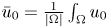
 , for any reasonably smooth nonnegative initial data, the corresponding no-flux type initial-boundary value problem possesses a globally bounded weak solution. Furthermore, we prove that the solution converges to the spatially homogeneous equilibrium $(\bar {u}_0,\,0)$
 in an appropriate sense as $t\rightarrow \infty$
 , where $\bar {u}_0=\frac {1}{|\Omega |}\int _\Omega u_0$
 . This result not only partly extends the previous global boundedness result in Fan and Jin (J. Math. Phys. 58 (2017), 011503) and Wang and Xiang (Z. Angew. Math. Phys. 66 (2015), 3159–3179) to $m>\frac {3N-2}{2N}$
 in the case $N\geq 3$
 , but also partly improves the global existence result in Zheng and Wang (Discrete Contin. Dyn. Syst. Ser. B 22 (2017), 669–686) to $m>\frac {3N}{2N+2}$
 when $N\geq 2$
 .
.


Eternal solutions to a porous medium equation with strong non-homogeneous absorption. Part I: radially non-increasing profiles
- Part of
-
- Journal:
- Proceedings of the Royal Society of Edinburgh. Section A: Mathematics / Volume 155 / Issue 6 / December 2025
- Published online by Cambridge University Press:
- 14 March 2024, pp. 1998-2019
- Print publication:
- December 2025
-
- Article
- Export citation
-
Existence of specific eternal solutions in exponential self-similar form to the following quasilinear diffusion equation with strong absorption
\[ \partial_t u=\Delta u^m-|x|^{\sigma}u^q, \]posed for $(t,\,x)\in (0,\,\infty )\times \mathbb {R}^N$
 , with $m>1$
 , $q\in (0,\,1)$
 and $\sigma =\sigma _c:=2(1-q)/ (m-1)$
 is proved. Looking for radially symmetric solutions of the form\[ u(t,x)={\rm e}^{-\alpha t}f(|x|\,{\rm e}^{\beta t}), \quad \alpha=\frac{2}{m-1}\beta, \]we show that there exists a unique exponent $\beta ^*\in (0,\,\infty )$
 for which there exists a one-parameter family $(u_A)_{A>0}$
 of solutions with compactly supported and non-increasing profiles $(f_A)_{A>0}$
 satisfying $f_A(0)=A$
 and $f_A'(0)=0$
 . An important feature of these solutions is that they are bounded and do not vanish in finite time, a phenomenon which is known to take place for all non-negative bounded solutions when $\sigma \in (0,\,\sigma _c)$
 .
.


Decay at infinity for solutions to some fractional parabolic equations
- Part of
-
- Journal:
- Proceedings of the Royal Society of Edinburgh. Section A: Mathematics / Volume 155 / Issue 6 / December 2025
- Published online by Cambridge University Press:
- 14 March 2024, pp. 1961-1997
- Print publication:
- December 2025
-
- Article
- Export citation
-
For $s\in [\tfrac {1}{2},\, 1)$
 , let $u$
 solve $(\partial _t - \Delta )^s u = Vu$
 in $\mathbb {R}^{n} \times [-T,\, 0]$
 for some $T>0$
 where $||V||_{ C^2(\mathbb {R}^n \times [-T, 0])} < \infty$
 . We show that if for some $0<\mathfrak {K} < T$
 and $\epsilon >0$
 \[ {\unicode{x2A0D}}-_{[-\mathfrak{K},\, 0]} u^2(x, t) {\rm d}t \leq Ce^{-|x|^{2+\epsilon}}\ \forall x \in \mathbb{R}^n, \]then $u \equiv 0$
 in $\mathbb {R}^{n} \times [-T,\, 0]$
 .
.


Unbounded Sturm attractors for quasilinear parabolic equations
- Part of
-
- Journal:
- Proceedings of the Edinburgh Mathematical Society / Volume 67 / Issue 2 / May 2024
- Published online by Cambridge University Press:
- 08 March 2024, pp. 542-565
-
- Article
- Export citation
Bifurcations and pattern formation in a host–parasitoid model with nonlocal effect
- Part of
-
- Journal:
- Proceedings of the Royal Society of Edinburgh. Section A: Mathematics / Volume 155 / Issue 5 / October 2025
- Published online by Cambridge University Press:
- 04 March 2024, pp. 1855-1894
- Print publication:
- October 2025
-
- Article
- Export citation
On determining and breaking the gauge class in inverse problems for reaction-diffusion equations
- Part of
-
- Journal:
- Forum of Mathematics, Sigma / Volume 12 / 2024
- Published online by Cambridge University Press:
- 26 February 2024, e25
-
- Article
-
- You have access
- Open access
- HTML
- Export citation
-
We investigate an inverse boundary value problem of determination of a nonlinear law for reaction-diffusion processes, which are modeled by general form semilinear parabolic equations. We do not assume that any solutions to these equations are known a priori, in which case the problem has a well-known gauge symmetry. We determine, under additional assumptions, the semilinear term up to this symmetry in a time-dependent anisotropic case modeled on Riemannian manifolds, and for partial data measurements on ${\mathbb R}^n$.
Moreover, we present cases where it is possible to exploit the nonlinear interaction to break the gauge symmetry. This leads to full determination results of the nonlinear term. As an application, we show that it is possible to give a full resolution to classes of inverse source problems of determining a source term and nonlinear terms simultaneously. This is in strict contrast to inverse source problems for corresponding linear equations, which always have the gauge symmetry. We also consider a Carleman estimate with boundary terms based on intrinsic properties of parabolic equations.

