To save content items to your account,
please confirm that you agree to abide by our usage policies.
If this is the first time you use this feature, you will be asked to authorise Cambridge Core to connect with your account.
Find out more about saving content to .
To save content items to your Kindle, first ensure no-reply@cambridge.org
is added to your Approved Personal Document E-mail List under your Personal Document Settings
on the Manage Your Content and Devices page of your Amazon account. Then enter the ‘name’ part
of your Kindle email address below.
Find out more about saving to your Kindle.
Note you can select to save to either the @free.kindle.com or @kindle.com variations.
‘@free.kindle.com’ emails are free but can only be saved to your device when it is connected to wi-fi.
‘@kindle.com’ emails can be delivered even when you are not connected to wi-fi, but note that service fees apply.
Vegetation structure is an important factor influencing the secondary dispersal distance of wind-dispersed seeds. How vegetation structure and seed characteristics interact to affect seed secondary dispersal strategies remains unclear. We collected data on seed morphological and aerodynamic traits, lift-off wind and dispersal velocities for 12 wind-dispersed species with six types of appendages using a large-scale wind tunnel simulating the seed secondary wind dispersal across six simulated vegetation structures of desert steppe, typical steppe and meadow steppe to analyze the effects of vegetation structures and seed traits on the seed secondary dispersal strategy. Seeds with pappi exhibiting large projected area, low mass, low wing loading and low terminal velocity were less affected by vegetation obstruction and tended to adopt telechory strategies across all vegetation structures. Conversely, seeds with one wing that demonstrated a small projected area, high mass, wing loading and terminal velocity were less affected by vegetation structures and tended to adopt an antitelechory strategy. Seeds with disc-shaped, four wings, balloons and thorns, characterized by higher mass, wing loading, density and terminal velocity, adopted a shift from telechory, atelechory or antitelechory strategies depending on vegetation structures. In sparse vegetation structures (bare ground or simulated desert steppe), they mostly adopt telechory or atelechory strategies, whereas in dense and high vegetation structures (simulated typical steppe and meadow steppe), they adopt antitelechory or atelechory strategies. In conclusion, secondary seed wind-dispersal strategies are jointly determined by the interaction between vegetation structure and seed morphology characteristics.
This study examines how institutional trust and governance quality shape citizens’ evaluations of water services. Drawing on psychological and institutional theories, we develop a multilevel framework linking individual trust in public authorities to regional governance performance. Using multilevel logistic models and pooled data from the Italian National Institute of Statistics (ISTAT) Multipurpose Household Survey (2014–2019), combined with a regional Institutional Quality Index, we show that trust in local institutions is the strongest predictor of perceived service quality. At the contextual level, higher government effectiveness and control of corruption are associated with more favourable perceptions. These findings suggest that institutional trust operates as a heuristic under limited observability, while governance conditions shape the context in which such evaluations are formed.
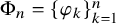
We prove an analogue of Chebyshev’s alternation theorem for linearly independent discrete functions $\Phi _n=\{\varphi _k\}_{k=1}^n$ on the interval $[0,q]_{\scriptscriptstyle \mathbb {Z}}=[0,q]\cap \mathbb {Z}$. In particular, we establish that the polynomial of best uniform approximation of a discrete function admits a Chebyshev alternance set of length $n+1$ if and only if $\Phi _n$ is a Chebyshev $T_{\scriptscriptstyle \mathbb {Z}}$-system. We also obtain a discrete version of Sturm’s oscillation theorem, according to which the number of discrete zeros of the polynomial $\sum _{k=m}^{n}a_k\varphi _k$ is no less than $m-1$ and no more than $n-1$. This implies that $\Phi _n$ is a $T_{\scriptscriptstyle \mathbb {Z}}$-system and a discrete Sturm-Hurwitz spectral gap theorem is valid. As applications, we study the orthogonal polynomials with removed largest zeros. We establish the monotonicity property of coefficients in the Fourier expansions of such polynomials, thereby strengthening the results of H. Cohn and A. Kumar. We apply this to solve a Yudin-type extremal problem for polynomials with spectral gap.

Patients with a suspected high-consequence infectious disease (HCID), such as Ebola virus disease, may require routine laboratory testing to guide management. We assessed the capabilities of frontline hospitals and the barriers they face performing laboratory testing for patients with a suspected HCID.
Methods:
A one-time confidential REDCap survey querying capabilities to safely perform laboratory tests that the Centers for Disease Control and Prevention considers critical for patients with a suspected HCID was sent to 95 institutions in Baltimore, MD, Boston, MA, New York City, NY, and Washington, DC, from January to May 2025.
Results:
Fifty (53%) institutions responded, mostly teaching hospitals (96%), with 24% reporting prior experience evaluating a patient with suspected Ebola virus disease. While many hospitals could perform on-site blood gas (70%), hemoglobin/hematocrit (68%), and lactate (68%) tests on a suspected HCID patient, fewer could safely perform a chemistry panel (64%), a urinalysis (60%), a complete blood count with differential (56%), and a malaria rapid diagnostic test (RDT) (48%) on a suspected HCID patient. The five tests respondents most often considered extremely or very important were hemoglobin/hematocrit (91%), chemistry panel (90%), CBC with differential and platelet count (89%), malaria RDT (88%), and blood gas (88%). Reported barriers to performing routine laboratory testing included issues related to patient and staff safety, infection control, lack of appropriate space, and funding.
Conclusions:
Our survey identified several barriers to implementing safe laboratory testing. The inability to conduct these laboratory tests may result in delays in care when an HCID is suspected.
Improvements in the availability, accuracy, and processing of individual-level data have allowed political science literature to address the ‘ecological fallacy’, whereby inferences are made about individuals based on units of analyses operating at a higher level. Yet there has been limited attention to the risk that individual-level analyses may suffer from the reverse ‘atomistic’ – or ‘individualistic’ – fallacy: the erroneous practice of drawing inferences about national-level outcomes based on individual-level analyses. In this research note, we present a mathematical statement and simulations to diagnose and evaluate the extent of this fallacy in the case of voting behaviour. We also illustrate the problem using European Social Survey data on far-right voting. We conclude by identifying three ‘perils’ of the atomistic fallacy, related to extrapolating conclusions about a party’s overall performance from information about an individual’s voting propensity. These perils can significantly affect how researchers interpret election results and, in turn, the policy implications of political science research.
Actors in international politics frequently relate to multiple international norms in taking and justifying decisions. The multiplicity of global normative standards creates constraints and opportunities, affecting how norms matter in contemporary world politics. International relations theorists have therefore devoted increasing attention to relations and interactions between international norms and to norms’ complex internal structures. In this article, I take stock of this recent research and propose avenues for advancing it. I sketch a pluralist agenda on norm complexity that I delineate from long-standing research on international regime complexity. I then zoom in on the most dynamic part of the agenda, the study of agency in complex normative settings. I argue that political actors creatively navigate norm complexity by (re-)connecting constitutive elements of different norms, thus relating these norms to one another in varying, often conflicting ways. I show how this concept of creative navigation can be integrated into different constructivist approaches to norms and normativity to highlight different drivers and implications of such creative agency. I use examples at the nexus of norms governing climate change, nuclear energy, and nuclear non-proliferation to illustrate how different perspectives on navigation can be applied in a pluralist engagement with norm complexity.
Medical microwave imaging (MMWI) is emerging as a promising noninvasive diagnostic modality, offering a safe, portable, and cost-effective alternative to conventional imaging methods. Despite its potential, MMWI poses significant challenges due to the ill-posed and nonlinear nature of the underlying inverse scattering problem. Two main strategies are typically adopted: qualitative imaging, which yields rapid but approximate reconstructions, and quantitative imaging, which aims to recover the full permittivity distribution of tissues. Both approaches substantially benefit from accurate patient-specific background models that enhance reliability and reduce computational complexity. Building upon preliminary results presented at EuCAP 2025, this work advances the development of patient-specific head models for quantitative brain imaging. The study employs anatomically conformal basis functions and extends the model to include cerebrospinal fluid, which represents a strong scatterer with markedly distinct dielectric properties. The proposed framework improves reconstruction accuracy and convergence efficiency, thereby contributing to the advancement of quantitative MMWI toward practical clinical applications.
During the first, long tenure of Dr Mahathir Mohamad as Prime Minster of Malaysia (1981-2003), the country embarked on a long-term strategy to achieve the status of a highly developed nation. This “Vision 2020” (Wawasan 2020) placed high-technology, especially Information and Computer Technology (ICT) at the centre of the country’s transformation, in line with the notions of “Knowledge Society” and “Knowledge Economy.” Within the political framework of that period, the government discourse was propagated through government agencies and institutions, including schools, universities, and the Dewan Bahasa dan Pustaka (DBP), as well as by the media controlled by or in sympathy of the government. Positive visions of high technology in the future Malaysia were soon to be found in many publications, including in the now booming genre of science fiction for the youth. This article examines several of these textual scientific and technical imaginaries, including the novel Panrita by Arena Wati (1993), as well as popular science fiction novels and short stories.
It is found that often the plot centres on the notion of a journey. The youth novels mostly depict a concrete trip to planets and galaxies far away, while in one case, a time-machine brings the juvenile heroes to an early 20th century Malay anti-colonial struggle against the British. In these journeys, the utopian vehicles symbolise Malay/Malaysian agency and competence in science and high technology, being at par with other developed nations. In the award-winning novel Panrita, the voyage through these new Technoenvironments also encompasses a deep spiritual and religious meaning within Malaysian Islam. Given the great political emphasis on Malay language and culture in this period, de-centring away from the Anglosphere, the question is raised whether in the Malaysian case the English term should be localised, e.g. by the Malay term “lingkungan teknikal”, building on previous theoretical contributions in Malay, including that of Sohaimi Abdul Aziz (2013) on “teknoteks” (technotext).
This study expands agro-sociological research on public perceptions of biodegradable plastic mulch by addressing three questions posed to direct-market and indirect-market shoppers in northwest Washington: (1) What is their general knowledge of plastic mulching practices? (2) What are their perspectives on soil-biodegradable plastic mulch (BDM) fragments in agricultural fields? and (3) Do they prefer biodegradable options over non-biodegradable plastics in agriculture? Rapid market assessments (RMAs) and semi-structured interviews incorporating photo elicitation were conducted at a farmers’ market and a bargain-market grocery store in Bellingham, Washington. RMAs (n = 102; 51 per location) and semi-structured interviews (n = 14) captured variation between direct- and indirect-market shoppers. Overall, most direct- and indirect-market shoppers participating in the RMAs did not associate plastic use with growing produce or view it as essential to modern agriculture. Interview participants were generally aware of non-biodegradable polyethylene (PE) mulch but were unfamiliar with BDMs. Once they learned that BDMs are designed to break down in soil through microbial activity, they expressed a clear preference for them. Although RMA results indicated that participants prefer neat-looking fields, interviewees expressed greater willingness to purchase produce grown with BDMs rather than PE mulch. Additionally, shoppers participating in interviews expressed a willingness to pay a price premium for produce grown with BDMs. Interview discussions revealed that consumer education—through signage, labeling, or other outreach—is critical to building awareness and acceptance of soil-biodegradable alternatives in agriculture.
It is argued that the Emperor Tiberius reacted as badly as he did to the fisherman who climbed the cliffs at Capri to offer him a gift of a surmullet (Suet. Tib. 60) because he regarded this event as an omen that his death was near at hand. He had the fisherman’s face scrubbed with the surmullet to transfer the force of the omen to him instead.
In recent years, some have argued that supported decision-making can be ethically superior to surrogate decision-making with respect to decisions involving adults with cognitive and intellectual impairments or disabilities. In this paper, we argue that supported decision-making could also be ethically superior to surrogate decision-making in the context of clinical research that involves greater than minimal net risks. In current practice, adults who lack decisional capacity are often excluded from research that involves greater than minimal net risks (call this the minimal risk requirement). While this approach is intended to protect them, it can be ethically problematic, in part because excluding adults who cannot consent blocks scientifically valuable research that needs to enroll them and undermines the generalizability of the research that excludes them. With this concern in mind, we argue that supported decision-making can provide an ethical means to enroll adults who cannot independently consent in greater than minimal net risk research. Supported decision-making thus offers a valuable modification to the surrogate enrollment requirement, and provides good reason to reject the minimal risk requirement as well.
Much of Western philosophy has treated the ability to reason as both the defining feature of human nature and also the condition of knowledge. Even when philosophers attempt to expose reason’s finitude, the very form of argument simply bolsters the authority it seeks to constrain. Philosophy cannot fully displace rationality when it presupposes rigid standards of justification. But literature works differently: because it does not need to defend itself through argument, it can effectively reveal the limits of rationality. By examining the philosophies of Plato, Aristotle, Descartes, Hume, Kant, Foucault, Nietzsche, and Cavell together with the literary works Goethe’s Faust and Shelley’s Frankenstein, this article argues that literary work critiques rationality in ways philosophical discourse cannot.
This essay explores the work of artist and activist Fredi Washington during the New Negro Renaissance. It frames Washington as an unconventional “Triple Threat,” not as an artist who dances and sings and acts, but as a performing artist, a writer, and a civil and human rights activist. It focuses upon Washington’s most direct engagement with the failures of American democracy—her writings for the progressive Black newspaper The People’s Voice from 1942 to 1947. A fierce advocate for Black people in the United States and around the world, Washington offers a model of resiliency and resistance in the face of white supremacy, misogyny, and the contemporary collapse of democratic institutions across the globe.
This paper examines how financial actors enter and reshape healthcare systems, building new, often transnational, social, technical, and financial infrastructures for organising and providing care. We use the concept of assetization – the transformation of ‘things’ into rent-generating assets for investors – to explore how financial actors appear within healthcare. Drawing on empirical case studies from England, Canada, and the Netherlands, we show how assetization unfolds differently across national contexts, shaped by political cultures, regulatory environments, and institutional legacies. Rather than deploying uniform strategies, financial actors respond strategically to systemic frictions and perceived crises, positioning themselves as problem-solvers and embedding investor logic into healthcare provision. As such, assetization is an active process that constructs new infrastructures facilitating future investment and normalising financial presence in healthcare. By tracing how an emerging investor logic reshapes the conditions that allow financial actors to turn healthcare into an asset across different socio-political and institutional contexts, and by tracing the mechanisms through which this logic is articulated and enacted, this paper reveals how care is increasingly integrated into broader circuits of financialization. In doing so, we raise critical questions about the evolving governance, valuation, and organisation of healthcare under expanding financial influence, pointing towards a future research agenda
While rapid four-compartment (4C) models have demonstrated cross-sectional validity in diverse populations, including athletes, their longitudinal validity remains unverified. This study aims to evaluate the longitudinal validity of utilising dual-energy X-ray absorptiometry (DXA)-derived estimates of body volume (BV) and bioelectrical impedance spectroscopy (BIS)-derived total body water (TBW) in rapid 4C models in athletes. Criterion 4C used DXA for bone mineral content, air displacement plethysmography for BV and 2H dilution for TBW. Analyses of longitudinal changes in fat mass (FM), in both kilograms and percentage, were performed in participants who experienced changes greater than 1 % (n 60) and in a subgroup exceeding the least significant change (1·97 kg, n 25). All alternative estimates underestimated changes relative to criterion 4C, with 4C TBWBIS providing the smaller mean difference (MD) (0·41 kg) and DXA the larger (0·94 kg). The MD for 4C BVSilvaTBWBIS and 4C BVHeymsfieldTBWBIS were 0·48 kg and 0·50 kg, respectively. Bland–Altman analyses showed wide limits of agreement (LOA) for all methods. Even the alternative with the smaller 95 % LOA had a wide LOA (4C TBWBIS: −2·9 %, 4·0 %, n 60). This investigation demonstrates that these rapid 4C models exhibit precision superior to or equivalent to DXA alone while offering reduced assessment times and broader accessibility than the criterion 4C. Regarding accuracy for evaluating changes over time, despite acceptable results at the group level, interpretation should be careful at the individual level.
The study aimed to characterize the species composition and compare helminth populations and communities in samples of helminths collected from marsh frogs in 3 localities in the city of Kyiv. Twenty helminth species were recorded in total, of which 8 were found in all 3 localities: the nematodes Cosmocerca ornata and Icosiella neglecta, and the trematodes Diplodiscus subclavatus, Haematoloechus asper, Opisthioglyphe ranae, Pleurogenes claviger, Pleurogenoides medians and Prosotocus confusus. In helminth infracommunities, species richness and abundance were the highest in frogs from Olzhyn Island (median 7 and 98, respectively). Helminth species richness was the lowest in the infracommunities from Lake Tiahle (median 4), while the abundance was the lowest in the infracommunities from Lake Telbin (median 51.5). From 3 to 4 species predominated in separate helminth component communities based on their high prevalence and abundance in the studied samples: D. subclavatus, I. neglecta, P. medians and P. confusus in Lake Telbin; Codonocephalus urniger, I. neglecta, O. ranae and P. confusus in Lake Tiahle; C. urniger, O. ranae and Tylodelphys excavata in Olzhyn Island. According to our observations, intense urbanization of Lake Telbin affects rather the abundance than the species richness in helminth communities of the marsh frog. On the other hand, the relatively low abundance of helminths in the infrapopulations from Lake Telbin resulted in comparatively higher diversity indices for the helminth component community in this locality. Moderate urbanization, on the contrary, results in the strong predominance of some helminth species and low values of the diversity indices.
